2026 Challenge
A number of people have asked about whether we will be having a challenge in 2026, and I am pleased to say on behalf of the SOTA MT, that, yes, we will be having a challenge. The purpose of challenges typically is to encourage activity on under-utilised bands or modes. This year, this band and mode combination made up less than 1% of all QSOs logged by activators, and so we are choosing to make the challenge…
2m/70cm SSB/CW
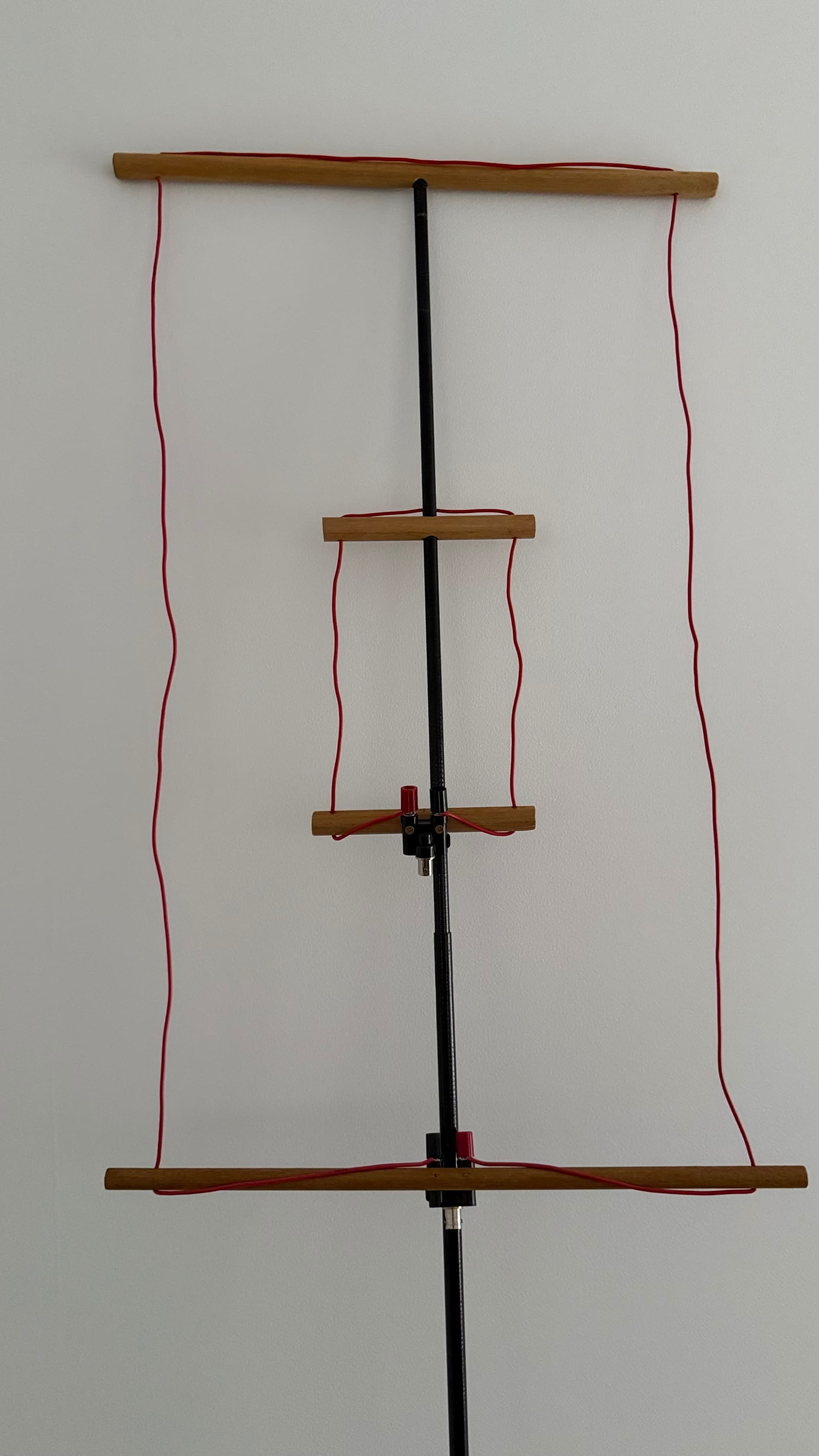
The MT believes this provides a great opportunity for interesting QSOs in the coming year. Many activators and chasers will have access to equipment already for these bands and modes - whether the old faithful FT-817 and FT-857s or newer options like the 2m option for the KX3, the timely CW modification to the cheap and cheerful Quansheng handhelds or the ubiquitous 2m transverter kits available on various auction sites for relatively low cost. Many antenna options are available, whether lightweight yagis, hentennas, oblongs, quads, flowerpots or J-poles (slim or otherwise). Many propagation modes are available. This should provide an interesting and challenging year for each individual participating, where the activators and chasers will have their work cut out to make QSOs under different conditions and via different means.
Scoring format
Given that SSB and CW are considered useful as DX modes on these bands, points will be awarded based on distance, number of summits activated and unique callsigns logged in an activation.
Activators
Your score will be 1pt/km for each QSO with a unique callsign (per summit) activated within the year, multiplied by the number of unique summits activated.
Chasers
Your score will be 1pt/km for each QSO with a unique callsign (per summit) chased within the year, multiplied by the number of unique summits chased.
Example
An activator climbs a summit, VK0/AA-123, and makes four contacts on 144MHz SSB, with VK0ABC, VK0DEF, VK0GHI AND VK0JKL. Each of these contacts is 110km, 120km, 80km, and 90km respectively. For this summit, they will receive 110+120+80+90 = 400 summit points. They have climbed 1 summit, so their total points is 400x1 = 400 points. They then climb VK0/AA-456, and make another four contacts, VK0ABC, VK0DEF, VK0GHI AND VK0MNO on 144MHz, and one contact with VK0ABC on 70cm. Each of these contacts is 210km, 220km, 280km, and 290km respectively. This is a new unique summit, so each distinct callsign for this summit counts for points - so 210+220+280+290 = 1000 points. The second contact with VK0ABC does not count for points. After two summits, their points tally is now (400 + 1000)x2 = 2800 points.
Finally, they go back to VK0/AA-123 and make another two contacts, this time with VK0PQR over a distance of 300km, and with VK0STU, who does not provide a location. VK0STU does not provide a location, so no points will count. As VK0PQR is a new unique callsign for the summit, this is now added to their score for VK0/AA-123, so their points score for the summit is now (400 + 300) = 700 summit points. Their total points score is (700+1000)x2 = 3400 points.
Entering location data
For QSOs to count, the location of the chaser must be provided (the activator location is of course the registered summit location that they are activating), and details exchanged as part of the QSO. If a chaser chooses not to provide their location, activators must not obtain it from other sources like QRZ. This information can then be entered in several different ways:
S2S entries
The position of both activators is known, nothing needs to be entered other than the summit references.
Activators
ADIF format
Using any of the <LAT> / <LON>, <GRIDSQUARE>, <POTA_REF> or <WWFF_REF> fields to a QSO record will add location data automatically, in that priority order (if multiple are specified).
FLE format
Adding the grid reference after a ‘#’, or including the POTA or WWFF references as part of the record will add location data automatically, in that priority order (if multiple are specified). I don’t believe there is a way of specifying lat/long pairs as part of the FLE format (other than to follow the approach for CSV files below)
CSV format
The SOTA CSV format has supported location entry for a while, although the format is perhaps a little cryptic unless you chase Microwave awards. Within the comment field, you can specify either lat/long using %QTH%-12.3456,123.4567% (latitude first, longitude second, using decimal degrees and ‘-’ for West and South), or you can specify a grid reference using %QRA%AA22bb% instead.
Manually
If you edit an upload, you can select the relevant activation QSO and select the “Map” icon at the end of each QSO row to add in additional location data, either as lat/long, grid reference, POTA reference or WWFF reference.
Chasers
ADIF
Using any of the <MY_LAT> / <MY_LON>, <MY_GRIDSQUARE>, <MY_POTA_REF> or <MY_WWFF_REF> fields to a chaser record will add location data automatically, in that priority order (if multiple are specified).
CSV
Similar to activators, within the comment field, you can specify either lat/long using %QTH%-12.3456,123.4567% (latitude first, longitude second, using decimal degrees and - for West and South), or you can specify a grid reference using %QRA%AA22bb% instead.
Manually via SOTAData
There is now a field on the Chaser upload dialog for location data. By default, this will be populated with the latitude and longitude taken from your SSO profile (if present). Please make sure you have your latitude and longitude around the right way…
Manually Via SOTAWatch
There is now a field on the Log Chaser button for location data. By default, this will be populated with the latitude and longitude taken from your SSO profile (if present). Please make sure you have your latitude and longitude around the right way…