This is a tricky trade off: known extra weight and volume vs risk of equipment failure.
For the summits I activate every year in my region I have almost no redundancy (spare pencil, spare battery). If something breaks and I have a failed activation, I shrug my shoulders and say, I enjoyed the walk and I’ll try again another day. I carried minimum weight.
For activations further afield or overseas especially once-in-a-lifetime ones I would definitely add some redundancy (eg KX2 and 2m FM HT). I find forgetting to take some critical item happens a lot more than equipment failure on summit.
Nicely done and interesting post, thanks for sharing.
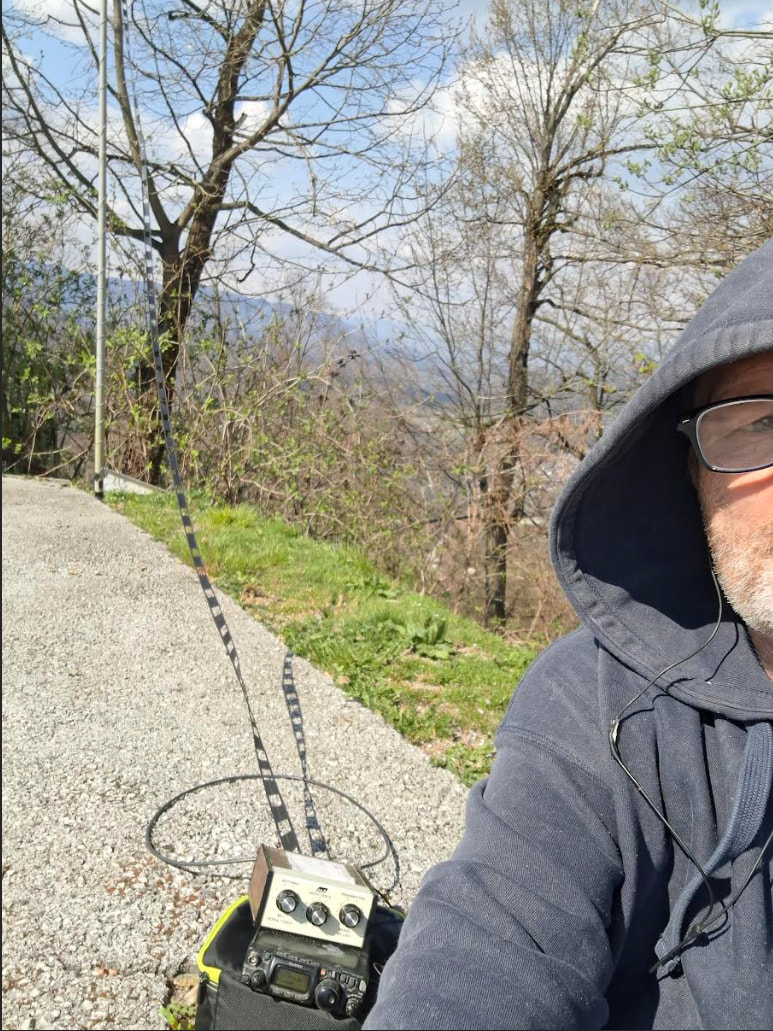
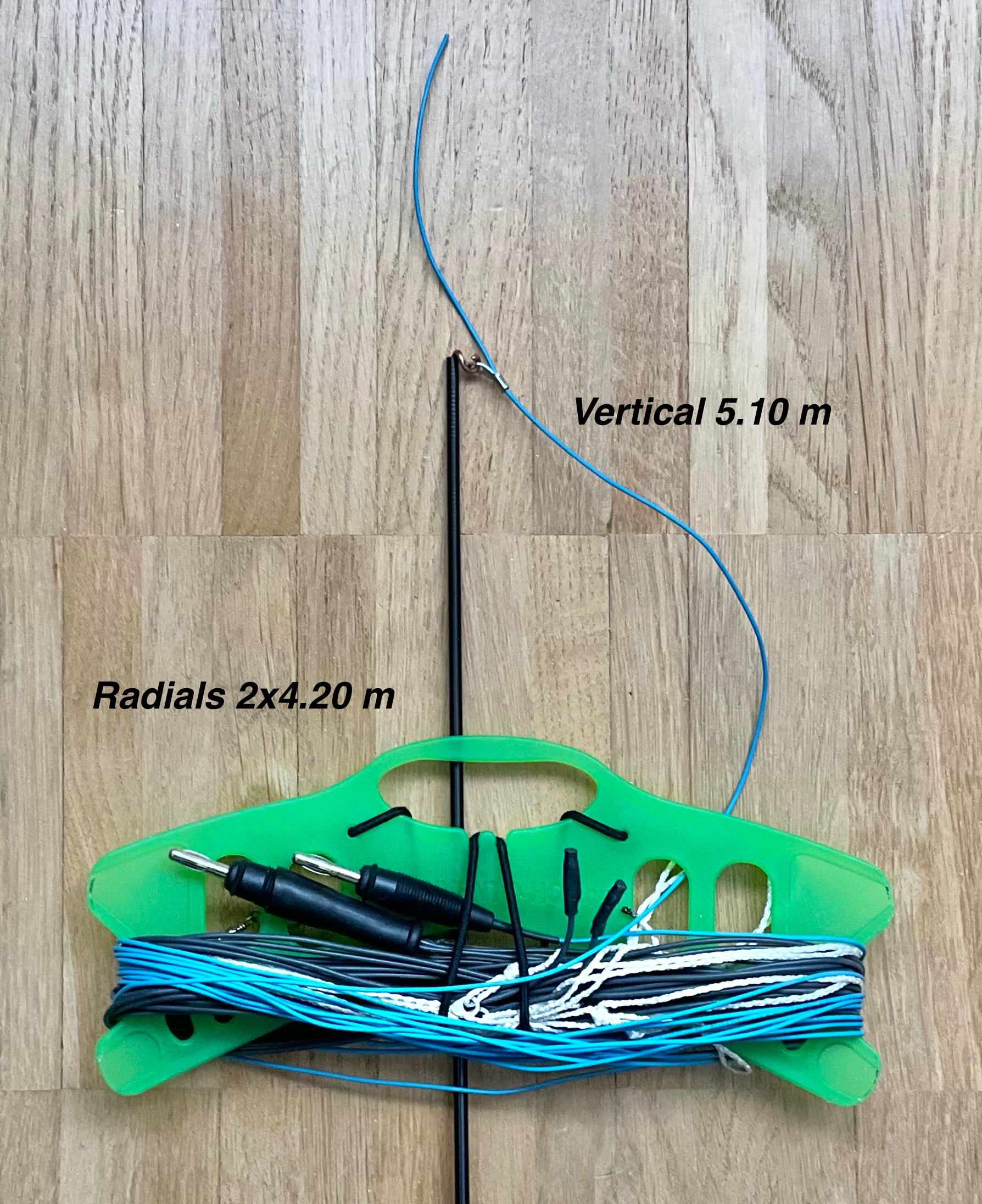
“Technical/exposed peaks” aside, I also like to use a very similar antenna on a mast about 6 meters long. The vertical wire is loosely wrapped around the mast 2-3 times, and the two radials are simply laid on the ground or guyed, depending on the practical height chosen for the radio.
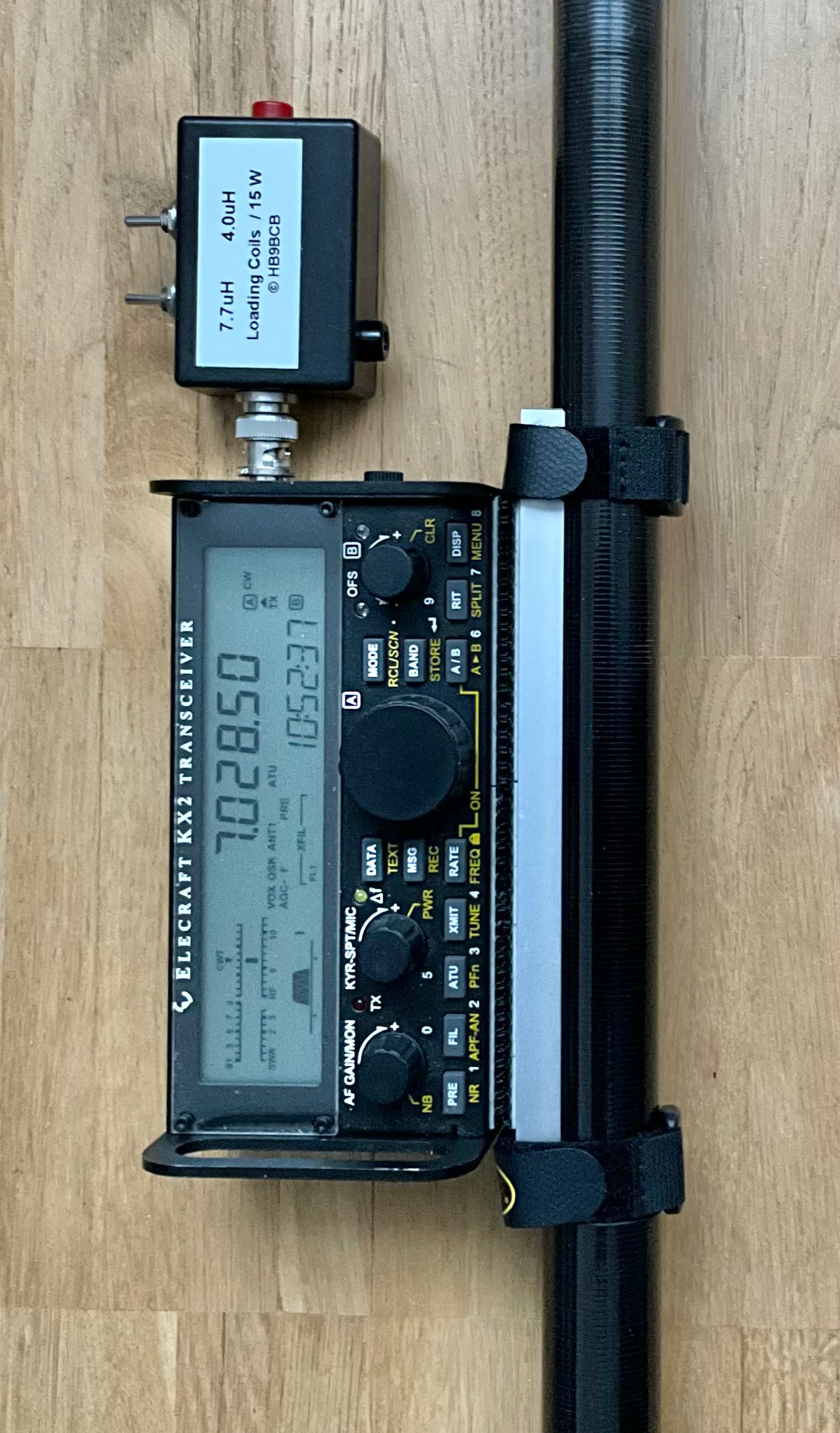
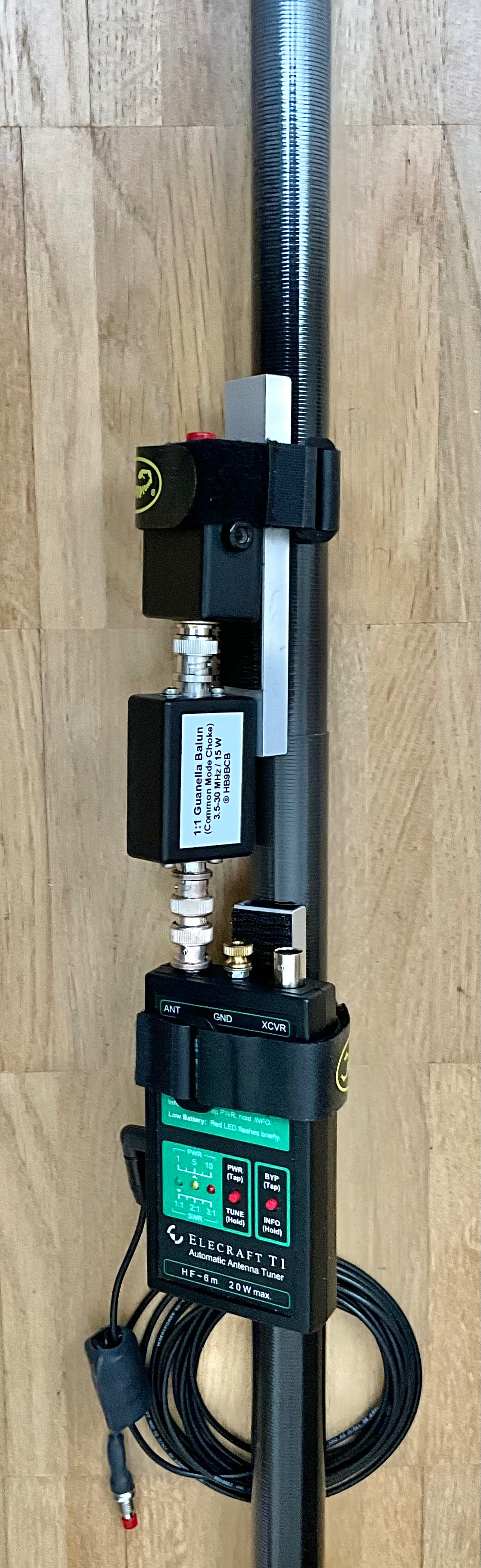
Below is this antenna in the 40-10 m remote/elevated version. Optimal radiation characteristics and ease of use were prioritized in its design. Typically, this antenna is used together with lightweight, low current consuming rigs such as Mountain Topper MTR3B (140 g, RX current ~16 mA), QMX, and similar.
Of course, this antenna is also well suited for short-term operation on extremely exposed summits during POTA/WWFF/SOTA (not just from the perspective of a comfortable desk chair, or based on hearsay, hi).
I am a link dipole man, supported on a pole at the feed point. You ask how to support the pole, I use 3, 2.5mm nylon parachute cords attached 1 m down from the top using camping pegs and or local stones. On steep slopes I have used only 2 cords with the pole well off the vertical.
Make full advantage of the 25m AZ. The objective is not to operate from the top of the summit (which may be full of people) but from within the AZ. It is the location of the op that determines if the activator is in the AZ. Take note of any pinacles, If a pinacle height exceeds 25m AZ activation must take place off its flank or summit. Read the MT info on AZ definition. Use Google Earth to plan your activation location. A GPS may help to determine the AZ but vertical accuracy is not good.
As you say, it is usually windy on summits, in these conditions only lift the feed point to about 3-4m.
I do not wish to preach to the converted, but make sure you and your kit are secured from a rapid descent, it is easy to get engrossed in operating.
Busy with people or not, I’ve learnt to avoid any summit attraction (e.g. trig point, cairn) as Sod’s Law states that even on the most-miserable & loneliest SOTA summit someone will turn up mid QSO. But I’m reluctant to stray too far from the actual summit - unless it’s one of those flattish moorland summits - as I usually activate on both HF and 2m, and don’t want to operate in a VHF radio shadow.
In winter, I take a longer coax feeder (~5m long) so my inverted-L EFHW or 2m Slim Jim can sit up on a ridge whilst I’m hunkered down on the leeside somewhere out of the wind. On warm dry gentle-wind days I’ll sit within ~2m of the base of the pole.
Returning to this topic’s main theme I don’t activate very technically-challenging summits with tiny operating space [I don’t want me or my dog to fall off a cliff] but – in that event - I would use a vertical HF antenna e.g. a whip because of its small footprint.
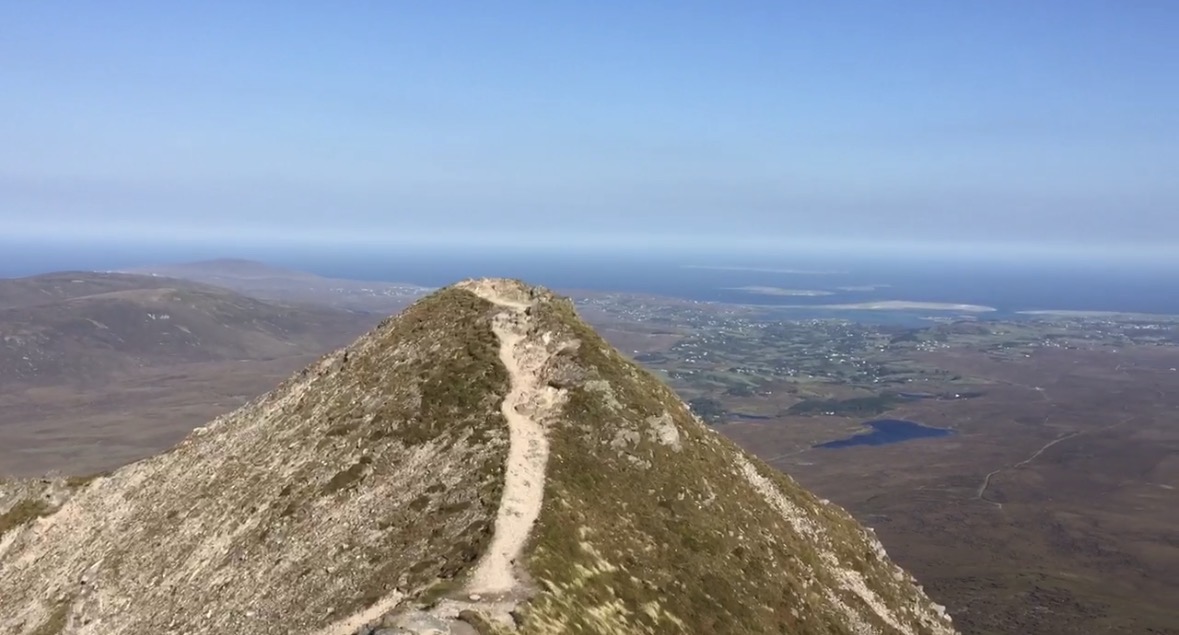
One of my most restricted summits was Errigal (EI/IN-001) - a very narrow ridge and (when I was there) about 40mph wind blowing across. I lay down on the track seeking shelter from the slight bank at the edge of the track and lifted my VHF handheld up whilst using an ear bud microphone. Pleased to have got 4 contacts!
And more less essential if you are intending to use 2m as a serious part of your activation. Of course nipping up to the top with a handheld may satisfy that aspect, but I have always preferred 2m SSB using a yagi to work some reasonable dustances and I’ve often sat exposed at the summit in appalling weather while Paul G4MD has found a comfortable sheltered spot lower down. There are advantages to doing just HF!
f you really want to travel light and activate different shortwave bands, in my opinion the QMX is currently the best option available… it even supports SSB now.
You can also simply lay an antenna wire on the solid rock. An EFHW is quick and easy to build…and more effective than a small telescopic antenna - and if necessary, a 5-watt tuner isn’t heavy or bulky either. The QMX displays the SWR.
If you’re not using a rope… , but are instead using hiking poles to reach a grassy summit, you can connect them together and use them as a mast. I then use the Velcro straps I used to secure the antenna wire.