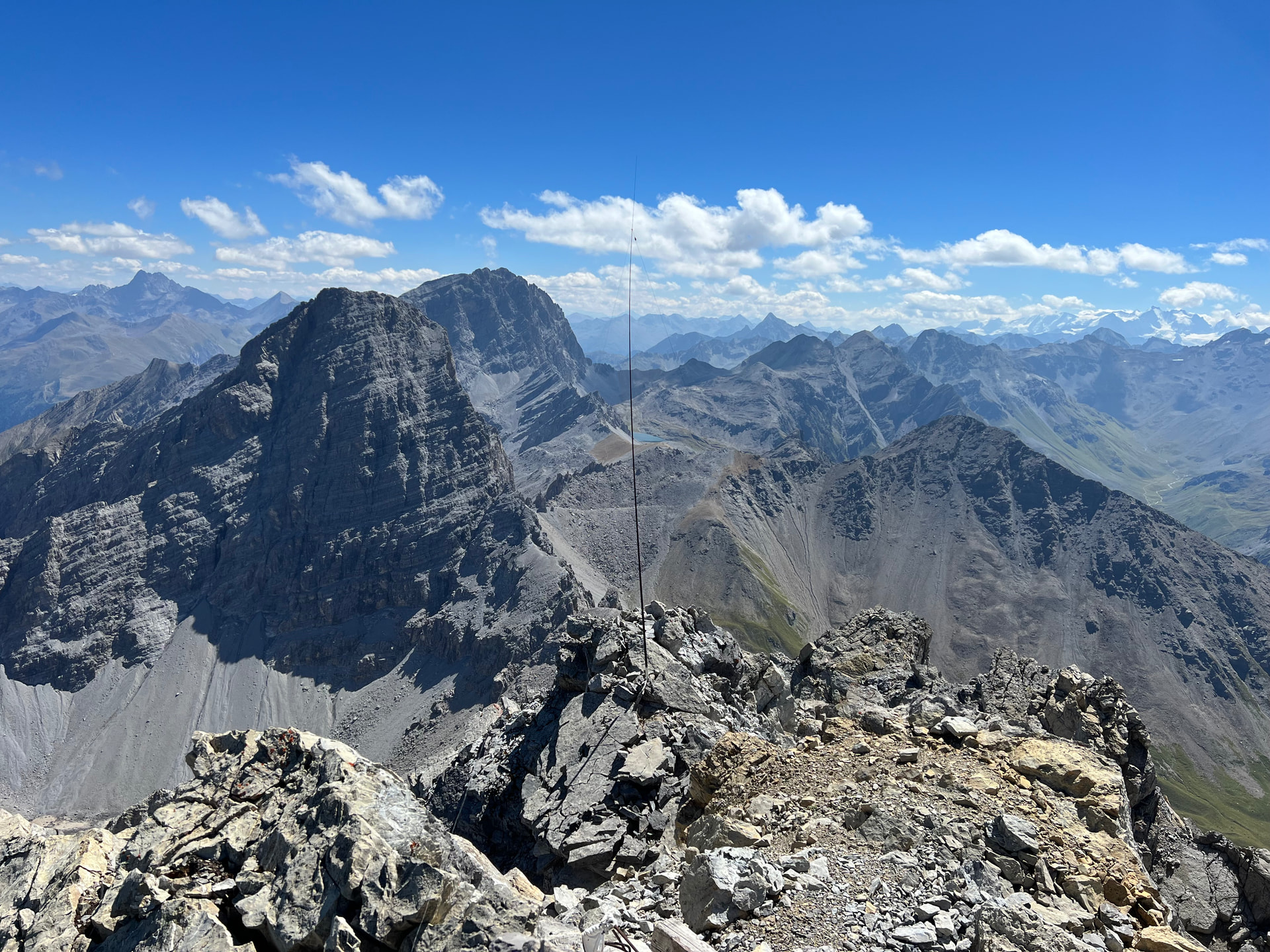
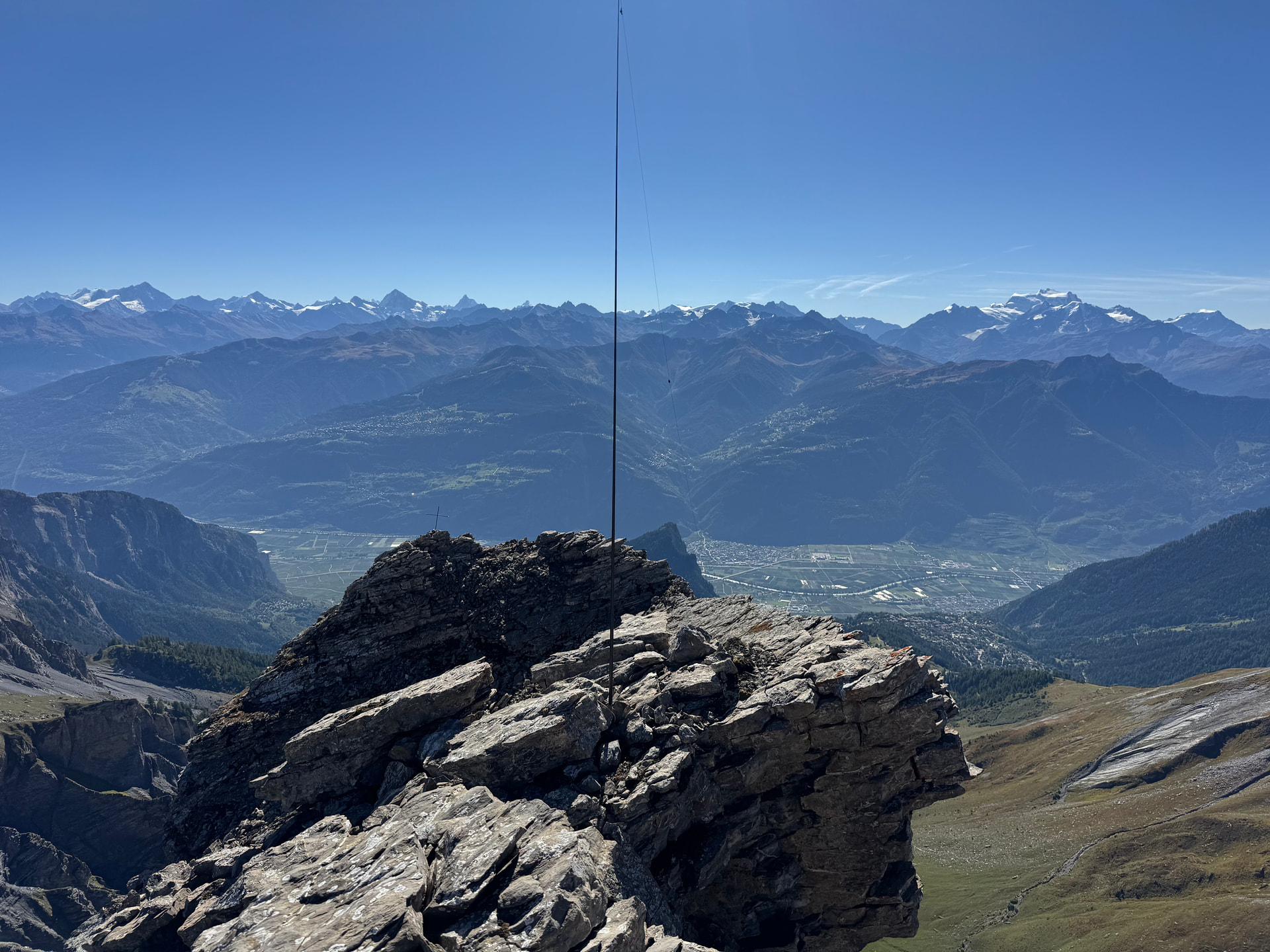
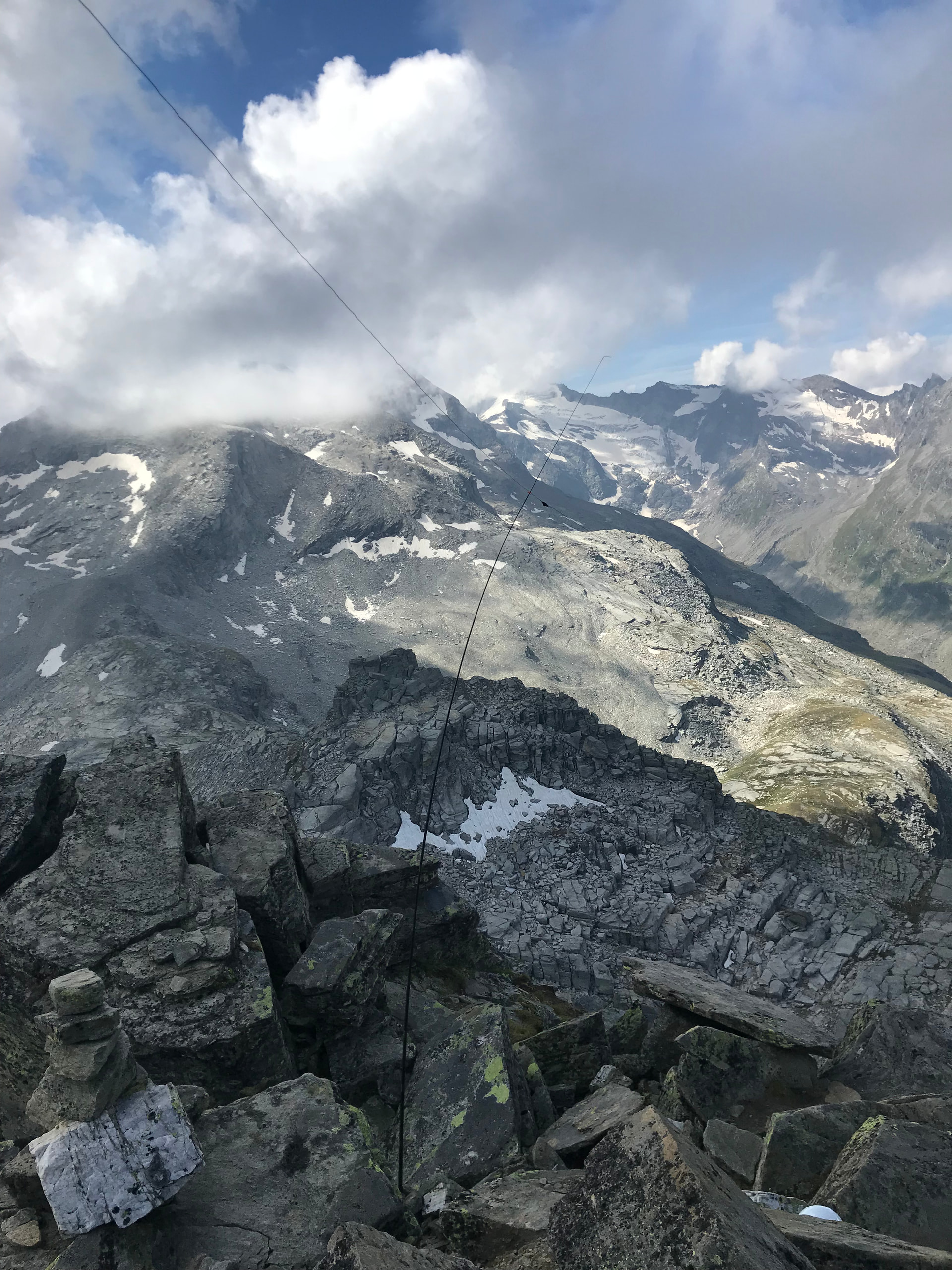
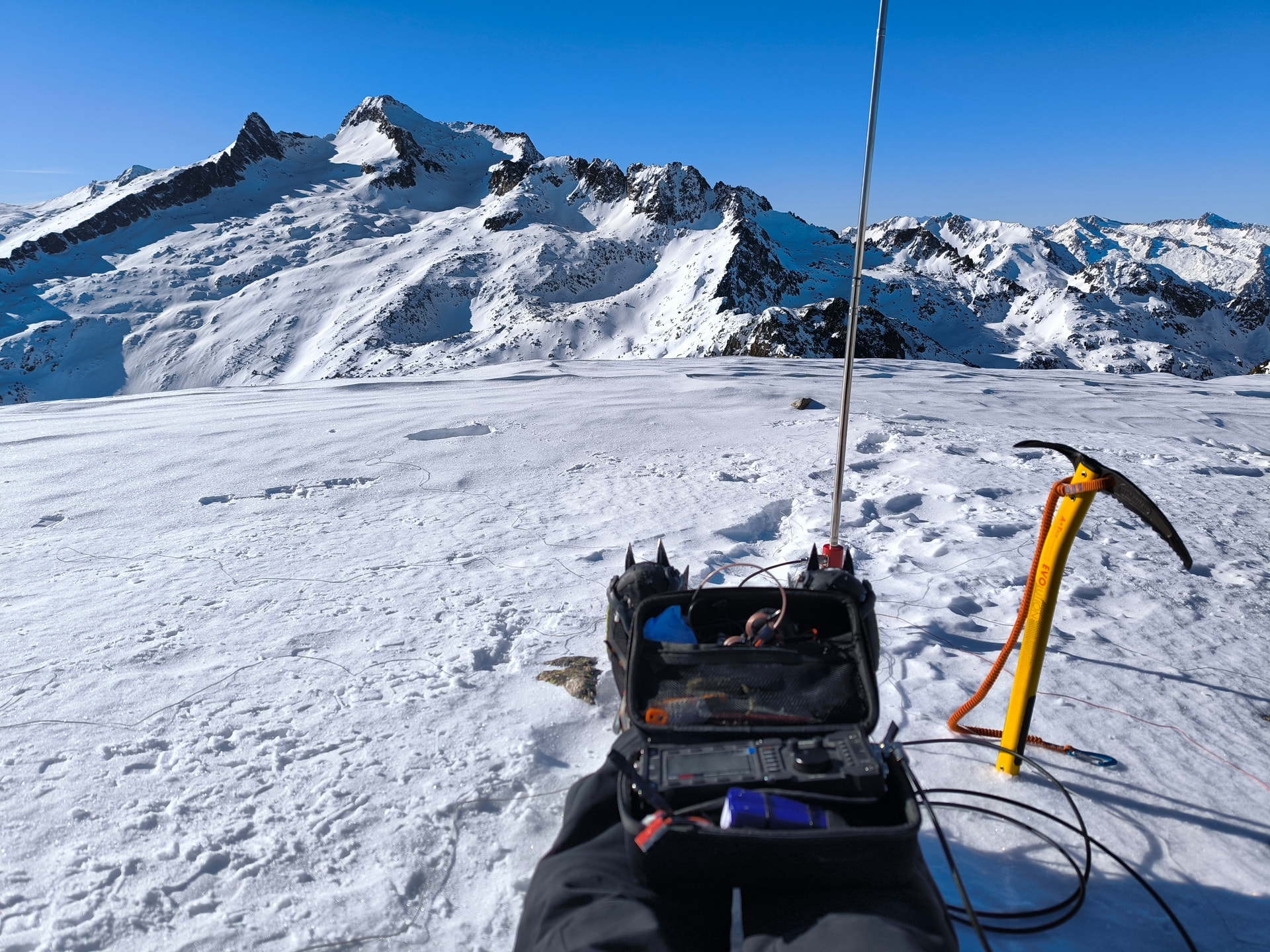
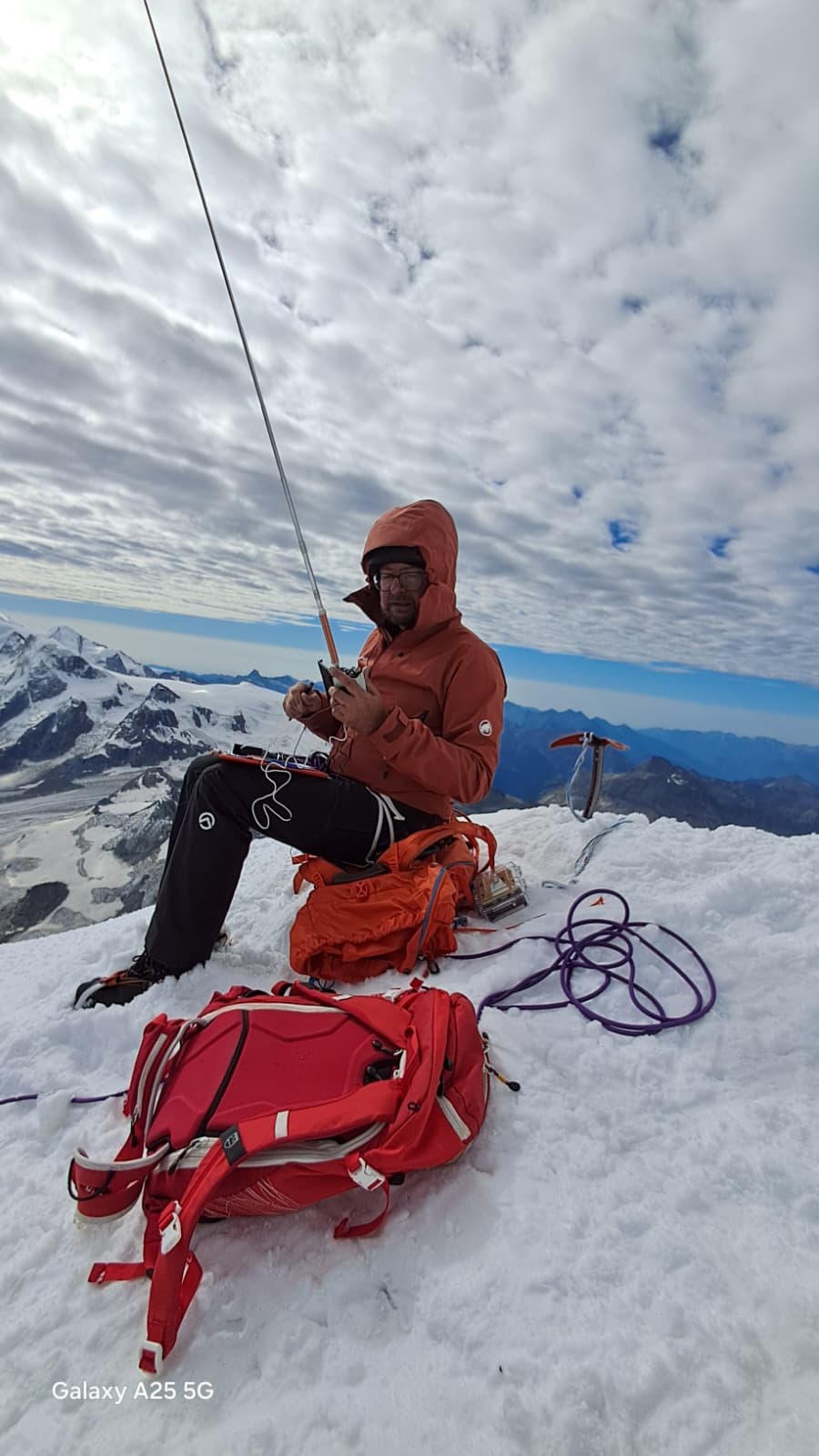
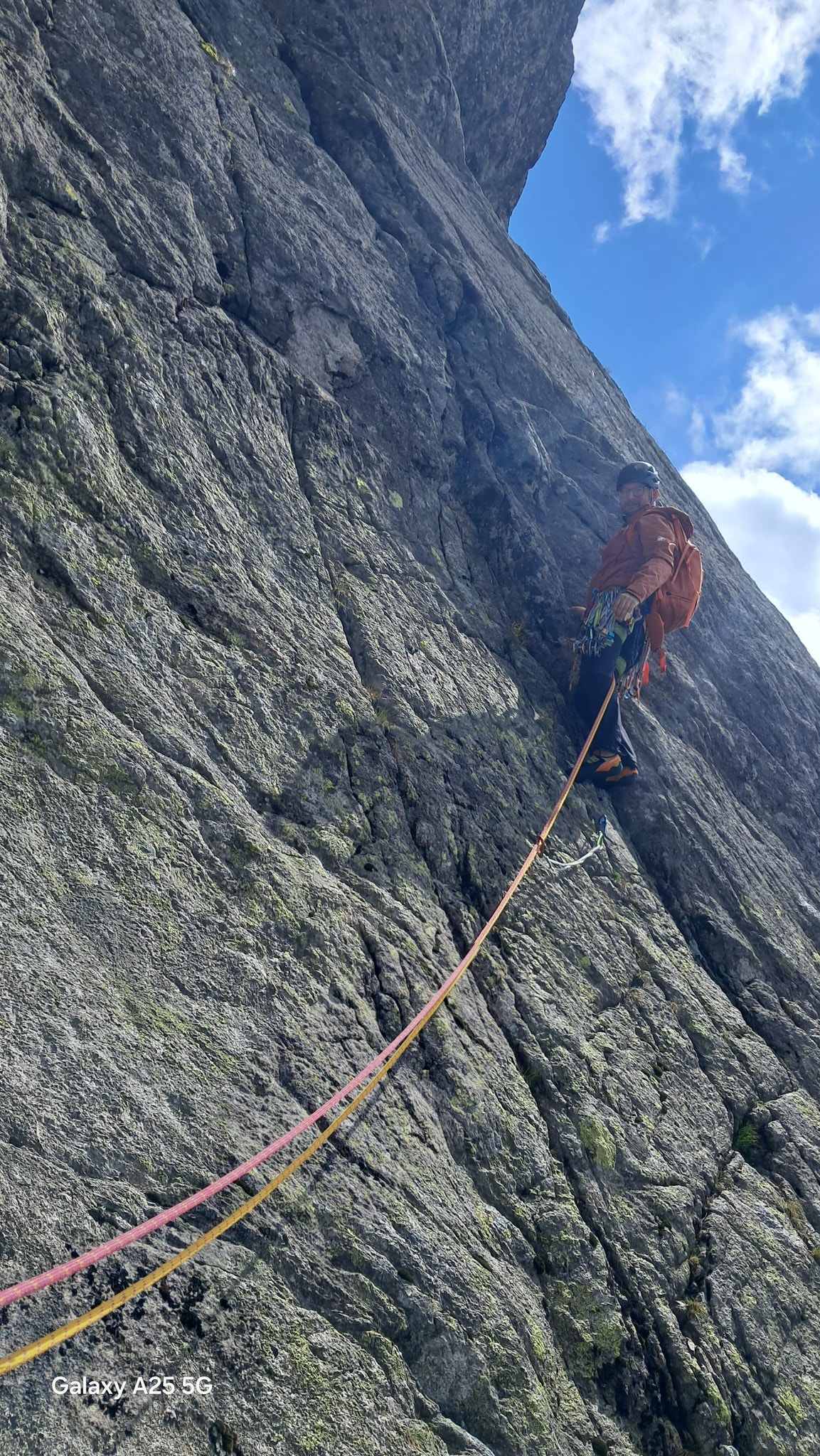
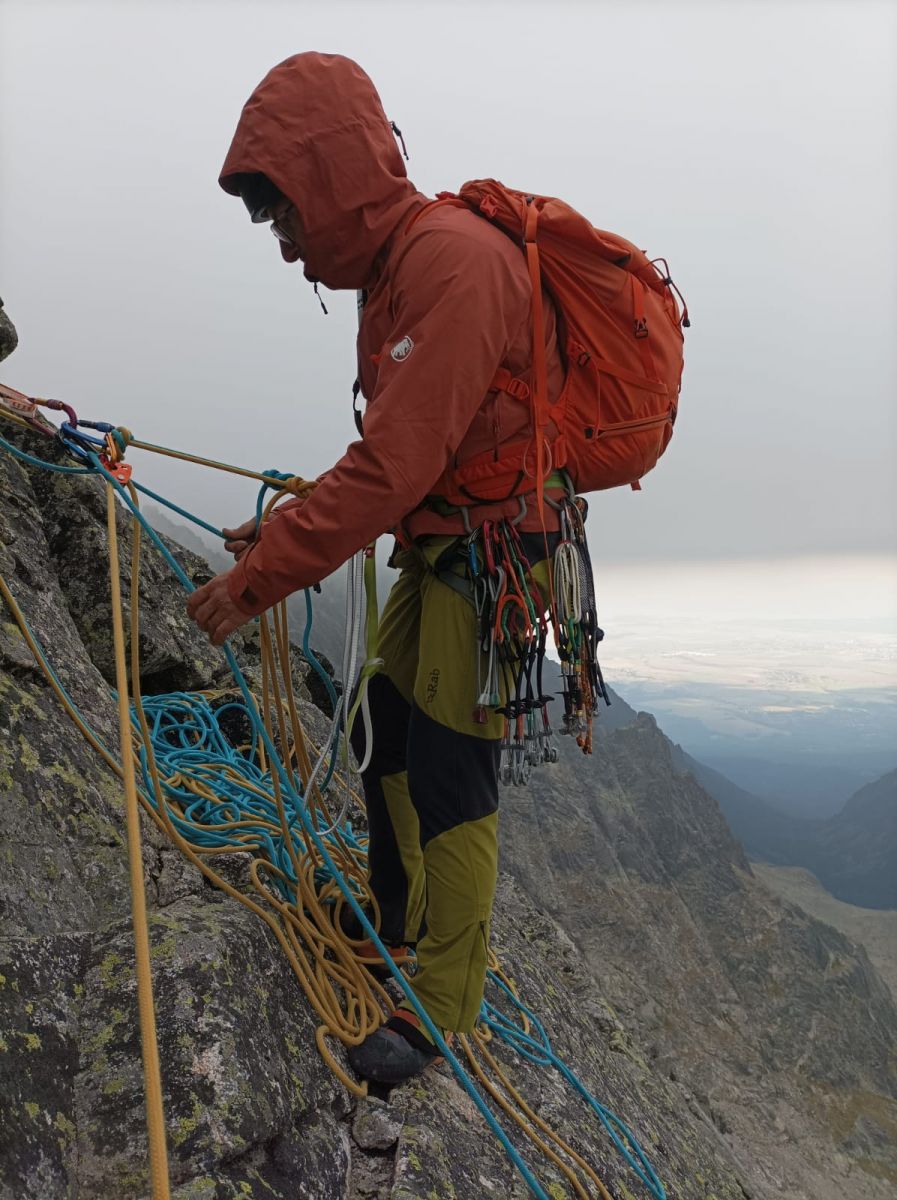
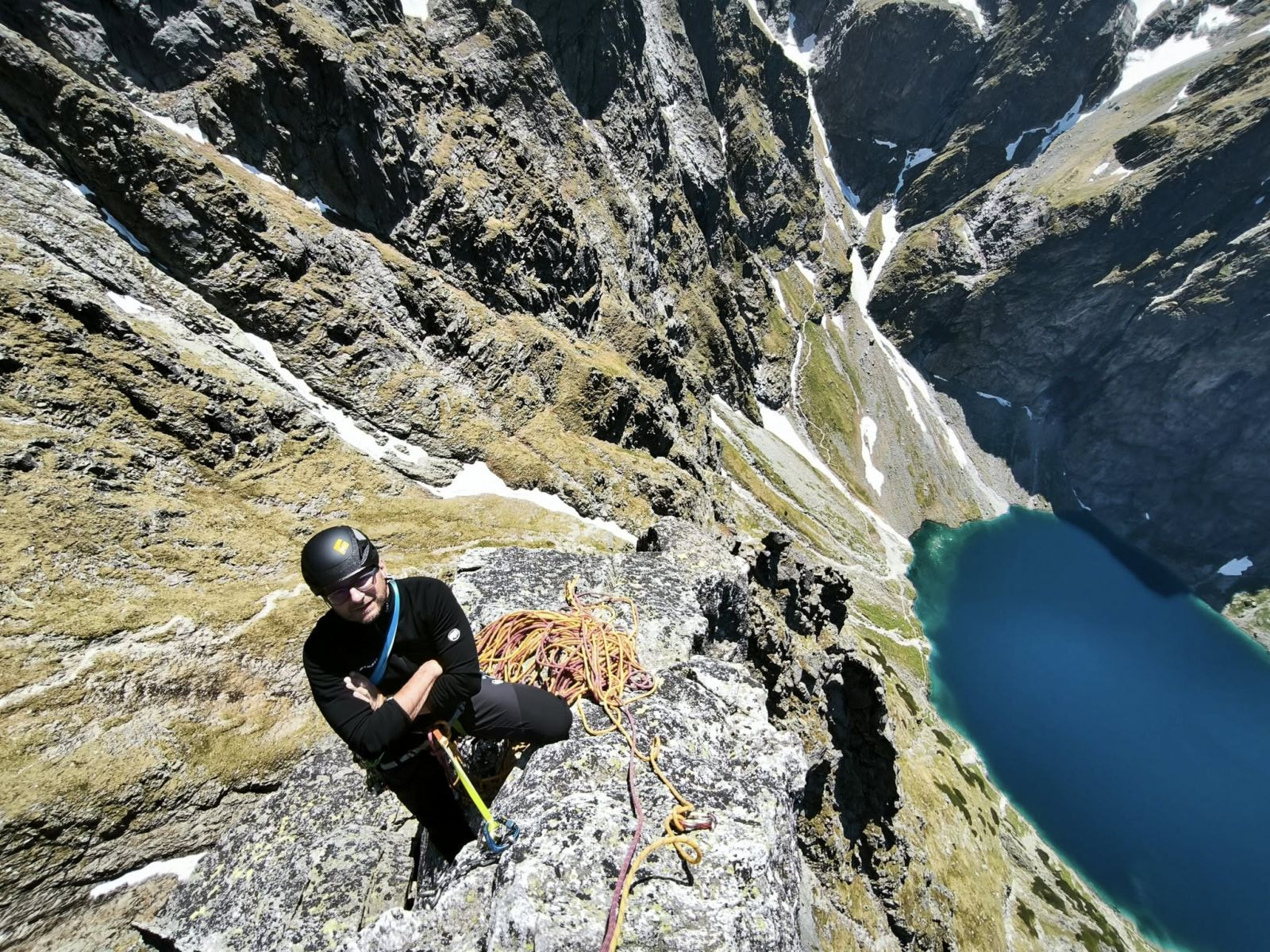
First and foremost, I arrived to radio from a mountaineering background rather than the other way around. I had my first exposure to radio when I was a kid, but it wasn’t until after university (Telecom Engineering btw) that I had the time and resources to properly dive into the hobby. Now that I’m licensed, SOTA feels like the perfect overlap between my two passions.
So I’m currently putting together a SOTA setup to operate SSB on 20m and 40m (CW is still a work in progress for me). The thing is, the kind of summits I enjoy the most—especially in winter—tend to be relatively technical peaks with very limited space at the top. Think of places like Peña Vieja in the Picos de Europa, Tebarray in the Pyrenees, or Espiguete.
In addition, these are usually trips where I either bivouac or stay in a refuge, so weight and pack size are absolutely critical — both for the radio gear and the antenna system.
When I try to picture myself deploying a 20m EFHW on some of these summits, I struggle to see how I’d do it given the lack of space and exposure. So before I get to building and adapting an antenna specifically for SOTA use, I’d really appreciate your advice:
Would you recommend an EFHW or an inverted V dipole in this kind of environment? For context, I think I’ll be using a 6m telescopic mast.
Regarding the rig, I decided to start using a G90 with a 12V 6Ah battery since it seems like a good trade-off between power, weight and capacity.
Thanks in advance for your insights, and looking forward to learning from your experience.
Focus on learning CW and this will drastically reduce your antenna requirements. You can use a vertical connected directly to your radio (something like the Elecraft AX1). It will be a compromise, but if the bands are in decent shape you will make QSOs.
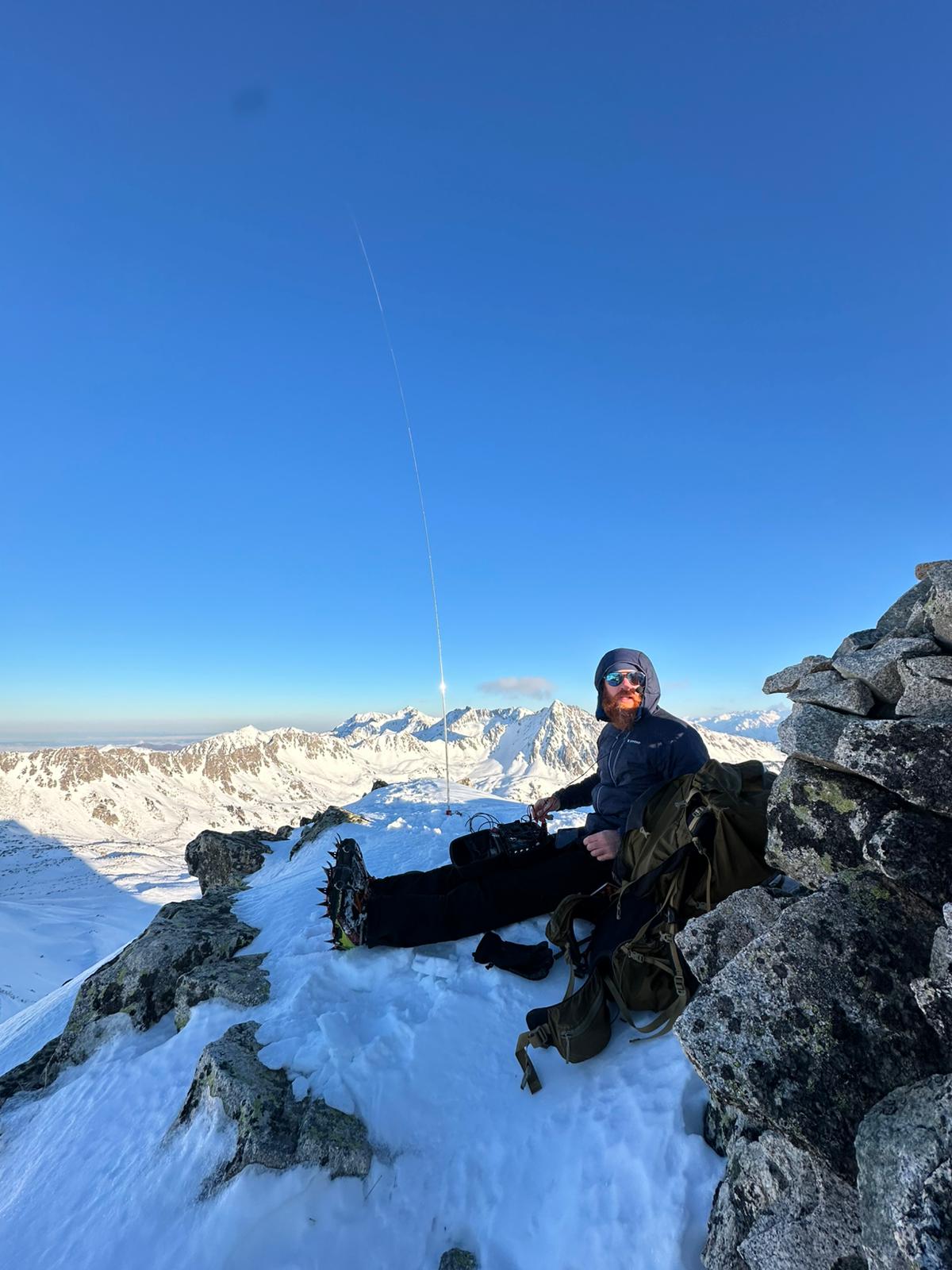
On a few space restricted summits that had steep drop-offs (basically a cliff) I have had success with just letting my wire antenna dangle over the edge.
In my experience, it was almost always possible to deploy a full-size inverted V EFHW for the 40/30/20m bands, even on “pointy” summits – at the very least somewhere along the ridge used for the ascent (within the AZ of course). But sometimes, it was a question of available time and nerves to climb/scramble along an exposed ridge multiple times to put up and take down the antenna, and perhaps also the presence of other climbers that may be inconvenienced by it.
In summer, I usually make the effort to put up a full-size antenna, so that chasers have a better chance at hearing me. In winter when ski touring, or in summer on very long alpine routes with glaciers etc., time and weight constraints are often tighter. Then I resort to “quick and dirty” solutions like an AX1 on a KX2 (handheld), or even my KH1 – better than nothing, and has never failed to get me more than enough QSOs in the short time available.
Even on the summit with the smallest activation zone in HB, I could have envisioned installing an EFHW somehow, but climbing a ridge of a neighboring summit (for fun) for 6 hours first, and a long descent via a glacier meant that there was no time for that, so the KH1 + whip antenna it was.
My advice would be: on peaks/ascents where you can afford the time and weight, a trap EFHW made of lightweight wire (I like Poly-STEALTH 26 with Pico Traps) as an inverted-V on a ~6 m carbon mast is a good choice and makes chasers happy. I would not recommend a dipole on technical summits because of the additional hassle/weight with long coax, center balun etc.
When time and weight are everything, then go with whip antennas, or perhaps hang a wire vertically from your mast with one or two counterpoise wires, and use your ATU.
Of course the G90 is a pretty heavy rig for SOTA in my opinion, and a 6 Ah battery will give you several hours of operation at full power, so you could save a lot of weight by bringing a smaller battery (and/or a lighter rig ).
I am using a homemade 40/20 m efhw. It is a clone of the PAR end fed trial (vibroplex). The length is about 13 m, weight 135grams with the balun. I usually install it as an inverted V, eventually as a sloper, using a 6.3 m chinese fiberglass pole, 43 cm collapsed, 265 grams. This is my standard antenna, ok for almost all the summits I activated. It is fast and simple to install, it gives me very good results, I get good reports.
For very small summits, I used a Komunica hf pro 2 plus T. Collapsed, about 30 cm, weight, about 300 g. You will need in addition some kind of tripod, and a few radials. This is a shortened antenna, the results are far less vs the efhw. I would recommend this antenna only for very exceptional cases.
If you can install your 6m vertical pole, on a small summits, a wire along the pole, and a wire on the ground, + atu, will give you better results vs the Komunica.
I just wanted to ask Manuel HB9DQM whether he tried any of that on his high-mountain activations (lying on the ground or just tossing it over the ridge). I guess this only works when you are on rocky ground. On grass ground, especially when wet, this will probably not work. I remember one time when I was on such a grass summit I heard a light thumping noise. I didn’t pay much attention as reception was quite ok, but nobody wanted to answer me. Turning around, I saw that my antenna had collapsed and the wire was on the ground. Luckily, no tourists or cows were hurt.
Well, this looks like a POTA setup to me. Heavy and bulky. When it comes to technical summit, maybe you should have a look at lightweight rigs such as QMX, trusdx etc.Together with a little 1.5 Ah LiPo battery and that’s enough, 300g all together.
Antennas … Not easy. A 5m Chinese whip and a few radials will give you 20m and all the bands above. Works great. Small footprint. You can add the coil and you have a compromised 40m, still usable.
As said above , a full EFHW can sometimes fit in much more places than we think. You can build one with some coils, as a sloper, it’s smaller…
Hi Mike, welcome onboard, you’re not gonna regret the combination of mountain + radio!
This reflector is a good point to ask and sure you will get useful answers.
According yo your statement, you’re thinking on a suitable gear for winter/ overnight/ small summits… I guess you’d need space to carry drinks + food and warm extra clothes etc
You better get a reduced, but trusty gear then….
Rig: G90 is an affordable rig but too heavy for such conditions. I’d rather go for a QMX with a small batt (3 X 18650 cells), doing well in SSB with a reduced current draw and handy.
Antenna: 5m carbon rod + small trapped EFHW (abt.12m) is okay, but when space and other mountaineers in summit are the key point I’d go by a shortened vertical. I made a small 3m on a glassfiber telescopic pole that runs well in 20m /acceptable in 40m, with a few short radials on ground (some hints here). It’s very unobstrusive. I find the telescopic metal whips are heavier and are not okay for placing the center loading coil as per my design …
The Chinese whip is a 5.6m stainless steel whip, that you can buy from ali*** for 20€. It has a base, a ground spike, and a few radials. Deployed in 2 min. You can throw the radials in the cliff if they are too long. You might need a few guy lines if the snow is deep and fluffy.
There is a topic on the forum already if you want to learn more about it
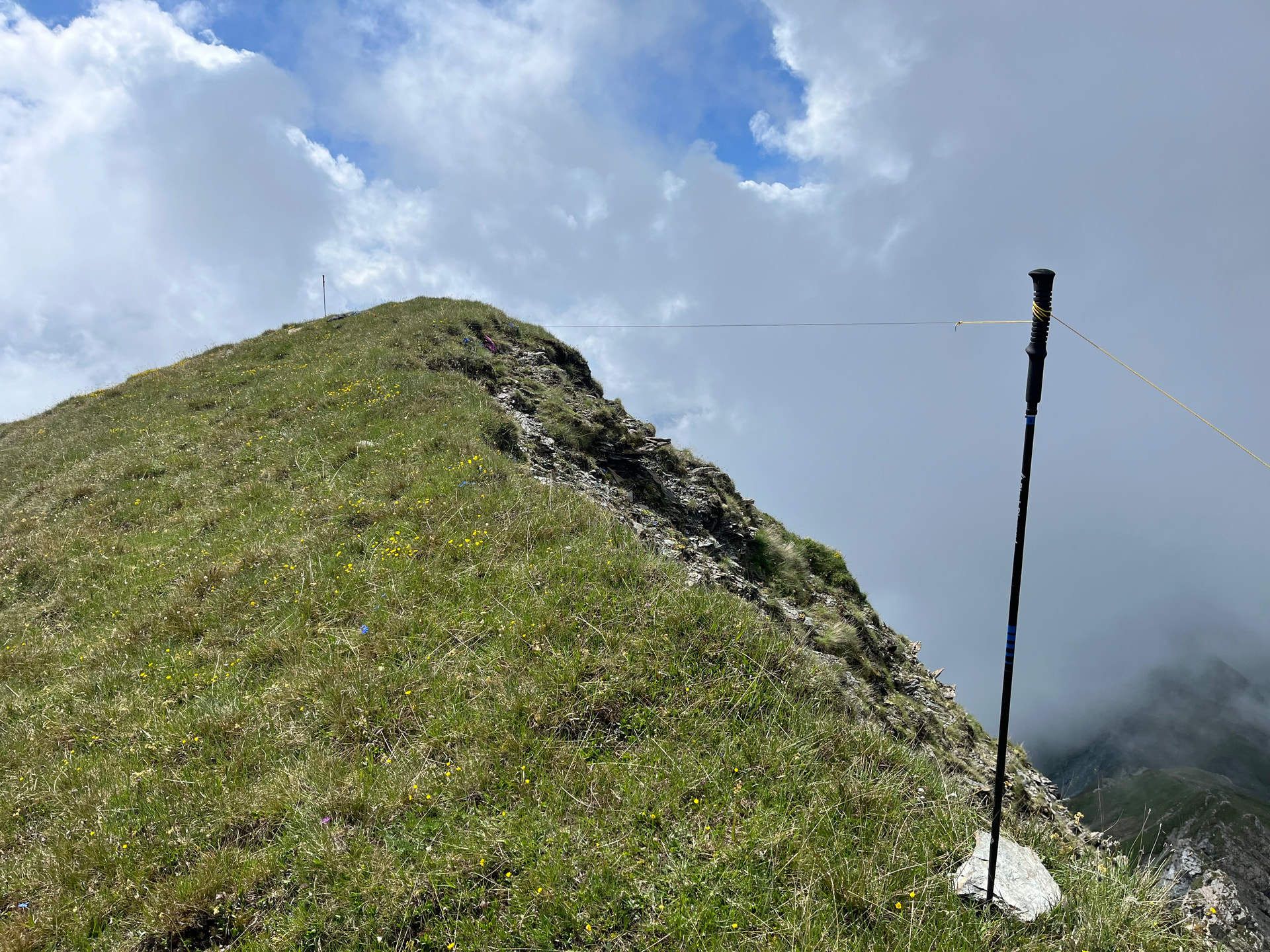
Not completely on the ground, but on a few occasions I forgot the mast or found nothing to attach it to. In such situations I strung the EFHW between two rocks, over the summit cairn, or between my hiking poles very close to ground. Although the sample size was quite small, I am under the impression that on very rocky summits, this works almost as well as on a mast.
But in a pinch, one can improvise on grassy summits too:
(MTR-3B, 16 QSOs made in 15 minutes on 40m)
Wow! I’m amazed by the quality and quantity of reccomendations and advices given. Thank you so much for this warm welcome! I can’t see the moment to come back to the mountains!
A couple of follow-up questions came to mind:
You made me reconsider the G90. My reasoning to choose it was the 100w. Considering the antenna solution up there in the peaks will always be a compromise, I thought I’d need as much power as possible. I know it is heavy, but thought it’s ok either if I carry a expedition pack (11+kg) or an alpine pack for just 1-2 days (6kg). Anyways, now that I discovered the QMX, I’m definitely buying one… QMX for technical peaks, G90 for easy or more relaxed trekkings.
I’m considering getting a SOTABeams Tactical Mast. Alternatively, I could use a lightweight 5 m telescopic fishing pole (around 600 g, very compact). However, I’m not entirely sure about the best way to secure it on the ground in exposed summits. For example, @Manuel (HB9DQM), looking at your photos I can’t quite see how you anchor it — I assume you’re using rocks around the base to keep it stable?
This leads to another related question: wind is almost always a factor on summits. Do you usually manage to deploy telescopic masts at full height, or do you tend to keep them lower than 5–6 m depending on conditions?
From your comments, it seems that an EFHW in an inverted L configuration, with the far end supported by a trekking pole, could be a good option. And in the worst case, just deploying the wire as best as possible — with or without a mast — and relying on the G90’s internal tuner. This though leaves the QSX in worse performance. I could always carry out a chinese ATU (ATU100M) but I would prefer not to haul more stuff…
Forgot to mention that always wanted to buy the Chinese whip, now i have a reason. I can’t think a simpler way to deploy the antenna in a reduced complex (sometimes crowdy!) place.
Any additional tips or real-world tricks would be very welcome!
73
EDIT: I wrote 100w but was thinking 20w. I know the difference between 5w and 20w is just 6dB, but I remember reading that 20w used to be the sweet spot for making the difference.
G90 is only 20W max. An added bonus is the internal tuner, but this might not be necessary on a rocky summit. I have to tune in densely forested summits with my EFHW.
QMX is a great radio for the price. You will definitely want to learn CW to make the most of your 5 watts.
Another tip: do your activations during busy times, like mid-morning to mid-afternoon. There will be other SOTA stations to chase, and they are generally going to hear your weak signal much better than someone in a city with high noise levels. On a typical weekend day, I can easily make dozens of S2S contacts with only 5 watts.
If you go out very early or very late, you will likely struggle. A lot of chasers go QRT in the late afternoon, and there won’t be other SOTAs around to chase. Eventually we all find ourselves late on a Sunday evening, calling CQ in to the wind and hoping for QSOs
The setup with the 5.6m vertical from Ali has been my go-to for almost a year. Sets up very quickly and in a relatively small footprint. @F4LEK your webpage and comments on the reflector about this were very helpful. Just wish you could change bands without having to adjust the length of the telescoping whip.
Mi antena preferida es una vertical de cable para 20m soportada por una caña de pescar de Decathlon (6m)…es una antena de despliegue rápido y muy efectiva, la caña, bien anclada, aguantará el viento muy bien, mucho mejor que el stick. Yo la suelo anclar con una pica.
La antena está ajustada, con lo cual te ahorras el AT, si puedo salir en 40m le añado una bobina made in home que puenteo.
En determinados picos hay que ser sobre todo práctico.
My usual SOTA setup is an FT818 operating into a link dipole on s 6m fibre glass pole. I’m not a “technical “ climber but on a couple of rocky summits with little space and many people I have used an spx100 loaded whip with a magmount base sitting on a ledge with the counterpoise wires just hanging over the edge.
This worked well on 20m for me.
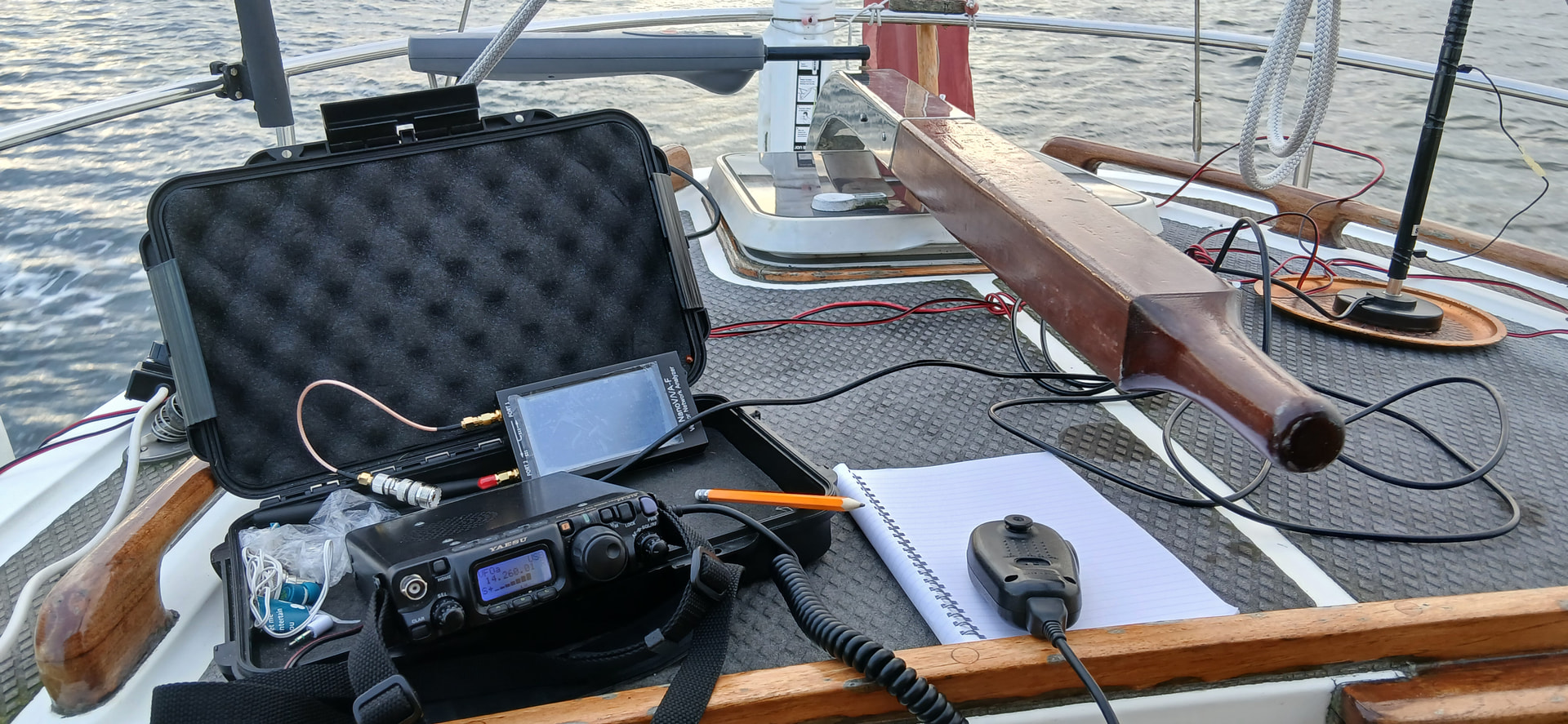
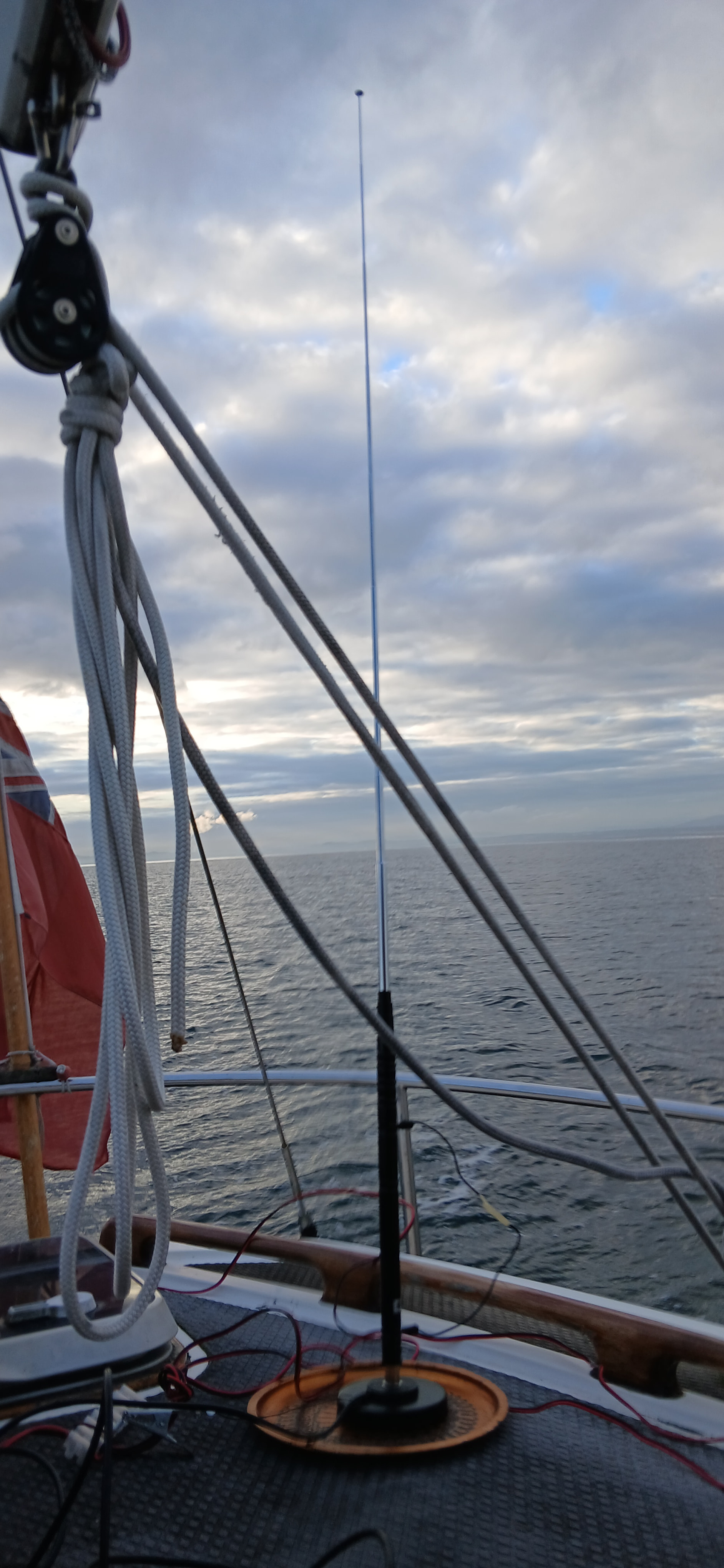
I’ve also used the same setup when sota chasing from a yacht and managed a qso from the Firth of Forth to a summit in Hungary.
The 1/4 wave whip can generate strong RF in your radio if not setup properly.
Make sure the radials are always lower than the feed point when using the whip. Sometimes it’s not easy because of the terrain or because the ground spike is anchored too deep in the snow, while radials are floating on it.
Additionally, a common mode choke, with a few turns around a type 43 ferrite, can be very useful on your coax (more likely a piece of small coax, rg316 or so).
About ssb on QMX. You will strugle to get good modulation and to find good microphone. Setup is well explained in the manual but good microphone is a problem.
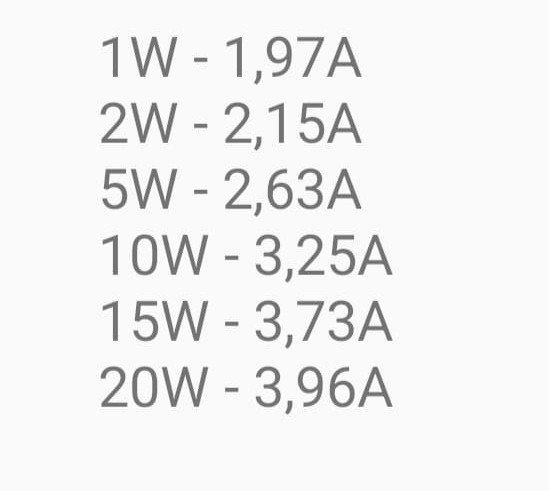
G90 is excelent rig. Tuner is always a bonus. For 10W of RF 6Ah is on the low side but for 20W 15Ah is much better. There is no much difference in current draw. Maybe 10Ah is better compromise. 9A7Am measured current draw. 0,47A on rx. TX on 7MHz with 12,6V
 ).
).