Yes, either I find some rock crevice to jam it into and add some smaller rocks to lock it in place, or I build a small cairn around the base. This works well enough unless the wind is very strong. I also carry some reusable zip ties in case there is a marker pole or a summit cross (only if nobody else is on the summit of course). And if there is snow, it’s a simple matter anyway 
4 Likes
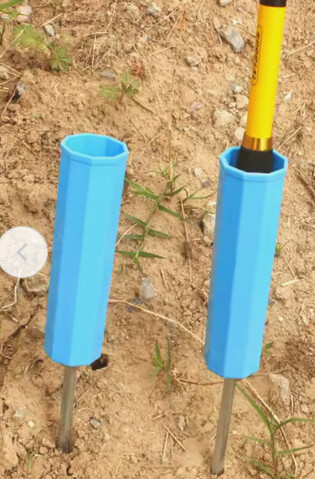
““I could use a lightweight 5 m telescopic fishing pole (around 600 g, very compact). However, I’m not entirely sure about the best way to secure it on the ground””
EA1PYM, The picture of a fishing rod holder may give you some ideas.
1 Like
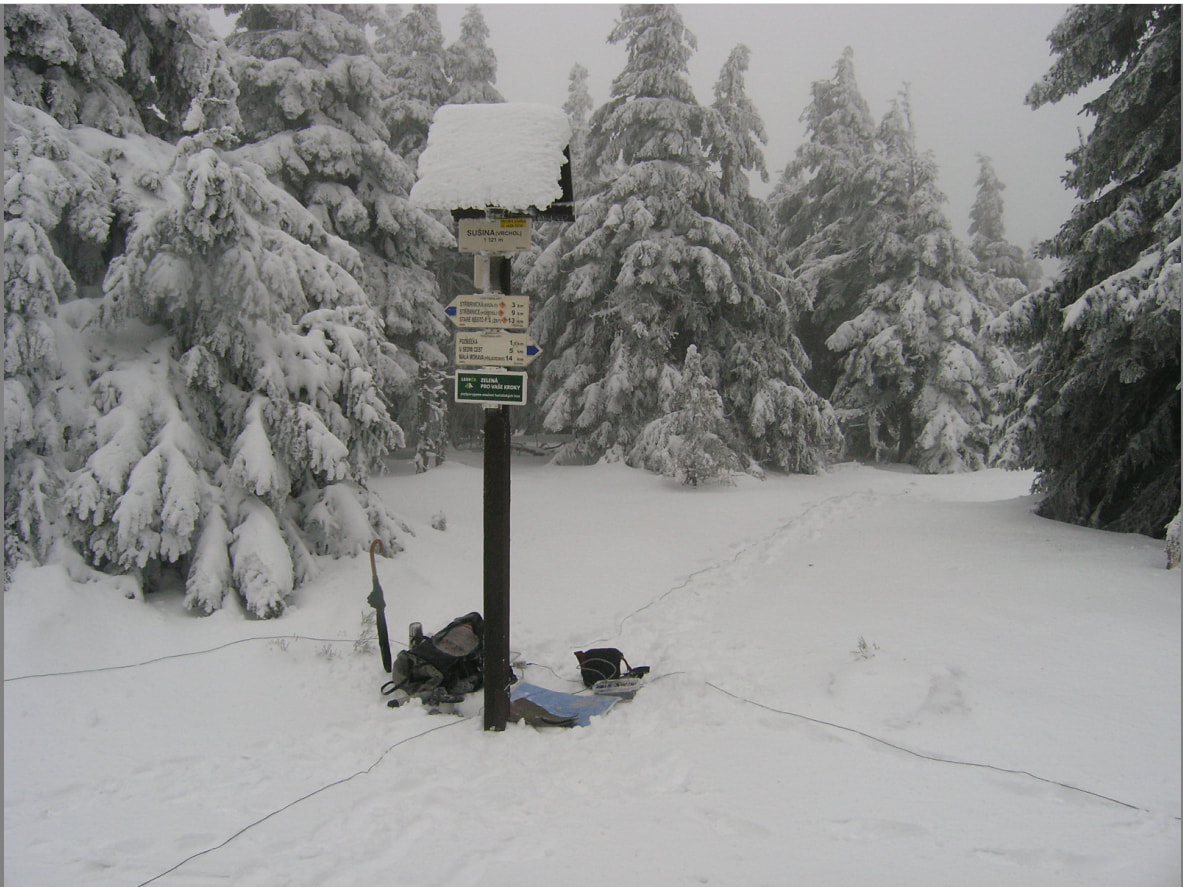
Hi, I can confirm that it works with low impedance antennas. On Kralický Sněžník in a strong wind my antenna fell to the ground and then I made the necessary QSOs for activation. On the next hill I placed the radiator and counterweights on the ground at the GP antenna. Here too the activation was successful.
73 Jan
4 Likes
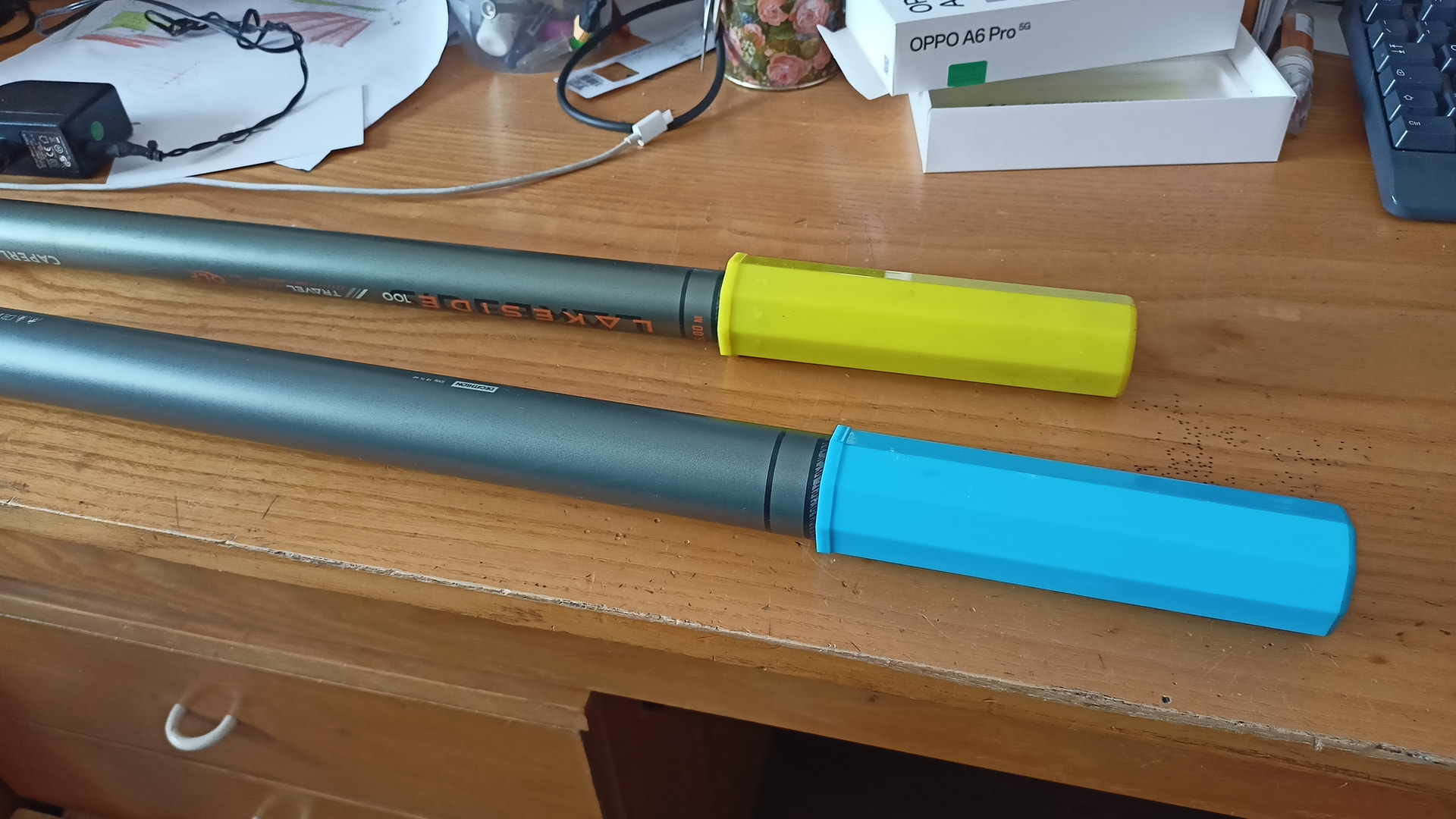
I use Decathlon’s Lakeside poles, fiberglass, for my LW, from which I cut off the plastic ends and fitted them into holders, which have screw-on tips. They’re really handy, both for mounting them in the ground and for using rocks as a support.
5 Likes
I did an activation with a 40/60m fan dipole on a summit that isn’t flat. Wouldn’t recommend or would do again 
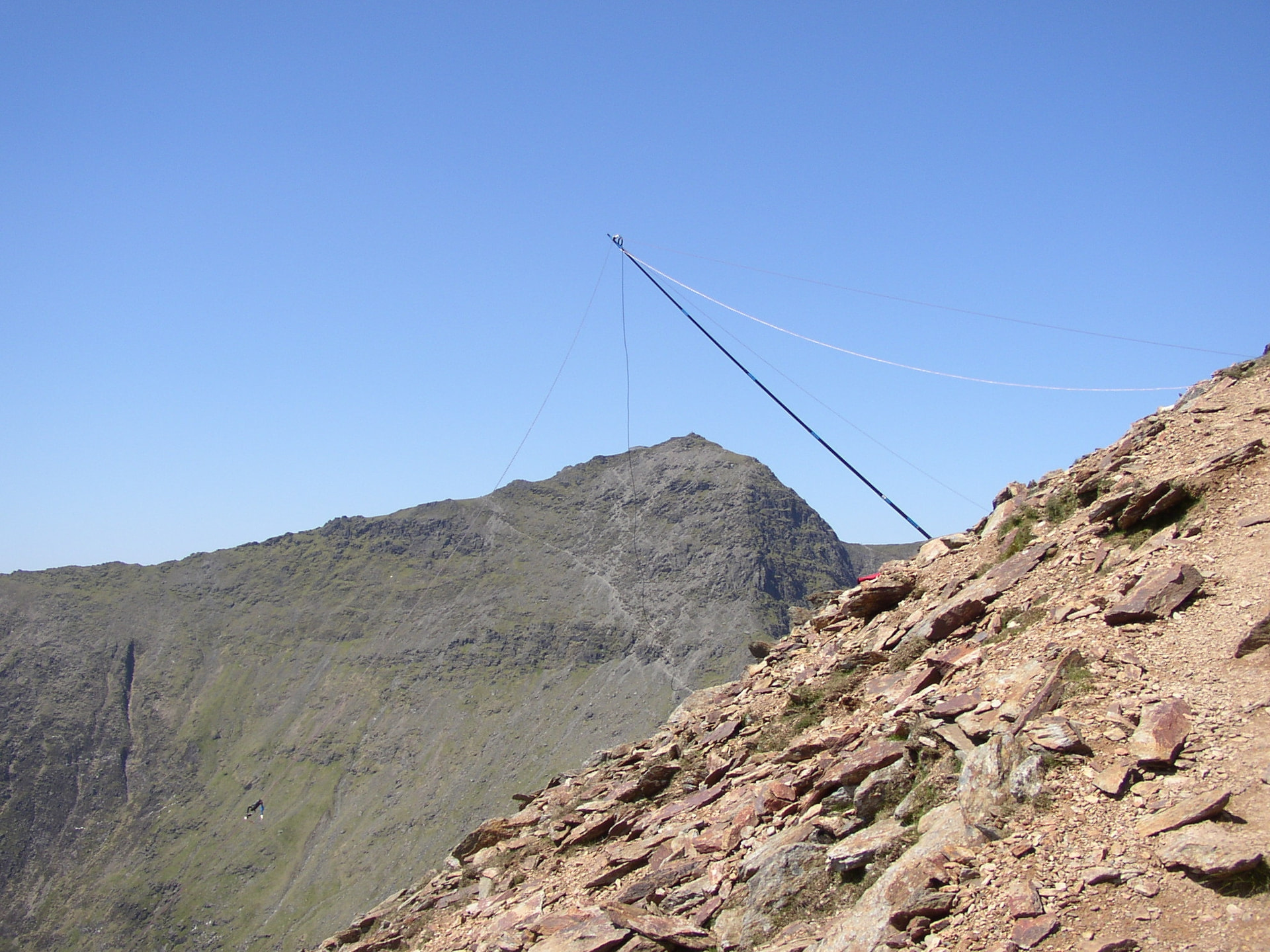
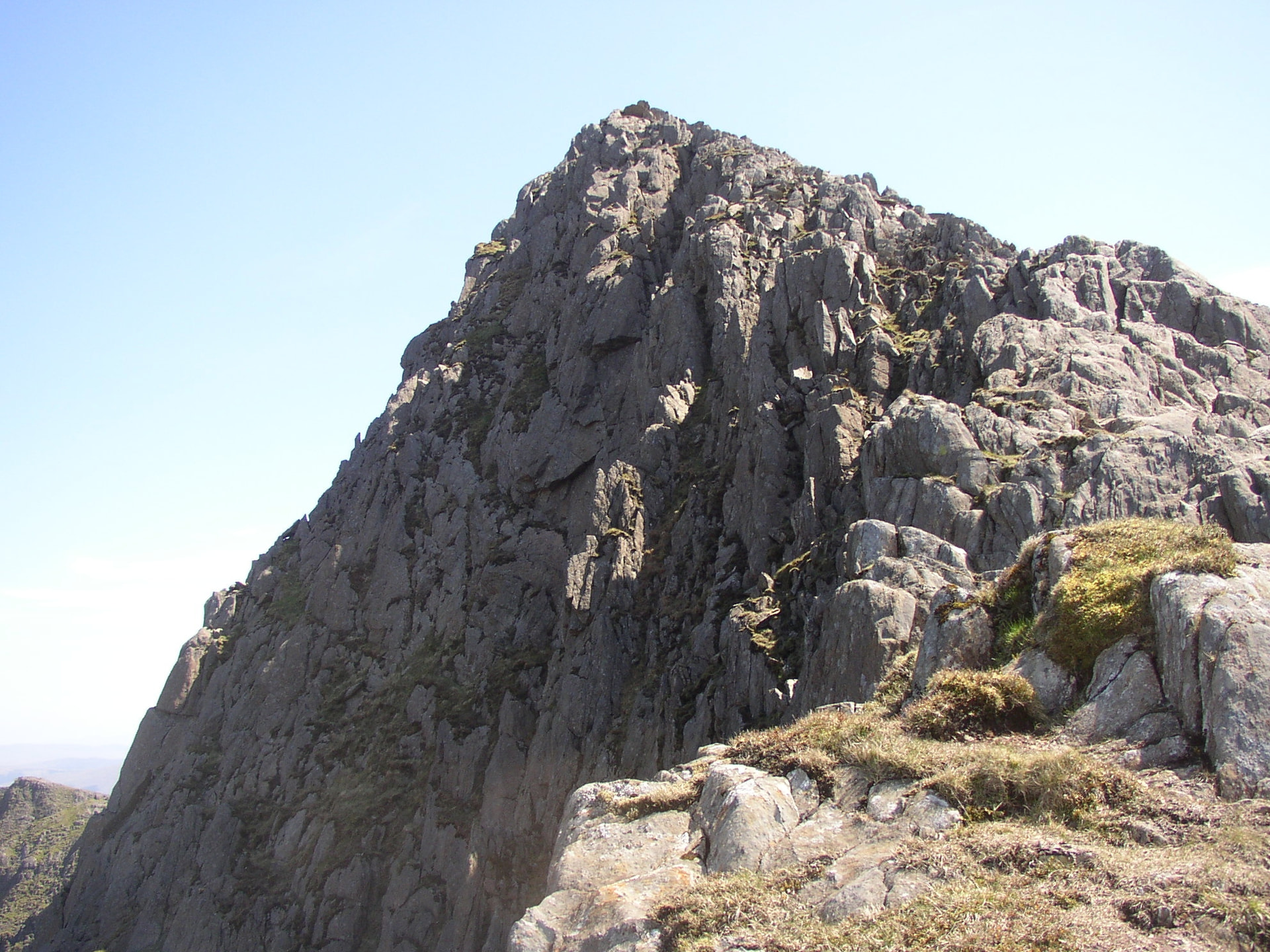
Summit of Y Lliwedd (G/NW-008).
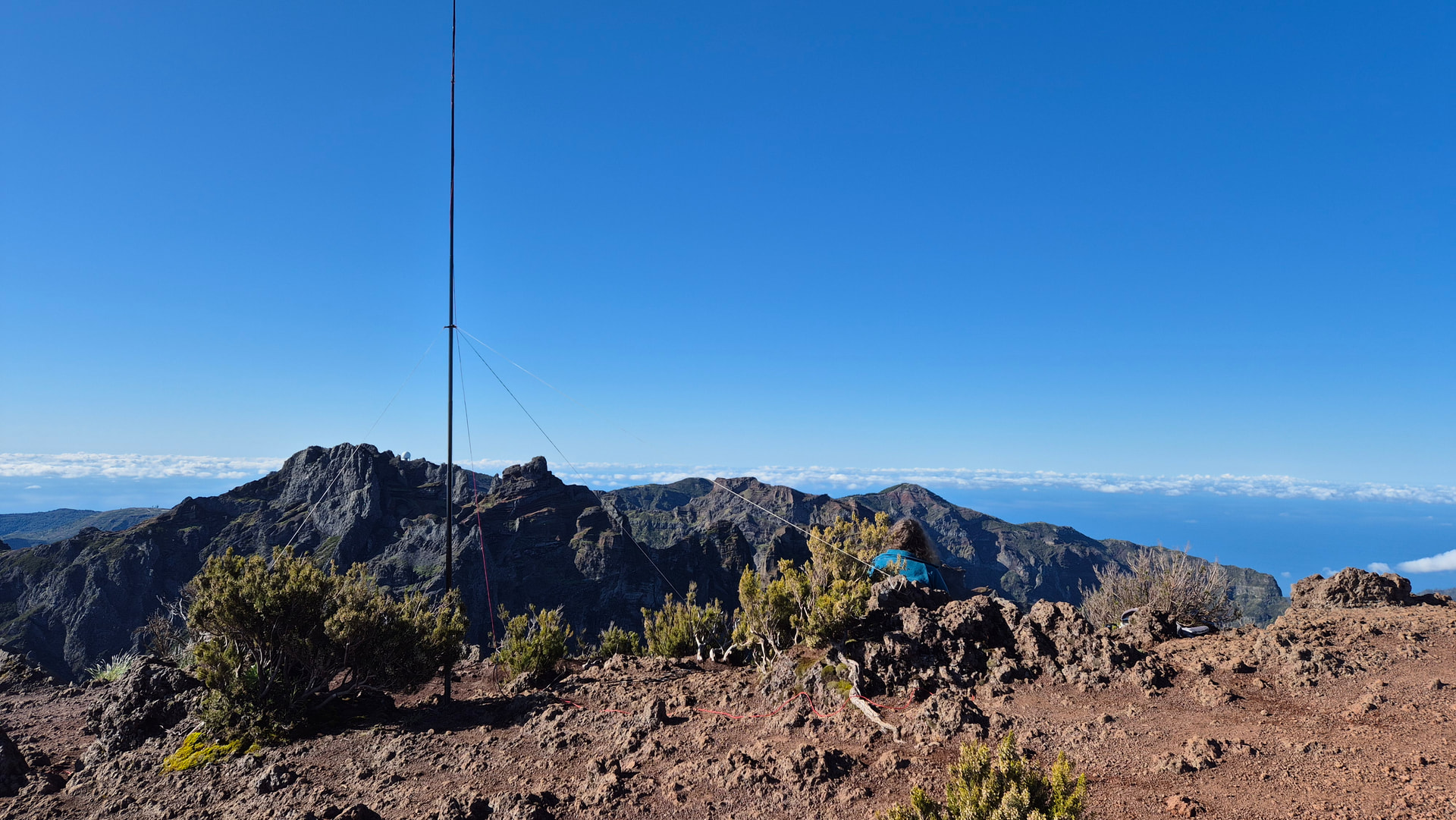
On summits that could be exposed (or busy), I use a very simple 1/4 wave “linked” vertical cut for the bands I want to use. No messing with an additional “tuner”.
20m vertical on Pico Riuvo de Santana (CT3/MI-001). The pole is small enough to carry inside a backpack.
Carolyn
7 Likes
Would you mind sharing the STLs?
The Decathlon 6m Pole is also my go-to for any kind of SOTA activation, be it on forest peaks or high up in the Alps. I love it so much for its compromise of weight, collapsed size and overall height that I even bought a spare one I store on the attic because I was afraid Decathlon might discontinue it one day.
3 Likes
They make the 6m model in fiber glass (530g) and carbon (320g). I saw them in the shop a few days ago. The carbon model looks like the sotabeam carbon 6m I own. If I break mine, I certainly know where to buy a replacement !
2 Likes
“Would you mind sharing the STLs?”
No 3D printing. The holders come from AliExpress, they are very cheap.
2 Likes
I have been using the 530g version and I never take out the last element as I’m afraid it won’t hold the weight and break.
Haven’t been able to find the 320g/6m/carbon version though. Do you have a link for me?
Much appreciated! Will order one and give it a try.
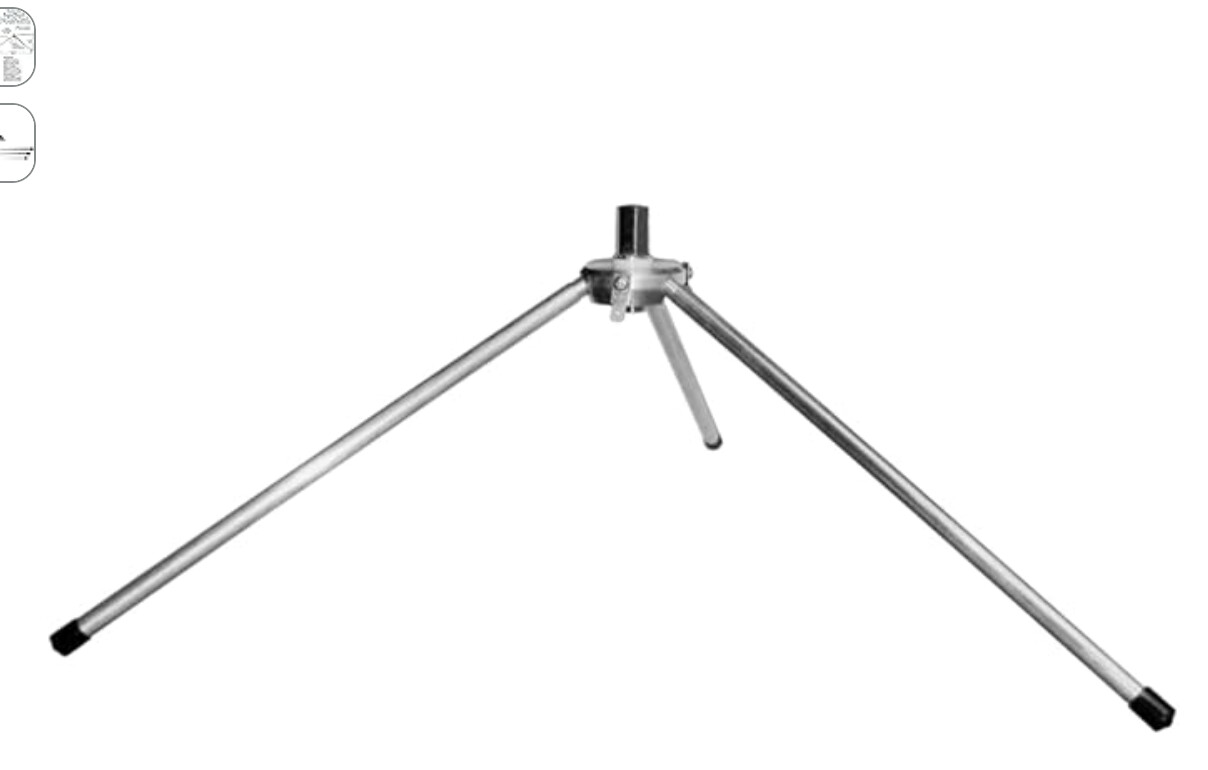
Whilst I usually use a switched dipole on big summits, I am also a fan of the SuperAntenna, this has a spike that goes in the ground or a small tripod for rocky summits. It can be tuned for any band.
The Radio choice is a bit harder. The G90 is my favourite all time rig, but it is not the lightest choice. As you say the 20w is nice to have. A few people have mentioned the QMX. This is a fun radio, but in my experience doesn’t match the performance of the G90. Other choices would be the KX1 a firm favourite on here, but expensive! Other options to consider would be the Xiegu X6100, X6200 or G106. I have a X6100 but haven’t tried the X6200 or G106.
Just a quick note the Decathlon 6m pole(538gm) is lighter than the all be it stronger, Sotabeams one (778gm), if weight is an issue.
Hope this helps.
Martin
1 Like
Hello Mike,
Putting these two statements together, I want to emphasize what Josh @WU7H said about learning and using CW mode.
Forgive me if I’m telling you something you already know: CW (A1A) usually has a 10dB to 13dB advantage over SSB (J3E) - so called ‘process gain’ by virtual of its modulation and narrower bandwidth.
To get the same received signal-to-noise performance of a 5W CW transmission with the same antenna, using SSB, an RF power of 50W to 100W is typically needed. The latter needs heavy and bulky transceiver and battery .
This reflector is awash with the experiences of SOTA activators getting many dozens of excellent 20m and 40m CW QRP QSOs using small, very-light-weight 3-5W CW dual- or tri-band rigs [e.g. Mountain Topper MTR-3B/MTR-4B, QRP Labs QCX-mini] and simple verticals – including small (e.g. ~1.3m-long) monoband whips with a short counterpoise wire.
The entire radio setup could fit in a big pocket and weigh less than 500g. [You can get even lighter solutions but personally I think it’s diminishing returns w.r.t. your total carried weight].
If you are activating on technically challenging summits and / or with tiny operating space, I question why you would want to risk jumping around to erect an EFHW when a whip / vertical has such a tiny footprint and excellent performance. Also, when activating in changeable winter weather, you might need to be able to take down and stow your radio gear quickly.
Keep it simple: focus on weight, stowed volume and speed to set up / take down.
Re learning Morse, ‘A little and often’ is the learning strategy: 15 minutes 3 times a week - no more (you won’t keep it up). In a few months. you’d be at 20+ wpm [but why wait 'til then as chasers will be happy to work you 5-12wpm]
Good luck,
Andy
8 Likes
Hi Mike,
I also have made many QSOs with my 40m dipole on the floor, Particularly on rocky summits I would estimated signals would be no worse than 3 S points lower. Avoid over thinking the problem, do tests, gain confidence, However do learn CW so you can read the chasers callsigns and do not be afraid of building up a callsign over perhaps 4 attempts. My most satisfying QSO is one I complete whilst exchanging 229 reports taking 3 to 5 minutes.
David G0EVV
3 Likes
Following are a few photos of station set-ups on summits with limited space:
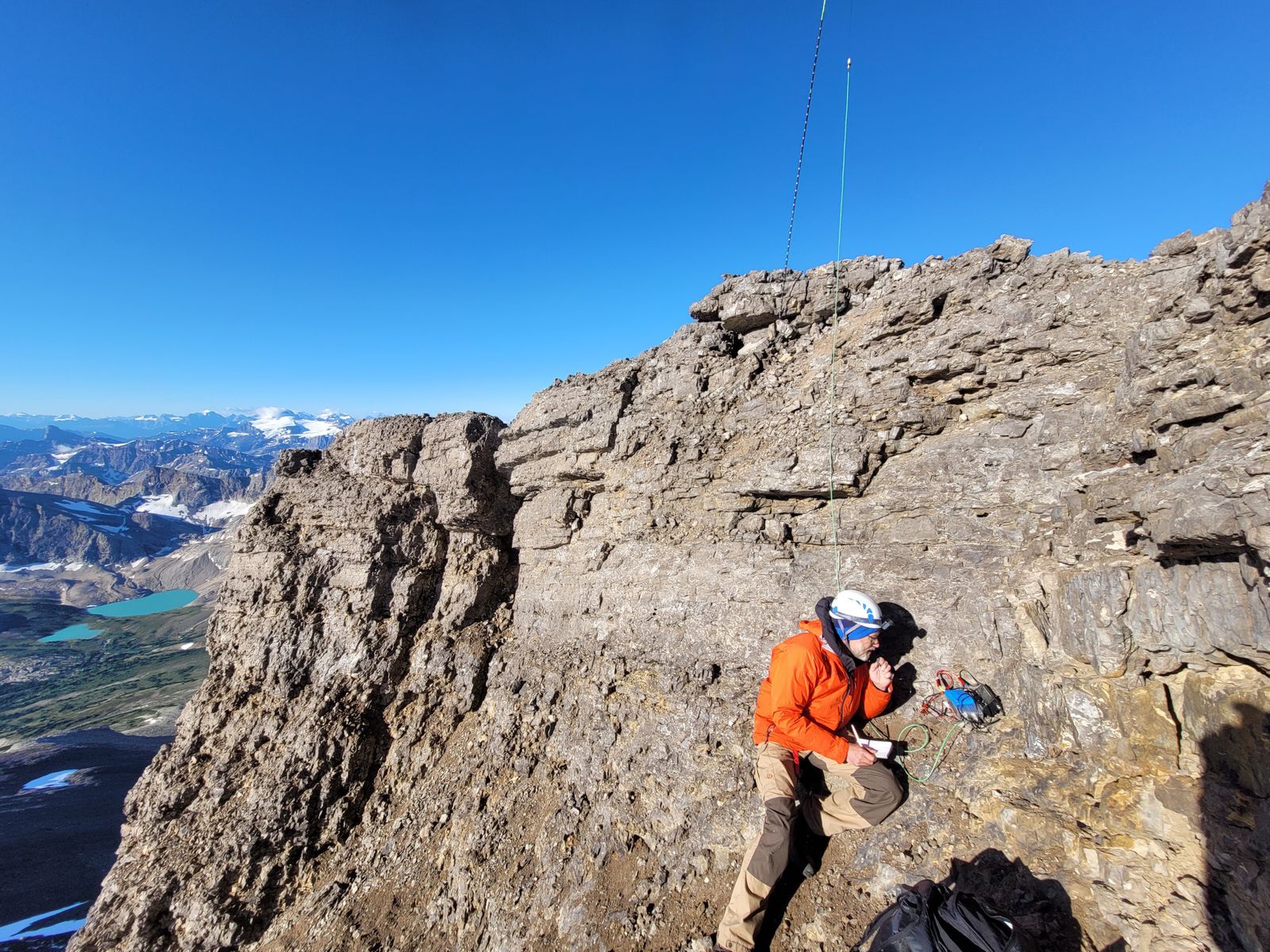
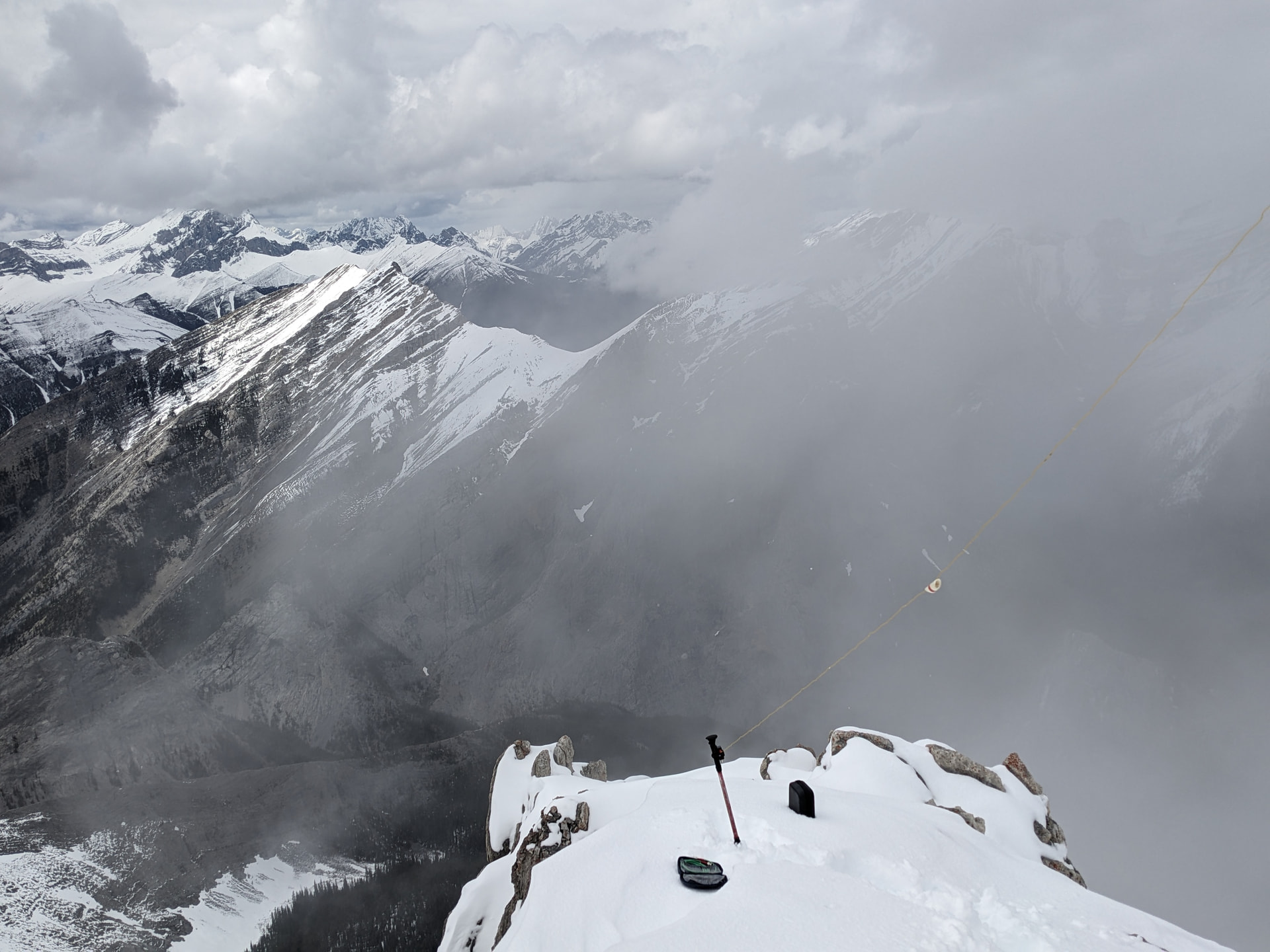
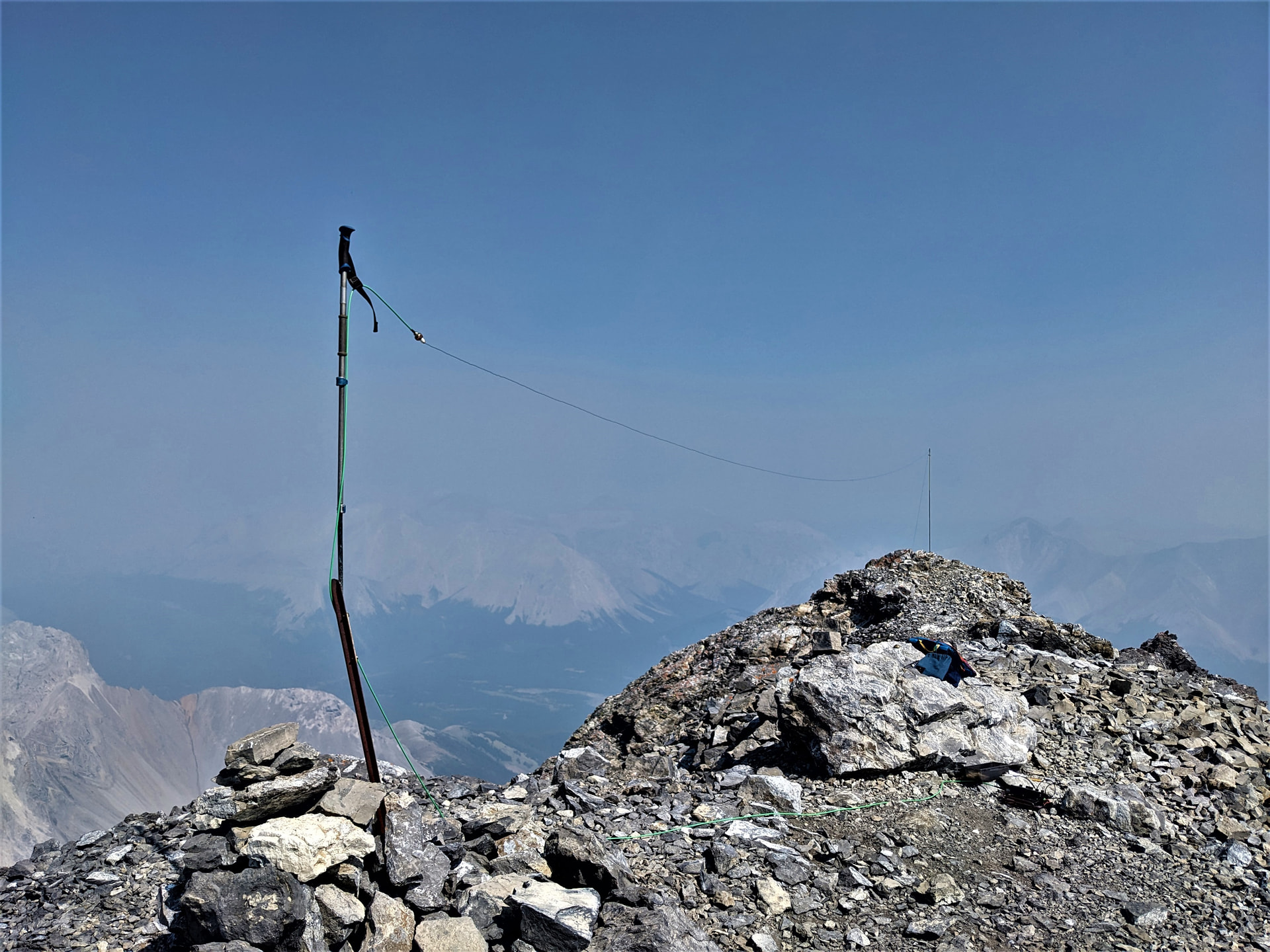
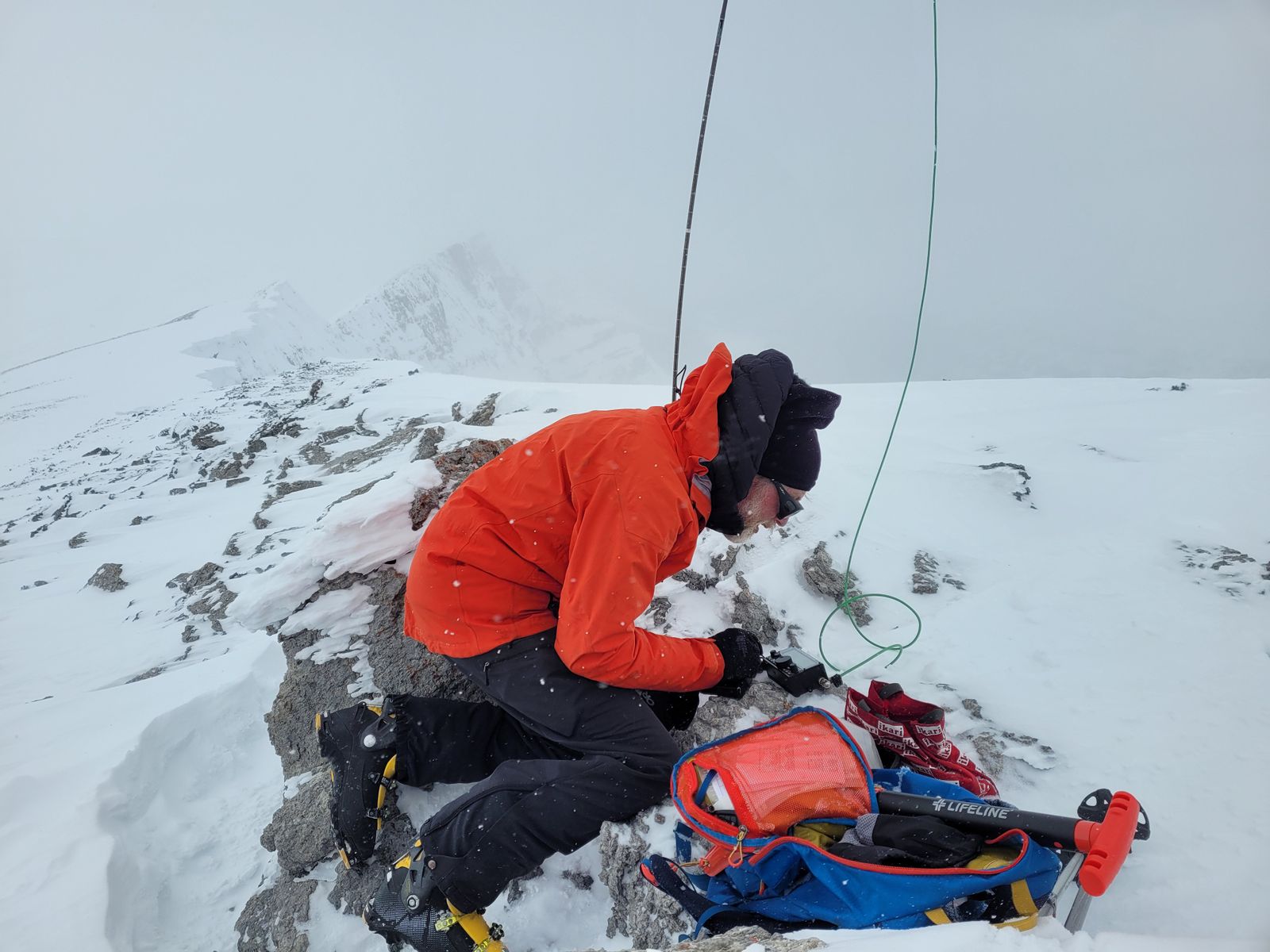
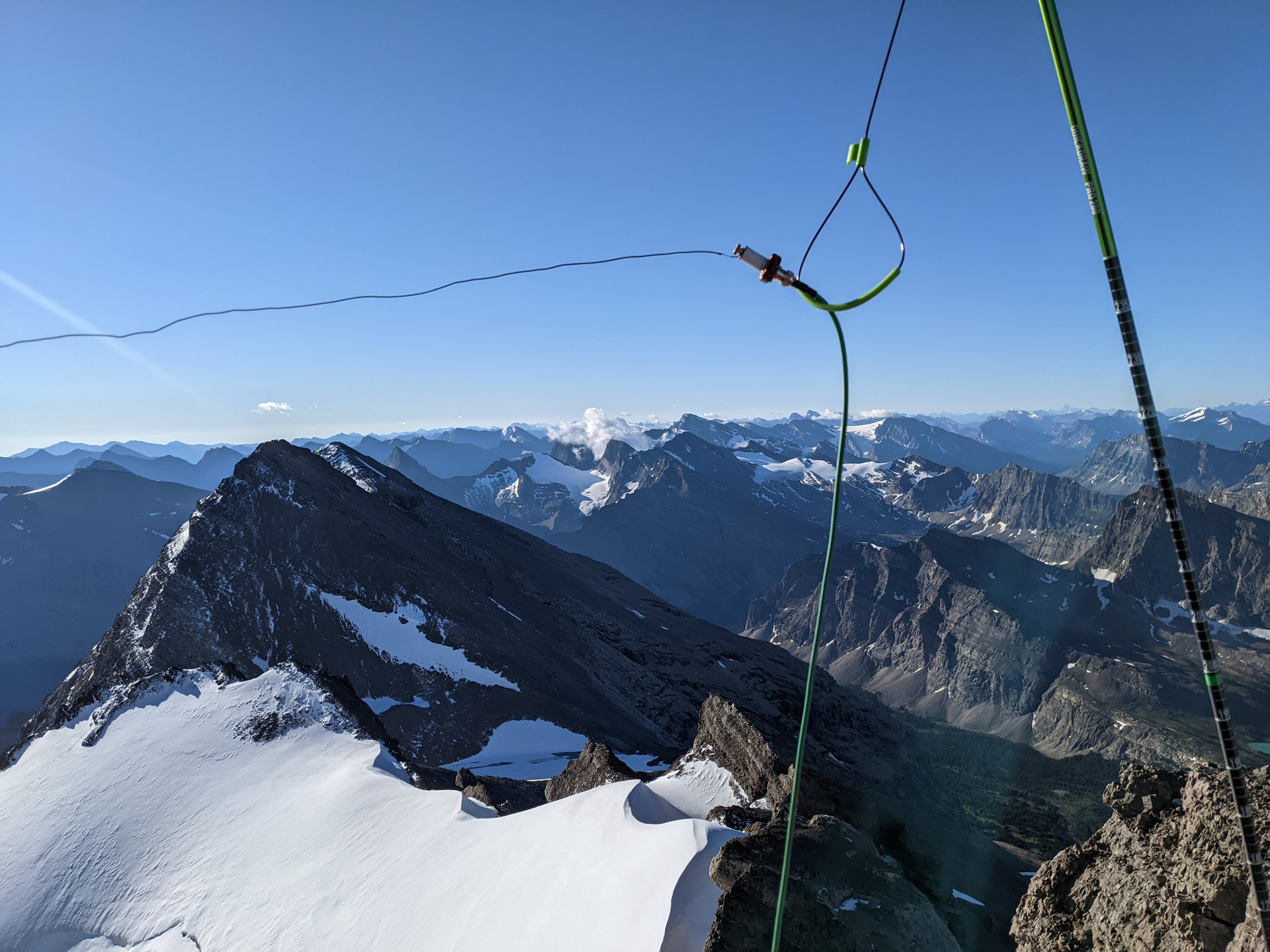
There are a lot of ways to skin the cat if you are creative.
6 Likes
I sat on a tiny wee pinnacle up in the Cairngorms, just because I wanted to try HF from a place not much bigger than my bum.

Rather good fun and went well. I can’t claim any credit for the antenna. It was @GM3GAV Gavin who suggested it.
9 Likes
Hi Mike,
For locations with limited space, my choice is a loaded vertical, such as the Spanish, Komunica Power HF-PRO-PLUS-T and a small tripod and radial wires. No mast, reduced weight, and while it may not perform as well as a linked dipole on a 6-10m mast, you already have the height on a summit. I find the G90 a good choice, but it is not light, and the required battery is also not light, so perhaps you might consider dropping to 5W with one of the many small, light QRP radios. I have had success lately with the G106 and a better (Abree) microphone, working DL-VK on 20m SSB long path. That was with the linked dipole. With the G90 and the loaded vertical from both summits and parks, I have worked VK from DL several times on 20m SSB.
You may wish to build rather than buy, but if you are considering buying, I can recommend the HF-PRO2, I’ve been using it for over 7 years, and its built-in slider acts effectively to match the antenna to the radio, and it just works.
73 Ed DD5LP.
3 Likes
Hi Miguel
First welcome to the SOTA-community  My YL Carine, HB9FZC and I actually came to SOTA also because of our mountaineering background. My-self I made my license 1989, when I was 16 years old, but only when we discovered SOTA by chance 11 years ago Carine made her license, so that she cannot further only write my log, but also go on-air from the summits
  We love to combine big mountain hikes in the Swiss Alps and High Alps with Amateurradio. So also for us the weight and pack size of our equipment is a critical part. On our beginning we started with an FT-817ND and wire-antennas mounted on fibreglass-masts, which wasn’t really funny nor the performance of such setups was really good. 2016 we started with the KX2, which we still use on most of our activations - either with the Telescopic-Whip AX1 for very speedy activations or with “HB9NBGs Clever-Whip Kit”, which is a very smart and lightweight High-Performance Fullsize-solution with a very small pack size. In addition to that SSB/CW-Setups Carine has also the KH1 in her bagpack on our SOTA-hikes, which we use often first of all on very speedy Winter-activations, where we don’t have any possibility to sit down on the summits (wind, space, etc…). Last year we’ve made a short SOTA-video from a nice Winter-activation in the Swiss Alps, where you can see all these setups in action…
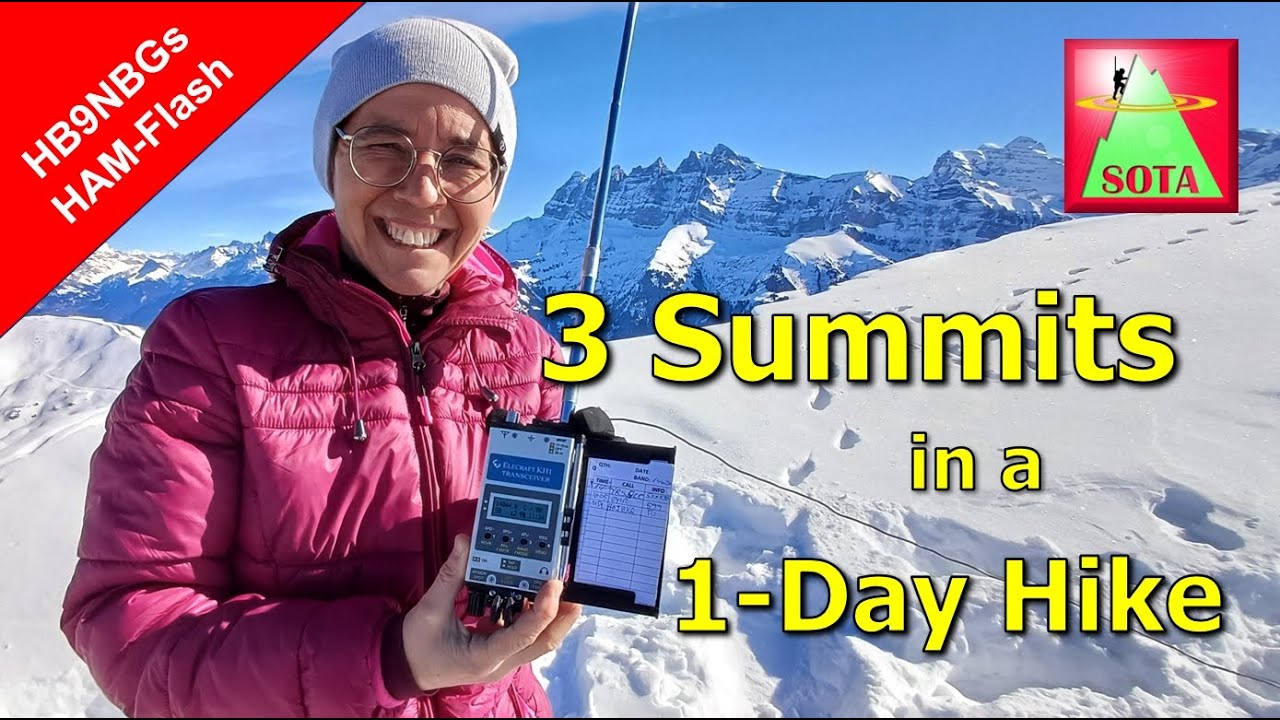
Have fun on your SOTA-adventures!
vy 73 de René, HB9NBG + 73/88 de Carine, HB9FZC
5 Likes
You may have read posts relating to the Trans-Atlantic S2S events where power output relative to battery load was discussed. The conclusion seemed to be that 20 to 30 watts output gave a slight edge over the basic 5 to 10 watts most QRP rigs produce.. FT-817, KX2, etc. This was specifically in relation to getting signals across the Atlantic and not in relation to qualifying the summit. There is a difference!
For many of us, SOTA activations take a lot of time and expense in planning, equipping, transportation and physical effort. We want results for our efforts and in terms of the radio aspect, that means qualifying the summit. When considering what equipment to use it is a matter of evaluating how to achieve this and for technical / exposed peaks I would suggest weight is a significant issue.
I am seriously guilty of over-equipping in order to virtually guarantee qualifying the summit. I recall ascending Ben Lui GM/SS-003 and getting the final part of the route wrong, ending up with an exposed scramble to the summit. My backpack weighed far too much and I was in serious danger of being pulled backwards by the weight. I ran 2m from the summit using my FT-817, a small linear and a 5 element yagi, making plenty of contacts. The rocky summit area did not make deploying an HF antenna easy, so I decided to forgo that part of my plans. Afterwards I descended to activate the adjacent HEMA summit and although the HEMA scheme is much less well supported than SOTA, I had no issues making many excellent contacts on HF. When I went QRT I realised that I had only been running 2.5 watts, the drive level for the linear that I had used earlier. That made me think!
As for batteries, I tend to carry a small capacity battery as a spare. Maybe I am too pessimistic in respect of the reliability of batteries, but it doesn’t weigh much… well that’s my excuse! However, that approach can apply to all our kit. I call it “mission creep” and regular reassessment of what goes into the backpack is required.
3 Likes
As a long-distance thru-hiker, this is the dreaded realization. In the end, you wind up carrying a pile of “just-in-case” items that each weigh only 100 grams but add up quickly. Ten of them make a kilo, and that’s more than the weight of my entire two-person tent setup. Every kilogram beyond 10 kg reduces both comfort and pace, and not just linearly, but exponentially.
8 Likes