Proposal for a VK/ZL<-> UK/EU S2S event (Part 2)

It used to be that when a SOTA chaser heard a weak S2S station trying to call an activator, they would tell the activator they were working to listen for the S2S only. Nowadays, that rarely happens. It never has happened in POTA, and perhaps many of the KW SOTA chasers have come from POTA (or other schemes) where helping the other station is not part of their normal routine. If you are a chaser reading this, please consider the fact that your home station has likely a better antenna and certainly more power than the remote activator on a cold, windy hilltop trying to get an S2S contact, and please help him or her by simply, either when you hear a station calling S2S wait and let them in - or make the contact and pass on that there is an S2S station calling. - Thank you.

73 Ed DD5LP.

10 Likes

Thanks James. I was really chuffed to get you in the log. I didn’t rate my chances as you had so many strong stations calling you, but persistence paid off!

1 Like

I reached the summit, I/LO-285, quite late and didn’t think I’d be able to make contacts with VK and ZL; nevertheless, at 08:30 Z, I completed a S2S contact with VK5CZ using 5 watts and a simple long-wire antenna set up as an inverted-L.

Let’s hope this bodes well for October 17th, when—WX permitting—I’ll be using a quarter-wave vertical with elevated radials.

Fingers crossed :crossed_fingers:

73 Fabio IK2LEY

8 Likes

Happy to work Ian @VK5CZ for a new one with a dipole and 50W :+1: :clap: .

73, Éric F5JKK

3 Likes

Amazing James. You were the only VK that I copied (I think I just missed Andrew VK1AD) on my 40m dipole at 5m via an ATU
 report 419. I didn’t call as most of your callers were 599 with me and I knew that I couldn’t compete.

Well done to all those that participated. My transport is still out of action, but I might manage something on 17th October.

73, gerald

5 Likes

Well that was fun!

I chose VK2/ST-001 Mt Cowangerong 1364m ASL for the winter bonus but also the summit is located along the Great Dividing Range and has an uninterrupted RF outlook, where the departing signal path heads East over the Pacific Ocean for the long path journey to Europe.

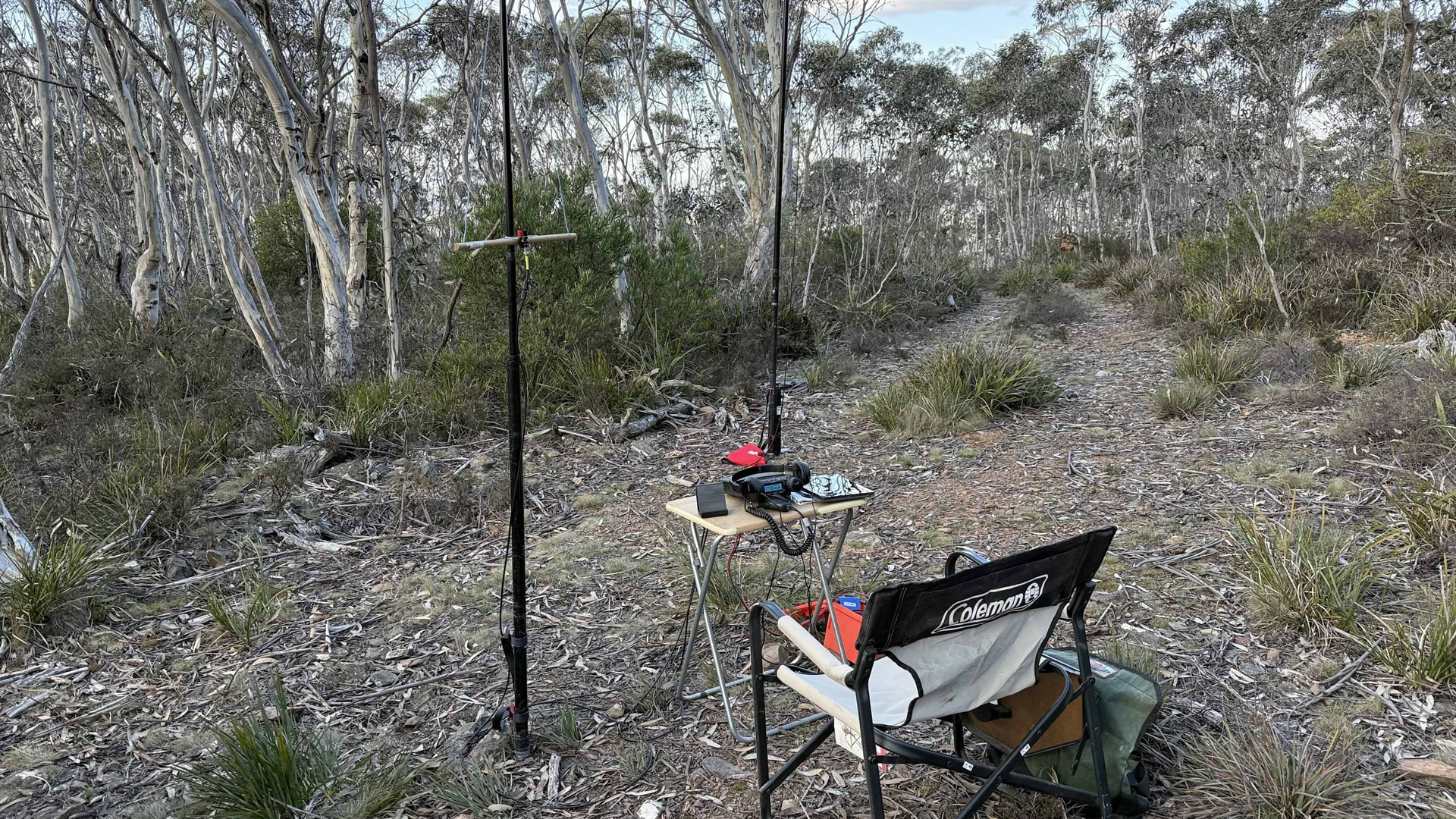
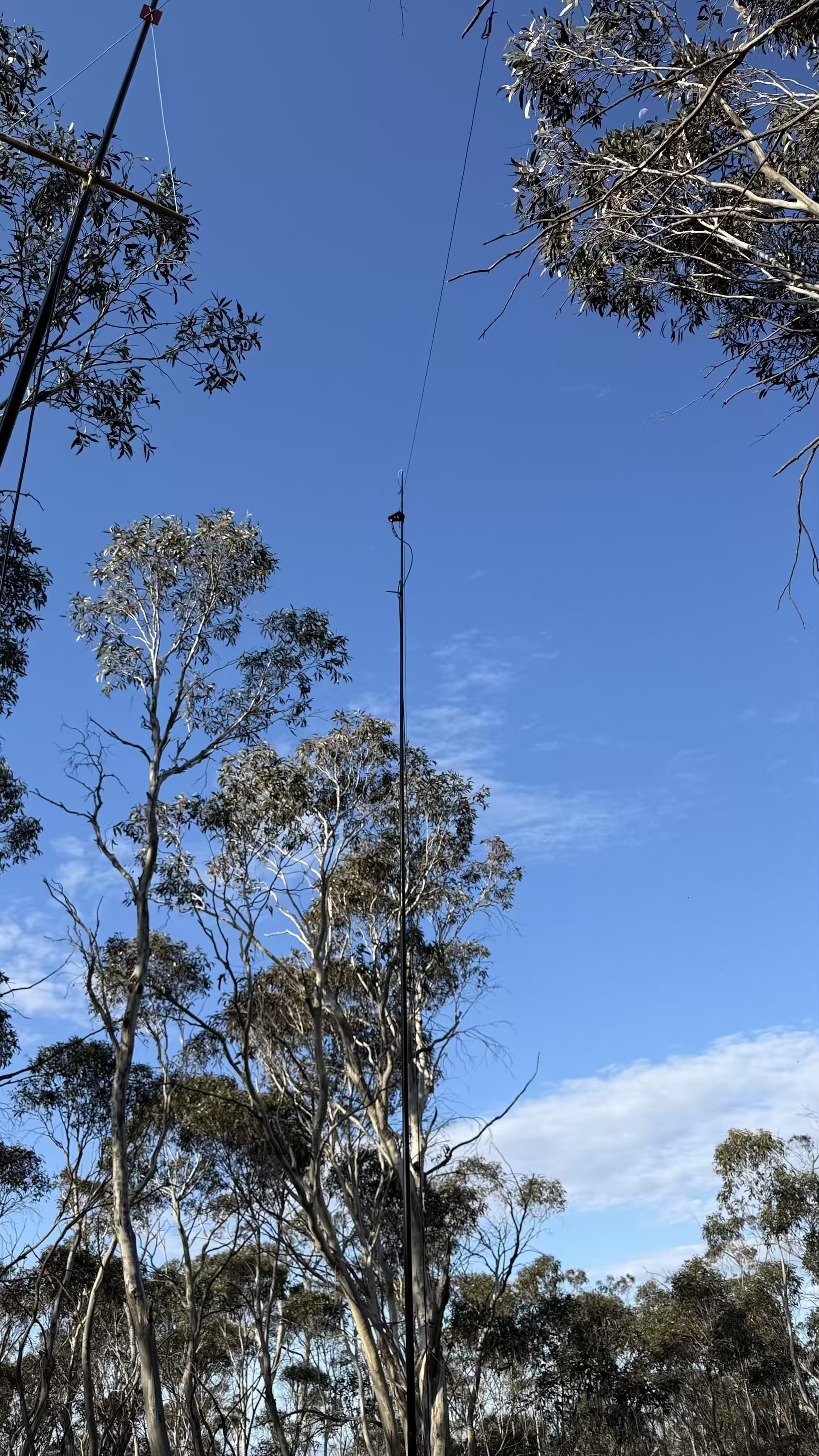
Station: FT-857D @ 30 watts and an inverted V linked dipole at 7m above ground. The ground at Mt Cowangerong is rocky quartz and surrounded by 7 to 10m tall eucalyptus trees, therefore I opted for an elevated antenna.

I started my activation at 04:55 UTC on 2m SSB for local VK1 and VK2 contacts followed by a short 40m SSB session with VK chasers. 2m SSB S2S included Andrew VK1DA and Tom VK1CAT.

At 05:48 UTC I saw a spot from Roman DL3TU at DM/BW-099 on 14.290 MHz. I concluded my 40m session and moved to 20m. There was Roman 5-6 easy copy :slight_smile: at 05:51 UTC. As Roman mentioned we had a chat for 4 or 5 minutes covering our respective station operating conditions and local weather reports. How cool is that! 20m LP propagation was well and truly open.

I was fortunate to work all of the potential EU S2S who had posted Alerts and picked up a couple of S2S surprises along the way, which occurred in the following order:

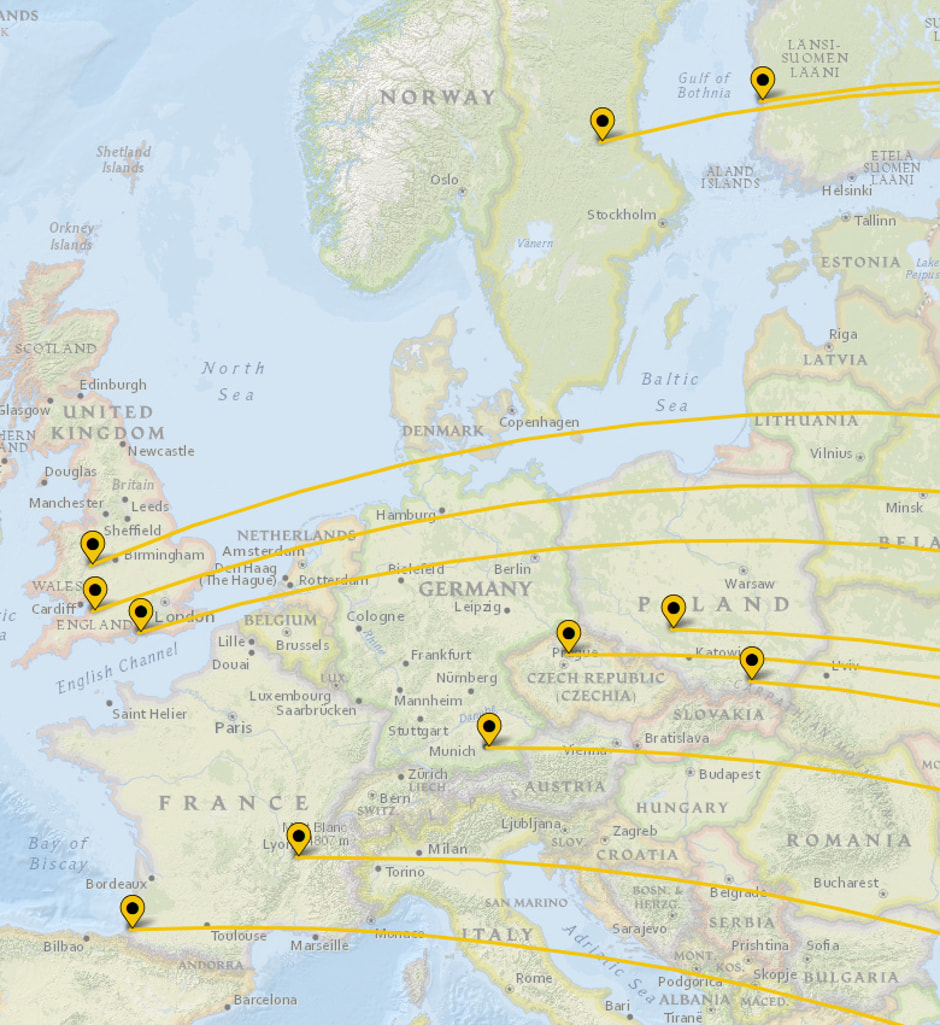
EU S2S: Roman DL3TU, Herbert OE9HRV and his two guests Simon OE9SSV and Thomas OE9TBI, Ed DD5LP, surprise Martin HB9GVW, Tim G5OLD, Remy F4LEK, Simon G4JXP and another surprise Thomas OE/DF7TR/P. Tom’s alert was for CW, I didn’t expect a SSB S2S!

Later in the 20m LP session at ~07:00 UTC, I had follow up conversations with Roman and Herbert. Signals were holding at 5-5.

At 06:34 UTC the 20m RF path opened to Japan for QSOs with JG0AWE, JO2TNW and 7N1FRE.

A couple of notable mentions. Mike M9MMM (ex 2E0YYY) called from a local hilltop for a 5-5 report. Great to chat with Mike :slight_smile: and Chris F4WBN a permanent chaser of VK summits was booming in with a 5-9 +10 signal :slightly_smiling_face:

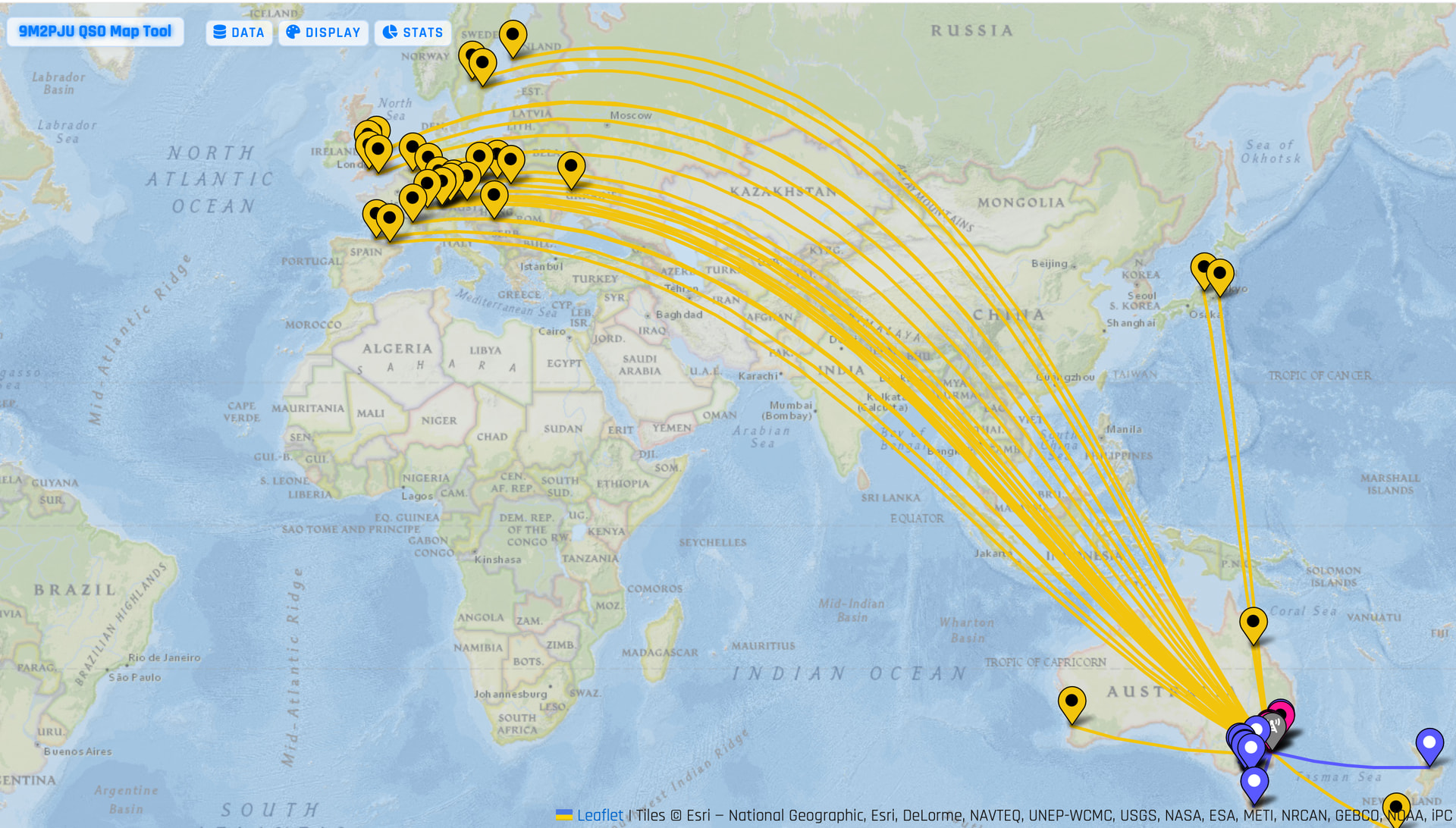
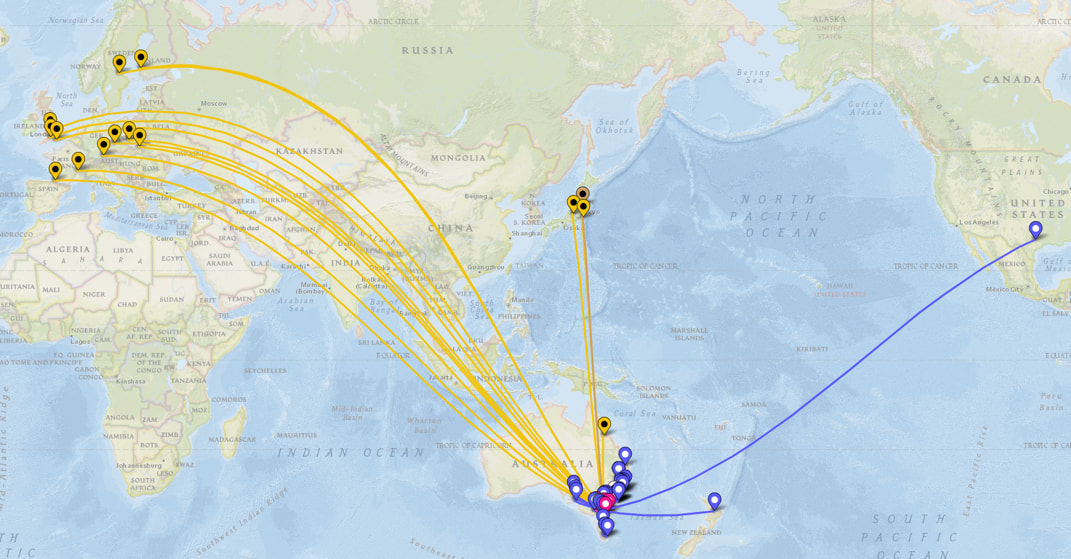
Summary: 8 EU S2S, 31 20m Dx QSO, three from Japan and one ZL. Two 20m VK QSOs and four VK S2S on 2m and 40m SSB respectively.

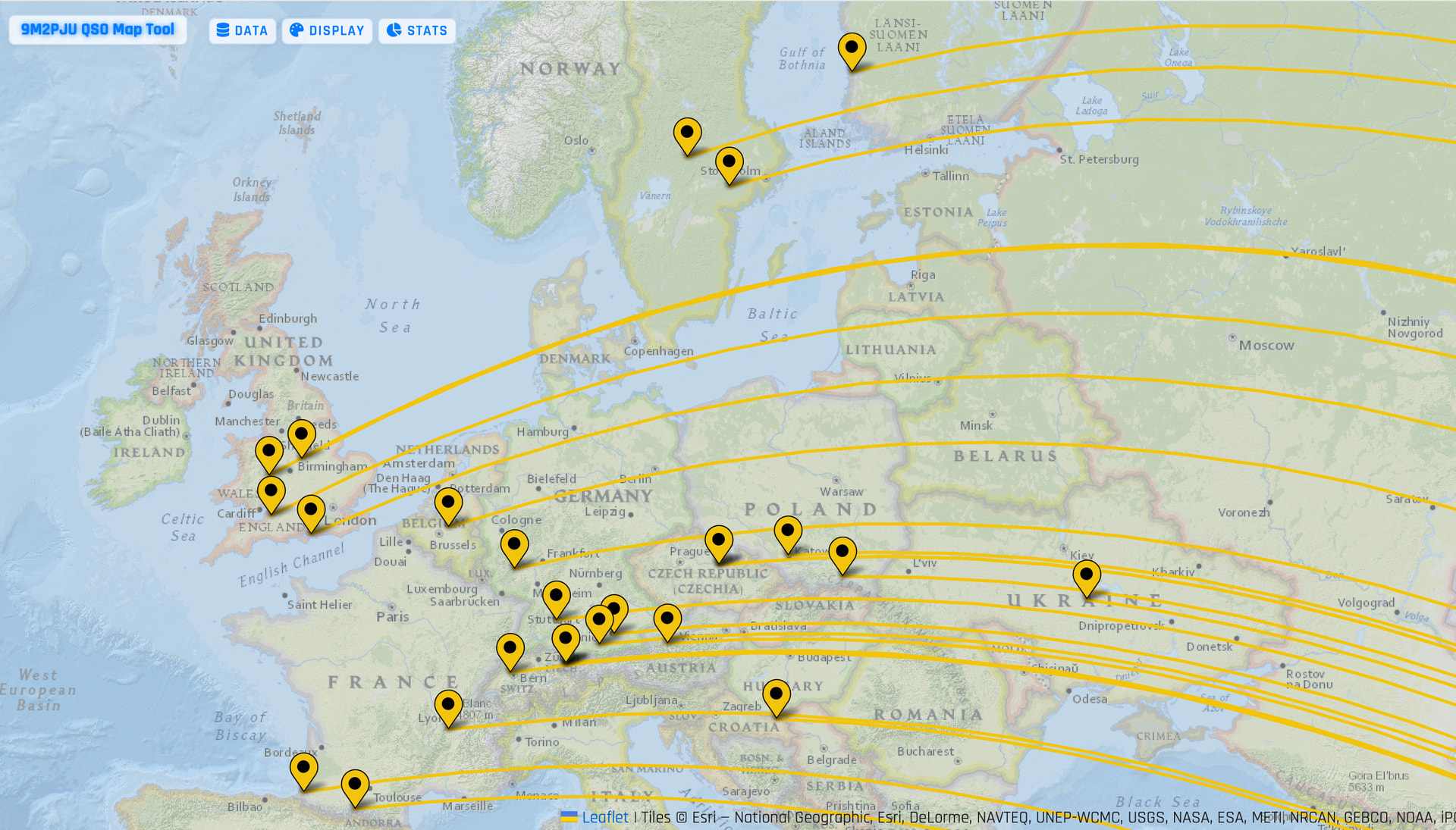
Unique countries worked in order: Germany, France, Poland, Czechia, New Zealand, Finland, Austria, Switzerland, Sweden, England, Ukraine, Japan and Croatia.

QSO map courtesy of 9M2PJU

Thanks to all of the S2S participants and the now regular SOTA chasers. Hope to work you all and potential new stations on 17 October. :slight_smile: Get the word out, 20m Long Path propagation is real and not something to be ignored or dismissed by a less than helpful VOACAP propagation prediction tool!

Andrew VK1AD

16 Likes


yes, it was great fun and I enjoyed it, especially 20m. Interestingly, I worked Peter vk3zpf yesterday testing his double Hour Glass antenna. It worked great and appeared to have a greater signal strength!

Geoff vk3sq

4 Likes

A spring day of SOTA September 2026

I decided on Saturday morning to head out for a multi-summit day. The forecast was for a fine Spring Day, but with some stronger winds. The plan was to attempt 4 summits, with a longer WWFF activation at the second summit. The other 3 summits are located in State Forests.

The first summit was VK3/VT-083, reached after a drive of just under 2 hours. I made a total of 68 contacts, with 13 contacts on 2 m SSB, plus 3 contacts on 2 m CW. This included 2 S2S contacts on 2 m SSB, and finishing off by chasing ZL1BYZ on 15 m CW and JP3DGT/3 on 10 m CW for S2S contacts. I closed at about 0045Z, to pack up and head to the next summit.

Next was Mount Useful VK3/VT-016, and 8-point summit in VKFF-3800. I was set up and ready about 50 minutes after going QRT on the first summit.

Here I made 112 contacts, with 18 on 2 m SSB. The tally included 7 S2S and 10 P2P contacts. I closed at 0345Z.

Next was Mount Selma VK3/VT-013. On arrival, I found Peter VK3ZPF still on the summit and working a station to the west. Peter and I had a chat about some of his and my antennas. I helped Peter to pack up his station and then started to set up my 2 m station: an IC-9700 to an Hourglass antenna. Peter departed for Mount Lookout.

My first logged contact was at 0502Z. Despite the Spring VHF/UHF Field Day Contest being in full swing, it was difficult to attract attention from the contest stations: they did not leave any breaks between overs when chatting amongst themselves! I made 14 contacts on 2m SSB over about 45 minutes before I gave up and packed up to head to the final summit for the day. Peter VK3ZPF had still not reached his next summit, and I hoped that I could catch him from my next summit before he closed.

Connors Plain VK3/VT-022

Once on the summit, I immediately set up the 2 m station. When I switched on, I was rewarded with hearing Peter VK3ZPF on VK3/VT-30 in the middle of a contact. Peter was soon in the log at 0633Z. I moved up the band and soon had more contacts logged on 2 m SSB. I looked on 2 m and on HF for other stations in the broader VK1 region, but none were heard. In between contacts on 2 m, I tossed a line over a tree branch and strung up the doublet antenna for HF, running roughly N-S. Several minutes on 40 m SSB produced 7 contacts. I could see from the Spots page that 20 m was busy, so I quickly moved to 20 m and started looking for spotted stations. First worked was Simon G4JXP/P on G/WB-012. I looked for other current spots, but could not hear the stations due to QRM on what was a busy band. I moved up the band and spotted. The callers were soon calling over each other
 Amongst the 14 worked was Tim G5OLD/P on G/SC-003. A Spot dragged me back to 40 m SSB to hunt Jim VK7JZ and Travis VK7VXT, both on VK7/WC-003 in VKFF-0347. I changed to a clear frequency, and worked 18 stations quickly. One of the callers was keen to try 2 m SSB, so I moved back to that band. In my rush, II incorrectly spotted as 14200 kHz, instead of 144200 kHz. Apologies for those that went looking for me on 20 m! I soon had 3 contacts logged on 2 m. I then hunted Naoto JF7RJM/p in JAFF-0161 on 15 m CW. I then tried 40 m CW, making 12 contacts, including S2S with Ian VK5CZ on VK5/SE-015. When the callers dried up, I spent a few minutes calling on 2 m SSB, working one contest station only. I switched off at 0810Z, with the light fading.

I finished with a total of 74 contacts from the summit. After packing up, I had a long winding road until I reached the flatter lands, and reached home at around 0830Z.

The entire day had been fine, but was cool in the morning – around 11 C when I reached the first summit. The wind was strong all day, making the apparent temperature much lower. At Mount Selma, it was around 13 C without windchill. As the sun approached the horizon in the afternoon, the temperature again dropped rapidly.

Thanks to all who called. It was a fun day out in the hills.

QSO Maps for Connors Plain below courtesy https://qsomap.m0trt.radio/

10 Likes

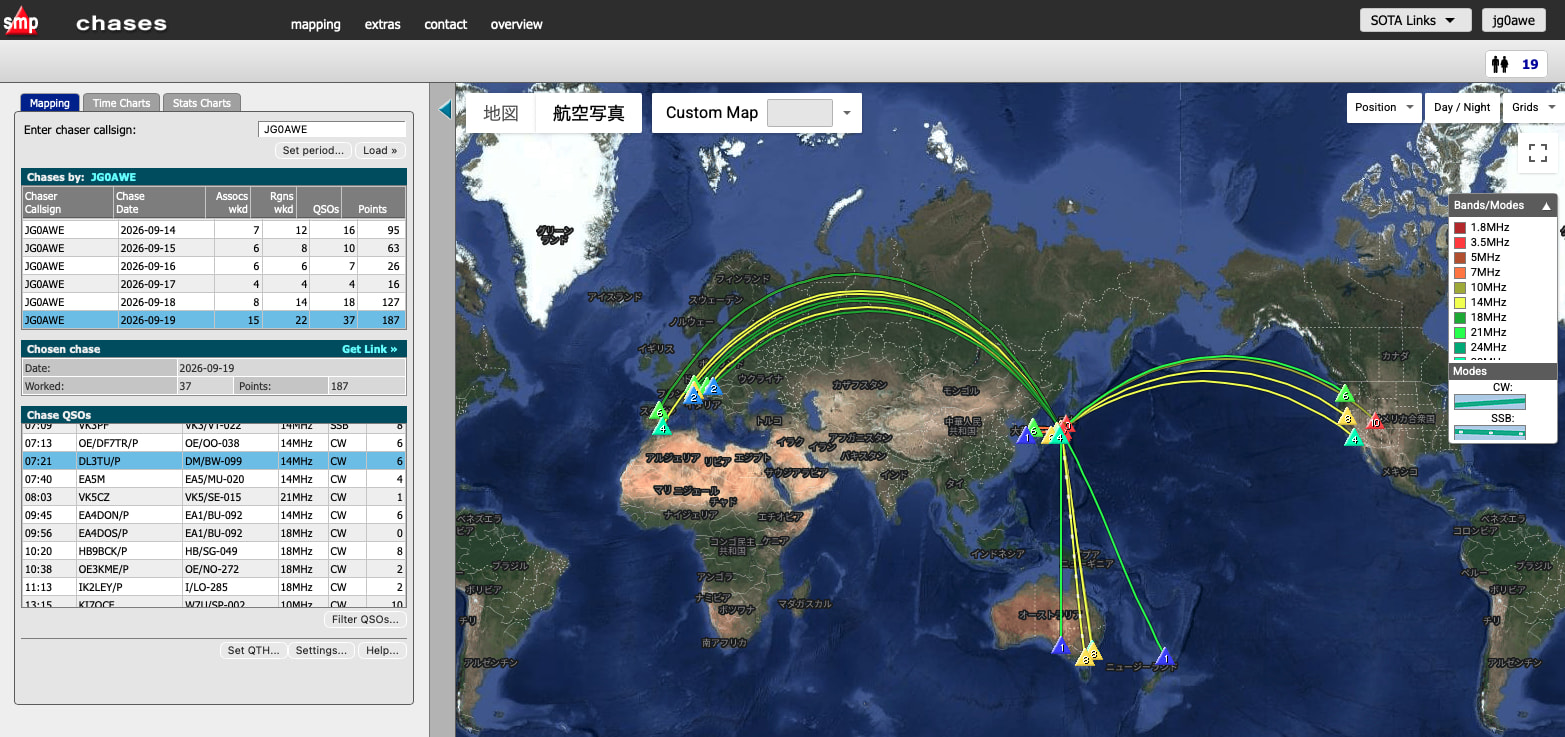
Thank you for the wonderful QSOs yesterday.

I was glad to chase SOTA stations in Oceania, Europe, and North America."

We’ve had bad weather in Japan lately, so I haven’t been able to do any SOTA activations.

Next week, I’m planning to spend a bit more time in the mountains and finally get back into SOTA!

GL & 73,

de JG0AWE / WAKA

14 Likes

Hi Andrew,

We have discussed this locally of course but I thought it worth mentioning here that the default in all those VOACAP propagation maps is the short path (SP) rather than the LP as the alternative. The maps therefore show the short path when in practice it actually is the LP in use at that time of day. The LP has nearly all the path in darkness as the sun is just setting on VK/ZL and has just risen in EU. The progression of the opening from the East (Russia, Poland etc) through to the western EU countries (Sweden, Norway, Denmark, Finland, Germany, France, Belgium, Netherlands, Spain, UK, Italy Greece, Bosnia and many others - list not in order of west-ness) tracks the rising of the sun, which in both parts of the globe progresses from east to west.

So to use the LP those of us with directional antennas beam south east from VK/ZL and those in EU beam south west rather than the north east suggested by the SP path on the maps. VOACAP has a lot to answer for, confusing the issue rather than clarifying it. It shows the shortest path between the two points, which is always the short path, not the actual path taken, which under these conditions is the long path, at 180 degrees from the short path.

73 Andrew VK1DA/VK2DA

5 Likes

For this event I set up at a local WWFF park (VKFF-0092) early in the day with the hope of making some S2P contacts as well as qualifying the park. Ended up working 16 EU stations (9 CW, 7 SSB) including two summits. First EU SOTA was @DL3TU worked on CW though he was a good copy on SSB earlier chatting to @VK1AD. Then I worked @DD5LP on SSB with a lot of repeats. It was great to contact Ed again after a 4-year gap. Also tried SSB with @G5OLD but my callsign didn’t make it through. @OE9HRV was heard too but low down and with a lot of callers. I was using an IC7300 and ZS6BKW doublet which I probably should have rotated 90 degrees for the event. For the October S2S event I hope to be on a summit.
Thanks to all the activators for taking part!
Cheers, Gerard - VK2IO

5 Likes

I saw your spots but couldn’t hear you on 20m. in “skip zone”.

nice to have 20m LP again


1 Like

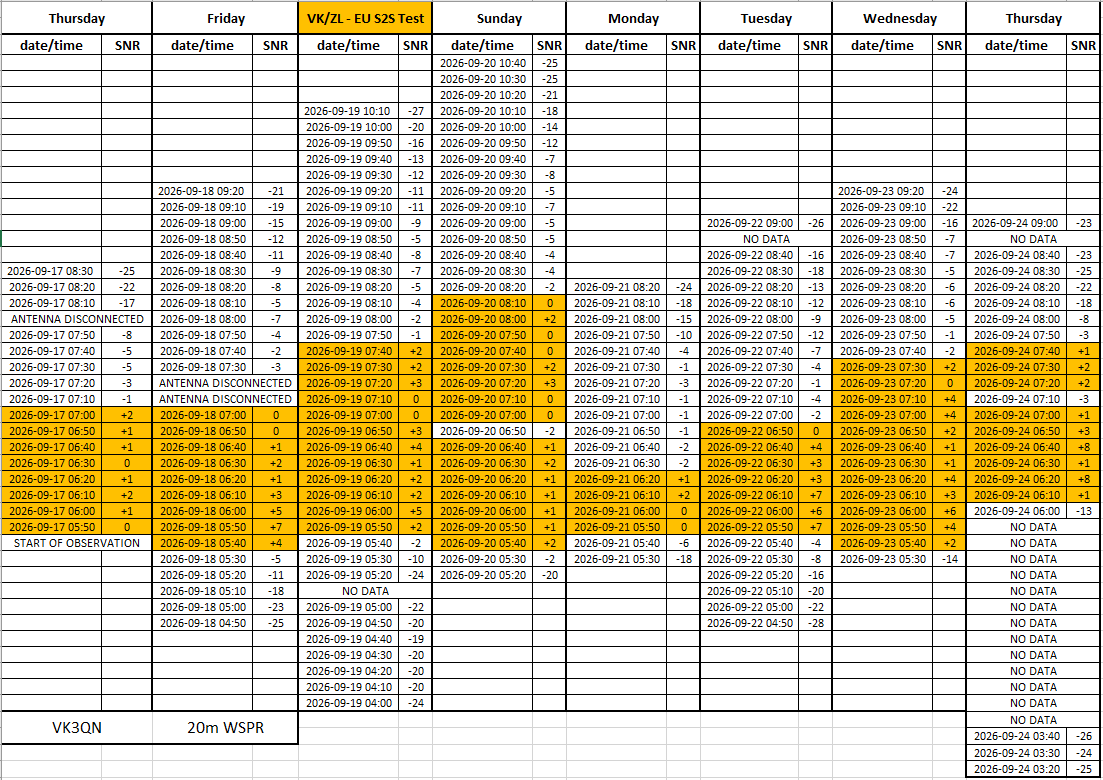
I’m monitoring VK3QN on WSPR for about a week now, using a vertical on the roof and a Red Pitaya WSPR Rx. VK3QN is transmiting every 10 mintues and can be received here reliably. Their working conditions are excellent (from QRZ.com): “The equipment is a QRP Labs kit running 5 watts. The antenna is 6 over 6 mono band 20M yagis beaming down a long slope favouring long path to Europe.”

I highlighted in yellow the time slot during which I heard signals on the LP last Saturday and noticed that it coincided, pretty much, with the values for a positive SNR of VK3QN.
I have now marked the time slots with positive SNR for all the other days, on the assumption that the local noise level at my home is more or less constant.

It seems the LP “switches on” rather quickly → SNR increases by 10..20 dB within about twenty minutes more or less at the same time (currently around 5:50 UTC).
It fades slowly over at least one hour, starting in average at approx. 7:00 UTC but there is quite some variation.

Times for other locations may vary but maybe you can find a WSPR station near your QTH to get an idea when the LP opens.

73, Roman

8 Likes

As we are at equinox, the possibility of contacts between UK/EU and ZL/VK are greatly increased via greyline on 40 & 80m at the moment. Timing is around the same as 20m LP in Roman’s chart, 0600 - 0700 UTC. Or at least in theory it should be - I’m going to test that theory out tomorrow morning.

73 Ed.

2 Likes

Just for fun :joy:. Thursday , I will activate Mt Stromlo on 20m SSB with a QMX and an inverted V dipole at 7m. I will start at 05:50 UTC.
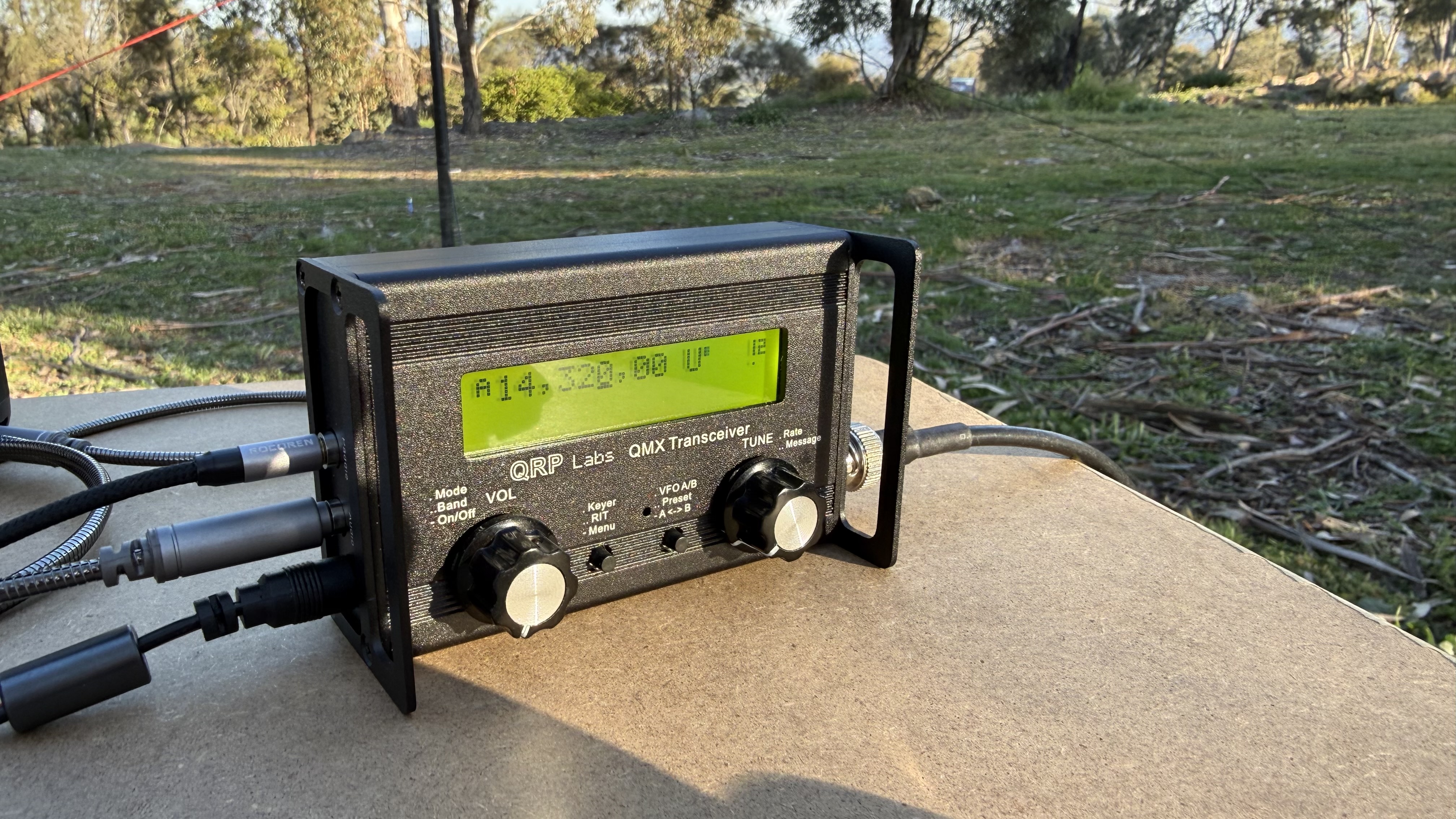
I’m hoping Chris @F4WBN can pull my signal out of the noise.

Andrew VK1AD

5 Likes


hi Roman, what is the frequency for wispr that you were listening to?

Geoff vk3sq

I’ll also take a look for you during my 40m tests, but it will be from a park rather than a summit, so just a normal portable chase, not an S2S if we manage it.

73 Ed.

2 Likes

If you run WSJT-x and select WSPR mode, a selection of standard frequencies can be used.

Many weak WSPR signals are so weak that you can’t hear them by ear.

Hope this is useful.

Andrew

2 Likes

Throughout this week, I’ve had several chasers from Japan during my POTA and SOTA activities—specifically on the 15m band between 10:00 and 12:00 UTC.
It is definitely worth listening on 15m as well.
73, Chris

2 Likes

So far 9 EU contacts at QRP plus 3 ZL

9 Likes