Lets face, we’ve all been on this ride more than once when it comes to LiPo batteries for the FT-857…. (these SOTA posts are just some examples! Link1, Link2, Link 3)
I took my FT-857 on Snowdon / Yr Wyddfa last weekend and had some nice SSB contacts on 2m with it. I’ve been using the golf battery solution to date (Ultramax LI18-12G), an awesome battery for a long activation, but at 2.2kg it’s pretty hefty; My legs are still sore from the walk after 5 days! In the end I curtailed the activation as the cloud base was below the summit and I was cold. I expect I used 1 or 2 Ah from the battery in total. It just seemed I needed something smaller and lighter so I went back over some old ground to try and find a better solution for this sort of activation, but was quickly trapped by the same old issue; 3S LiPos voltages drop too low for the FT-857 spec (which could result in final damage from drawing excessive current, I believe) and 4S LiPos voltages are too high when fully charged at 16.8V (requiring a voltage drop diode or other circuitry). I thought I was on the same merry-go-round until….
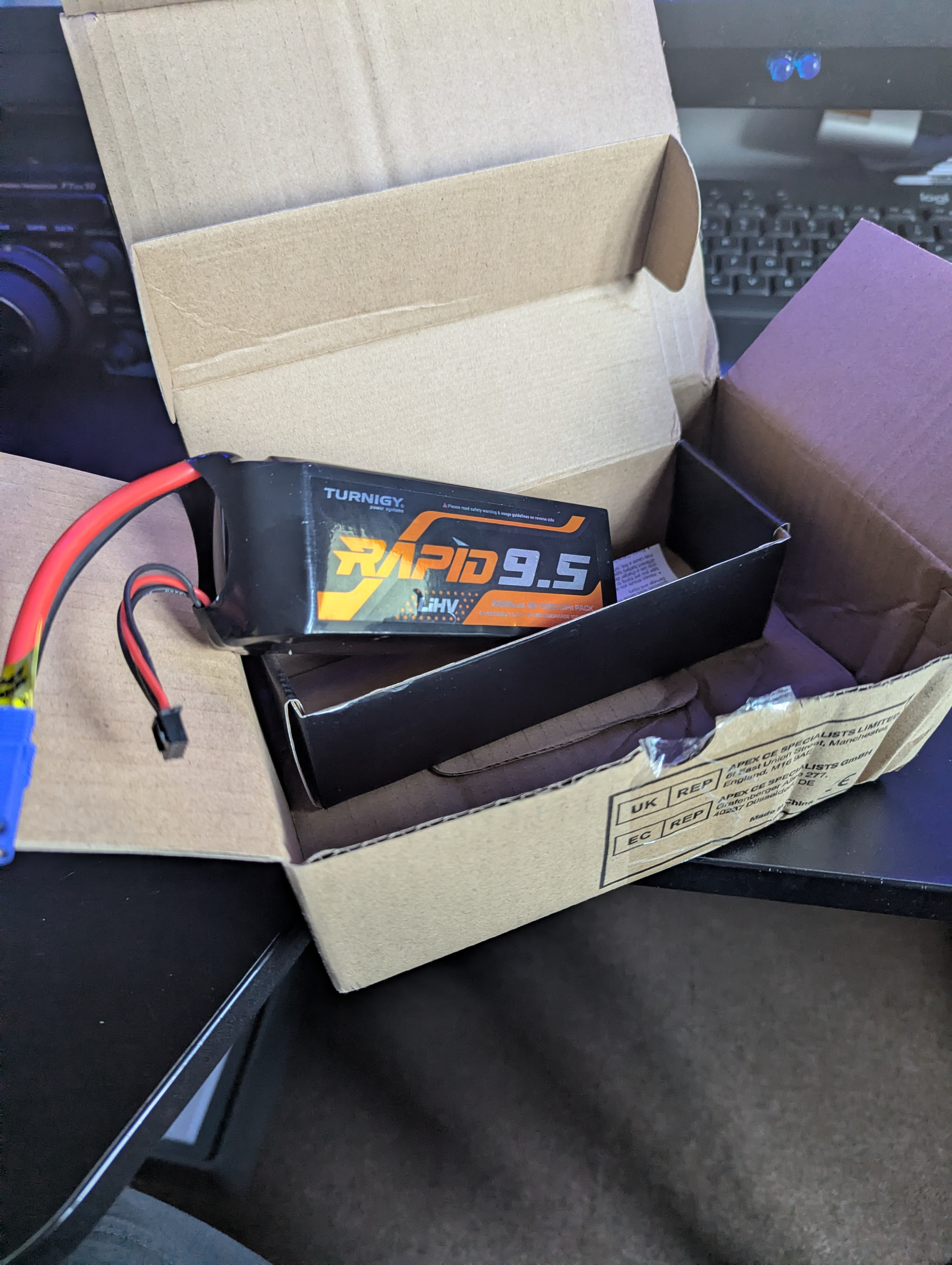
I stumbled on this battery from Hobby king. There is now a relatively recent 3S 11.4v LiPo design, designated LiHV (Lithium High Voltage) which are intended for over-volting RC car motors by a small amount to improve performance. The nominal voltage is 11.4V, but at 100% charge they reach 13.05V (max cell voltage of 4.35v x 3). I don’t have the actual spec for the battery in question, but the blurb on the hobby king site and other anecdotal evidence suggest a max discharge voltage of 3.2V per cell = 9.6V. This is obviously way too low for the FT-857, but due to the relatively flat discharge profile of LiPo batteries, I estimate you will be able to get around 85% or 8Ah of usuable power out of this pack (source data). The pack is rated for a continuous current rating of 100C (or 950 amps!), so shouldn’t experience much voltage sag under load and should easily support continuous transmission from the FT-857.
Needless to say I have one on order an in transit. I’ll do some testing in the home shack first (maybe this weekend if YODEL don’t lose the package) and report back my findings. At a measly 518g, It has more than enough power for most activations with the 857 and a quarter of the weight of the Ultramax LI18-12G. It can also be charged by a USB C PD charger with something like this (also on order), in around an hours time.
Given the voltage profile, current capability and mass I expect this to become my go-to battery for all activations, if everything works out! I will report back once I have received and tested the battery.
Whilst I have already taken the plunge, I would be interested to hear if anyone else has experience in using 3S LiHV battery packs? There are some search hits to people discussing LiHV batteries, but no detailed experiences.
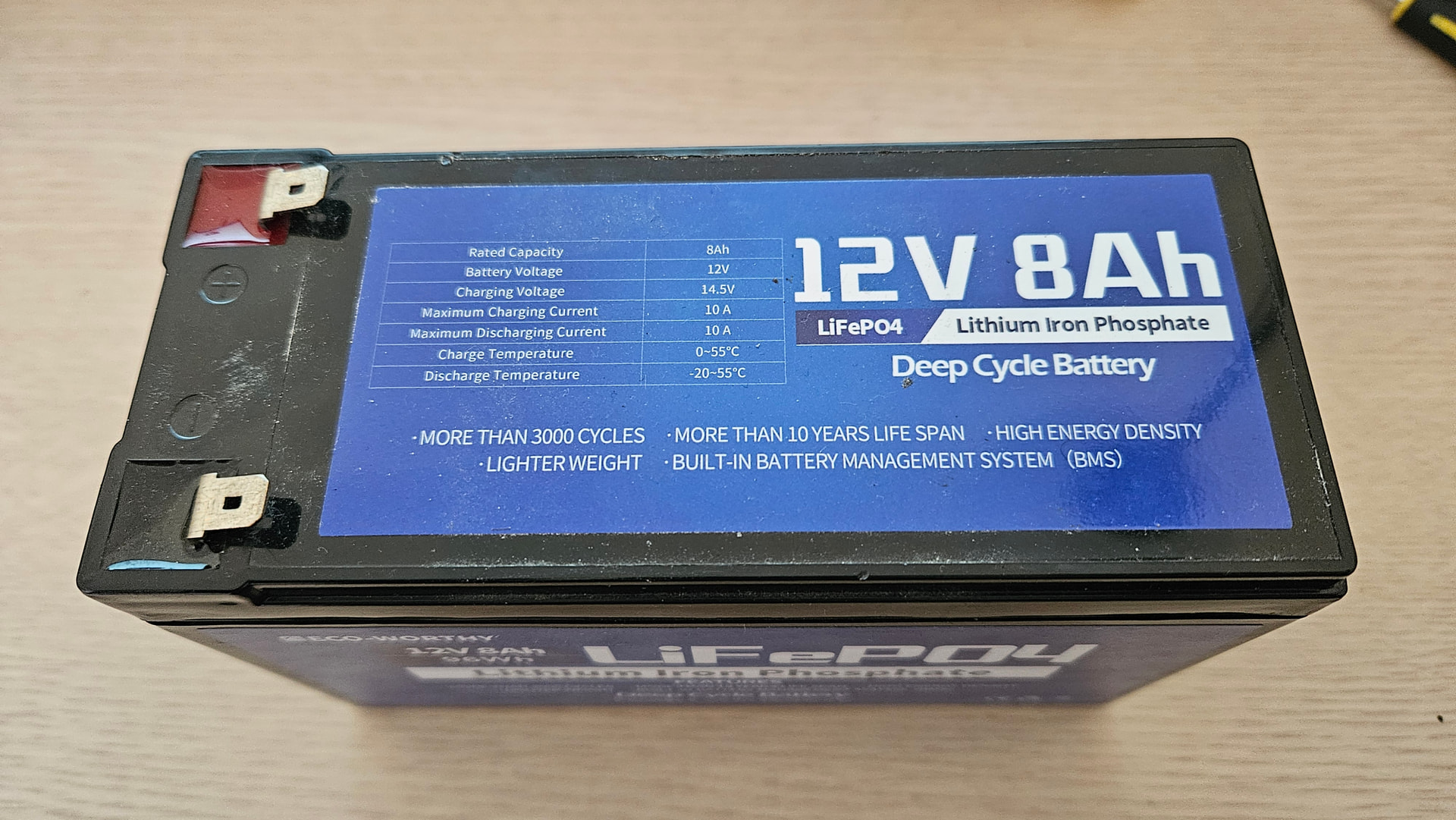
I’ll start by saying I’m not an expert and others will know much more. I started with LiPo but went for 4S. These rather inconveniently produce slightly more that 15V when fully charged. I used a string of diodes, or a DC to DC converter to reduce the voltage. They are rather fussy in that they don’t like over discharge (it kills them) so I also have a plug in meter that goes in the balanced charging socket to monitor the voltage to stop over discharge. I found the DC to DC converter generated all the RFI that I had gone up the mountainside to avoid … so it became rather suboptimal. I then found some LiFePO4 batteries (again from hobbyking) . The chemistry is different and 4S produces a rather nice 13.8 ish when fully charged, has a fairly flat profile and then is fully discharged around 12v so it will connect directly to my kit without needing anything to drop the voltage. In the old days it was somewhat easier to buy batteries, a combination of carriers being somewhat reluctant to transport a 14v firebomb and our decision to enjoy a Brexit bonus have made it slightly harder….
A 3S LiPo will cause the FT-857 to cut out when using a decent amount of power. Many a 10m QSO have I had the radio cut out on me trying to use too much power Use a 4S and either don’t charge to full voltage or regulate to 13.8V, there is a thread on this I started above.
LiPo and Li-ion batteries offer excellent energy density but require protection against short circuits, over-current, over-voltage, under-voltage, cell imbalance, and temperature extremes or you risk your radio, backpack, back, etc. A suitable BMS is strongly recommended.
I used to get quite a few QSOs out of my 4AH LiPOs, then someone would tell me my mod had gone distorted. I solved this by putting a 10AH NiMH in series. This was before LiFePO4 technology was affordable.
Having sold my 857 and gone down the 817 + MX-P50PM route, I now use 4S 4.2AH LiFePO4s. IMHO better technology.
That is my solution as well. And if you need more than 6AH, bring two of them. They are easy to pack, light, and last for many cycles. I wire mine up with a balance lead and use a balance charger (cheap on Amazon).
An 18Ah battery seems a bit OTT unless you’re planning many hours of operating - less capacity will give a lighter battery.
Like the other posts you mention, I’ve seen LiHV batteries advertised for a while but haven’t tried them so I’m interested to hear how it works out.
I played around with using an 18V Bosch drill battery for powering radios using a buck converter but like @G4IPB it generated far too much noise. The drill came with the charger and a spare battery and the batteries were quite compact so it could have made a good solution.
I get that comment sometimes, followed up by the next chaser saying there’s nothing wrong with my modulation
The more I think about this the more it feels unlikely to be the solution.
The 4S LiFePo packs of a few years back seem to be gone from the market. I guess many of them are being used to blow up stuff in Ukraine. So the replacement is to brew up a 4S pack from the 3 common sized single cells. 4x 18650, 4x 26650 or 4x 32700. Of course shipping is a problem but should be less so with LiFePo over LiPo.
Eremit’s packs (highly regarded) are 4S2P 18650 + BMS
Home brewing is simple, 2x or 4x holders are sometimes available from eBay but easily obtainable from AliExpress and similar MiddleKingdom sites.
4x 32700 size LiFePo 6000mAh cells with free postage is £34.99
4x 26650 size LiFePo 4000mAh cells with free postage is £24.33
If you want long, hi current operation, make 2 4S1P packs and parallel on the day.
There are zillions of buck-boost converters available with outputs in the 13.8V 25A range. What you don’t know is if they are noisy. So the fix here is to use a high side switch (big P-channel MOSFET) to enable the converter on TX and feed the radio direct from the battery via a single power diode for RX and connect the converter output to the same point The PTT line enables the high side switch and the diode stops the higher voltage going back to the battery.
If the converter is noisy, it’s not really a problem on TX. So on RX you get 12-9V (battery->diode) and on TX 13.8V.
Or do the simple fix, 4S LiPo with a pair of beefy silicon diodes, (best 1/2 a bridge rectifier) and yes it needs a heatsink. But it’s simple and cheap and noise free and switching the diodes in and out as the cell voltage falls can be done automatically to save brain fade failures.
Or use LiFePo.
Or learn CW and dispense with the need for QRO. Especially as CW has no weight penalty.
I’m sure someone will tell me why these solutions don’t work.
I was hoping to have received the battery in time for the GW sota weekend. In the end it was delivered whilst I was activating GW/NW-034 Foel Cedig on Saturday when DPD rang my “Ring” doorbell, and the distinctive alert from my phone was heard by someone as I was transmitting at the time .
Safely arrived, although the box was a bit battered in transit and the battery (inside another box) was free to rattle around the larger box. I’m not impressed by Hobby King, as the order was over a week ago.
The battery is labelled as being shipped with a 30% charge and the voltage is currently at 11.4V (on spec, if it is 30% charged). I took a meter with me on this weekend’s GW SOTA event, which can report energy consumed. 54 QSOs over just under 3 hours consumed 6.5 amp-hours on the FT-857, so I remain hopeful this is the battery for me! I checked the weight and it came in at 530g on my kitchen scales.
I’ll get to changing the connector to an Anderson powerpole and test it next weekend, if work doesn’t get in the way.
This is my smallest battery which I use with both FT-818 and G90, I do have a bigger battery which I have taken up various summits including Shining Tor. I generally won’t touch LIPO with a barge pole due to the fire risk.
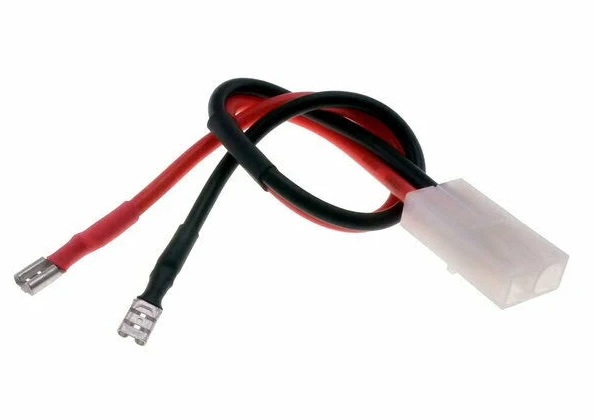
Just a thought, Does anyone knows where I can get a power-pole adapter for this battery?
I build my own using 27650 5000mA cells. My configuration is 4S1P and gives 5Ah capacity, weighting only 340gr including internal BMS. All it need is another 4 units and you could have 10A weighting about 700gr.
You will need a crimping tool, if you make your own leads up. The tools can be very expensive, but a cheap one from amazon is OK, unless you plan to make hundreds of leads or start doing it professionally:
Crimping is more reliable (repeatable) and cheaper as an industrial method than soldering.
That said, I tend to crimp with the proper tool first and then follow up with solder to make a more robust connection. The reality is that you are moving the failure point from the wire pulling out of the crimp (which is simple to repair), to pulling the entire pin out of the connector, or breaking the fitting.
The important part of crimped connectors is to make sure you have the right kind of multistrand wire for the size of crimped connector. Single strand (ie. solid wire) cannot be gripped by the deformation in the crimping process, whereas a wire with too many small diameter strands also can produce a weak joint.
It looks like a nice battery with excellent power output for the weight. It will be interesting to see how it works out the field.
Changing the connectors could invalidate any guarantee, but you may be like me and just disregard that fact and take the hit should it fail (probably unlikely). An adaptor would overcome that issue. Certainly add fusing in circuit… Andy LLD recommends two. I make do with one in the positive lead.
 Use a 4S and either don’t charge to full voltage or regulate to 13.8V, there is a thread on this I started above.