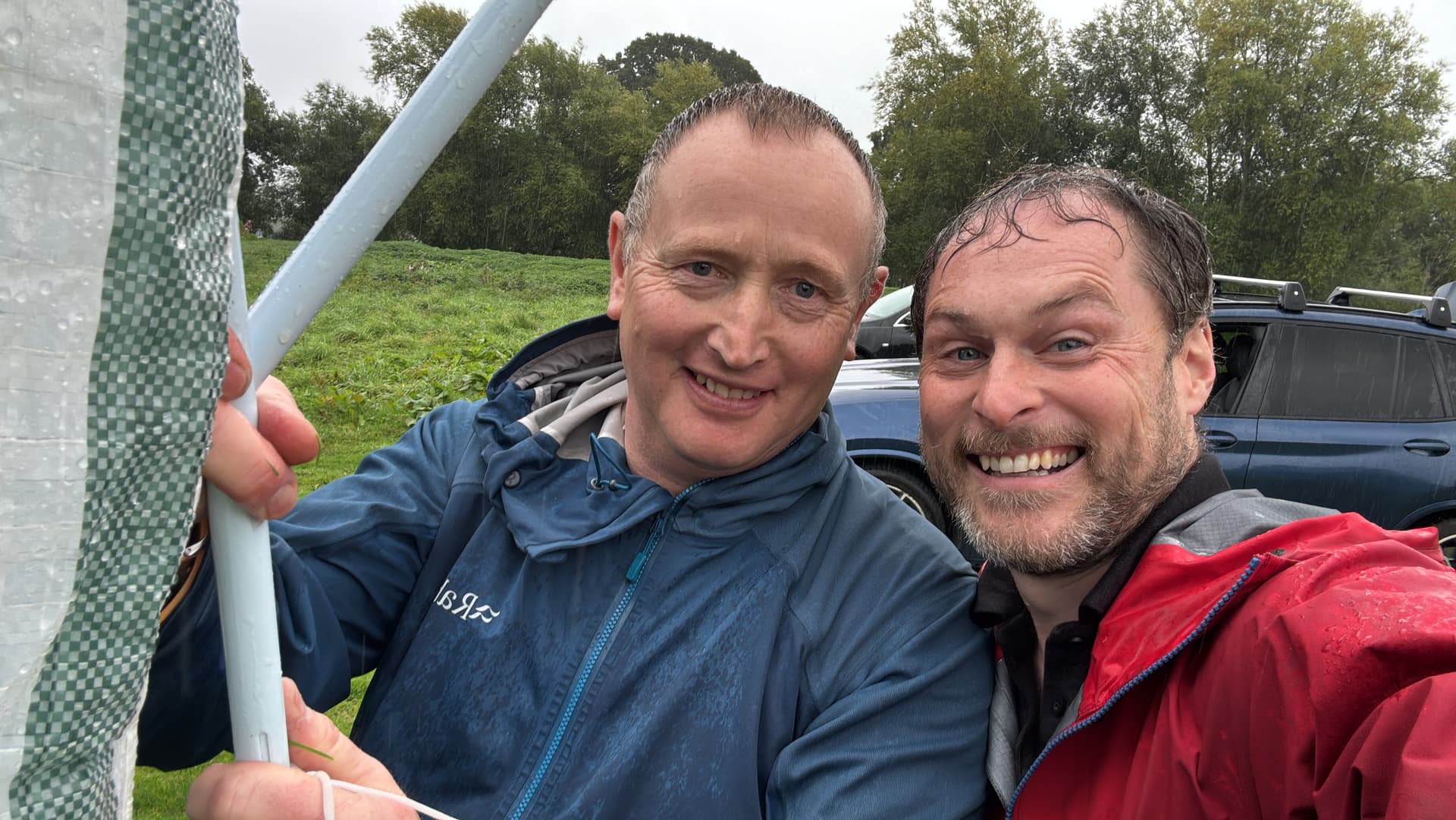
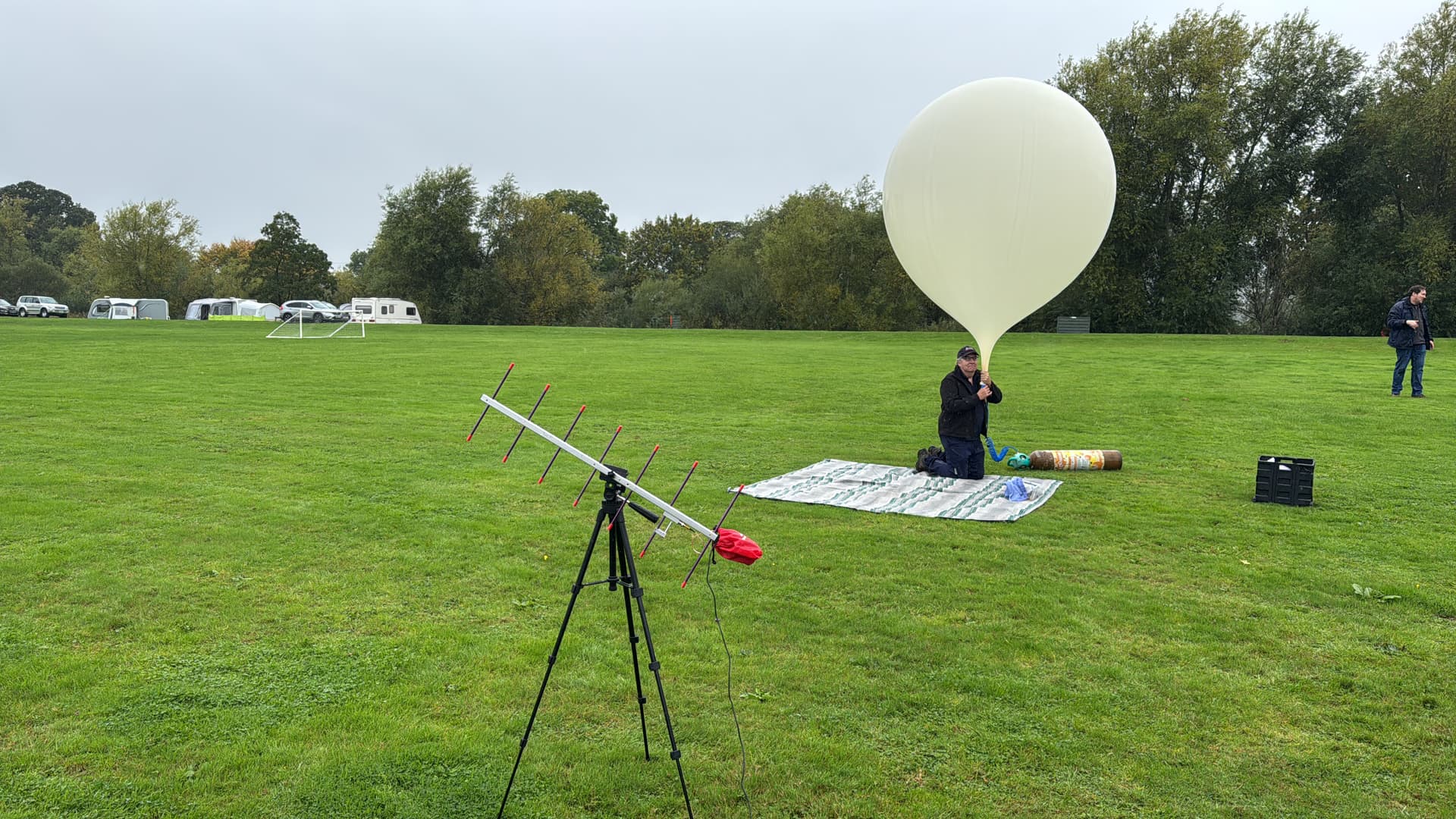
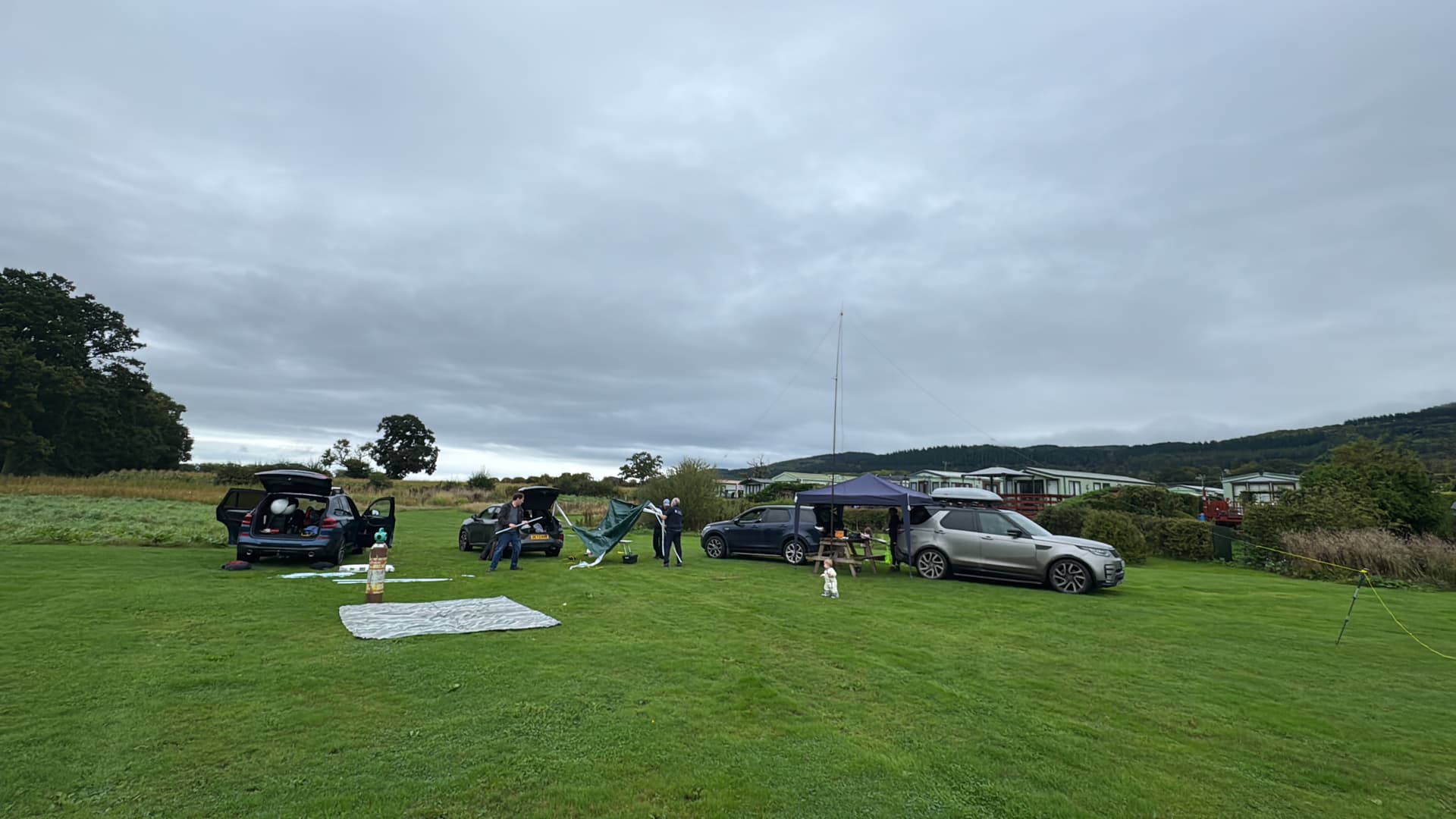
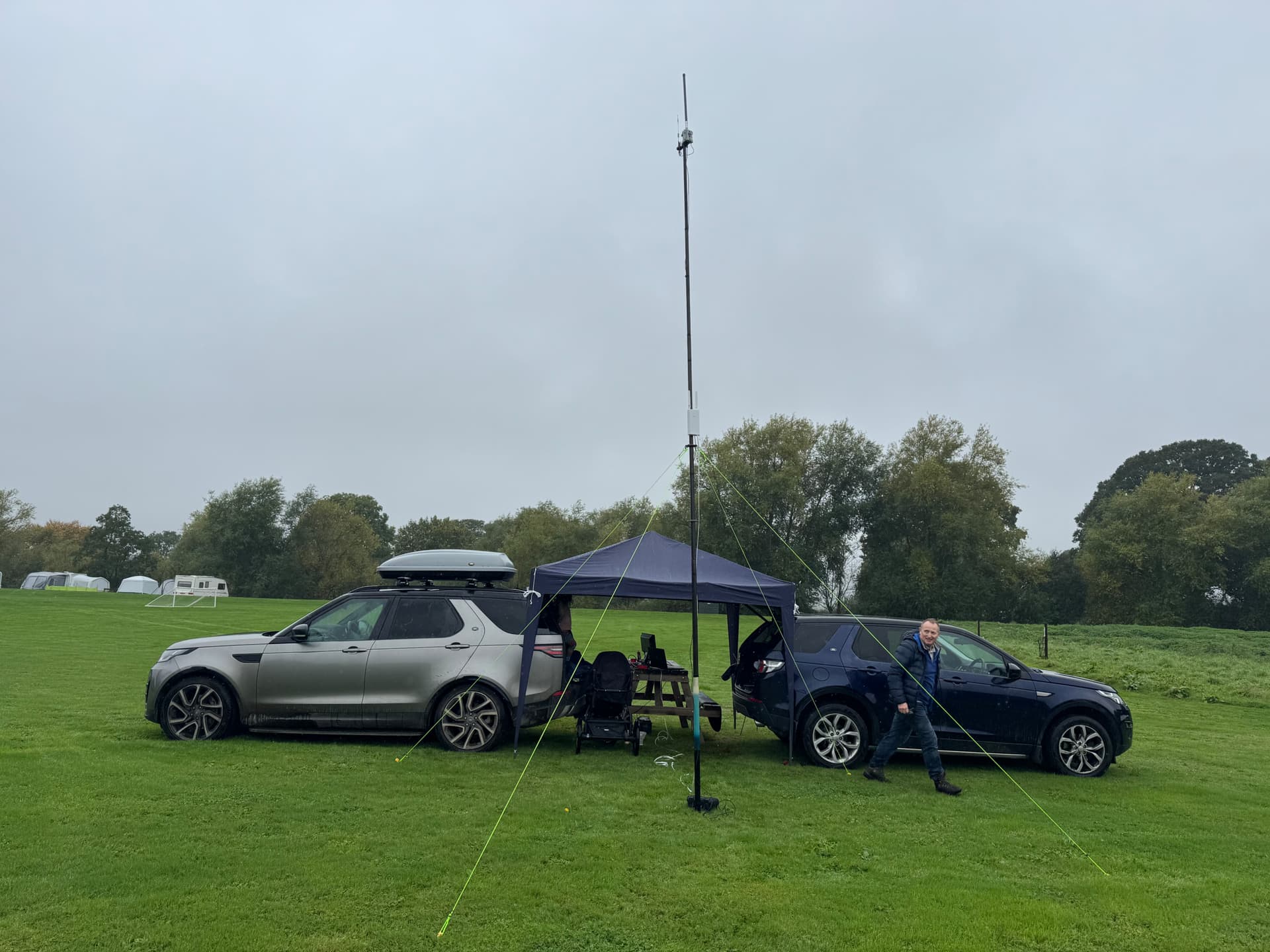
A fantastic (if not very wet and windy) morning sat under a tarp on G/WB-006 - great to be a part of this project. Well done to both @GW4BML Ben and @G1JKS Dave and all the others involved for putting this event on. I managed 5 in the log whilst holding on to the guy ropes to stop the tarp blowing away and managed to get a S2S with @M8BIA Martin as well.
On my way down the hill after hastily dismantling everything, I could hear the water sloshing around in my 7m pole - it was quite a sight to see it pouring out the end when I undid the rubber cover (I only had it at half mast because the wind was pretty bad so the rain must have been running down the inside for 3 hours). It is now drying on the living room floor. Thankfully all Dave’s equipment appears to have survived to live another day (or another event?!).
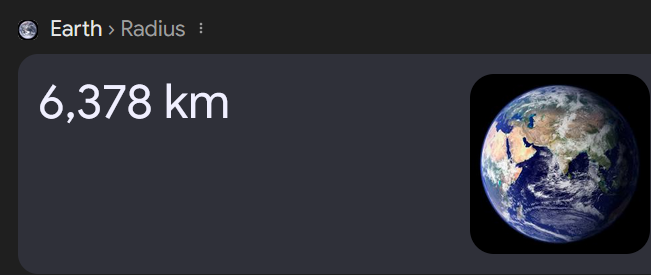
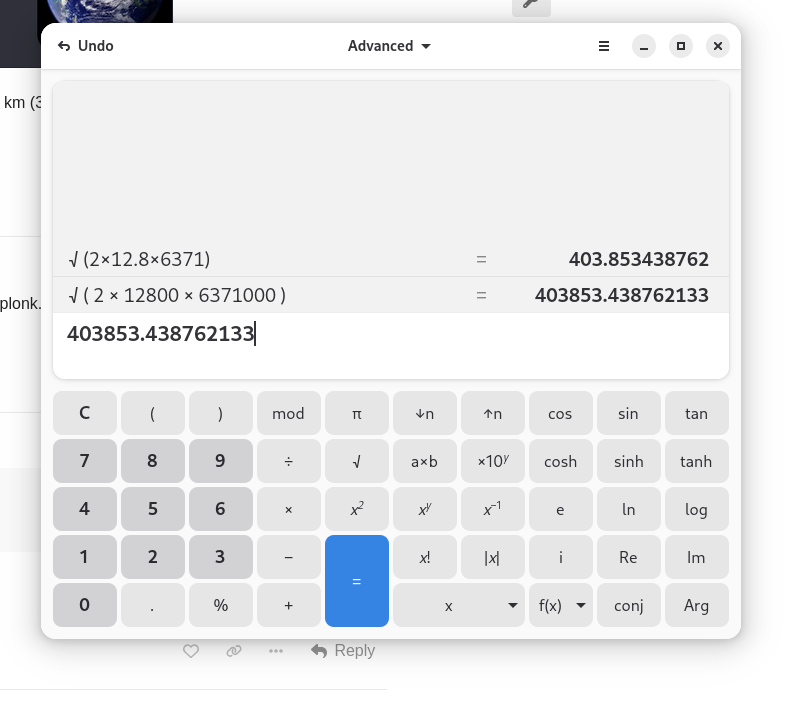
No, you are right Andy. Looks like I made a mistake at step 4 (the square rooting). I did it again on another calculator and in Excel and got the same answer as you: 403km. So, probably not LoS for Fraser after all.
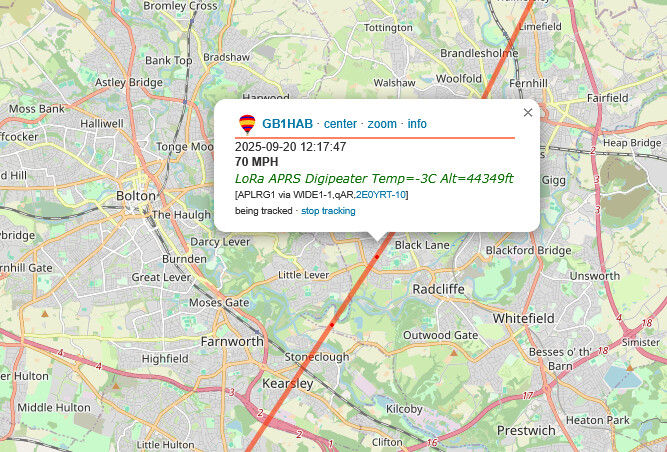
Not my friend Jack G8HIK - he saw the ground-track pass within a few yards of his QTH in Radcliffe, at which point the balloon was at around 44 kilo-feet:
Yep, if you’re tracking a high altitude balloon with a yagi, most of the time you’ll get away with a single axis rotator. The only time you need to raise the angle above the horizon is if the balloon’s really close to you, and then the signal will be stronger.
Yeah. The other problem with this launch is that the balloon seems only to have got to about half the planned maximum altitude before it burst, so its horizon was a lot closer than it might have been.
I only see information for the fix sent from the balloon. I don’t any information for the fixes relayed by the balloon at around that time. There’s a table of all the fixes relayed by the balloon, but it’d take some interpolation to work out where the balloon was when it relayed each one.
Thank you very much to everyone who took part in yesterdays LoRa HAB balloon event. The weather from the launch location was pretty dire, and from some of the Igate locations, so we all managed to stay committed and get the balloon in the air and receive its packets - a great job! This was aimed to be a fun event and a test, to see if it worked, so we can plan more events similar to this in the future, so we knew it wasn’t going to be absolutely perfect, so sorry @M0LEP Rick, you might find more faults yet if you keep looking for them #supportive!
I hope everyone enjoyed it, despite the weather, but it ended in success - happy days!
Me and Dave had a right soaking, it was like doing a normal SOTA summit day outing in GW
Thanks both for taking the time to work that out. A couple of years ago, my QTH i-gate received packets from that pico balloon that managed a few laps of the planet. I recall 300 miles / 480km was the final packet, before Norwegian i-gates started gating the RF, so that convinced me that my set up would work of if it could see the balloon.
The Radio Society of Harrow participated in the event from our outside our club house in Bushey (near Watford) in Hertfordshire. We operated using a Heltec Tracker purchased from the SOTA shop connected to a 6 element Yagi. Whilst we were unsuccessful in contacting the balloon it was a fun morning for us, thanks.
Looking at the map on the EA LoRA APRS website no-one in the Hertfordshire/London area seemed to have contacted the balloon - the nearest two stations to us that did were 20 to 30 miles miles to the West.
So perhaps Hertfordshire and London were just too far South East of the balloon for the path involved.
Philip, G4GHZ
Programme Secretary
Radio Society of Harrow
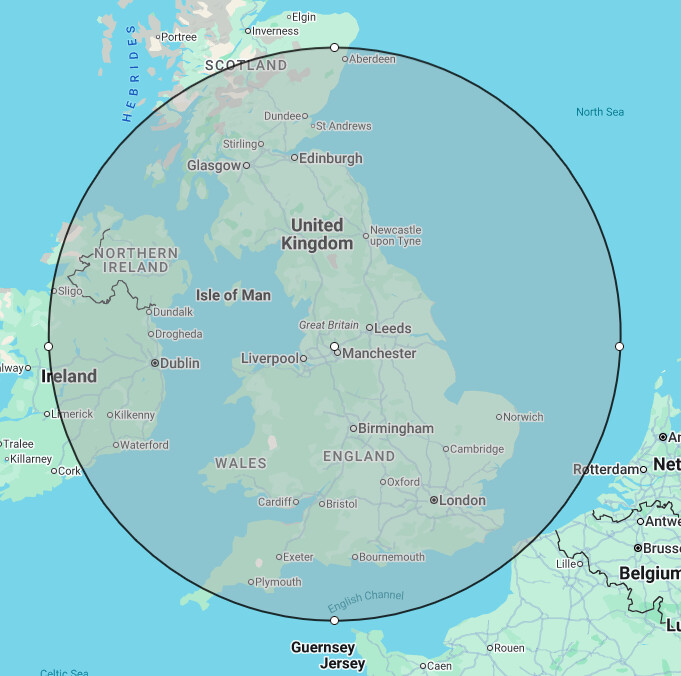
The difficulty would be a literal “pile-up” of all the stations within that circle calling at once - as each transmission lasts a second or two, there’s a very high probability of “packet collision”. Plus there’s a possibility of the airborne receiver being overloaded by sum of all the other UHF signals in the country picked up on its antenna!
Did you see any of the downlink packets on your receiver? That would give a much clearer idea of when you were in range.
Thanks for your reply and explanation re the coverage and likely congestion which is good to understand.
We didn’t have anything that could demodulate LoRa on the downlink frequency (or was it AFSK on the downlink?) but something for next time would be to set up an SDR receiver to see the downlink carrier(s).
Those trackers are actually transceivers, so you should see all the received traffic on your OLED panel. Or plug it into a PC serial port and capture it in a terminal window.
If you now switch your device onto the terrestrial APRS channel (439.912500, both Tx & Rx), you should see all the local activity.
First, I am not looking to find faults. If it comes over that way, I’m sorry.
I have been on the fringes of the UK HAB community for longer than I’ve been a radio amateur, and HAB tracking is what got me into amateur radio in the first place, so I think it’s great to see the RSGB actively using HABs as a way to generate interest. Thanks for getting that ball rolling.
You have my deep admiration for managing to pull off a launch in such hideous conditions. I have seen worse, but not much worse. Imagine, if you will, a moderate wind added, enough to pull the static balloon over almost far enough to touch the ground…
I was pleased to get one fix from my tracker relayed by the balloon, and disappointed that it wasn’t at greater distance, but I had the tracker running in the garden shed up the garden with its beacon interval set to 7 minutes, and it wasn’t to hand for random “send a fix now” button pressing.
On the whole, I personally found the tracking exercise more interesting (though not as much fun as the old RTTY trackers used to be), and if a similar event is run another time I will concentrate my efforts on that side.
Thanks for your reply Ross - Yes I had used the tracker to communicate with a local iGate run by a nearby amateur prior to reflashing it with the firmware for the balloon competition frequency.
The problem is that as far as I know the competition uplink frequency firmware and the standard CA2RXU firmware don’t allow half-duplex split frequency operation, only simplex operation, and also only ‘pre-canned’ frequencies.
Please let me know if the situation is any different.
It’s good to know that the incoming data can be viewed via the USB port, thanks.