The (Mostly) Everyone Loves The Yaesu FT-290R Thread

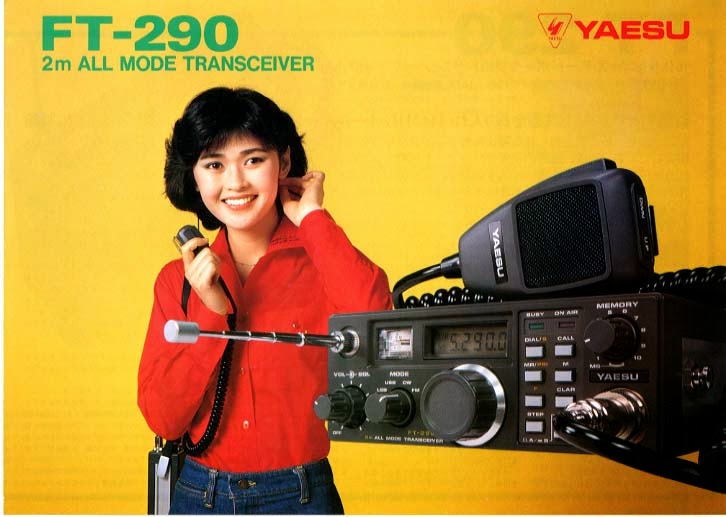
This is a thread to have a natter about (mostly) everyone’s favourite cheeky little 2 meter pensioner scamp, the mighty Yaesu FT-290R. Coachbuilt by the good people at Yaesu in 1982, this cheerful, buxom pup would bring 144Mhz of delight to jamon enthusiasts the globe over (selling by the 000’s). It continues to do so to this day (if you can find one that isn’t in bits).

Do you own at FT-290R? Have you owned an FT-290R previously? Do you wish you had an FT-290R? Do you have a poster of the FT-290R on your bedroom wall? Do you know technical stuff about the FT-290R? Savage. This is the thread for you so!

My beloved FT-290R and FL-2010 arrived back from their EI spa retreat today. The 290 is working pretty much perfectly now. Here’s a list of stuff that the doc found wrong with it and what was fixed:

  • A faulty transistor on the receive AGC which was shutting off the receive in SSB/CW

  • A broken connection for the front panel LEDs that had been previously fitted

  • The switching of the CTCSS module was not quite correct, leaving the 1.8kHz call tone always enabled

  • The loudspeaker was rattly, so a new one was fitted

  • 290 and PA both needed realignment. Completed

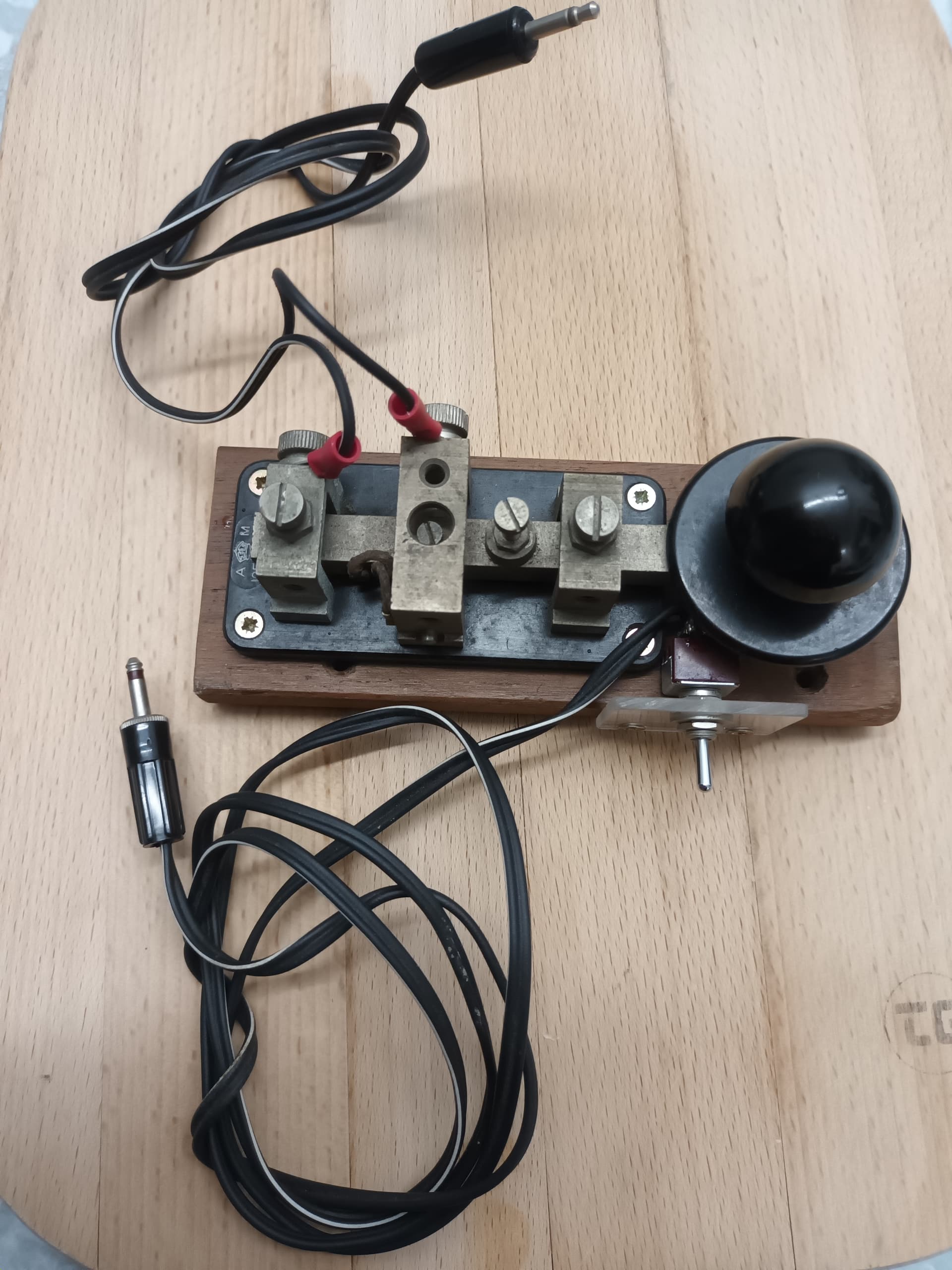
So everything is now hunky dory, I lifted the telescopic antenna and gave CW a quick tickle with my bathtub key. Works a treat! The sidetone is like a symphony of CW magnificence. Brilliant!

There’s a problem though.

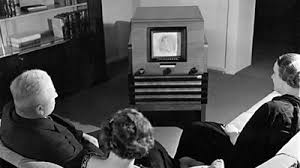
The 290R set up for CW in this way still requires you to hold down PTT on the mic while you key. That’s about as fun as your mum telling you you’re getting pizza in for tea tonight and when you thought you were getting this:

Mum went to Bejam or Tesco or summat and got this:

So I got a Picokeyer Plus and tried that, but no dice. It works, yes, and I can use paddles and all the rest of it, but only if you hold down PTT on the mic.

Does anyone know how I can get around the whole PTT before keying thing as that’s just absolute trousers. It’s like coming back from the bar with a round of pints and trying to clutch a chaser from slipping while you make your way through the crowds.

Also, I still can’t get the MML 144/25 and now the FL-2010 to work off of LifePo. Fully charged batteries, all hooked up properly and nothing. I’m hesitant to hook the FL-2010 up to a PSU as it says something about DC and blowing up the linear amp if you so much as look at it.

Aside from all the above, what is everyone else doing with their FT-290R other than using it for transverters?

BONUS CONTENT:

Here’s a little tip for QRP Labs QMX owners. Apparently you can use the QMX with the FT-290R as a keyer and it will do the PTT piece for break-in!

Just use the following chain: Key > QMX > FT-290R using 3.5mm cables as interconnects. Two things to check first though:

  1. If you have an early HW version QMX, you may need to perform the mod at the following link:
  1. You need to go in to the terminal and set the following: enable “TX PTT grounded” in the band configuration settings.

I have a QMX but haven’t tried this setting yet. Has anyone else tried it?

2 Likes

How about constructing a footswitch?… unless you eat pizza with your foot. Maybe you can’t eat pizza and key anyway, so it’s not a big deal . :joy:

4 Likes

God loves a trier! :rofl:

A footswitch is an idea but what a hassle it would be. I might try the QMX as a keyer, if it can do the PTT pizzaz then we’re golden.

Who honestly sat at Yaesu and went " Hmm, nobody does CW on 2 meters so let’s not bother doing anything fancy. The PTT is good enough. That’ll do." and honestly thought that was okay?

Absolute trousers that is. Shambolic!

1 Like

The 290 has a 3.5mm socket on the left hand side, helpfully labeled “standby”.

That is where to connect a tx switch. As Gerald suggests, a footswitch might be convenient.

I use a key with a toggle switch mounted beside it for the purpose.

If using the QMX, remember to give it a dummy load - and you would still need 2 connections to the 290, one for tx/rx and one for keying…?

I don’t know why your amp isn’t working, I used to use mine with a lead acid battery, definitely less than 13.8V most of the time. It should at least show signs of life on 12V, I’d say.

2 Likes

Ah! I wondered what that standby jack was for! Thanking you kindly sir. :blush:

2 Likes

Long time ago with my Atlas 215 I use simple circuit with two optocuplers. Key was activacting both led diodes. One optocupler was used for keying. Another optocupler was used for PTT. That part of the circuit uses another transistor, resistor and capacitor as time delay. All you need is 12 or 9 volts from somewhere

Explanation is not very good but hope you understand the idea.

1 Like

Never heard of it. Where’s the waterfall?

5 Likes

Would a spark gap help here?

3 Likes

15 years ago 9a3al show me his work. After the rx preamplifier, before mixer he took part of the signal and send it to usb sdr receiver and had 2m waterfall

Where we’re going we don’t need…waterfalls. :smiling_face_with_sunglasses:

I haven’t a breeze what that is (unless its a spark plug gappy measurey feely thing for a car?).

3 Likes

I believe it is a device that guarantees you contacts?

3 Likes

When I was a boy ( not recently) my Uncle George showed me a car radio that he had in his shed. It had a spark gap buzzer component that chopped up the 12v supply then stepped it up through a transformer to feed HT to the three valves in the radio circuit.

It also had variable inductance tuning rather than variable capacitor tuning.

The front panel was a standard car radio size but it expanded to twice that size at the back.

I didn’t understand it all then but would love to see it now.

Andy

MM7MOX

4 Likes

Presumably from Ofcom/ComReg.

1 Like

Found this. Apparently it was designed with the FT-290R’s fun approach to keying in mind:

https://www.wm5r.org/super_cmos_iii/#:~:text=One%20of,MHz%20transverter

1 Like

Waterfall? Waterfalls are only good for winter climbing!

2 Likes

Known as a vibrator power supply. There were RF / IF valves that were designed for 12V HT but getting power for the audio stages was almost impossible without higher voltages hence the vibrator PSU. Once Germanium audio transistors appeared you could get a few watts of audio and the 12V HT valves meant the vibrator PSU went the way of the dodo.

Permeability tuning. It was ideal for radios that were subjected to mechanical vibration such as car radios and worked better than variable capacitors in such cases. It also enabled push button “memory” tuning. You had a permeability slug for each push button and they could each be set to a different station. The same was used in the early UHF colour TVs in Europe. Most VHF TVs had a a 13 (??) position rotary switch that selected the channel. As there were only 2 channels in most areas of the UK, the TV dealer would fit a pair of permeability tuning coils for the Band I and Band III channels used in your area. Saved money when tellies were so expensive.

Later on the same tuning was used on UHF TVs which in the UK would have 4 channel presets, “BBC1”, “BBC2” and “ITV” with the fourth preset marked “*”. Where I lived we where on the edge of the Winter Hill transmitter that covered NW England. By coincidence, Moel-y-parc, the Eastern North Wales transmitter was 180degs away from Winter Hill. It was almost LOS where Winter Hill was behind the higher parts of Liverpool. The result was reception of Moel-y-parc was trivial. The downside was a lot of the programs were broadcast in Welsh so it wasn’t a replacement.

Given my fascination with everything electrical when nobody was in I played with the “*” channel tuning having seen my dad tweak the tuning. The mechanical tuning could drift with the physical selection of the channels with time. And it came to pass I found HTV and I watched it and told nobody. Well I’d been told off for faffing with things I knew not :slight_smile:

In those days, early 70s, the ITV companies were all independent and so Granada TV (NW England) and Harlech TV (Wales) had different schedules. This meant a different film would often be shown on the 2 ITV channels or a network program would go out at different times. I forgot about not letting on and one day was found watching something I’d missed on Granada. There was some astonishment a 10 or 11 year old had increased the number of TV channels by 25%.

By 1976 or so we had progressed to a Philips G8 chassis, the one with the famous Thyristor regulated PSU that used to eat Thyristors just like ours did. It had 6 channels that used varicap tuning. There was a 20 turn preset to set the tuning voltage for each channel. 6 channels meant not only BBC1/2 and Granada but also BBC1 Wales and BBC2 Wales and HTV. This was truly brilliant having possibly 6 TV channels to pick from. USA readers will be scratching their heads at the truly limited choice we had then. Now we have gazillions of channels to pick from on broadcast TV and streaming services and they’re all s****. :slight_smile:

Open your 290 and marvel at the circuit density. Squeezing more components in would be hard work and raise the cost. A 290 was £300 in 1982 which today is about £1200. It was about 2 months wages for the average worker. Today an IC-705 is around the same price £1300 and the average UK weekly wage is £733. So an infinitely better and more capable radio covering all modes from DC to daylight and offering things that were considered almost science-fiction in 1982 costs 2 weeks wages. Hence no VOX on a 290.

4 Likes

Limited? Luxury! Our first TV was a 9-inch B&W with just one channel, the almighty Beeb, with a tendency in the summer for interference that I later learned was Es. This would be in the early 50s. I remember that it closed down at 2200 with a photo of the Queen and the National Anthem. There was no choice for a few more years, but it was better than looking at the magic eye on the radio!

4 Likes

Brian in his youth …

If it weren’t for the secondhand FT-290mkI I used for 2m CW portable in the wilds of South Lanarkshire in the early 90’s I probably wouldn’t have passed the Morse test, got my A licence (MM0ALC), discovered the joys of portable QRP CW (on HF as well as on 2m), and got into SOTA in 2017. So I’m a bit nostalgic about the '290.

2 Likes

Now we know it was a 290 in the briefcase!

pulp-fiction-vincent-vega-smoking-72vtealhsrbv6p34

When was break-in introduced? The FT-290R II? Was it just a space thing? You’re right, it is packed like a deli sandwich in there. What a radio though. 1982’s Quansheng in terms of community mods, hacks and general tinkering. :heart_eyes:

2 Likes

Until they turn back into water.

We were camping near the CIC hut one winter. We were woken by a huge crash and explosion in the middle of the night. When we got up in the morning, we saw bare rock streaming with water where The Curtain IV(5) had been. We’d only just climbed it the day before.

3 Likes