I still have my 290, here it is in action in 2014…
The cheese is an optional accessory.
I still have my 290, here it is in action in 2014…
The cheese is an optional accessory.
It is?  You could turn it in to a key!
What version of the MML linear are you using there? Is it the 35w version? I think there were 4 different models made around 1982. I found this about the 100w which may help folks:
http://www.g4kfk.co.uk/MML144-100LS_2m_Linear_Amplifier_PW_198209.pdf
How do you find performance with it? Does it work well for SSB and CW and is it easy to power alongside the radio?
Also found this which may help some folks here with building keyers for their old rads:
Also, just to note Adrian, I’ve put a mark against your record in the logbook here for the lack of CW key attached to your FT-290R in the photo. Once a key is added to your setup the docked points shall be restored within 6 months (or 3 weeks for good behaviour). Yours sincerely, the 270 CW Police. 
Snap!
Same here, I have one on the shelf, bought for a fiver at a club sale - it had been dropped on a hard surface but I restored it. I don’t use it other than an occasional powering up, I prefer the 817, but it reminds me of great days (and nights) in the 80s.
Sorry Brian, going to have to put a mark on your name too in the logbook! Sincerely, the 270 CW Police. 

Noooo! Not the 270 cw police.
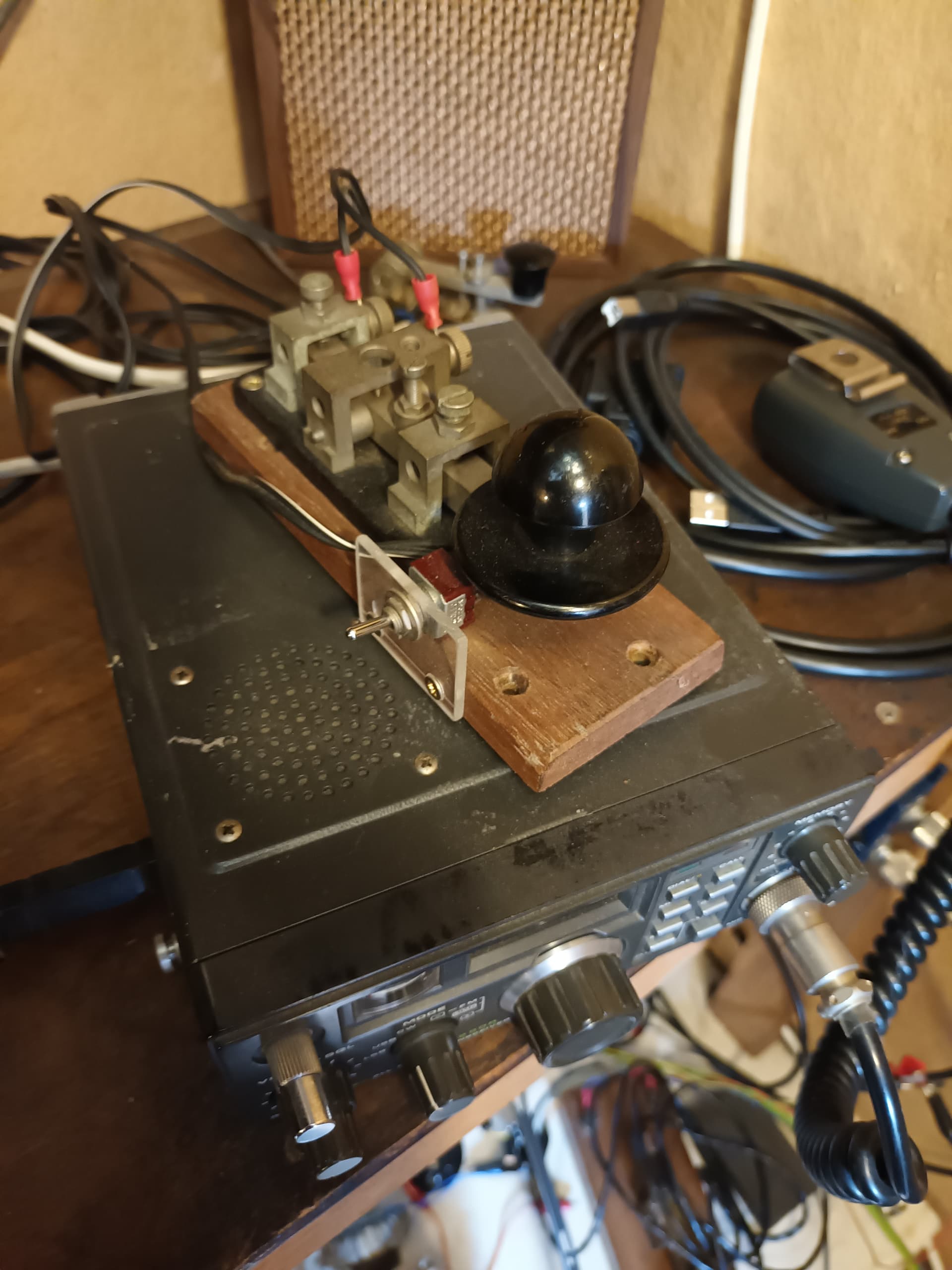
Here it is in my shack today, with key attached - note the added “tx” switch, as the radio doesn’t support break-in keying (ie just pressing the key doesn’t make it transmit).
The amplifier is the 30 watt version, and works ok using the RF switching option (it goes into transmit mode when it senses RF on the input). I don’t really like doing this on CW or SSB, as the clattering of relays is distracting - but I have never got around to building a little interface to link it to the 290’s “PTT” line.
As Andy MM0FMF mentions above, it isn’t the most linear of linears, and In practice I have used it more on cough FM cough where that is less of a concern.
Just to set the hares running, I acquired this recently - I haven’t used it yet other than a bench test. It is a heavy beast for SOTA, but I might be tempted to take it out for an activity session..
Or learn how to operate a 45-50yr old design maybe?
Penalty points removed from the log! 

Explains why no TX light when keying so! I since noticed rather than holding the PTT down on the microphone, you can wire up a foot switch to the Stand By jack on the side of the radio. Not ideal in a pileup to be juggling a mic, a key and logging at the same time!
Interesting looking radio. Maybe take it out for a bit of POTA if it is a bit of a lump for taking up on hikes. Keen to see how you get on with it. Is it all in good nick and working?
For anyone interested, there is a nice feature in a 1980 edition of Practical Wireless rounding up some choice 2 Meter all mode radios. 2 years before the mighty FT-290R, but some nice sounding kit all the same. Pages 36 through 38.
Yes, it seems to be. It was an impulse buy, I had in mind to use it as a dedicated driver for my 13cm transverter aimed at the QO100 satellite. Like many a project, I haven’t got much further with it yet….
As a permanent CW outlaw I consider that is something to be proud of!
Hi Brian, no one’s outlawed you - quite the reverse. Many of us think you would actually enjoy Morse/CW once you got beyond the starting gate.
Unless one has dementia, it’s not too late. Old age is not the barrier. ‘A little and often’ is the learning strategy: 15 minutes 3 times a week - no more. In a few months you’d be slow but fluent. If I can learn a foreign language in my dotage, then so could you learn Morse Code. It’s just a mindset problem or lack of motivation.
No, Andy, its a self-outlaw! I can actually read CW at somewhere between 15 and 20 wpm, I have known the code since about 1962 when I passed my RAE, and went to the trouble of brushing up my speed several years ago with the G4FON program. This taught me that I still did not enjoy using the code, it remained the chore that it has always been. It may be that in the future I will have to resort to it as my local noise level becomes ever more punishing, but not yet.
Older chaps hope to be slower but fluent. Instead they are slower but flatulent.
Think of it as rocket propulsion in first gear…

This one releases no methane. Less global warming.
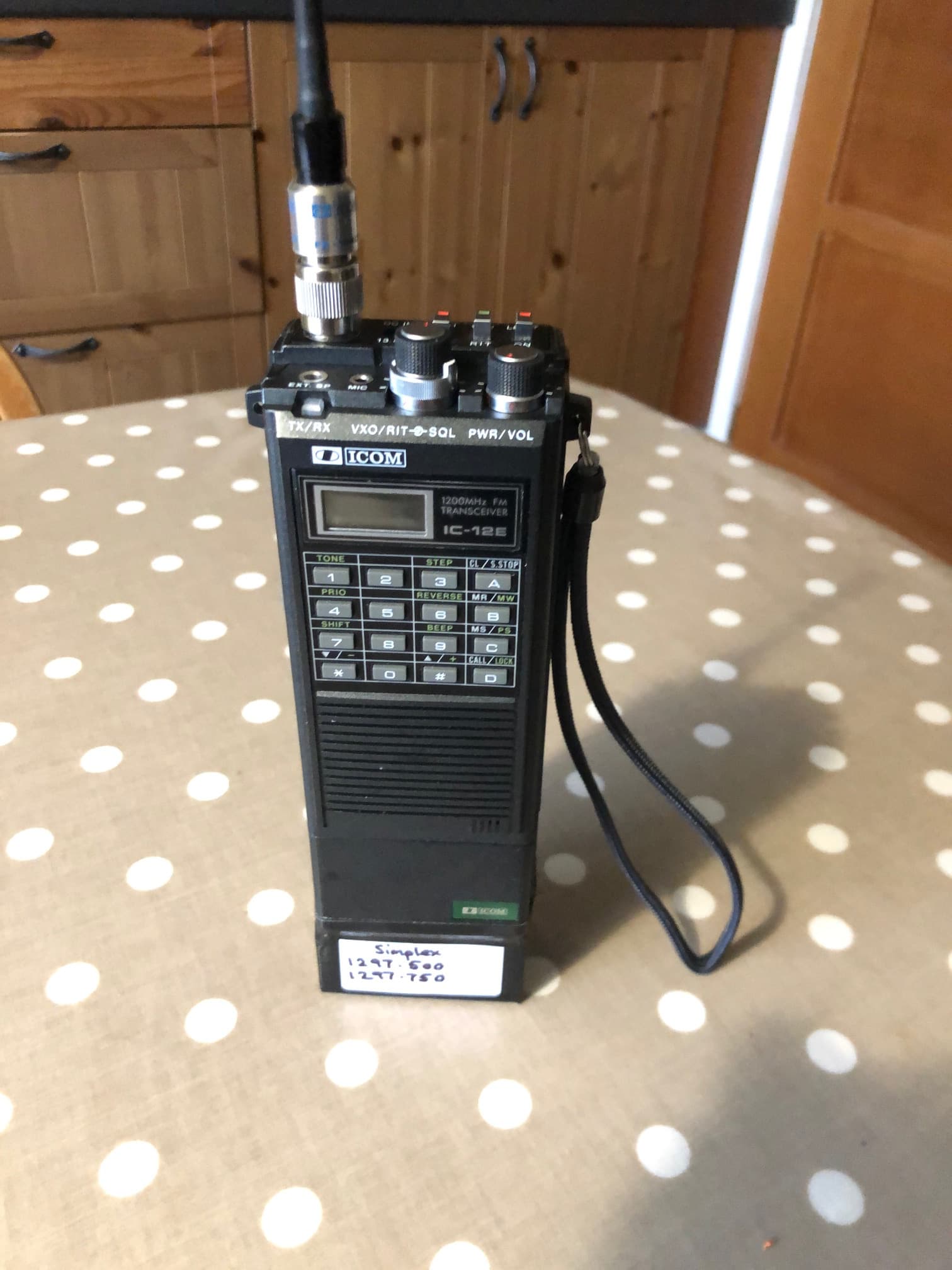
Does my 1980’s 23cm handheld qualify? I’ve had it now for a few years and it came boxed looked unused with its accessories still sealed in bags. The batteries of course were toast and the squelch potentiometer had broken. It’s now fixed with new gaffer tape battery pack and it would love to talk to someone.
73 Steve
Most definitely that qualifies. It would have been damn expensive nearly 40 years ago when they were new.
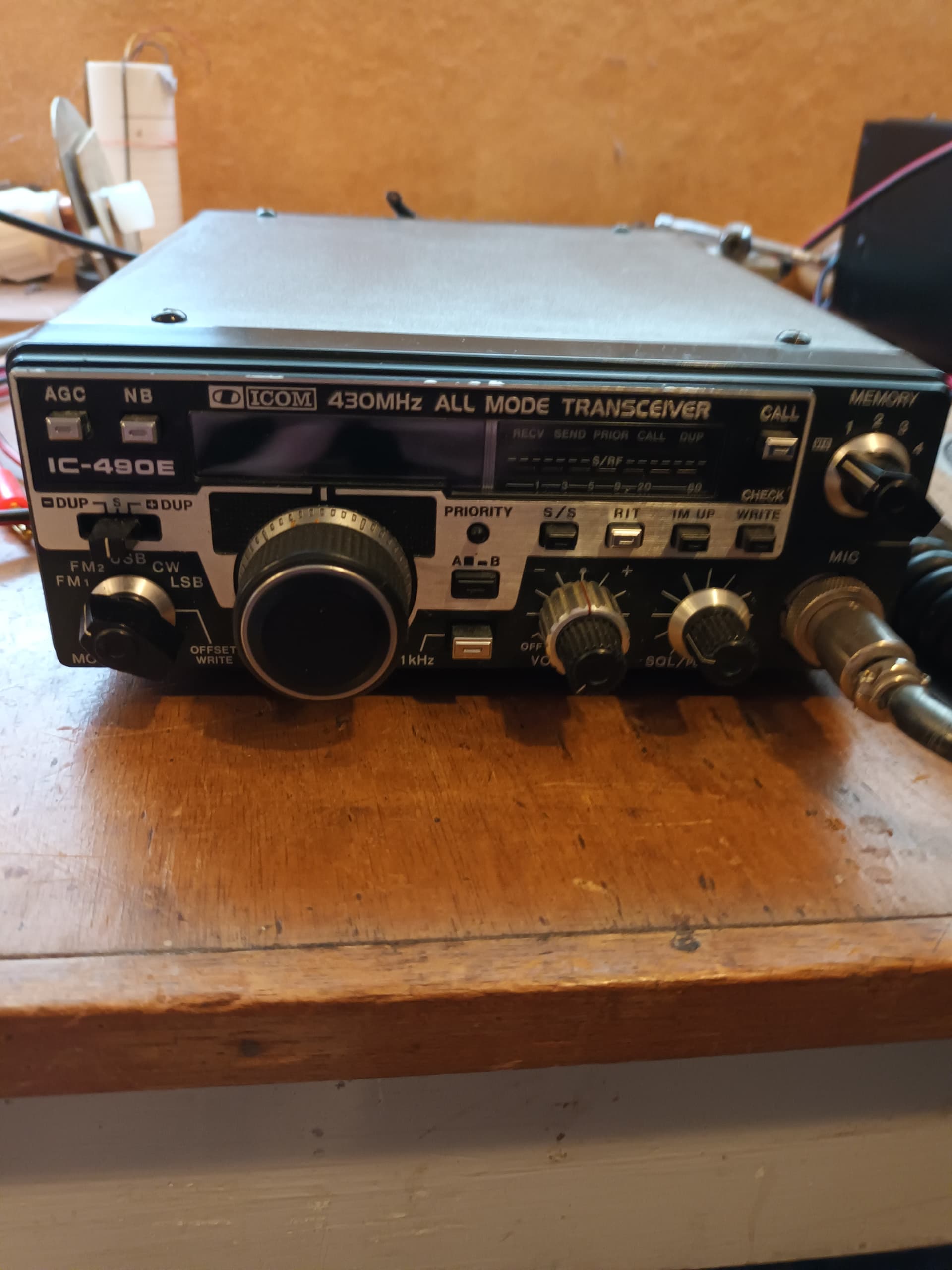
The 490 and its 2m brother the IC-290E (10W) IC-290H(25W) IC290D(25W) were much better than the FT-480/780, TR9000/9130/8500 and FT290/790 when they came out in 1983-ish. Then Kenwood released the TR-751/851 pair and regained the crown for the multimode small mobile and finally blew everyone away with the TM-255/455 pair.
That thing is a work of art. I love it. Is there anyone you could set up a sked with to test it out? What’s the antenna you have on it?
The original Icom supplied rubber duck, but I’m on with making a 5 element Yagi.
It puts out a healthy 1W and I’ve made a DX call between the shack and kitchen 
73 Steve