Forward…
A word of caution; this is more of a set of notes on what I did and how you may do similar, and less of an operating report, though there are some notes on operating toward the end.
Intro…
After being told that work would like me to travel to Japan for a few weeks, I knew I’d like to try and squeeze in bit of ham radio. A quick search online for licence information led me to a post by Stephan @HB9EAJ on the SOTA reflector about his Visit to Japan - Kanazawa in May. My visit to Japan was scheduled for mid-November 2025 and so the information on Stephan’s post very helpful, alongside his writeup of his first activations on Japan. I also found Ara @N6ARA’s post on The QRPer SOTA and POTA in Japan particularly helpful. Thanks also to Paul @VA6MPM for reaching out to me via email with summit suggestions. Start with those posts for guidance on how to get you Japanese reciprocal licence and operating quirks.
My company had put me up in the Marriott Westin hotel in Yokohama, a thoroughly nice place, and about a 10 minute walk from the Yokohama central station. A quick survey of SOTA maps, blogs and YouTube videos along with input from Rob @M0VFC (who got me involved in SOTA to begin with) lead me to choosing summit JA/KN-022 for my first JA activation; mainly as it would also come with POTA JP-1313 and was accessible by public transport.
A rough plan…
A look at SOTL.as Maps showed that JA/KN-022 was a reasonable distance from the hotel.
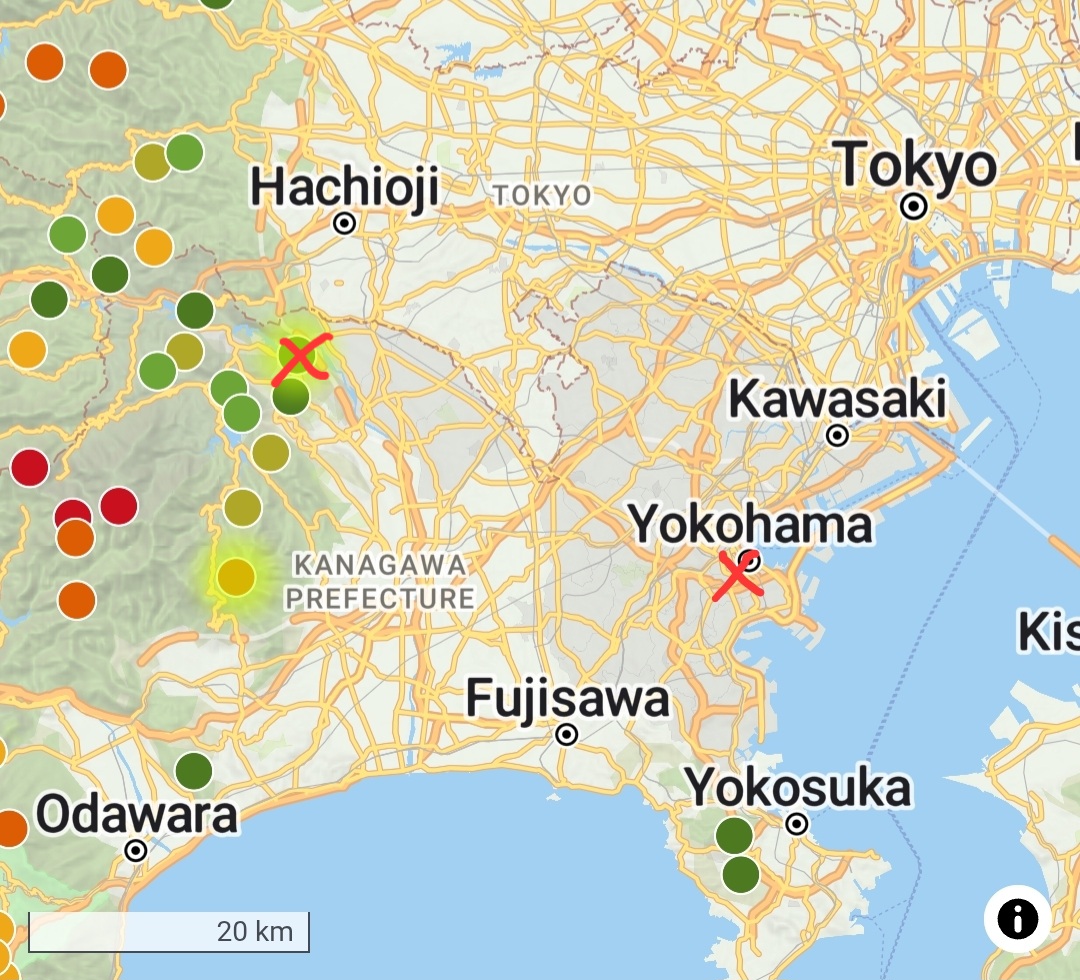
I had a few options:
- Hire a car and drive the 61km – this proved to not be possible as I didn’t have my IDP with me.
- Take a taxi, costing around ¥20,000 (approx. £98, €111, $130) each way – too expensive!
- Take a train & bus, costing around ¥1200 (approx. £6, €7, $8) each way
I opted for the train & bus, with NAVITIME (the recommended travel app) showing around 1h 30m.
Around work commitments, I only had one day to activate before things got busy. This ended up being Sunday 23rd November 2025. The night before I set up my spots, so that the RBN would spot me if I had no cell coverage (fortunately KN-022 had good 5G), and I noticed that Katz @JG1JJL also had a spot for the summit on that day. I adjusted my start time to ensure that Katz had plenty of time to operate before I arrived, so as not to disturb him.

Getting to the summit…
Getting from Yokohama central station to the summit was overall pretty easy. I found myself using a combination of Google Maps (more English UI) and “Japan Travel” by NAVITIME (better knowledge & detail). Both apps suggested a JapanRail (JR) “Yokohama Line” train from Yokohama central station (station JK11) to Hashimoto (station JH28), and then a local bus Kanagawa Chuo Kotsu route 01.
Starting out…
At Yokohama train station I hit a bit of a dependency problem, which took me 90 minutes of back and fourth to resolve…
I arrived at the station around 10am JST, knowing I needed to buy a train ticket, and that the best way was to get an IC card (Suica, Pasmo, etc) which are very common in Japan for much more than transport.
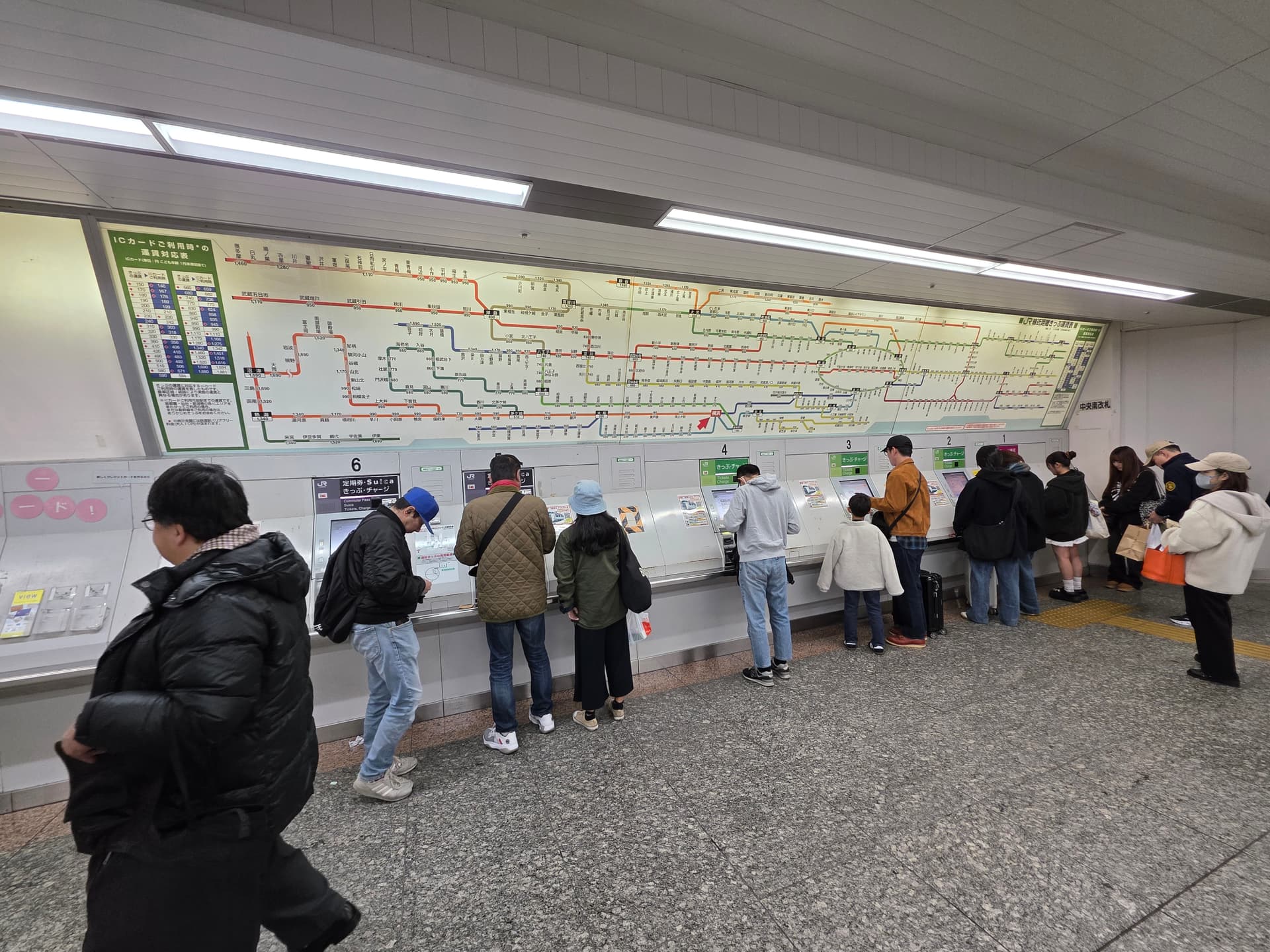
The ticket machines, pictured above would only take cash (notes or coins) which, having just landed in Japan, I didn’t have. I scanned around to find signs for 3 different ATMs and headed over to the closest one, only to have it fail to read my card (magnetic strip error). This repeated for all (five!) of my cards at all 2 of the ATM machines. I assumed that this was an issue with the card vendors not playing nicely (turns out they only accept Japanese issued cards).
I headed to the JR Ticket Office, took a number and waited in the queue (for 15 minutes) until my number was called. I explained to the clerk that I wanted to buy a ticket to Hashimoto and also purchase a Suica (IC) card. I told him I needed to pay by card, but it wasn’t until I offered him my western card that he told me that they cannot take it - damn! The JR clerk told me that I needed to find an “international ATM” and that maybe 7-Eleven would have one.
I ended up walking to a 7-Eleven to use their in-store “international ATM” which charged me a ¥600 (approx. £3, €4, $5) fee to withdraw cash. Later information from Japan National Tourism Organization told me I could have withdrawn cash at ATMs in Japan Post Bank and in Seven Bank, as they don’t charge a fee. There is a JP Bank outside Yokohama station, too. Ah well!
Assuming you either have some Japanese Yen or an IC card already, none of the above will be relevant to you!
Once you’ve got the essentials…
You can touch your IC card on the train ticket barriers to get in, it’s very similar to London’s Oyster Cards, etc..
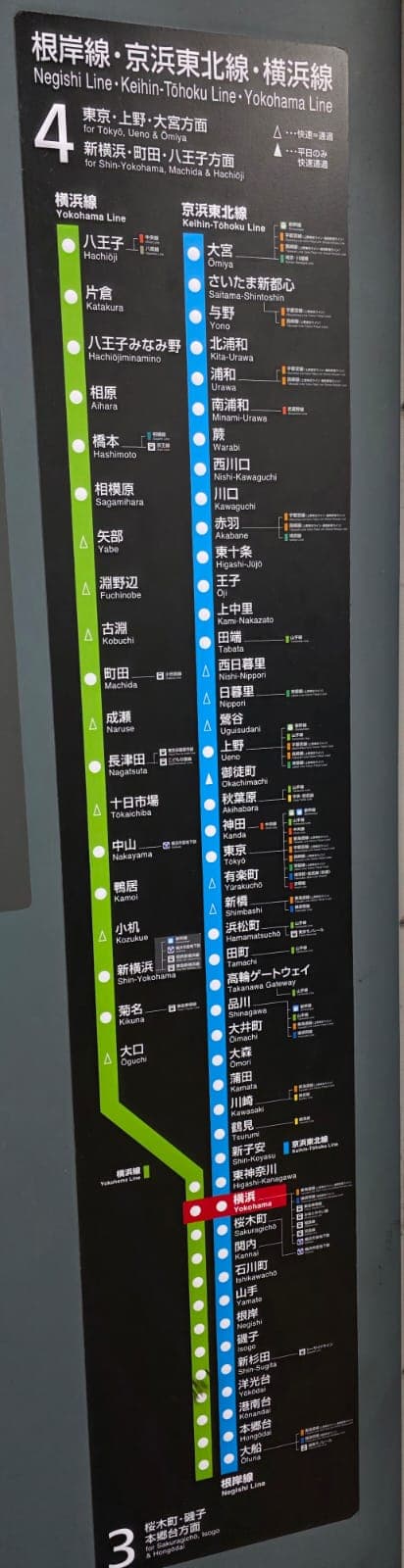
At Yokohama station, I took the steps up to Platforms 3 & 4, and observed the map to understand what was going on. Google Maps and NAVITIME made it sound complex, changing from one line to another, but this is more of a theoretical thing than actual. I waited for a Yokohama Line train (green) that said it was heading past where I wanted to go, and got on. The train I boarded was headed for Hachiōji at the end of the line. Around 40 minutes later I was at Hashimoto station (station JH28). The train announced everything in clear, informative English.
At Hashimoto, take the station’s north exit, head out, slightly left and down the stairs (blue star on map below). The needed bus stand is the right side of the roundabout, at the back (red star on map below). I took Kanagawa Chuo Kotsu Bus 01. I used Google Maps to confirm this was the right stop location, and once moving, Google Maps follows the route and tells you when to get off. NAVITIME also does this, but it is a premium feature which I didn’t have. I recognised the large-ish “01” on the front of the bus and gambled it was correct. The bus waited at the stand until it was time to depart, and so I had a bit of time to confirm it was going to the correct place by asking a local - it was! The bus did not have English announcements, but it was easy enough to follow along on Google Maps.

The bus journey took around 20 minutes and I got off at Lake Tsukui Tourist Center bus stop. The bus stops directly (really, like within 2 metres) by the trailhead.
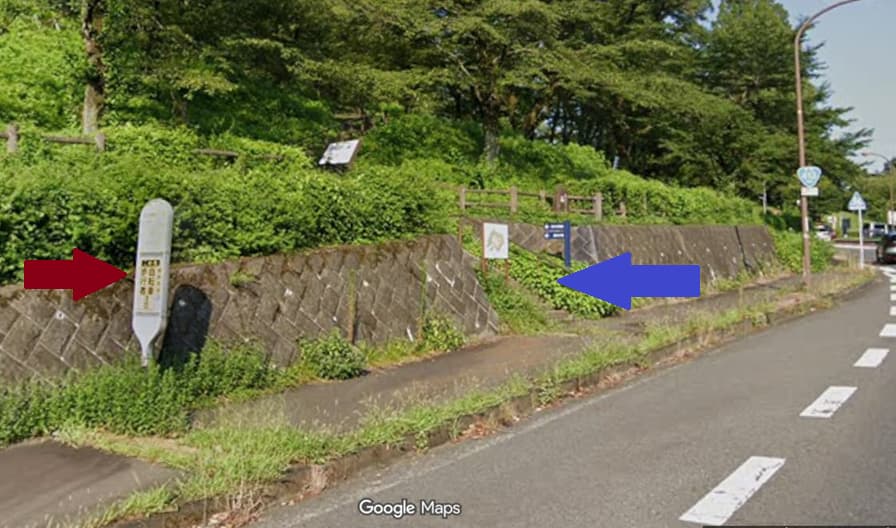
The Ascent
For the first part of the ascent, I followed a few others Japanese tourists off the bus. I was there on the Labour day weekend, so there were a few families getting off the bus for a walk. I chatted to the lady who’d confirmed the bus direction; she was asking what instrument I played and gesturing to my antenna (MA-12 from AliExpress, the same as a Chelegance MC-750 at ½ the price for the same thing!). She and her family where off to find flying squirrels (I had no idea Japan had them). We parted ways as I diverted upwards into the trees toward the summit.
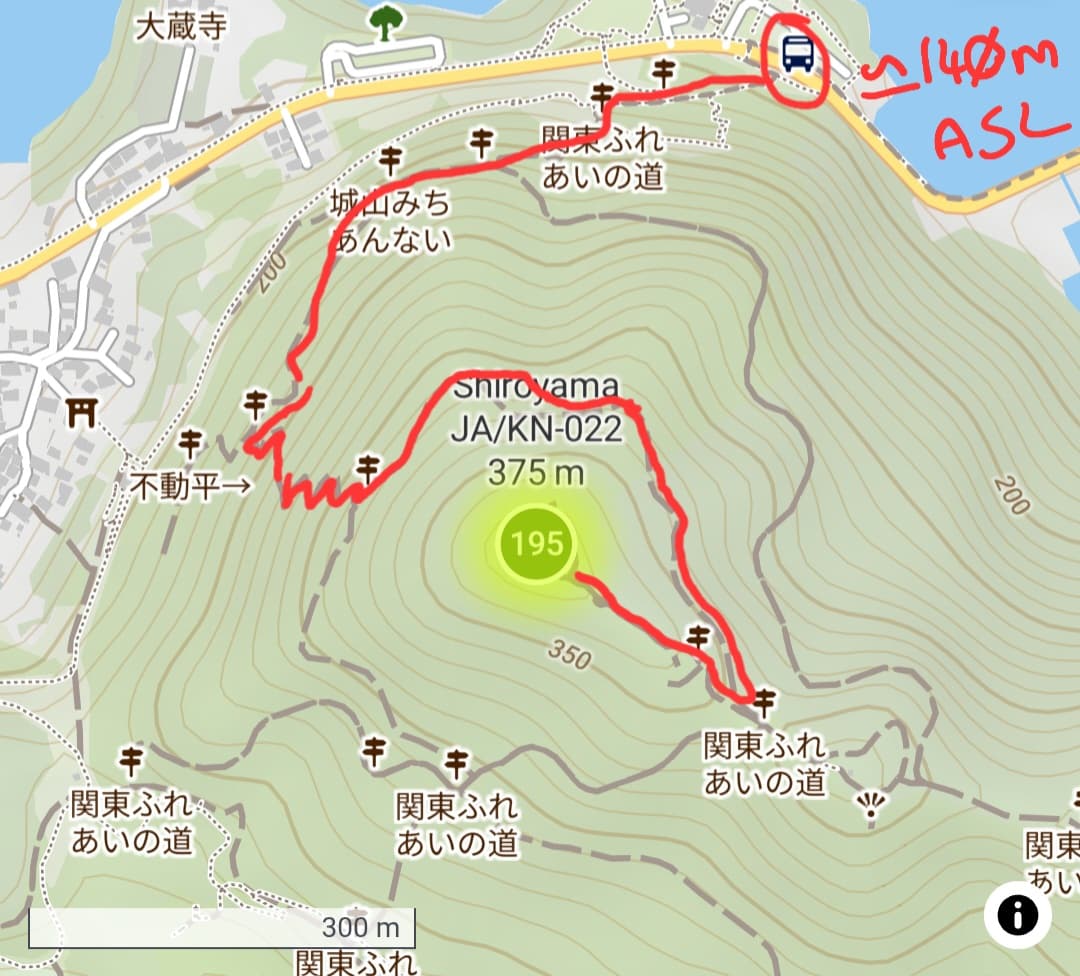
I closely followed Kawa @JA1CTV’s trail which starts at about 140m ASL and winds up to the summit at 375m. The path is well signposted, and I used Google Lens & Google Translate to help with the (many) signposts & caution signs. Mostly these were about falling trees, hornets, and other similar outdoorsy things. My favourite sign was one that said “DO NOT STOP HERE - Frequent Rockfalls!” which I stopped at for 20 seconds to translate. I was amused by this and escaped unhurt!
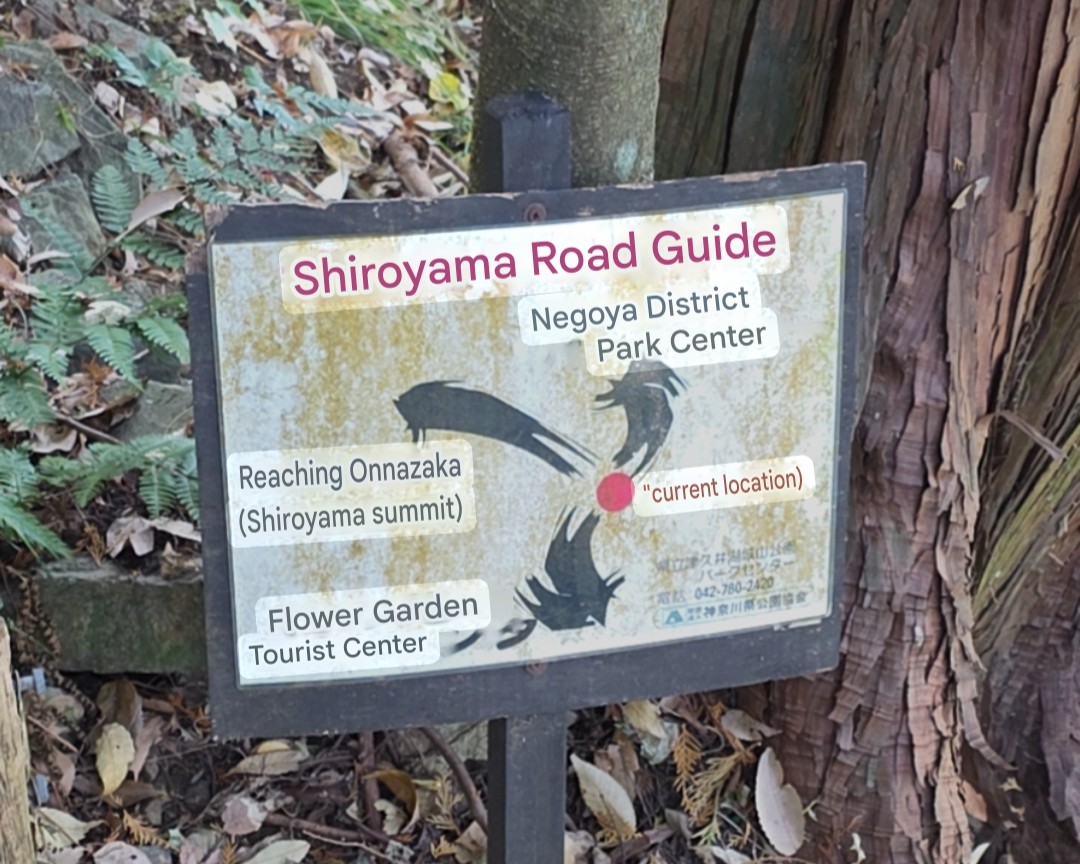
I had seen on Reddit for the park and other peoples blogs for activating JA/KN-022 about black bears and was doing my best to follow the advice (be loud so as not to surprise them, and if you do see one, be big and aggressive towards it, don’t turn away, definitely don’t run) – I’m from England, we don’t have these issues. None of the signs I saw in on the walk were about bears. As I walked now, I couldn’t help but laugh to myself about the two possibilities: (i) that the signs others mentioned had been removed as bears were less of a risk during autumn, or (ii) angry bears had destroyed the signs to get more to eat!
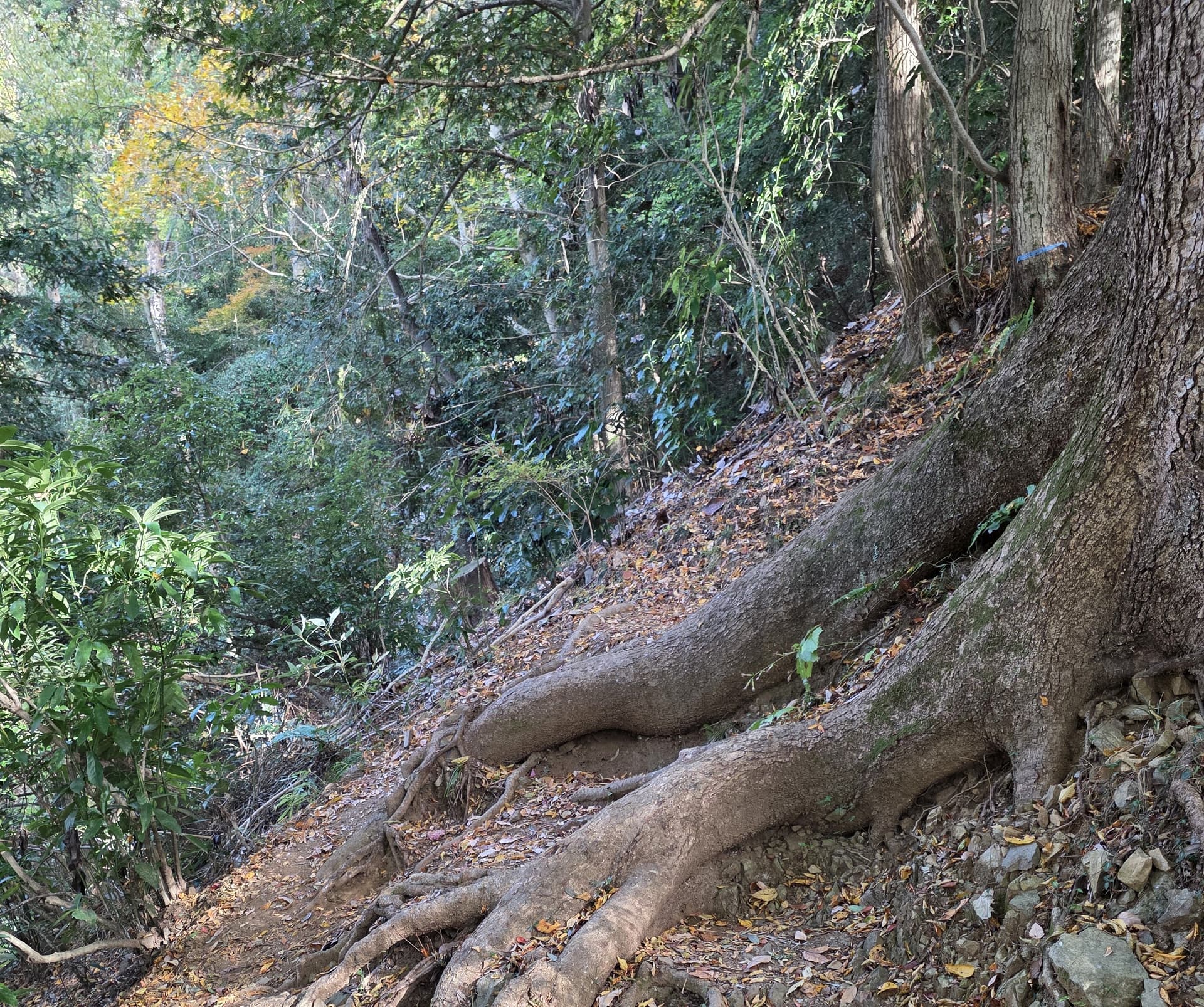
The walk up took me around 40 minutes. It was a mix of steep sections and flat sections. Some parts were narrow and the land eroding, so I held on to the trees. Other parts, the tree roots were all that was left of the path, so I trod carefully.
The activation…
When I arrived at the summit, I saw the benches that @F5MMP operated from in his SOTL.as photographs. The summit was quiet and I had planned to return to the benches after visiting the slightly raised platform for the views of the lake below. However as I rounded some shrubbery I found Katz @JG1JJL sat on a small seat packing away. I wandered over and introduced myself, not knowing if Katz spoke English (he does speak excellent English) and we chatted for around 30 minutes, with each of us showing the other our radio kit. Katz offered me plenty of advice on operating, most of which is summarised in the linked blogs by Stephan @HB9EAJ and @N6ARA, but a few extra bits are included here, too.
Antenna-wise, I had chosen to use the MA-12 (same as MC-750, but cheaper). In Europe I mainly use it on 20m where is acts as a ground-mounted ¼-wave vertical monopole. It’s super quick to deploy (around 1-2 minutes) and just works. I used my IC-705 with my 8Ah 12V LiFePO4 battery with TX power set to 10W. I recorded a voice-keyer for “JL1HWG portable 1” (logged as JL1HWG/1) and set up PoLo Logging App for the summit and park references.
I spotted myself on 14.253 MHz USB via PoLo on both POTA and SOTA clusters and began calling CQ. After around 2-3 calls, I pulled Waka @JG0AWE out of the noise but it was tough – he was far too close for the band.
Katz advised I drop down to 40m as (a) the skip would be better for Japan domestic, and (b) licence conditions meant that everyone could work me (some bands, like 20m are only available to higher licence classes in Japan) – I followed the advice and set up on 7.097 MHz LSB, above the data section of the band, but below where the main rat-race begins. This was a case of simply adding in the 40m loading coil for the MA-12 antenna. Once going, I quickly worked 9 stations on 40m (including @JG0AWE, this time much stronger!). 40m was busy, and I struggled to hold a frequency with 10W SSB; Katz explained that I should have gone up in frequency on the band and @VA6MPM says that popular SOTA hangouts are 7.163 MHz, 7.167 MHz, and 7.176 MHz, though I had forgotten this until Katz mentioned it again. In hindsight, the inefficiency of the loading coil wasn’t helping either, and I suspect the 40m dipole in my backpack would have helped a lot, too.
Katz then advised I jump to 70cm FM since a local Tokyo contest had finished we may get some takers there. Katz explained the national calling frequency, and that we should announce a frequency so I called on 433.000 MHz, and announced I’d be listening on 432.940MHz FM (having previously checked it was clear) – to the EU operator, these were all foreign frequencies to me, as was the 10 kHz channel spacing (not 12.5 kHz) though the concept of CQing with a “listening on frequency X for calls” is one I employ when activating on VHF in the UK. Again there was a small pileup of 4 stations, all of which I worked with a bit of a chat in between, exchanging names, JCC numbers (city codes, definitely know this for where you’re activating). I didn’t call CQ again on 70cm, as I had already qualified for both SOTA and POTA with 14 QSOs in the log, and since it was starting to get dark I thought it was best to get going.
I remain incredibly grateful to Katz @JG1JJL for staying with me and mentoring as I got started. His knowledge of what to try was very helpful. I can only imagine how painful it was to listen to me fumble through these QSOs and butcher Japanese phrases, but he remained upbeat and encouraging throughout! If you’re reading this Katz, again, thank you!
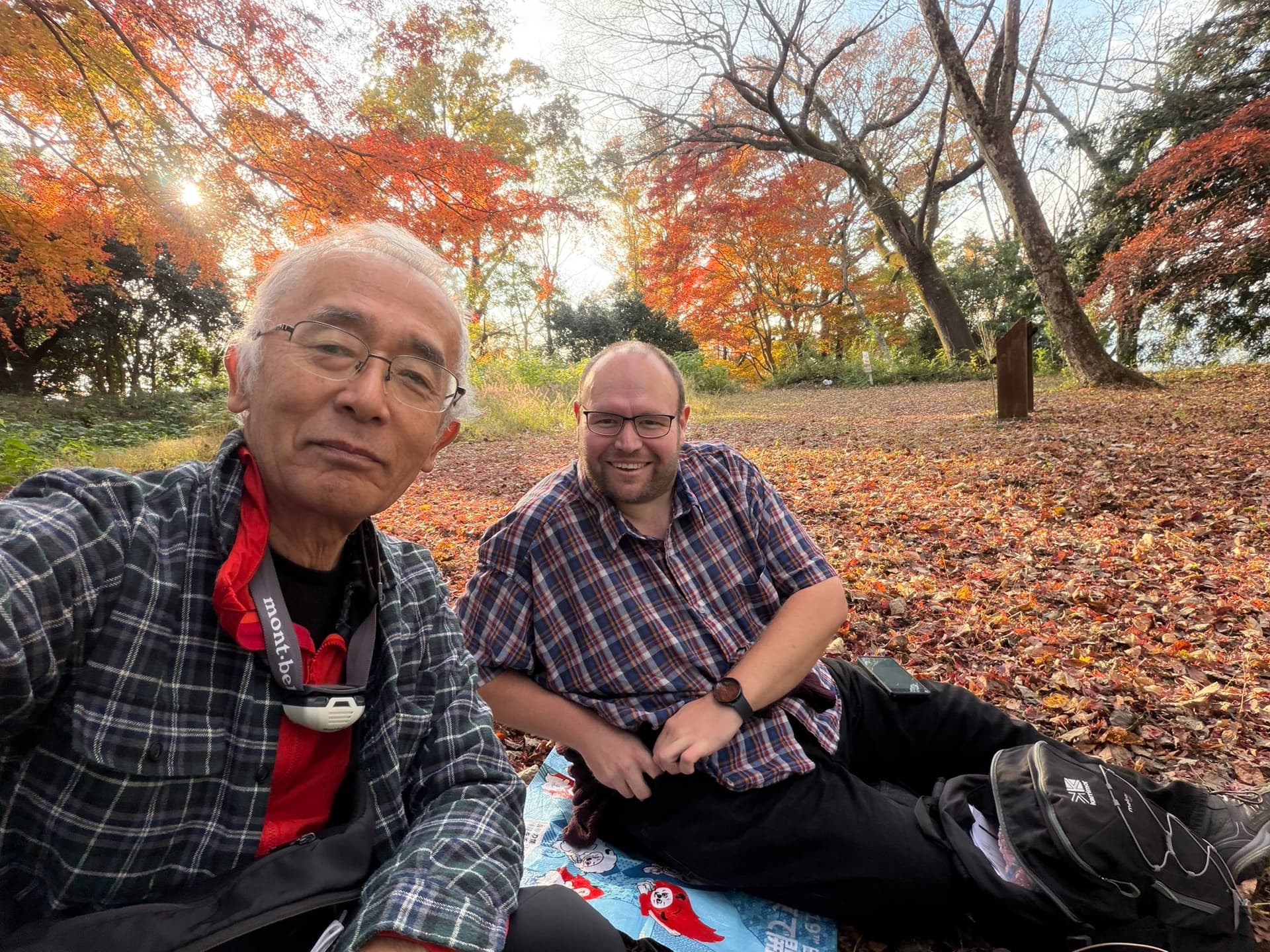
I was surprised at the amount of English spoken; I was expecting to struggle as I have barely two words of Japanese – it wasn’t an issue at all – it felt like I could have made 100s of contacts with time.
In hindsight, I do wish I had taken a few minutes to tune around the bands to see what there was. While searching for a clear frequency on 20m I heard South Korean, and some other languages I didn’t recognise. Quite different from short-skip 20m in Europe. I should have also done a bit of S&P for other activators, I did have a quick listen in the CW section of the band and heard a few folks calling CQ POTA, but it was getting dark and the decent was a bit sketchy in places with narrow tracks. In another world, I would have happily spent hours up there tuning around and working whoever I could hear!
My advice for anyone considering similar:
- For HF, concentrate on 40m as it is busy.
- For VHF & UHF, FM is quite busy, as is SSB and CW. The band plans are different, take note.
- English wasn’t a problem, there were more than enough people happy to try!
- “Domo Arigato” means “thanks a lot” or “thank you very much” in Japanese.
- See where others are spotting themselves for a given band/mode and go close.
- If you have the opportunity for a local to operate with, chose it. I was very grateful Katz found the time out of his day to wait for me to activate.
- Take bear bells.
The decent and return…
The decent was very much a case of “installation is the reverse of removal”. By now, it had gone dusk and rapidly getting dark. Katz and I took our time walking down. Katz suggested walking the opposite way around the summit, which we did, taking the blue path to the south on the return.
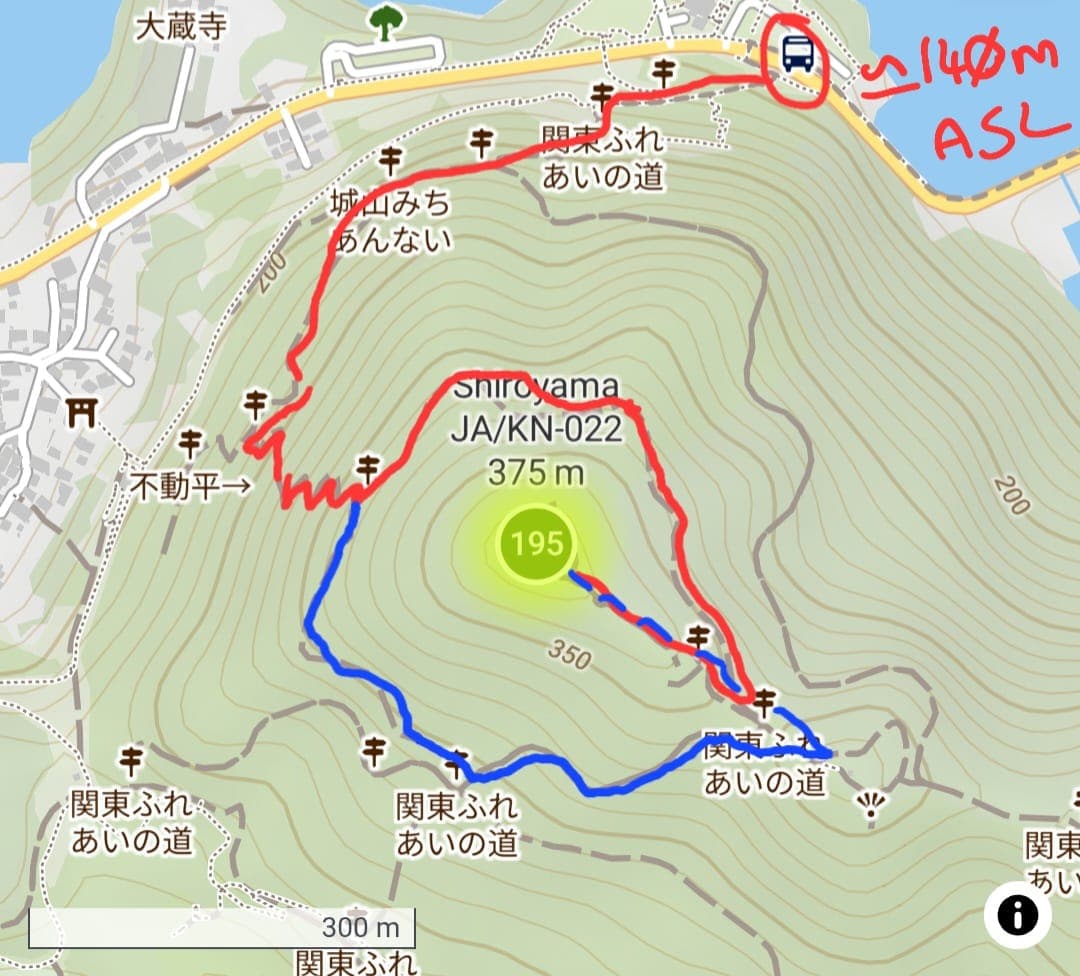
Arriving back at the tourist centre after around 30 minutes, we used the facilities and I got a drink from the vending machine with some pocket change that had been acting as my bear bells, before we both got on the bus back to Yokohama Station.
Katz and I parted ways at the station where I took the Yokohama Line back to Yokohama Station and Katz headed back to his home in Shinagawa City, south of Tokyo.
Since I got back to the hotel Katz had reached out asking if I was planning another activation  I’m keen to squeeze one more activation in before I leave to redress some of the things I missed last time.
 )
)