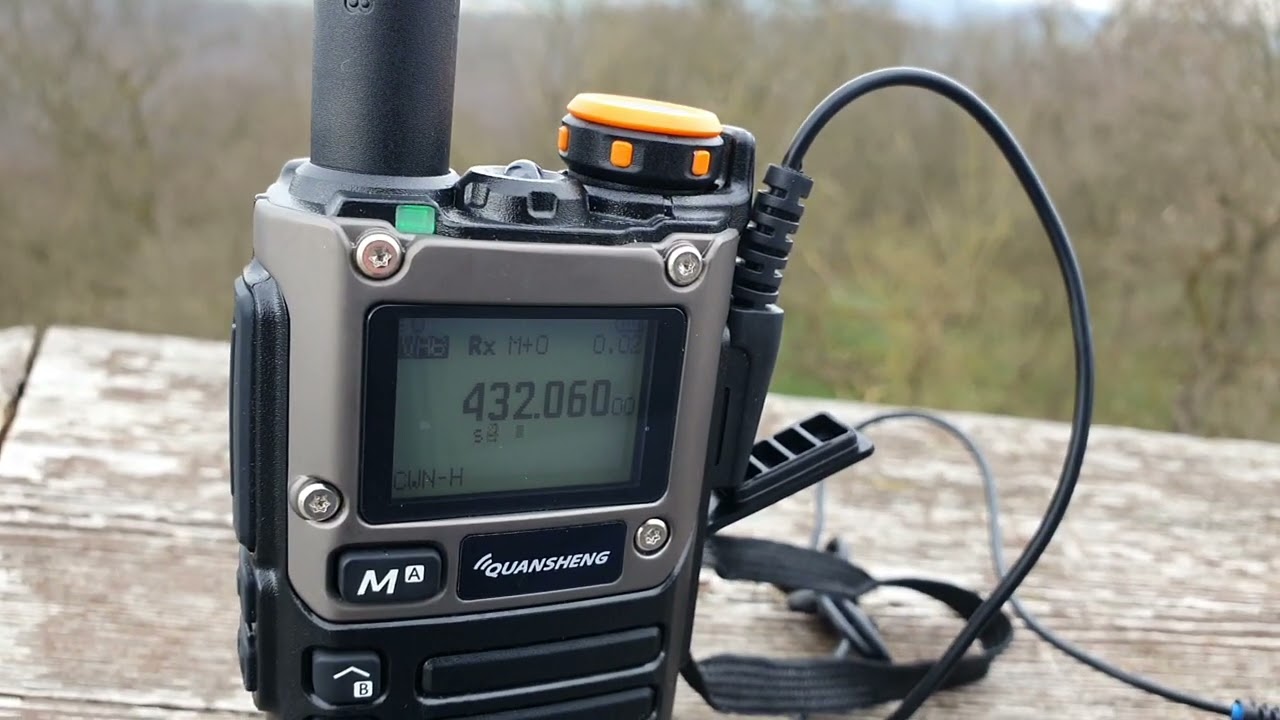
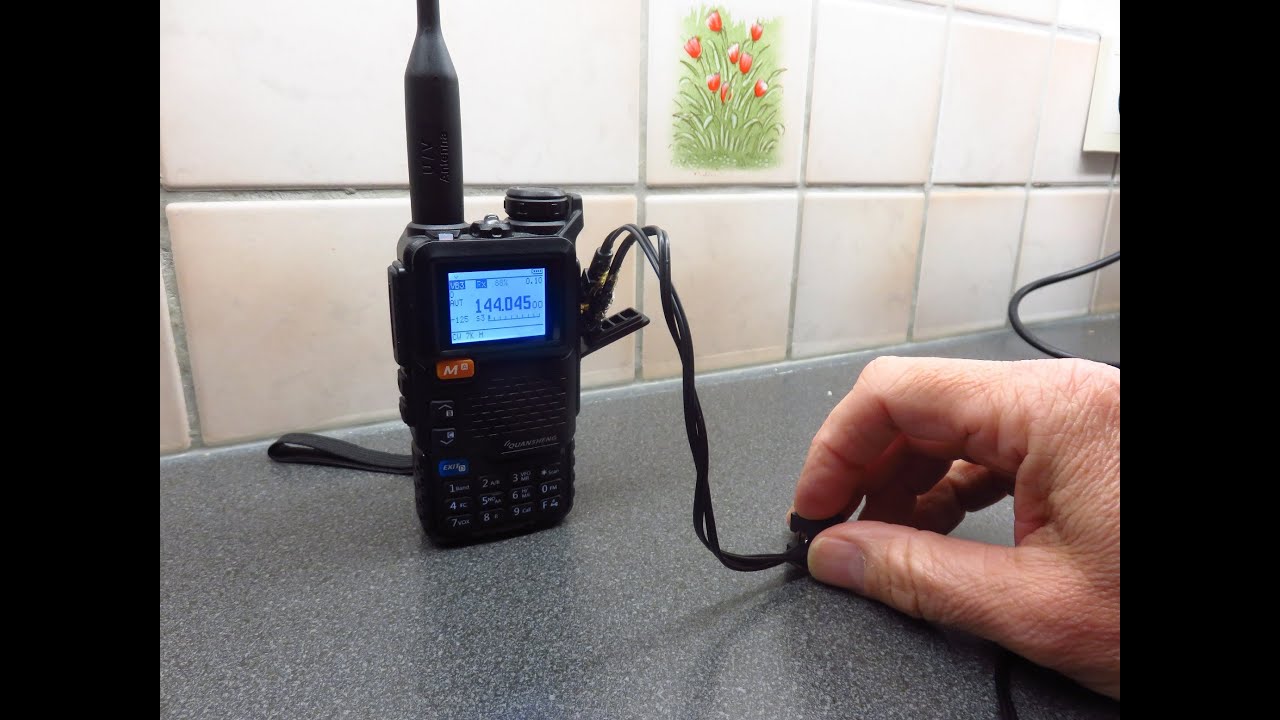
Modifying a Quansheng for CW

Howyas All,

Curious about how to get in to CW for 2 meters and 70cm? Unsure if it is for you but wouldn’t mind dropping a couple of bob on a cheap, hackable HT and hopefully excited enough to want to give CW on 2m and 70cm a go?

Brilliant! The more the merrier!

Thankfully, getting in to CW on 2 and 70 is now made a lot easier thanks to the versatile, hackable and reasonably priced Quansheng K5 handheld radios and the community that has grown around them.

Notably around recent developments in custom firmware for the K5 that have introduced a plethora of capabilities to allow the little handheld to punch well above it’s weight.

I’ll try not to drown folks in too much technical detail, rather outline the steps you need to take to get up and running armed with a Quansheng K5 and a compatible CW key.

There are some caveats that are firmware dependent, which is important to note.

Part One: The Radio

Before you do anything, you will need a Quansheng K5 handheld radio. These are available from a variety of stores online. The cheapest place I’ve found them are on Ali Express, though be prepared to wait a couple of weeks for shipping.

You might also save a few bob by ordering from sellers in bulk, perhaps as a group buy. If you want your radio(s) a bit quicker you could try sellers within EI (if any, I am unsure) or where you live, or try Amazon etc.

Part Two: The Firmware

Once you have received your radio(s), you will then need to overwrite, or flash, the stock firmware with one of two custom firmwares available.

There are several flavours of custom firmware available, the two we are interested in for CW are IJV Mod and CEC.

Now, this is where you have your first choice to make. Both firmware flavours are capable of CW (amongst other additional features), but they both take a different approach. I’ve made an easy bullet list below.

  • If you choose IJV Mod you are only able to operate CW using a straight key. You can use a paddle, however it will only work as a straight key. You could add a keyer to the chain I suppose, but that’s more gear to carry.
  • If you choose CEC you can operate CW using a straight key or paddle.
  • For both flavours of firmware, you will need to create a custom 3.5mm cable with resistors in-line, or you can use the Quansheng PTT button to operate as a straight key.
  • For IJV Mod only you can modify the internal PCB and avoid having to make a custom cable. This is the route I chose. You can use a paddle with IJV Mod by adding a pico keyer in-line. I chose not to do this as it’s another device to add to the chain. Quansheng’s are reasonably cheap, so I went the hardware modification route instead.
  • IJV Mod is available in the latest revision version 3.60. However, multiple sources online report that version 2.95 is the better choice for CW at the present time. I chose to install v2.95.

You can take a look at both the IJV Mod and CEC firmware pages at the following links:

IJV Mod download site: Quansheng K5 Firmware Mod (IJV Mod)

CEC download site: Introducing UV-K5 Version 0.3Q (Stable version, added FT8 QSO)

Part Three: Internal Modification (Optional)

Rather than muck about making custom cables, I decided to go a different route and modify the internal PCB of the Quansheng.

Modifying your Quannie in this way will mean you don’t need to make a custom cable but will still need to use a straight key (or a paddle that will function as a straight key).

It’s a fairly straightforward modification, just a little fiddly so you may want a magnifying glass and a steady hand for it.

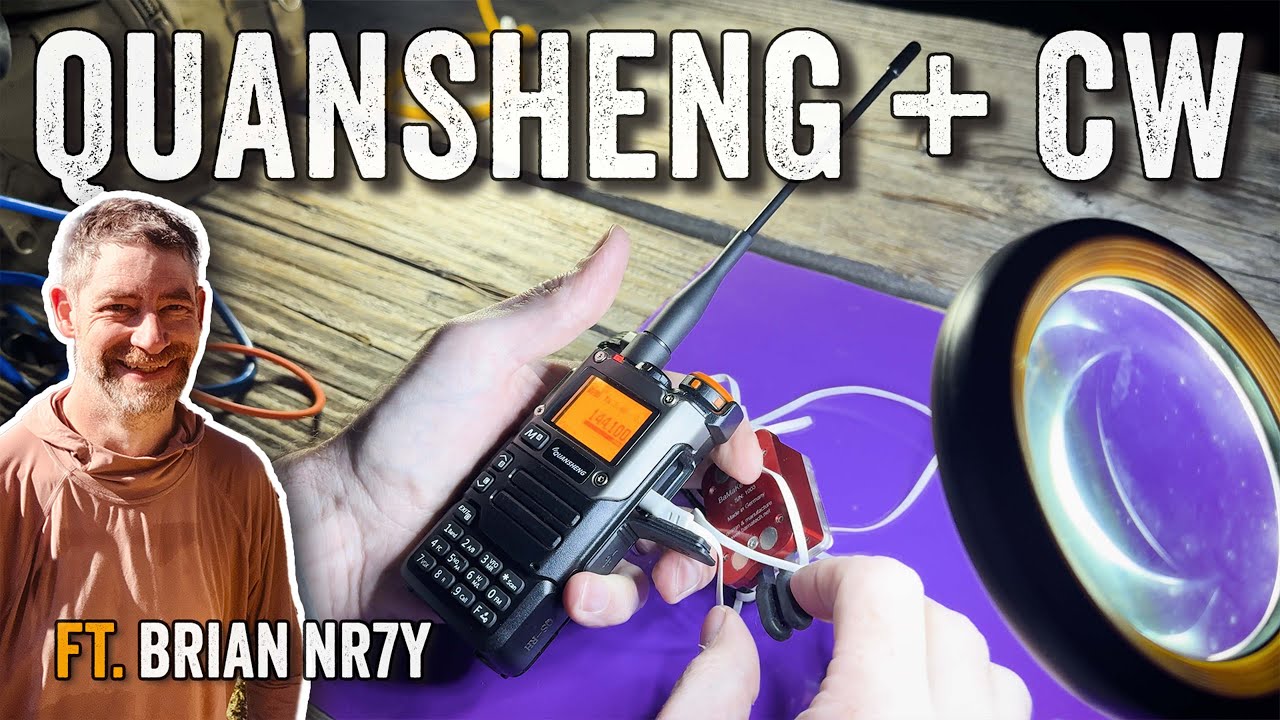
The folks at SOTA+ have made a good video about the internal modification and the instructions to follow in order to complete it successfully. This is the video I followed and credit to them for the great resource:
Part Four: The Best Bit! (NOT OPTIONAL!)

Fire up your Quannie, set it to CW Mode in the menu system. Punch in 145.050 on VFO A and 432.050 on VFO B and start hammering out some sublime CW on our beloved 2 meter and 70 cm bands!

It’s time to stop our complaining that 2 and 70 are dead bands. They’re only dead because folks are not picking up their rads and yappin’!

Now, with the Quansheng custom firmware and low price-point, it’s even easier (and cheaper) to get involved on 2 and 70!

I don’t want to be the lone soldier though! Let’s use the bandwidth provided to us and make 270 great again, not just on FM, but on SSB, CW, SSTV and all more!

How about some SOTA and POTA CW on 270? Some 270 SSB (or CW?) DX?

What can you do? I can’t wait to see what folks minds come up with. I hope you enjoyed my little guide and found it useful.

Over to you!

73 DE EI3lH. :ireland:

12 Likes

30km from a summit to the chaser with Quansheng in a garden in a big town, both with the small antenna.

73 Chris

3 Likes

That’s great to see you giving 70cm the full beans there Christoph, good work!

It makes me wonder with the great results I experienced during 433 Alive how far CW on 70cm could get you? 235km+ on phone. How far on CW? EI to UK again perhaps?

2 meters during decent lift might get to Europe possibly? Maybe a WSPR beacon for 270 might be a future build and deploy idea to give a decent indicator?

Let’s see more 270 CW secret agents emerging from the shadows! How have your attempts gone?

2 Likes

…thanks Ian, great information.

Geoff vk3sq

1 Like

What is the effect of removing that resistor ?
Does an external speaker-mic still work as intended ?

As for an external keyer, this one could be made very small, with a small battery, just enough for one activation (I did try a CR2032 coin cell but that didn’t work too well, so I use 1 Li-Ion cell).

73,
Luc ON7DQ

2 Likes

What a comprehensive project. Respect! There was a time when I loved sitting in front of the computer for weeks and programming in Modula, Java, and C.

Now I prefer going outdoors.

The DigiSpark still appeals to me, and I even have one in my SpotaOne as a keyer. (There will be good news about this project soon.)

I built a 2m bandpass filter for the Quansheng. If you’re interested, please let me know.

73 Chris

3 Likes

Removing the resistor negates the requirement for building a custom cable in order to use a key with the Quansheng. Otherwise you need to build one if you want to keep the radio intact.

It’s explained a bit better than I would ever be able to here:

CEC CFW works with one of the Ali Express 3.5mm paddles but IJV Mod will still only work with straight keys, even if you connect a paddle it will operate as a straight key.

The external speaker still works no problem. I have two Quansheng radios. One modified internally and with IJV, the other left intact internally but running CEC.

Both radios work 100%. The only faults I have with them is finding other 270 CW operators! :sweat_smile:

i’d like some slow morse over 2m to help or get me learning morse again. is there frequencies where you can morse and talk on the same frequency? that would make a lesson easier if you could talk on freq then do some more conversation on freq then talk again.

1 Like

Great post Ian, thanks.

Are you aware of any modification or firmware update to any of handhelds which would allowe 2/70 SSB transmit? Or are we limited to FT817/8 in that field.

Thanks

73 Marek

1 Like

The Quannie will do SSB on 2 meters with CFW. Not sure about 70cm though. Here’s a video demonstrating 2m SSB:

The good thing with the Quansheng is the price and hackability. If you find you want to do a bit more on 270 (and why wouldn’t you!? :grin: ) you could then perhaps look to move on to an 817/818, 857, 991 or a vintage all mode. There is of course the 705, 905 and FTX radios too.
Hopefully with the surge of interest recently, the bigger names e.g. Yaesu, ICOM (and, if they still care about amateur radio, who knows these days?) Kenwood et al might be inclined to make future VHF/UHF radios in their product lines all mode too? We can but hope!

If you are reading this Yaesu - MAKE IT HAPPEN! ……..Please. :blush:

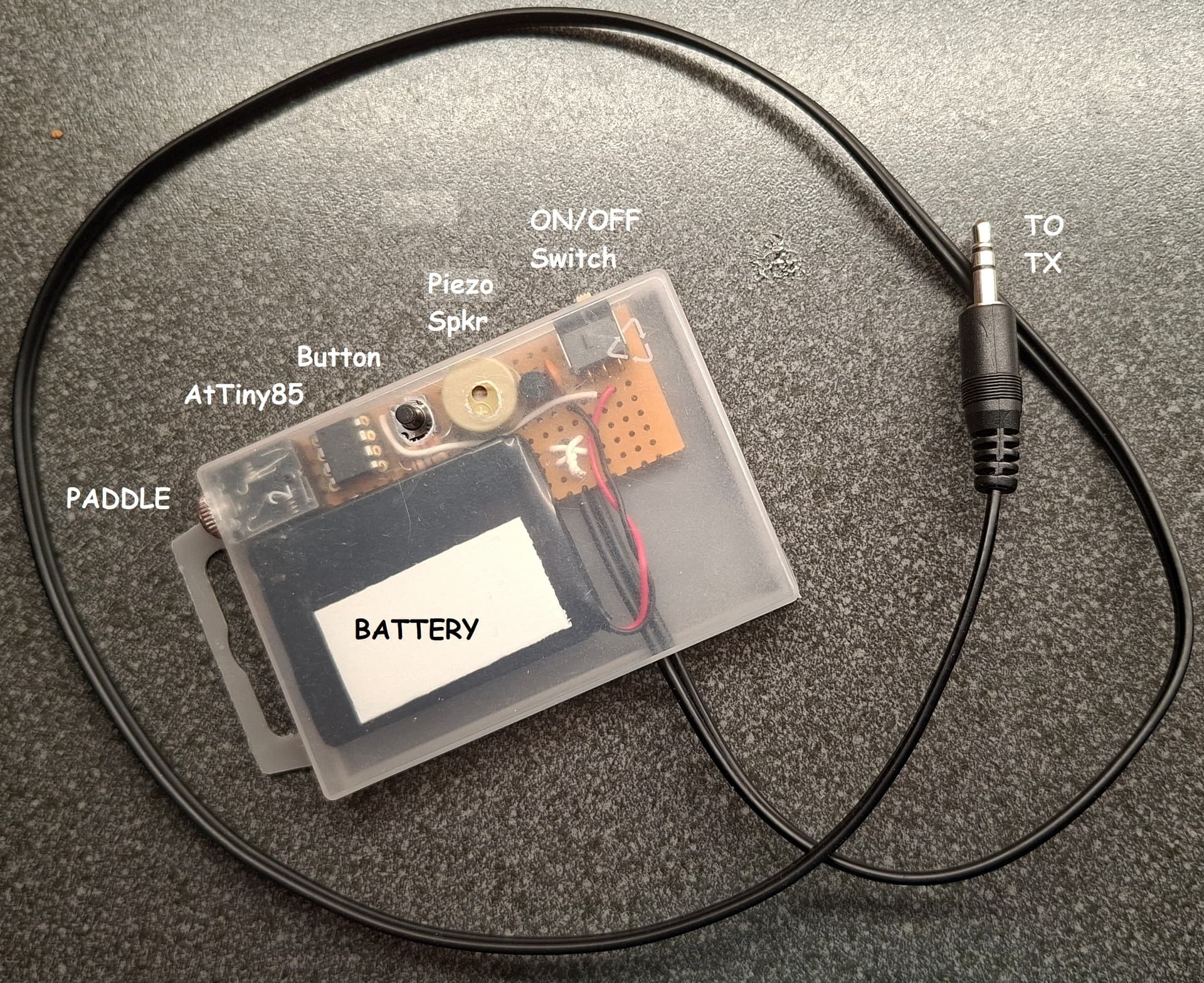
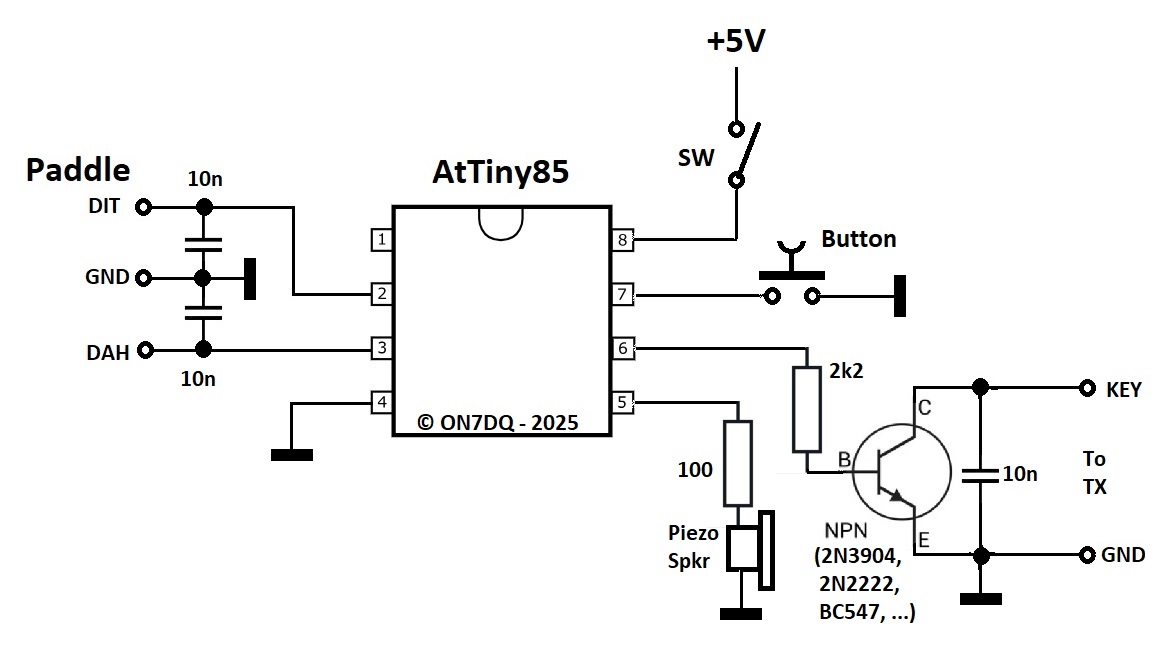
This afternoon, I built another YACK keyer with an AtTiny85 chip, this time ignoring the “DigiSpark” cloning, like in my blog post (see above).
I tried to make it as small as I could with what I found in the junk box. Of course, if someone would design a PCB and use SMD components, it could be even smaller.

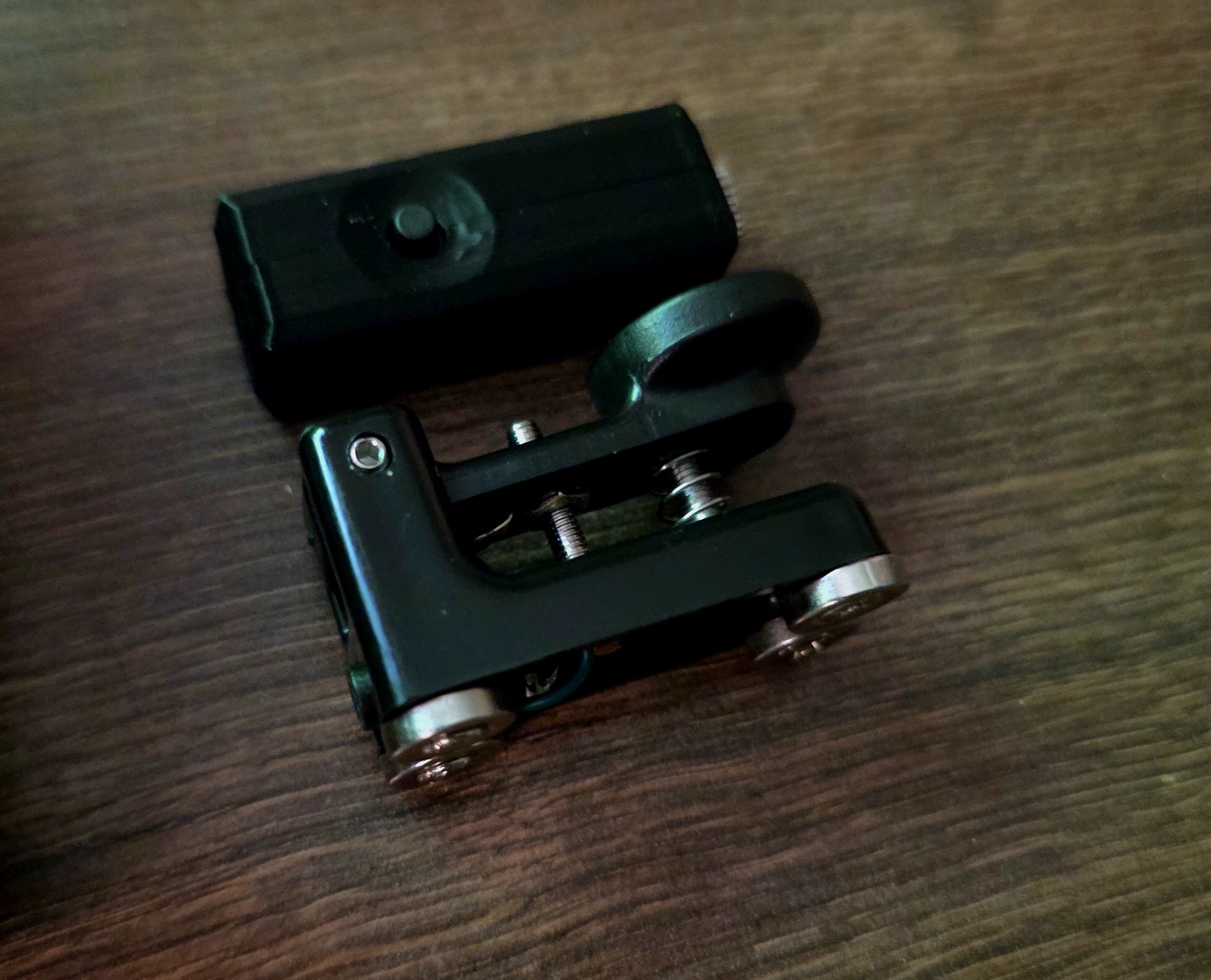
The biggest part was the battery, I found nothing smaller than this 650 mAh Li-Ion cell from a cordless phone (the black rectangle in the picture).
If it were not for the battery, the whole circuit could be housed in a 7 cm piece of electrical conduit.
Total weight with cable, but excluding a paddle, is only 48 gram.

The circuit has become really simple this way:

73,
Luc ON7DQ

3 Likes

Happy to give it a go at 2 wpm. :joy:

Seriously though - I started my CW journey 3-4 weeks ago… doing it on a HT + (large) whip seems appealing - provided other people are there to QSO with.

3 Likes

Best of luck with it!

1 Like

If anyone is considering a straight key for the Quansheng, or just for /P /M /MM /AM /RS /B&Q /ICI etc…

I received two straight keys from ‘Le Express Magasin avec Ali’ today. I tested them on the aul Quannie, both IJV and CEC and they work just fine.

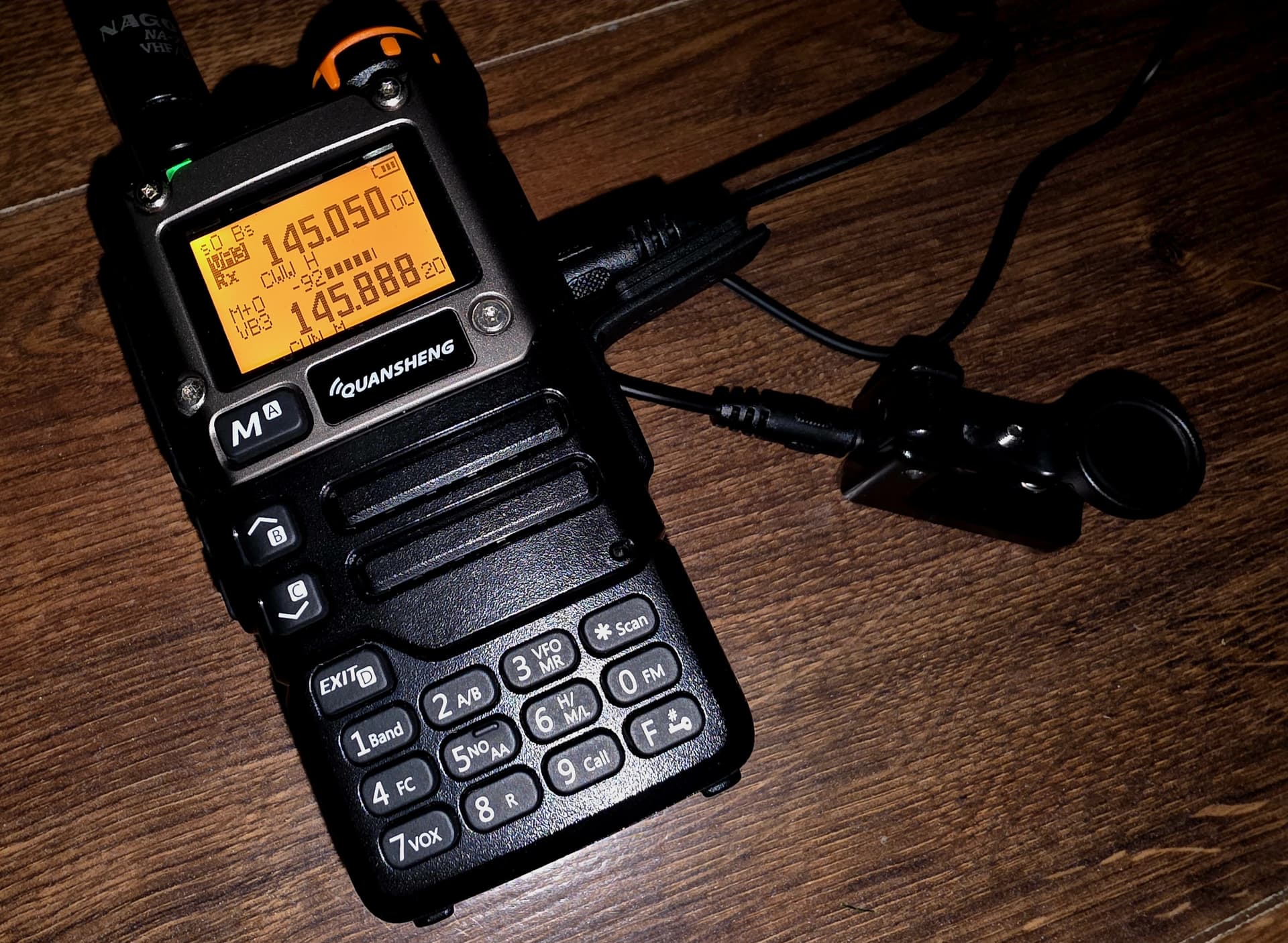
These keys are tiny and fully adjustable. I’ve added a (brightened up as the room was dark) snap of the ‘Alikey’ against a @K6ARK mini mic I built (the QMX one that doesn’t seem to work yet my KX2 mini mic does) for a size comparison.

I’m going to make a shorter cable and you can also unscrew the magnets, so I might add a velcro base on the Alikey and the Quannie for extra compactnessness.

The keys are about €12ea delivered. I can post a link if anyone would like (and if it is allowed).

3 Likes

If you can’t put a keyer in the paddle … put the paddle in the keyer !

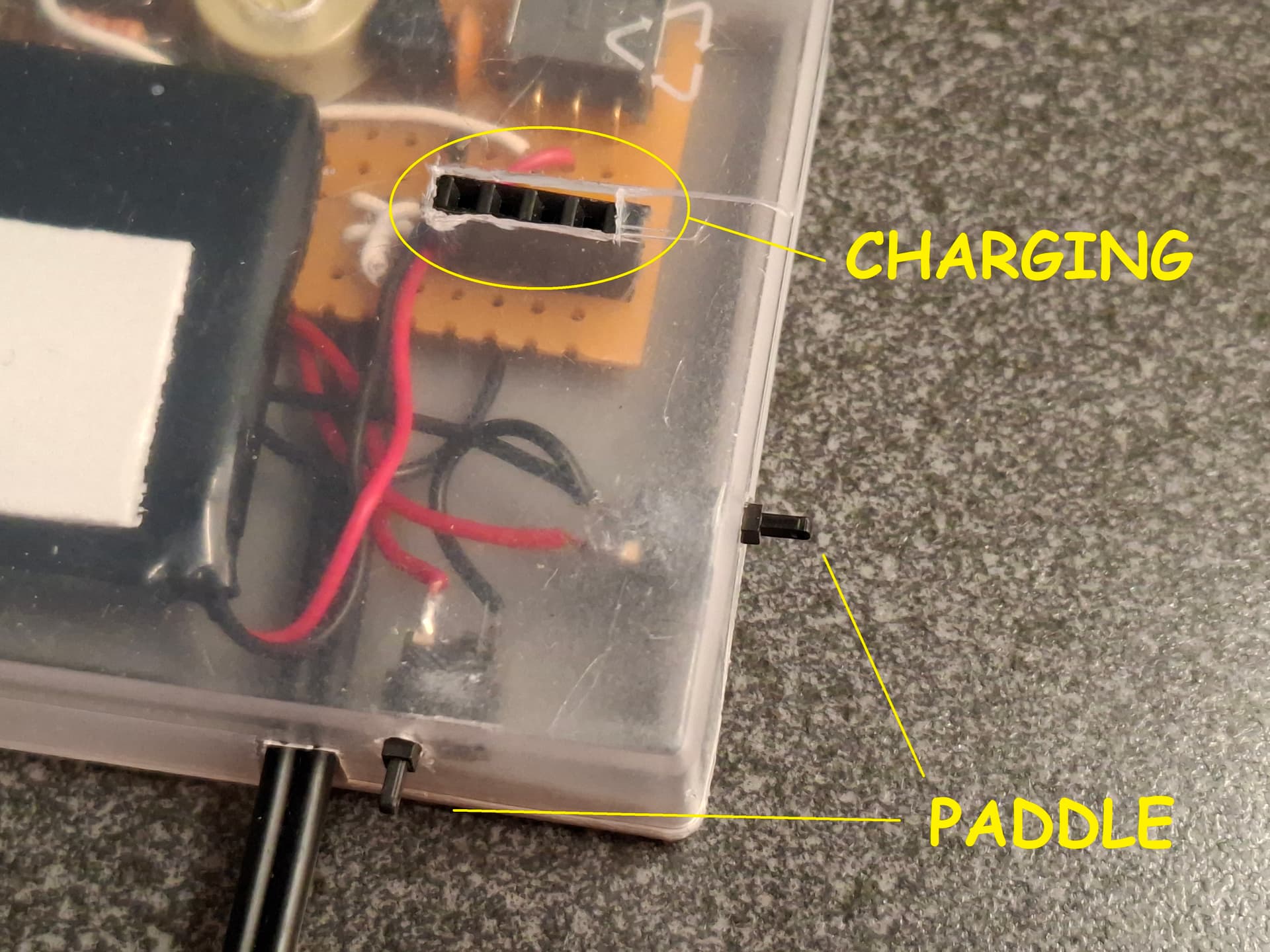
I used two small buttons (write protect switches from old 3.5" floppy drives), and glued them in the corners of the keyer enclosure. They are connected in parallel to the 3.5mm paddle input connector.

While I was at it, I also added a 4 pin header to the battery for charging. Only two pins are connected, so plugging in a Chinese charger board the wrong way has no effect.

Total weight of the keyer, with battery and an adapter cable (with another button as a backup straight key), is only 59 gram.

That makes a total weight of abt. 320 gram for a complete 2/70 FM/SSB/CW station (excluding extra antennas of course).

My rig is a UV-5R Plus, which was cheaper than the UV-K5 at the time, and came with a bigger battery (2200 mAh vs. 1600 mAh). It lacks the USB-C charging port though.

I made a new post on my blog about this version of the keyer:

And here is a short video on my YouTube channel, showing the straight key, and the “button paddle” in use:

73,
Luc - ON7DQ

7 Likes

If you are in Auckland, the VHF Group plans a Quansheng Mod Night in November, i.e. before this years VHF field day, so that people can use these for 2m SSB.

DM me if you are interested

1 Like

That is excellent. Nicely done!