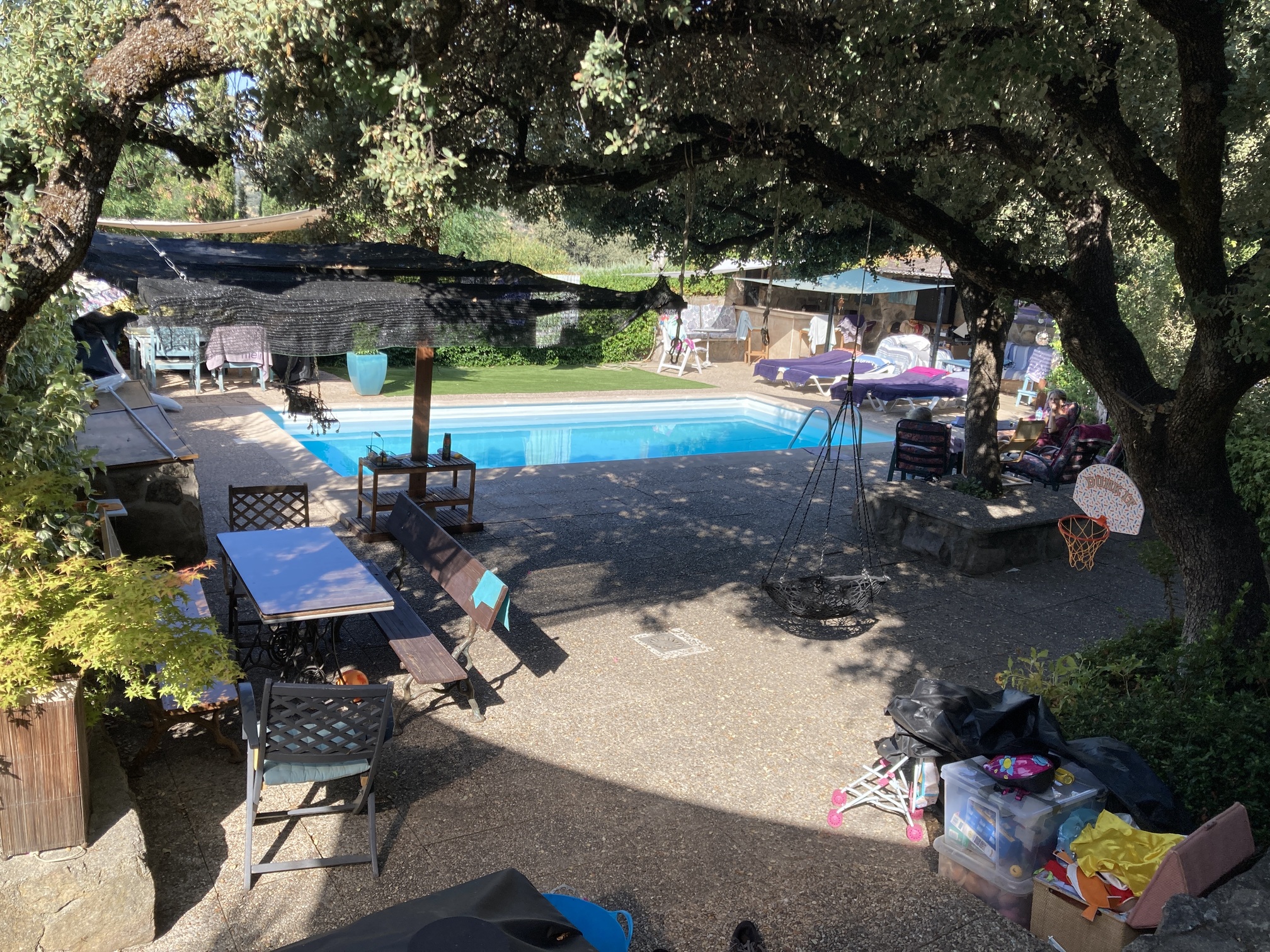
First activation for me in Spain.

Non-authorative AI-answer (check the links it refers to though)

But Spain has a specific workaround for exactly this case. Under Article 15 of Spanish Order IET/1311/2013 (“temporary authorisations for foreigners without a CEPT licence”), a Novice-class UK licensee can apply for an individual temporary authorization from the Spanish telecoms ministry. In practice almost everyone does this through FEDI-EA (which also gets you EURAO membership):

  1. Join FEDI-EA (roughly €10/year) — this gets you civil liability insurance and lets them submit the paperwork on your behalf.
  2. Email them (fediea@fediea.org) with: a copy of your passport, a copy of your Ofcom licence, your travel dates, and your accommodation address in Spain, requesting authorization to operate under your Foundation/Intermediate callsign.
  3. They forward it to the Spanish Ministry; you’ll get an acknowledgment and then an approval.
  4. The authorization is valid up to 90 days per request.

Once approved, you operate under both sets of limits simultaneously — the Spanish authorization’s terms and your home UK licence limits (so a Foundation licence holder stays capped at 25W even in Spain). Your callsign gets an EA prefix, e.g. EA/2E0YGL on the mainland or EA8/2E0YGL if operating from the Canary Islands.

Alternative organizations like URE (Spain’s national amateur radio society) can also help, but FEDI-EA seems to be the most commonly used route by UK Foundation/Intermediate operators, per the sources below.

One caveat: apply with enough lead time before your trip, since it’s an individual paperwork process rather than an instant reciprocal right — some reports suggest turnaround is fairly quick, but I didn’t find an official guaranteed processing time.

Sources:

6 Likes

I find that a bit surprising, Andy. I contacted you on April 3rd to ask permission to use some of the maps available on the SOTA database, which you kindly granted. The purpose was clear: they were for an article approved for RadCom Basics. You had read the draft, and the article was specifically about temporary permits being granted to UK Foundation and Intermediate licence holders.

For those who don’t know, the article was subsequently finalised with one of the editors and reached the final proof stage, but was pulled by the RSGB at the 11th hour because someone wasn’t happy with it. That decision has resulted in some unfortunate PR for the RSGB, although perhaps they may yet reconsider sharing this information more widely.

It isn’t a reciprocal licence. It’s a unilateral arrangement: the Spanish licensing authorities have chosen to provide a route for non-HAREC licence holders to obtain permission to operate in Spain, including UK Foundation and Intermediate licence holders.

If a country’s licensing authority, with the assistance of its national association, decides to open that door to lower-tier licence holders, I see that as a positive and inclusive development. There’s no reason why we shouldn’t welcome it. Hats off to FEDI-EA and the Spanish authorities for making the process accessible.

Regardless, I spent some time making sure this information was available for people to find. Clearly it has worked, judging by @PE1EEC’s AI search result above.

I’ll leave @M6GYU to post his version of the application process. Kudos to you for making enquiries, submitting the application, and having some fun. :ok_hand:

7 Likes

Thanks for posting that. That’s the way I did it. I got my Authorisation within two or three days of FEDI sending it off.

5 Likes

I have no recollection of that exchange till you reminded me now. I went and dug out the exchange and only reading it, remembered it. Had you had a wager with me about it last week you would have won bigly.

Having re-read what I wrote I did suggest making a change to a particular phrase that I thought could end up being counterproductive. Looks like I may have been right. As they say in these parts “you were tell’t”.

If you find it surprising you can imagine how concerning it is for me as I normally have an excellent memory for stuff like this. I expect next I’ll find myself standing at the open fridge wondering what I came for. Time to buy new toys whilst I know what they’re for.

3 Likes

Hi Omar,

Have you submitted the article to Practical Wireless? It sounds like it could be of great interest to other Foundation and Intermediate holders. I find PW can be more open to things like this, so you may get a better response?

Good luck either way :+1:

73, Simon

3 Likes

I can always give PW a go — thanks for the suggestion. :+1:

I’d also already reached out to Cale at Ham Weekly, and he kindly included it in the weekly blast, so that’s another useful way of getting the information out there.

For someone like me who regularly visits the EA5 district, it’s a great way to choose new hikes in the area. I’ve discovered a few corkers simply by using the SOTA database as a starting point.

Access in EA5 is superb, although in other districts some summits are on private land. It’s always worth doing a bit of planning in advance.

4 Likes

id like to thank those who have encouraged and supported my successful application to operate in spain as a foundation licence holder.

i believe it is misleading and inappropriate to imply or suggest that only full licence holders have the necessary skills to operate in other counties without causing chaos or havoc.

There are many other foundation and intermediate licence holders who have operated professionally in either the commercial or military service around the world on both land and at sea using transmitters which were far more powerful than those allowed to be used by amateurs. All of us were trained to the highest operating standards which far exceeded anything required by hams.

I think it is disappointing that the RSGB has failed to publish the fact that some other countries do allow Foundation and Intermediate Licencees to apply for a licence to operate in those countries. .,

.

8 Likes

Yes, if that indeed is the case Dave that the RSGB have never published the fact that some EU and other countries will allow licenced Foundation / Novice / Improvers (call them what will) this is a big omission and is unjust. If what you say is correct then assuming you are a member, you could raise the issue with the President or at the AGM in 2027 if you feel strongly enough, or send a carefully written email to the RadCom editor for publication: Edward.ONeill@rsgb.org.uk

In the case of Foundation licencees operating abroad unsupervised, it has to be said that you are a retired professional Royal Naval Telegraphist who has come back to radio as a radio amateur after a long period of time. It is a matter for you as to whether you wish to progress through the three stages of our licencing structure. Some people have an issue with that, I don’t. So long as you can do what you want to do in the hobby, especially in SOTA where you do so well and you keep within your licence rules then you need go no further unless you wish to.

Kudos to you for keeping the CW mode alive. In years to come there will be fewer and fewer of us I fear.

73 Phil G4OBK

5 Likes

I think the best way to annoy the doubters is simply to carry on doing exactly what you’re doing — get out there, operate, enjoy yourself and share the fun and pleasure of it. You’ve already done that, and I expect you’ll be doing the same on every trip you make to Spain from now on.

And I think you’re absolutely right about people with commercial or military operating experience. But even without that background, the fundamentals are covered by the Foundation license. If someone can follow a band plan, observe their power limits and periodically check their equipment here in the UK, there’s no reason why they suddenly become incapable of doing exactly the same thing when they cross the Channel.

A Full license can be extremely useful for the right person, of course, but it shouldn’t be regarded as some sort of passport to responsible operation. Responsible operating is about the operator, not simply which of the three UK license tiers appears on the certificate. CEPT is a route, not a ceiling.

For those who still think amateur licensing should remain firmly in the 405-line black-and-white era, progress can sometimes be inconvenient — but it isn’t going backwards. The future awaits!

We’ve already seen licensing authorities simplifying their licensing systems and becoming more inclusive towards visiting operators. I suspect it’s only a matter of time before more countries follow suit. The world of amateur licensing is changing, and I think that’s something to be welcomed.

Do share how you obtained the Spanish authorisation — it could be really useful to others who might otherwise assume that “not CEPT” automatically means “not possible”. The more people know that these routes exist, the more likely they are to investigate them.

I hope there are plenty more EA activations to come from Foundation and Intermediate brethren.

PS Although David, I am slightly annoyed with you because your posts about operating in EA4 are becoming a serious distraction. I should be doing adult things, but instead I find myself looking at flights and accommodation. This is entirely your fault!! :laughing:

3 Likes

:grin::grin: yes I will explain the what and how. When we get back home next week :blush: but as you know there’s not much to do or explain how. In the mean time …….:smiling_face_with_sunglasses:

3 Likes

Now that is what I’d like from a SOTA summit!

2 Likes