Saturday 20 June, rain was forecast for my local area, so I thought I would head north, over the Great Dividing Range, where the rainfall is often the opposite to my local area. If it’s raining south of the range, it’s probably not raining north of the range. This weekend was also the WIA Winter VHF UHF Field Day, and I was hoping for some good 2m SSB QSOs from this contest.
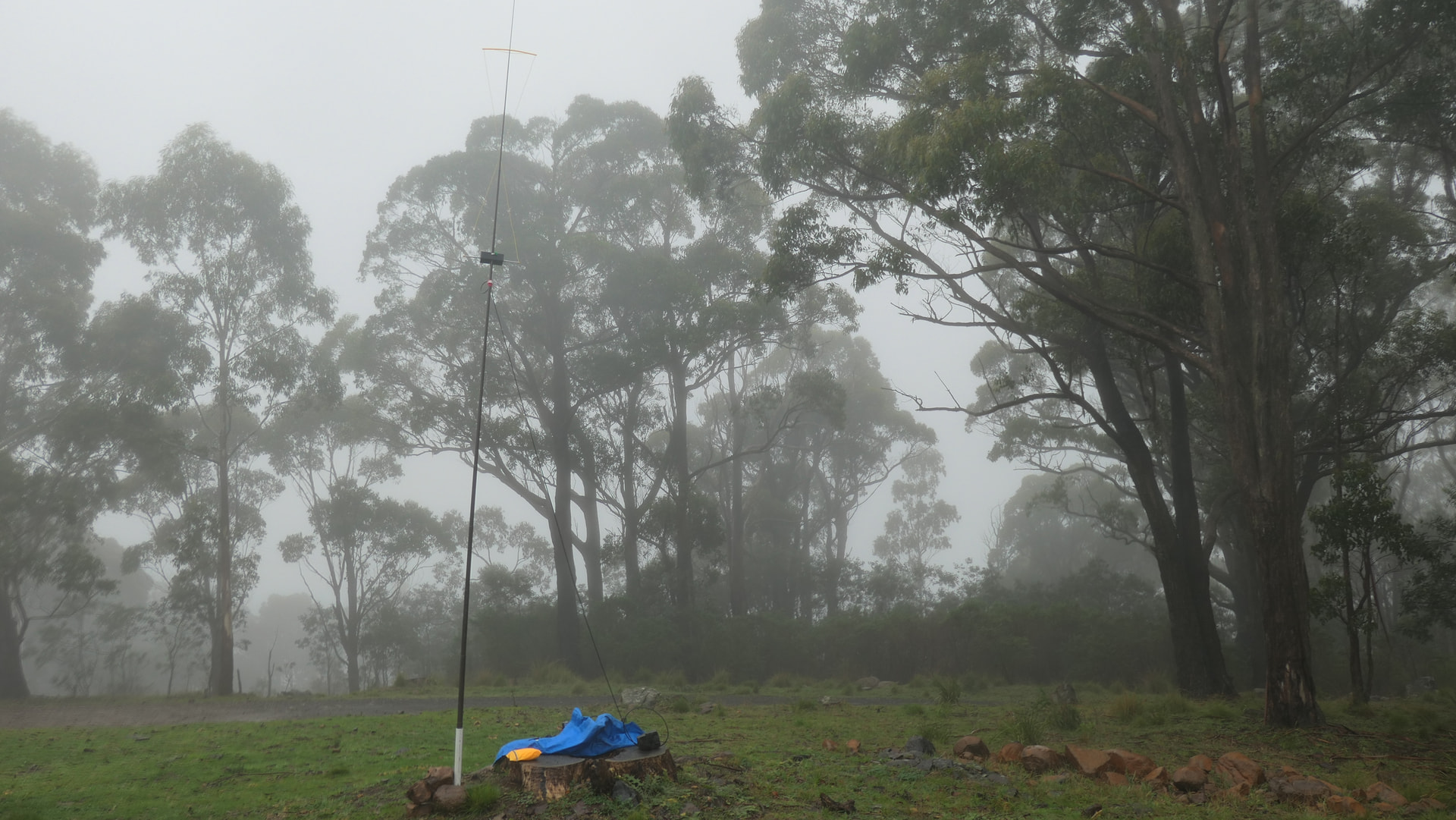
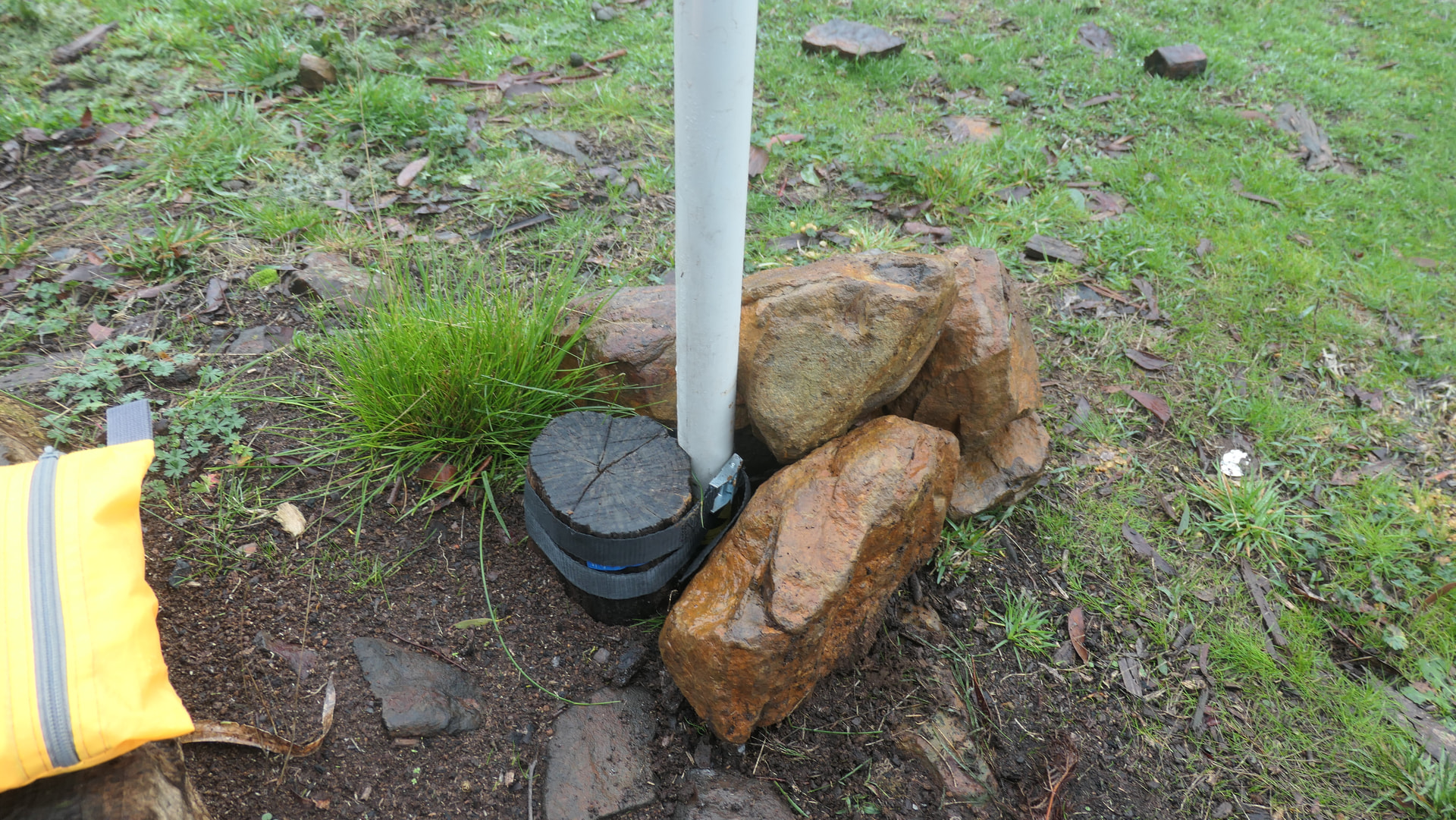
My first summit, VK3/VN-015 Mt Hickey, 805 m ASL, could be considered part of the Great Diving Range and I wasn’t surprised to be greeted with light drizzle when I arrived on the summit. The rain was varying between nothing and light rain, so I dressed in what should have been waterproof pants and jacket and walked about the summit looking for a suitable place to set my mast and station. I found a short, wide tree stump for the station. A smaller stump, with some additional rocks, was used for holding the mast. Between brief showers I set the station and then sat on the stump and learned that my waterproof pants, were not as waterproof as I thought. 
Operating for about 45 minutes, only on 2m SSB, I logged 9 QSO ranging from 70 to 183 km using the FT817ND and my hourglass antenna. The field day contest started at 0100 UTC, but I didn’t hear any Field Day stations before rain set in and I concluded my activation at 0125 UTC.
My second summit for the day was VK3/VN-028, Mt Piper, 440 m ASL. This summit is located within the Mt Piper Nature Conservation Reserve, so I was able to activate WWFF and SOTA at the same time.
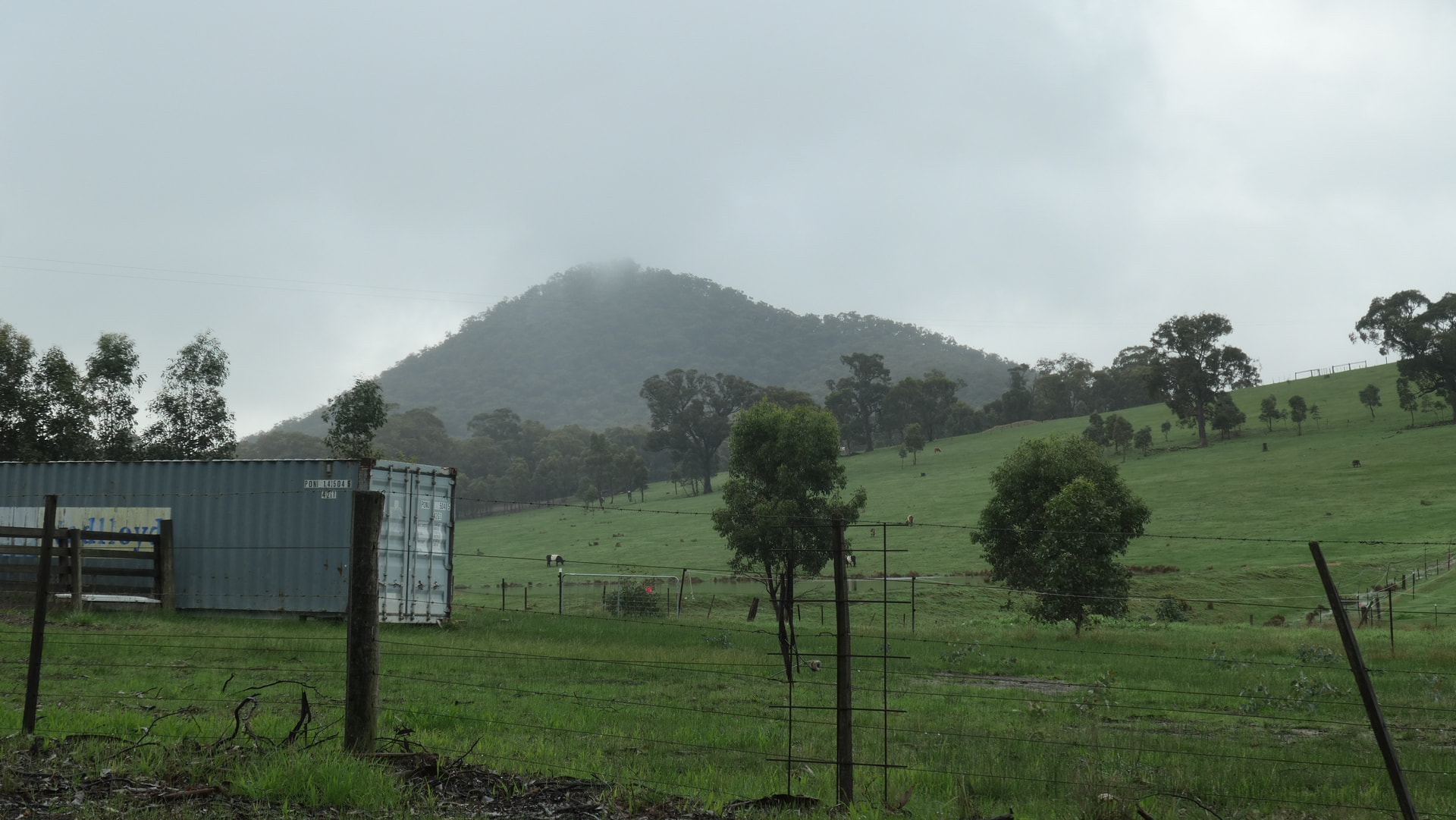
There is a formed track from the main road to the reserve gate that has a few puddles as it approaches the reserve. In my four previous visits I have driven to the gate, but on this visit the puddles looked a bit too deep for my RAV4 so I decided to park and walk the last 150 metres. The driver of a VW Tiguan ahead of me also parked up and walked.
The access is along a 950 m zigzag path, rising 155 m from the gate to the summit. The access is well defined and varies from a formed gravel path for most of the route, to a rock scramble as it approaches the summit.
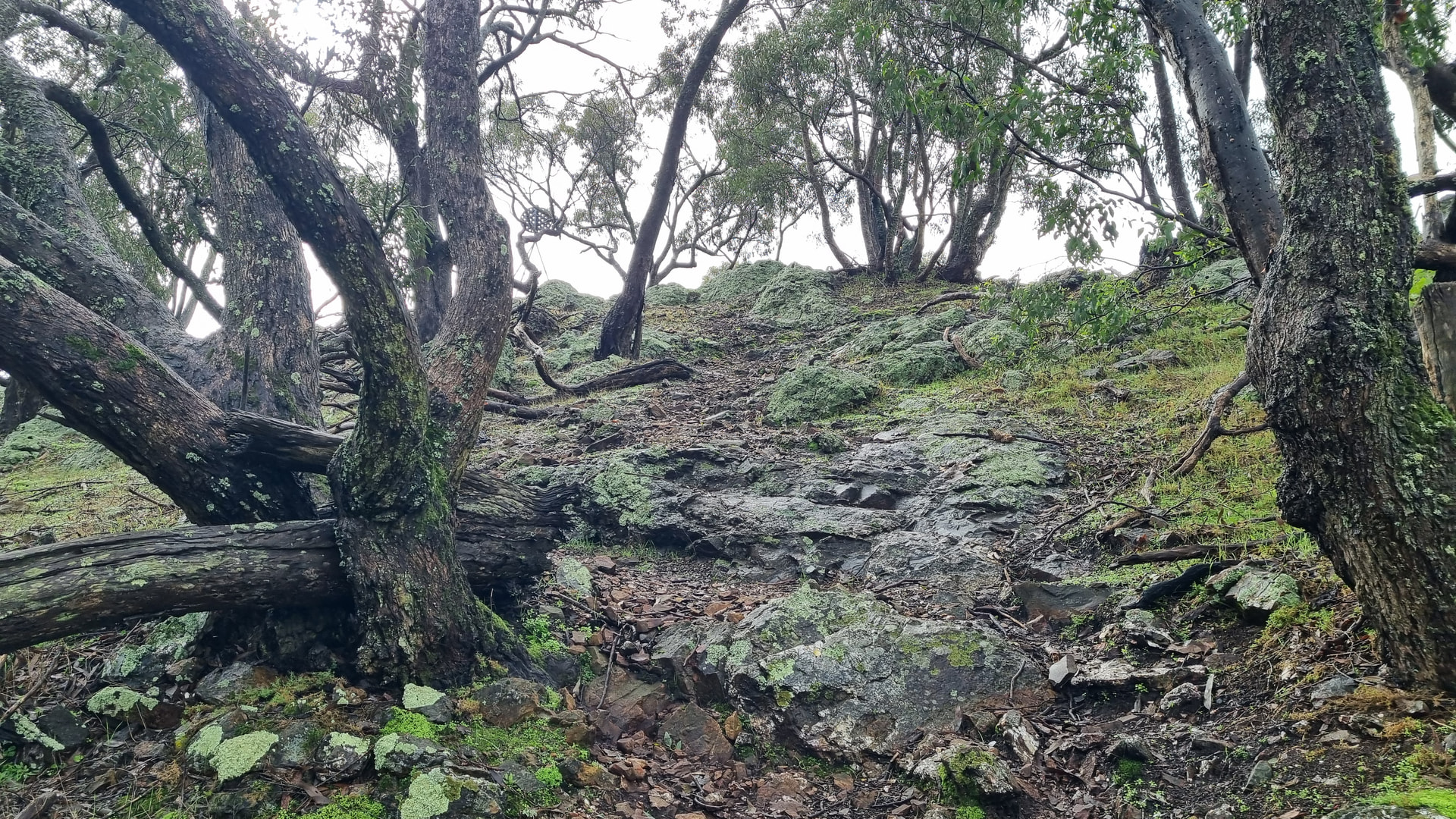
Once on the summit I set my mast against a tree and posted a spot to SOTAwatch and logged four stations on 2m SSB in 30 minutes, from 79 to 91 km, before moving to HF. Working SSB on 40m, 20m, 15m and 10m I made a further 64 QSOs in 1 hour, including 4 DX QSOs to Japan on 15m and 10m. Periodically checking 2m SSB, no Field Day stations were heard.
The rain clouds were passing to the east and west of the summit, but no rain fell during the activation.
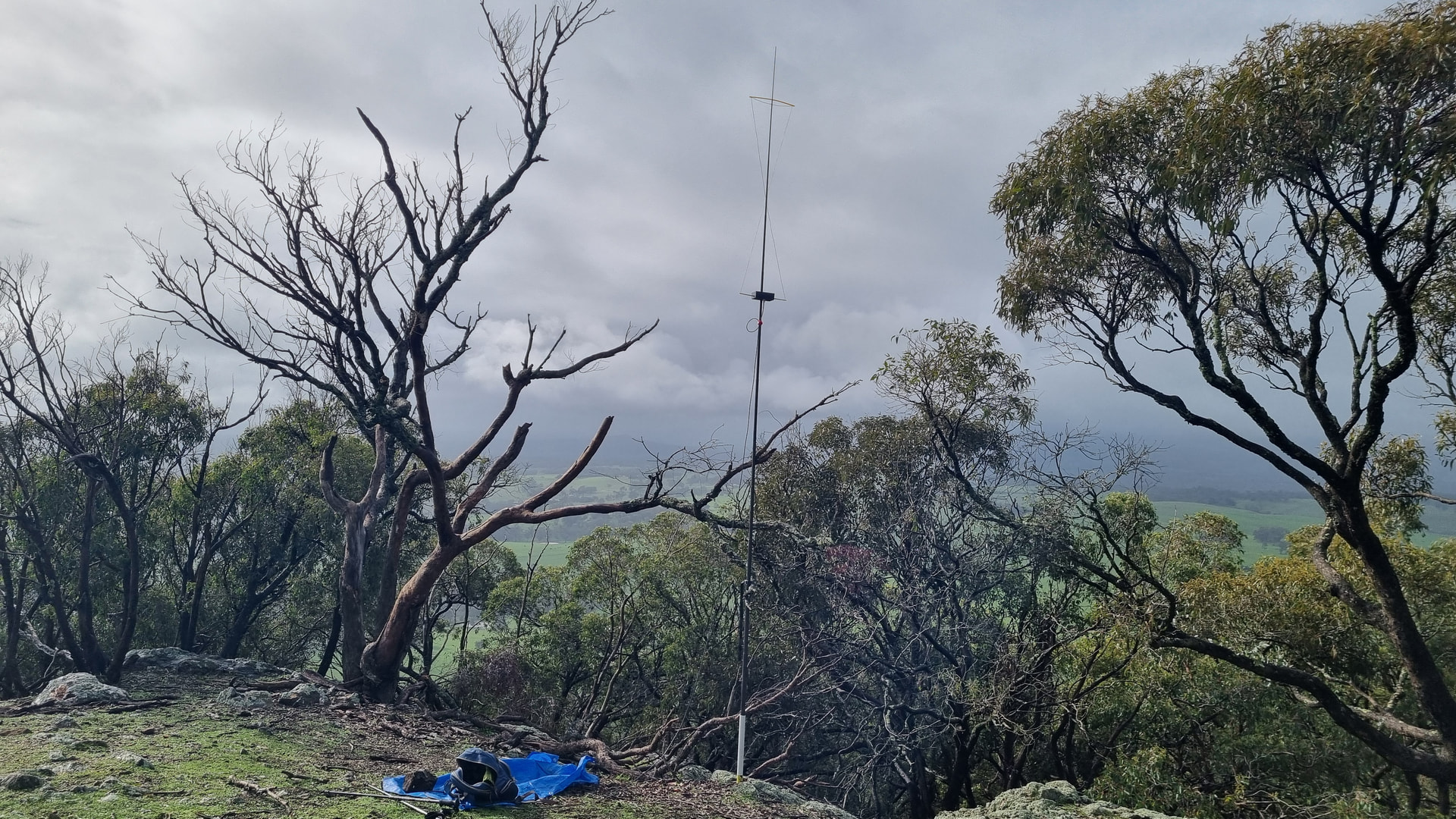
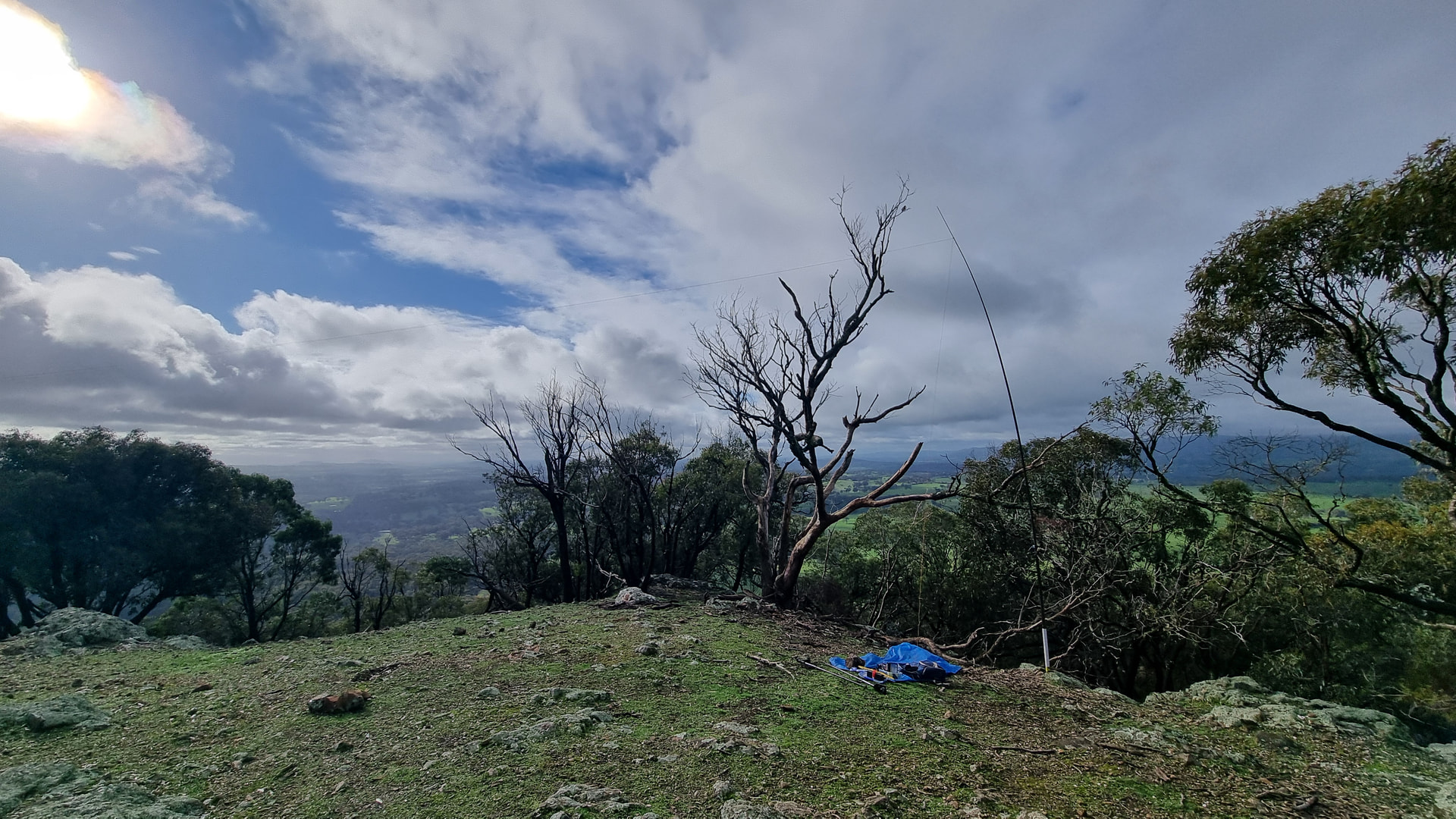
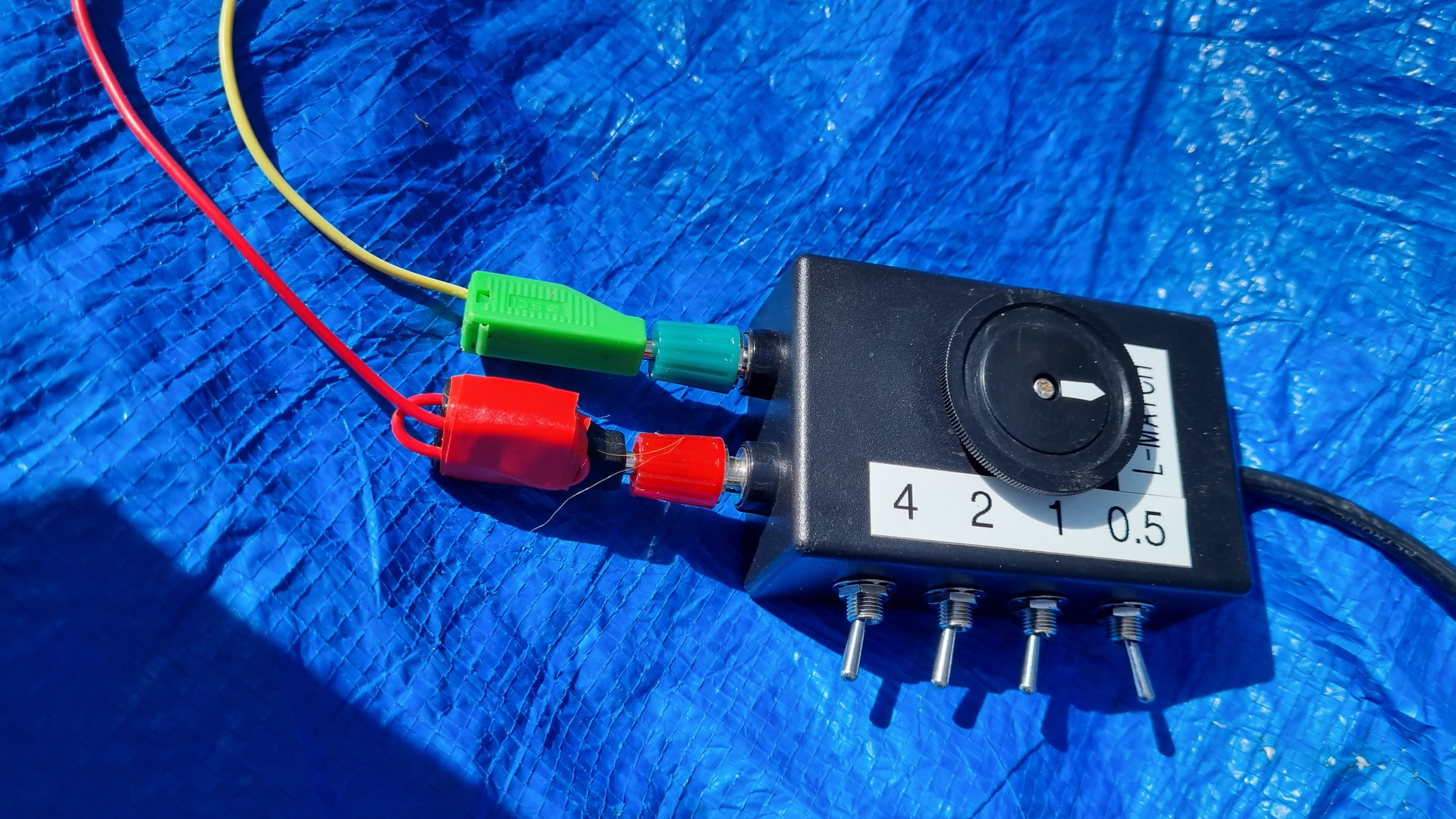
I thought about trying @ON7DQ idea for HF using the hourglass, but I don’t have a suitable UNUN or ATU. I considered using the L match that I have for my Inverted L antenna, https://youtu.be/JwVuvu-C30c, but I think I may need a way to join the inner and outer of the coax to the antenna binding post on the match box.
Something to look at on a day with nicer weather and more resources.