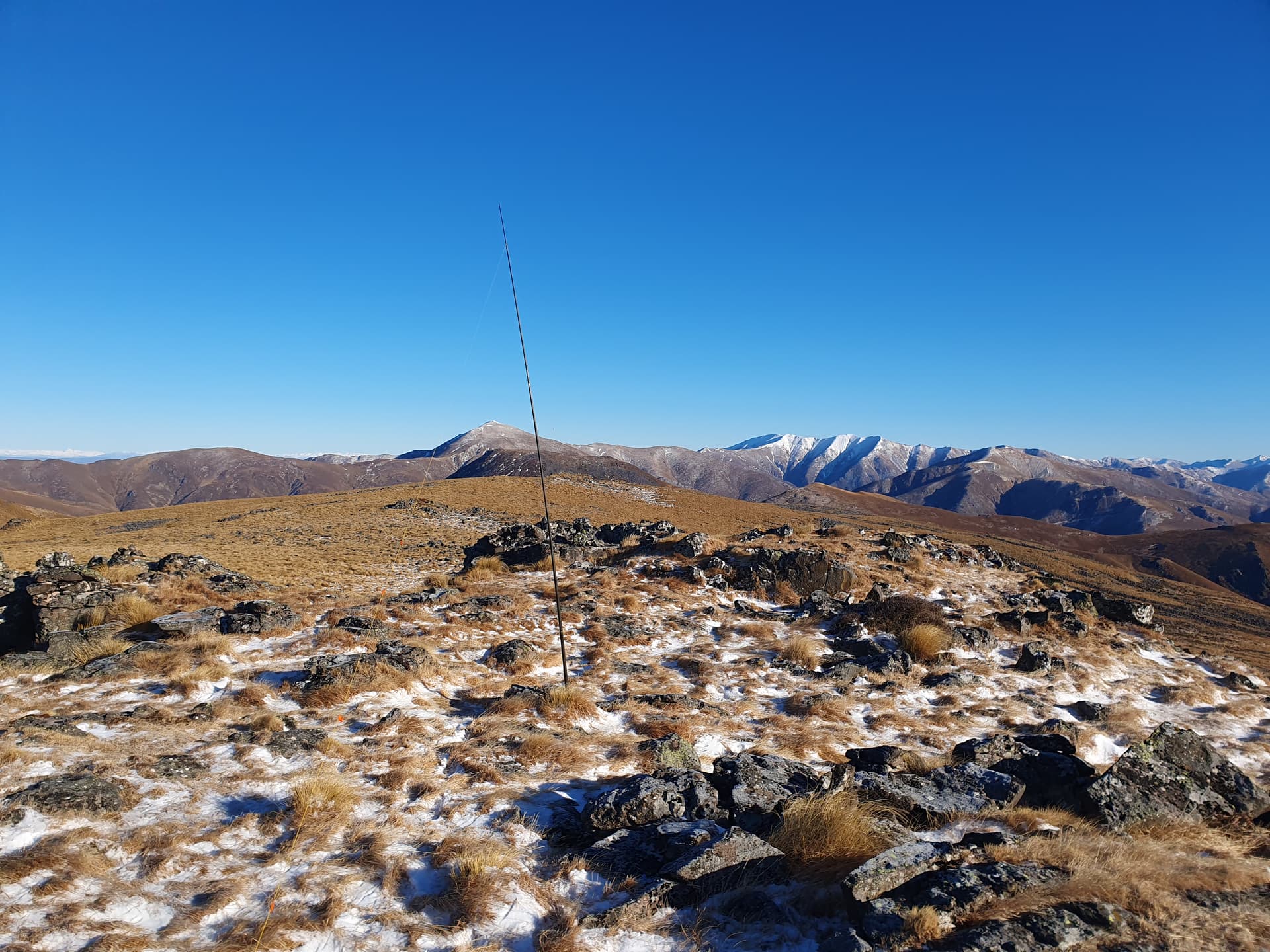
Access issues and Winter Wanderings in the Dunedin Volcanic Field

Persistent wet and stormy spring weather over the Southern Alps has been disrupting things the last couple of weeks, resulting in repeated short-notice breaks from work. With winter bonus season still in swing, and anywhere west of home off the menu due to the weather, this has provided the ideal impetus to head east and pick up some of the more challenging 2- and 4-pointers in Coastal Otago.


Trip 1: Silverpeaks

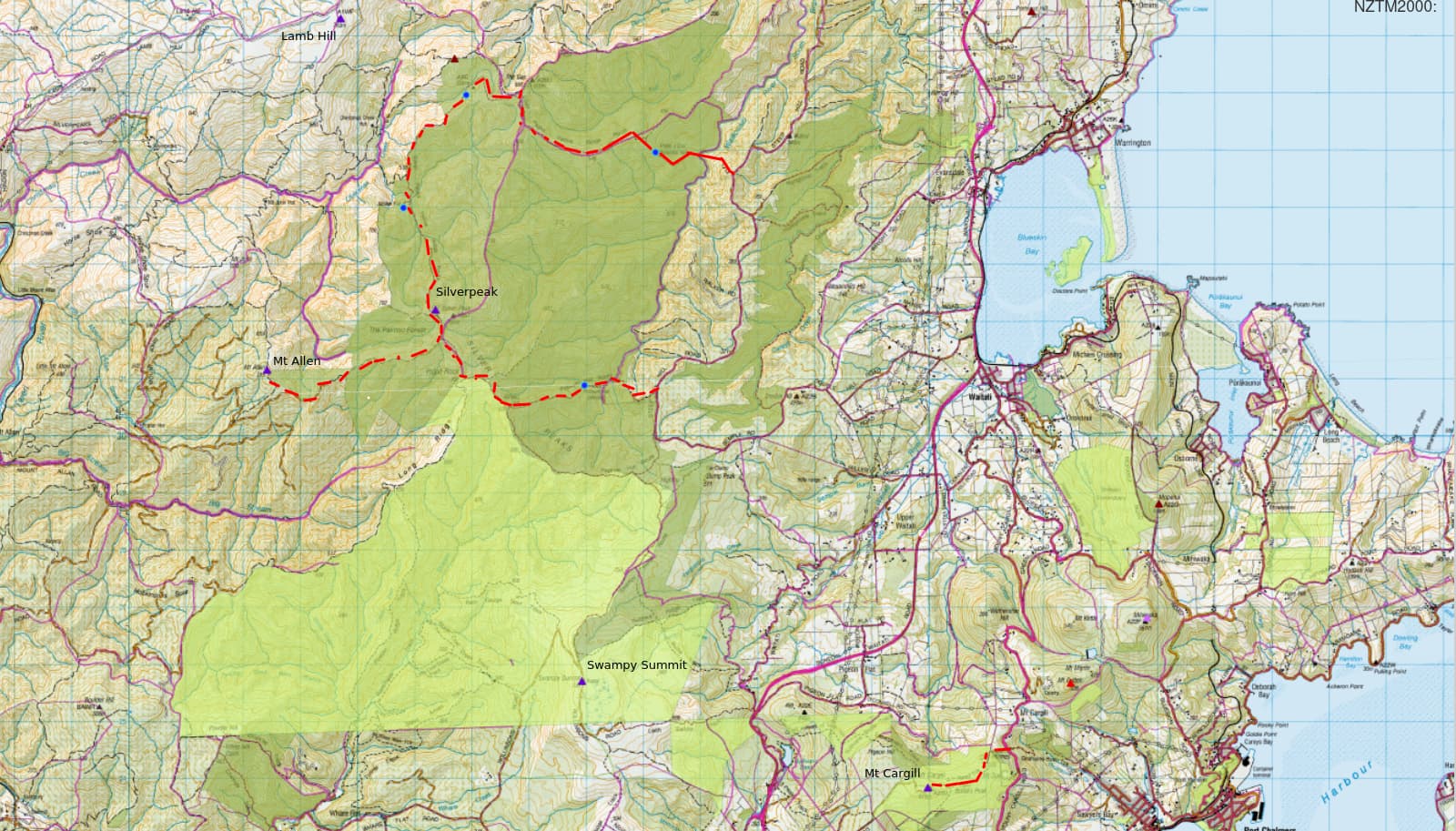
The Silverpeaks form a low range of hills dividing the Dunedin coast from the Strath Taieri. With their highest point (Silverpeak - ZL3/OT-436) at just 767m and thus only worth 2 points, they have always seemed a good winter SOTA target. However, only 2 of the 4 summits lie on maintained walking tracks; the tops of the entire range are covered in swampy, stunted, impenetrable scrub; and any realistic trip would require an overnight backcountry stay (or two day-trips from commercial accommodation) - all of which has led me to seek greener pastures elsewhere in the past. Time to put that to rights.
Day 0

I head over the Pig Root on a clear, still Friday evening and drive up the northern end of Mountain Track to the PJ Cox roadend. About 4km from the start of the walking track, a locked forestry gate across the council-maintained road brings me to a halt. Sure enough, the formed roadline departs from the legal road corridor for 50m and the forestry company have taken advantage of the fact to close access.

Returning to the coast I take the southern end of Mountain Track and 30 minutes later am back on the ridgeline, 4km from the start of the walking track, and faced by another locked forestry gate. Maps reveal the same scenario - a brief divergence of the legal road and formed road has allowed the forestry company to take the letter, rather than spirit, of the law and block access (in both cases they’ve planted out the legal crown-owned roadline in pine trees - so no letter of the law where it suits them, note!).

I park up, as I should have done 30 minutes ago, and start the additional 4km walk along the forestry road to the carpark.

The night is warm and still, and despite my mutterings abut ‘when it suits them’ forestry companies, I soon find myself enjoying the walk. The lights of Waitati / Blueskin Bay twinkle below me, the distant fairy-light chain of traffic along State Highway 1 joined further out by those of ships approaching the Dunedin Harbour mouth. The warm optimism of spring.

It takes just 40 minutes to reach the carpark and start down the PJ Cox track by torchlight. The PJ Cox Memorial Hut lies on the next ridgeline west of the forestry road, and we drop gently on soft beds of pine needles to the river before entering regenerating native bush and slippering up the clay-mud walking track back to the tops.
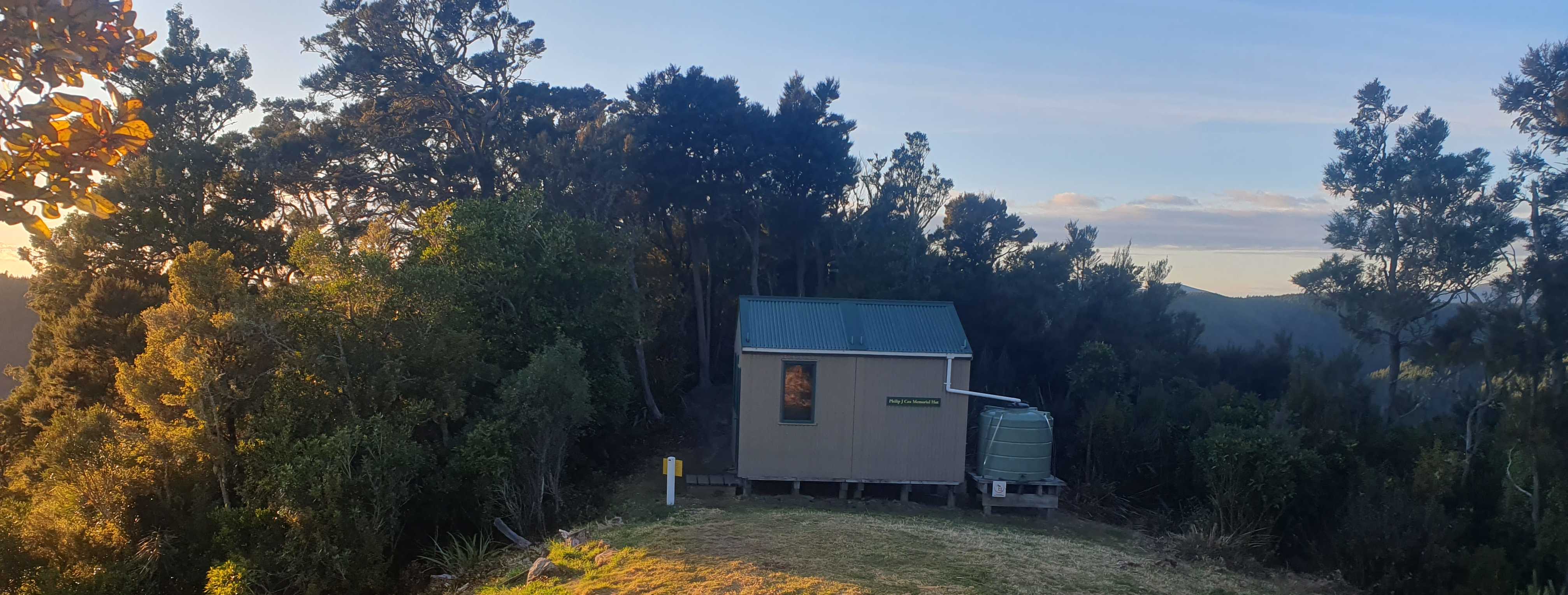
PJ Cox Memorial Hut (ZLH/OT-067), at just 2km (make that 6km) from the carpark is mostly used on Friday nights by those making the 2-day circuit of the Silverpeaks loop track, and wanting an early start. I’ve brought the tent just in case, but the hut is empty upon arrival and soon the EFHW is erected in the SOTApole outside, the billy is on the stove and dinner is underway. A newly-licensed local ham in my home town of Alexandra is working towards his DOClands award (DOC - Dept of Conservation, manage most conservation land in NZ) and requires contacts with 5 backcountry huts as part of that, so I’ve arranged to put the hut on the air as I cook dinner. 40m proves to be open to the Australian east coast, and I pick up five contacts with VK1, VK2, and VK3 as well as five with ZL1 thru ZL4, with 5/5 being the worst report. Things are working well.

Day 1

The plan for Day 1 is to activate Lamb Hill, ZL3/OT-439 and maybe a couple of HEMA summits ZL3/HOT-028 and ZL3/OT-029 before dropping to Jubilee Hut to camp for the night. These summits lie beyond the park boundary, but can be accessed via an unmaintained legal road the runs from The Gap just west of PJ Cox Hut. I last worked in the area in about 2004 and recall a rough 4WD track across vaguely scrubby tussock tops.

Things have changed. North of the park boundary the tussock tops have been burnt off, ploughed in an sown into pasture, the former 4wd track that followed the legal roadline is gone with them. Despite the elevation and exposure, the grassy tops are dotted with ewes. Now, legally, that changes nothing. The legal roadline is the legal roadline, and with the boundaries on my GPS I’m perfectly capable of following it across flat tops paddocks whilst remaining on the crown land. But I have the dog with me, we’re a week or two from lambing, and it’s not really the time to be exercising legal rights. I turn around and return to the walking track: Day 1 just got cancelled.

Morning smoko finds me at Jubilee Hut for a quick cuppa and a chat with a walker making the loop trip in the reverse direction to myself. The large hut drew much ridicule 15 years ago when it opened - a waste of money, beds never going to be filled - but the walker informs me that it is fully booked for this Saturday night. Build it an they will come. Sometimes.

I leave Jubilee Hut 22 hours early (or 2 hours late), and make the quick 400m climb south up the spur known as the Devils Staircase (oh how we laugh at these lowlanders!) to the park’s high-point at Silverpeak (ZL3/OT-436). Since passing The Gap the lush green regenerating bush of the coast has been replaced by a dense-packed, aromatic scrub of manuka and turpentine, the track a narrow corridor between its walls.
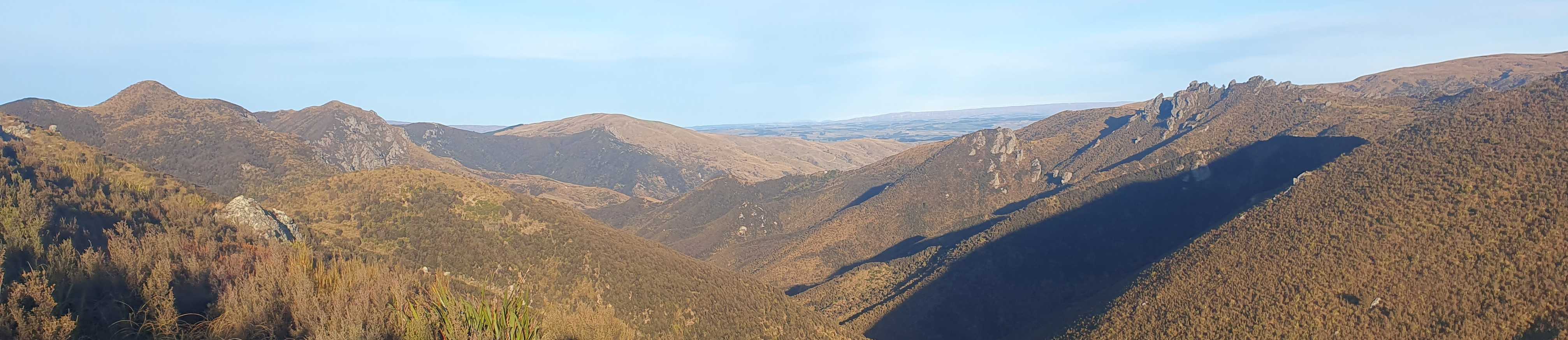
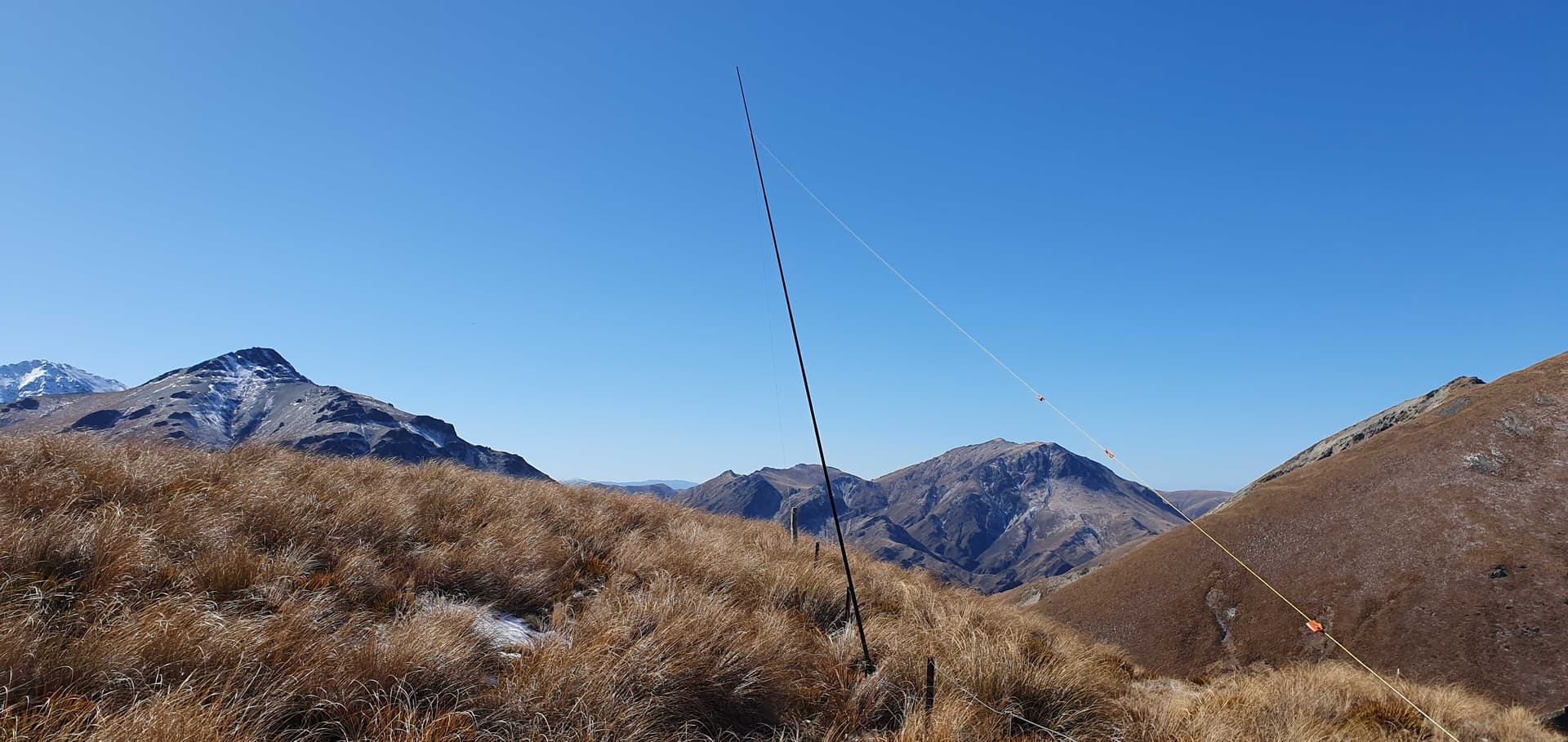
The activation of Silverpeak is straight forward - antenna stretched along the track, tied to bushes at each end, SOTApole held upright by simply jamming it into the scrub. Twelve contacts, all intra-ZL, including 4 SOTA summits, a POTA park and a lake - the bonuses of a weekend activation.
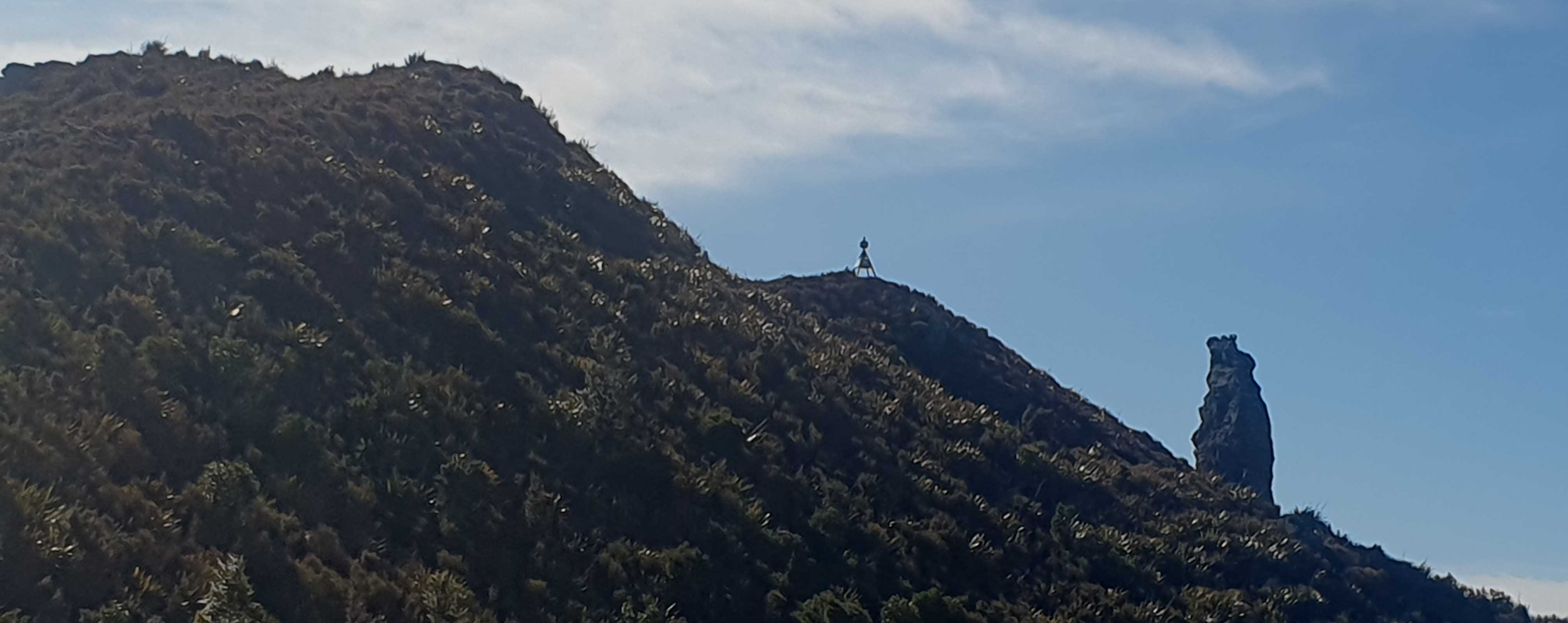

Mt Allen (ZL3/OT-446) lies just 4km west of Silverpeak on the boundary with commercial pine forests, topo50 maps show a 4WD track running along the ridgeline that joins the two.

I stand on Silverpeak and stare west towards the deep green boundary of pine trees. The continuous dun colouring of manuka / turpentine scrub is bisected by a stark yellow line of gorse flower: our track. Dropping all but essential activation gear at the saddle, we start west: maybe it will improve.

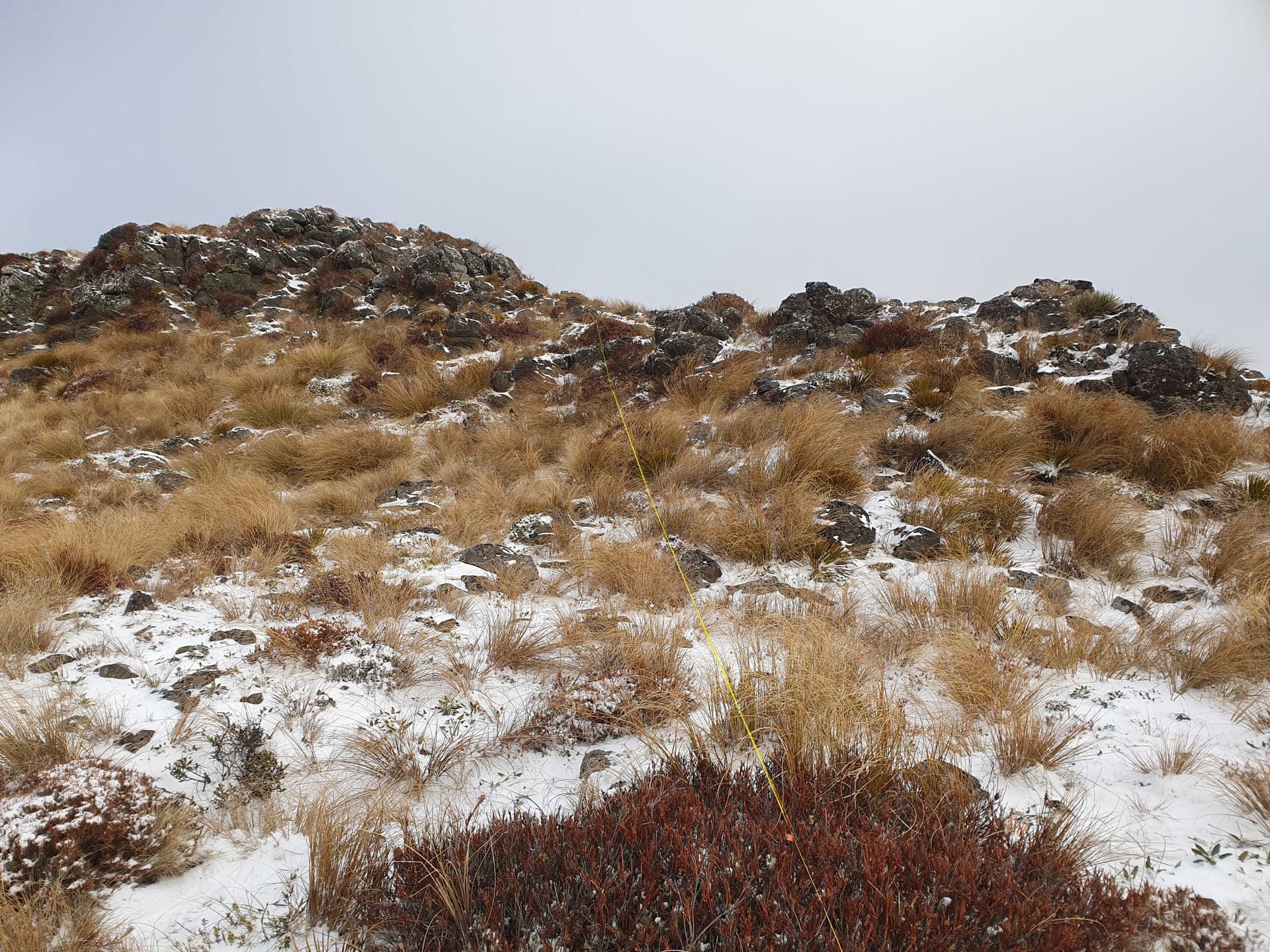
It takes 2 hours to cover the 2km to the start of pine trees, alternating between crawling beneath the 3m tall gorse, and forcing our way through the dense-packed turpentine. I’m reduced to continuous crawling and at the point of giving up when we reach the saddle between the two peaks and stumble upon a freshly cut track, green debris still littering the ground:

  • That better not have been there all along and I’ve missed it - my first thought
  • I hope that’s been there all along and I missed it - my second thought as I realise I have to return by the same route.

The narrow hand-cut track leads to the start of the pine trees, beyond which the old roadbed shows evidence of occasional vehicle traffic and the gorse / broom is reduced mostly to knee height. The track ends just short of the summit at another wall of impenetrable gorse, but a quick check of the maps shows that we are, thankfully, within the AZ of Mt Allen peak.

I linger long on Mt Allen, postponing the inevitable return trip as long as I can - netting 17 chasers between 40m and 20m.

The return trip is agony - legs red-sore from their previous gorse-encounters complaining the whole way. The hand-cut track runs a mere 10m beyond where I found it, and does not offer the relief I hoped for. Even the dog is on strike - her usual backtracking ability mysteriously deserting her whenever we come to thick, painful sections of gorse. Finally, back on Silverpeak, I am rewarded by retrieving my overnight gear from its stash, loading the pack back up to full weight, an continuing my way along the thankfully-well-cut walking track.

We have time to return to the truck before dark - effectively completing the full loop plus side-trip in a single day, but I don’t fancy the 200km drive home fatigued, so drop instead to the historic Possum Hut, 1.5km before the forestry road and carpark.
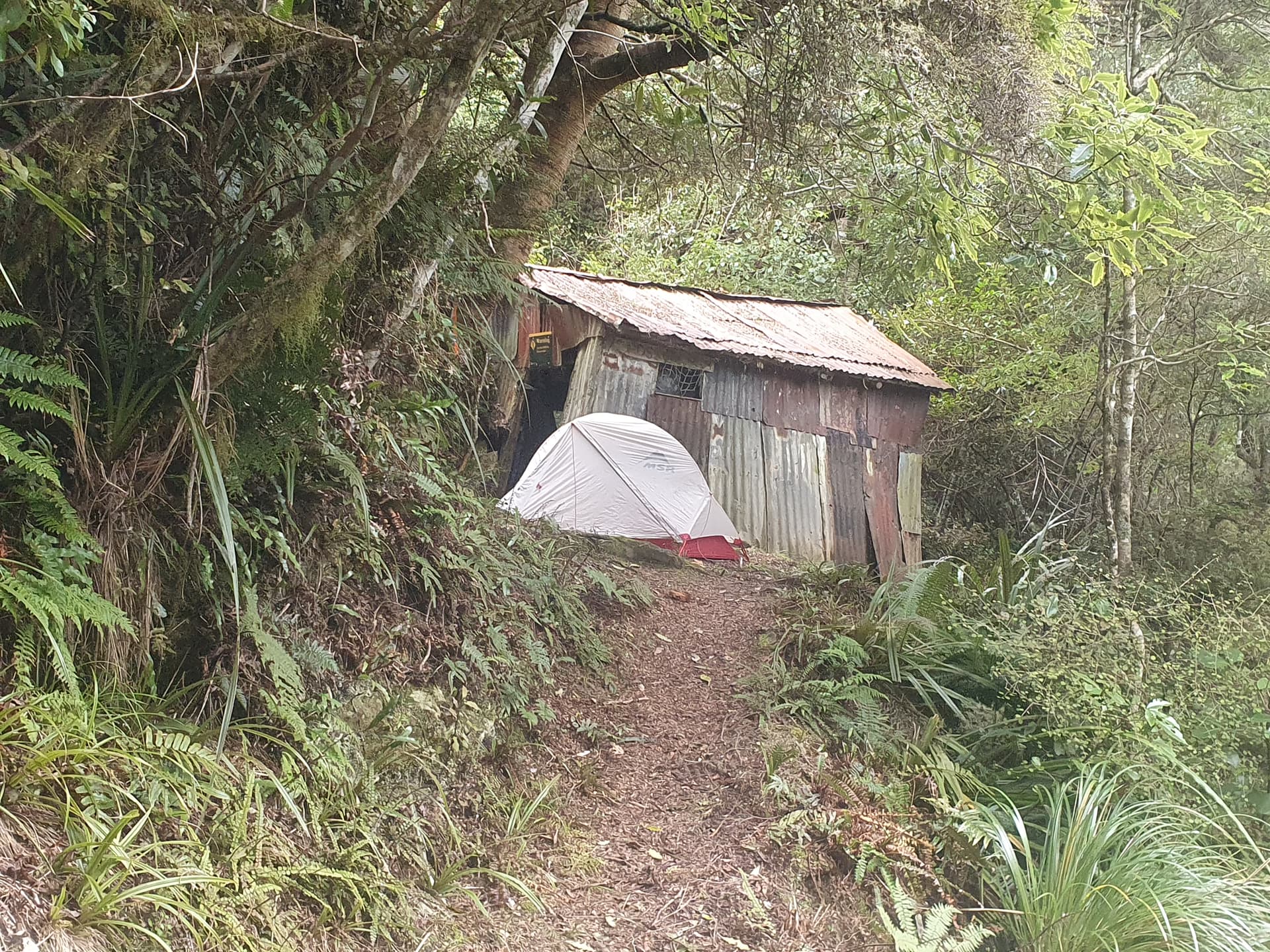
A sign above the door of Possum Hut states ‘Derelict Structure, Do Not Enter’. The floor is of packed earth, there are no beds and the roof clearly leaks in places, so I pitch the tent outside. But shortly afterwards unforcast, heavy, sleety rain commences, wind thrashing the trees above. I make the quick decision to pull the pegs and move the tent indoors. There are a few drips, but inside the tent we are warm, cozy and have a pleasant, quiet night.


Day 2

It’s barely breakfast time by the time we reach the truck on the forestry road above, still-dry tent packed and stowed. There’s a sleety slush on the ground, but the road is thankfully still driveable.

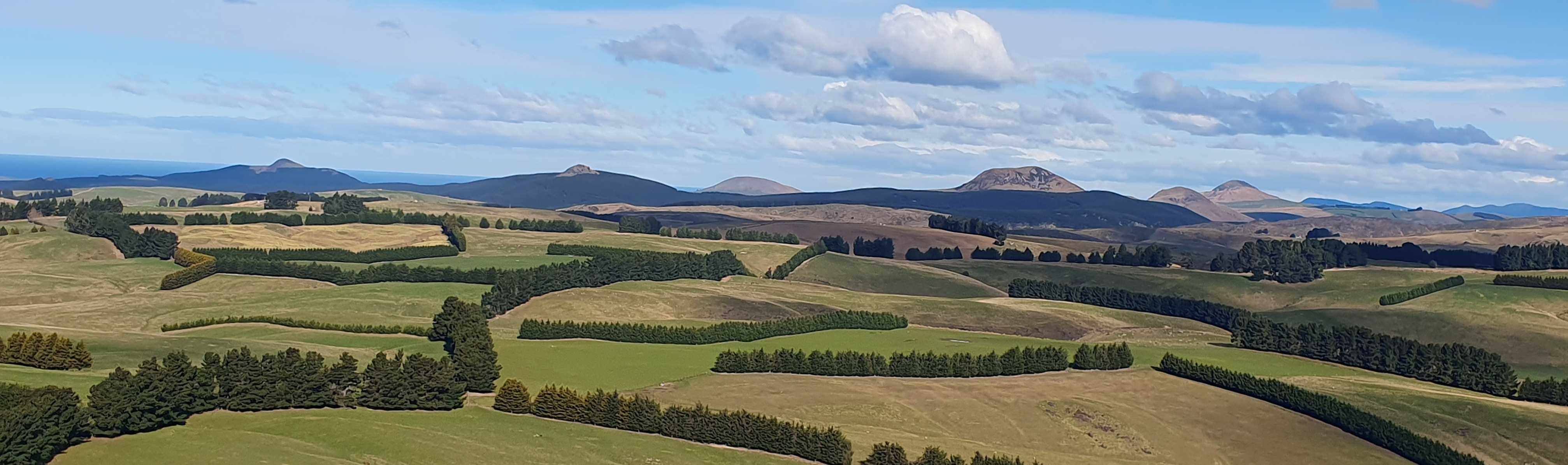
I decide to pick up a couple of 1-pointers on the way home to make up for the loss of Lamb Hill. The Dunedin Volcanic Field stretches out below us: conical peaks dot the coastline to the north, ZL3’s very-own Glasshouse Mountains (just 40 degrees cooler than the genuine VK4 article). To the SW the vast collapsed crater of the Dunedin Volcano forms the Dunedin Harbour, it’s high-point at Mt Cargill a landmark for the transmission tower that dominates the city skyline.
Mt Cargill

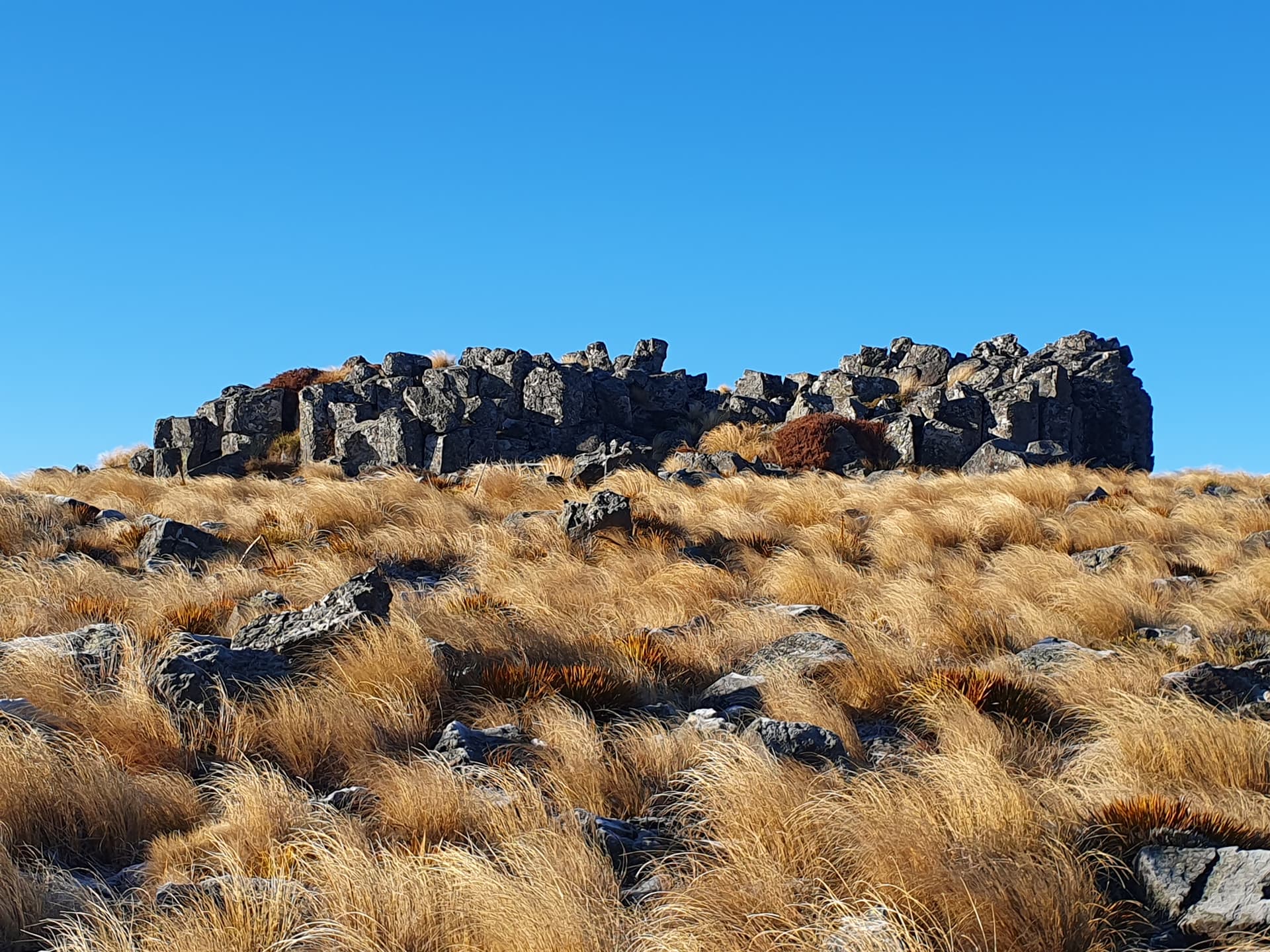
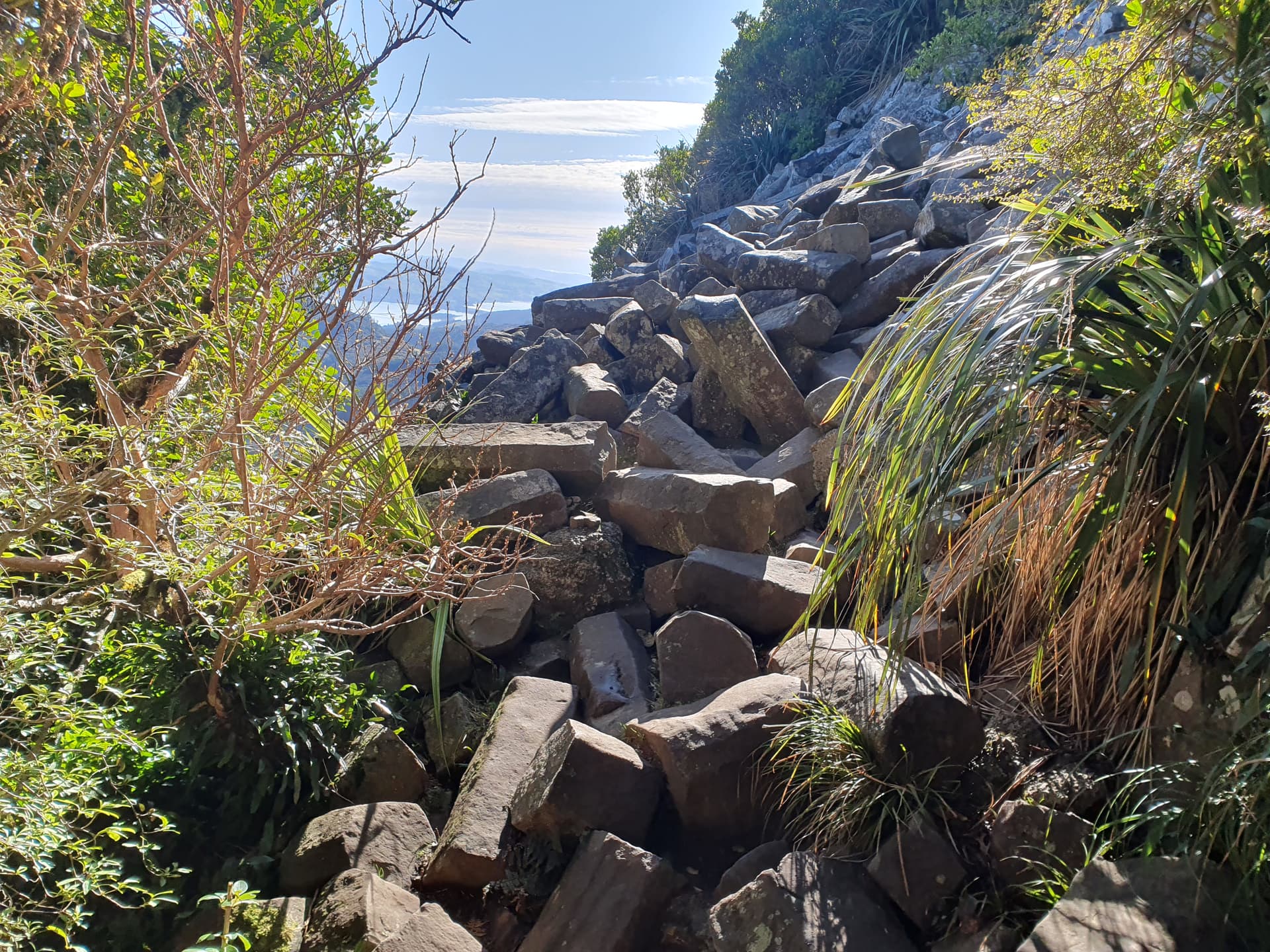
An easy gravelled / board-walked walkway climbs to Mt Cargill from the road saddle to its east, passing below iconic basalt organ-pipe towers and geometric rubble.
Thirty minutes of pleasant walking finds me at the picnic table on the summit. I eye the tower suspiciously, having encountered ice-shedding in similar circumstances, but it seems to be free of rime.
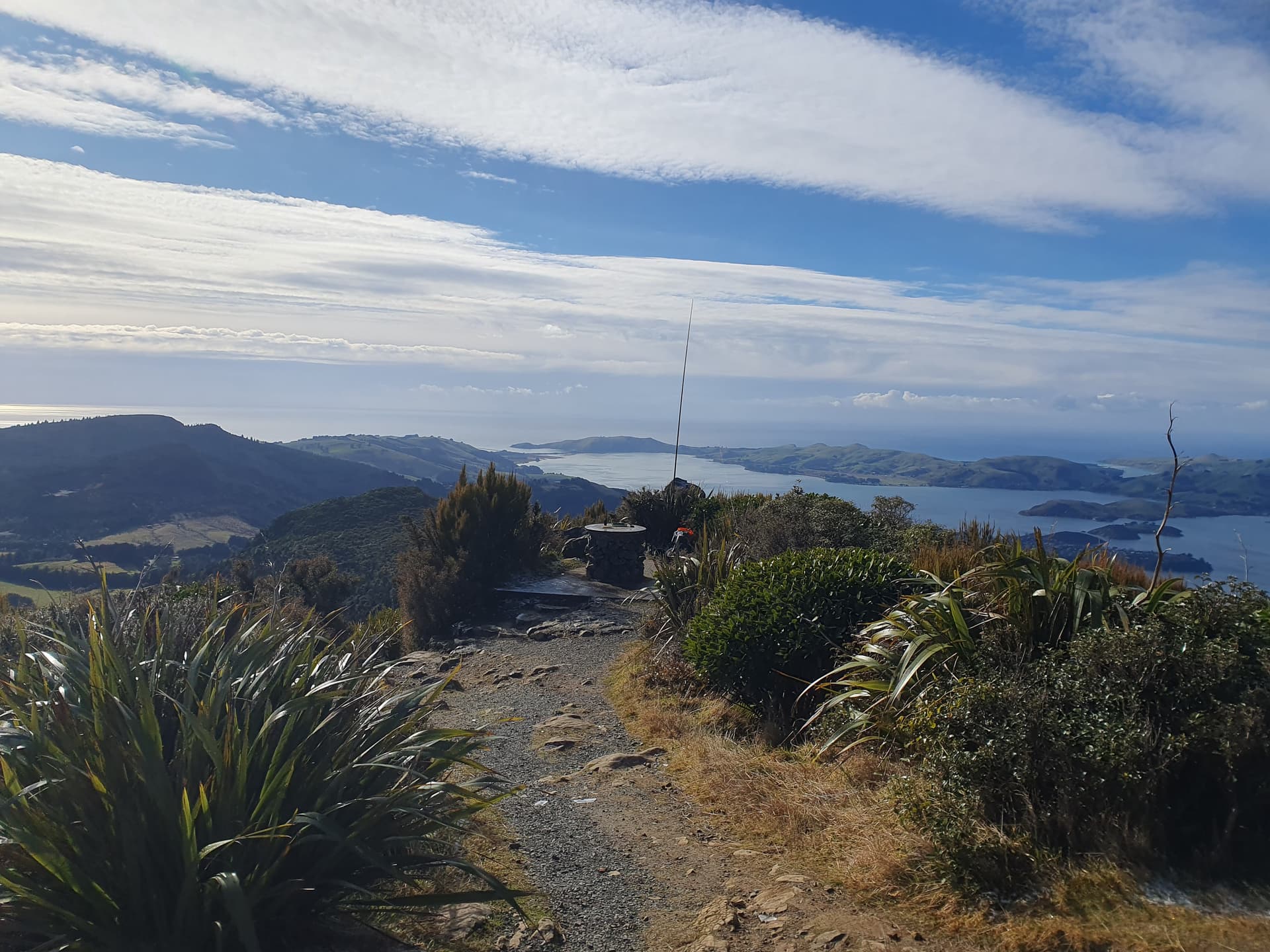
A very enjoyable 30 minutes of SOTA ensues; warmed by the morning sun, looking out over the city and harbour below. Interrupted only occasionally by the platelets of ice that flutter, rather than fall from the tower above. VK’s are still in bed, with the exception of VK4NH, but we make 18 contacts within ZL, including a good long natter with ZL1CNB. An increasing stream of walkers and joggers makes the call to head down - let others make use of the table, and let us seek out a good strong cup of morning coffee.


Hikaroroa / Mt Watkin

The dry-weather Ram Rock Road connects the coast at Wakaouiti with the Strath Taieri via the northern remnants of the Silverpeak range. Late winter is not really the time to drive it, but we follow the first few kilometers to the base of Hikaroroa / Mt Watkin. This iconic volcanic cone is one of many that dot the North Otago landscape and make up the majority of the Dunedin Volcanic Field. Active 15-18 million years ago, they don’t present the excitement of the current-day North Island volcanos, but are still dominant geographic features,
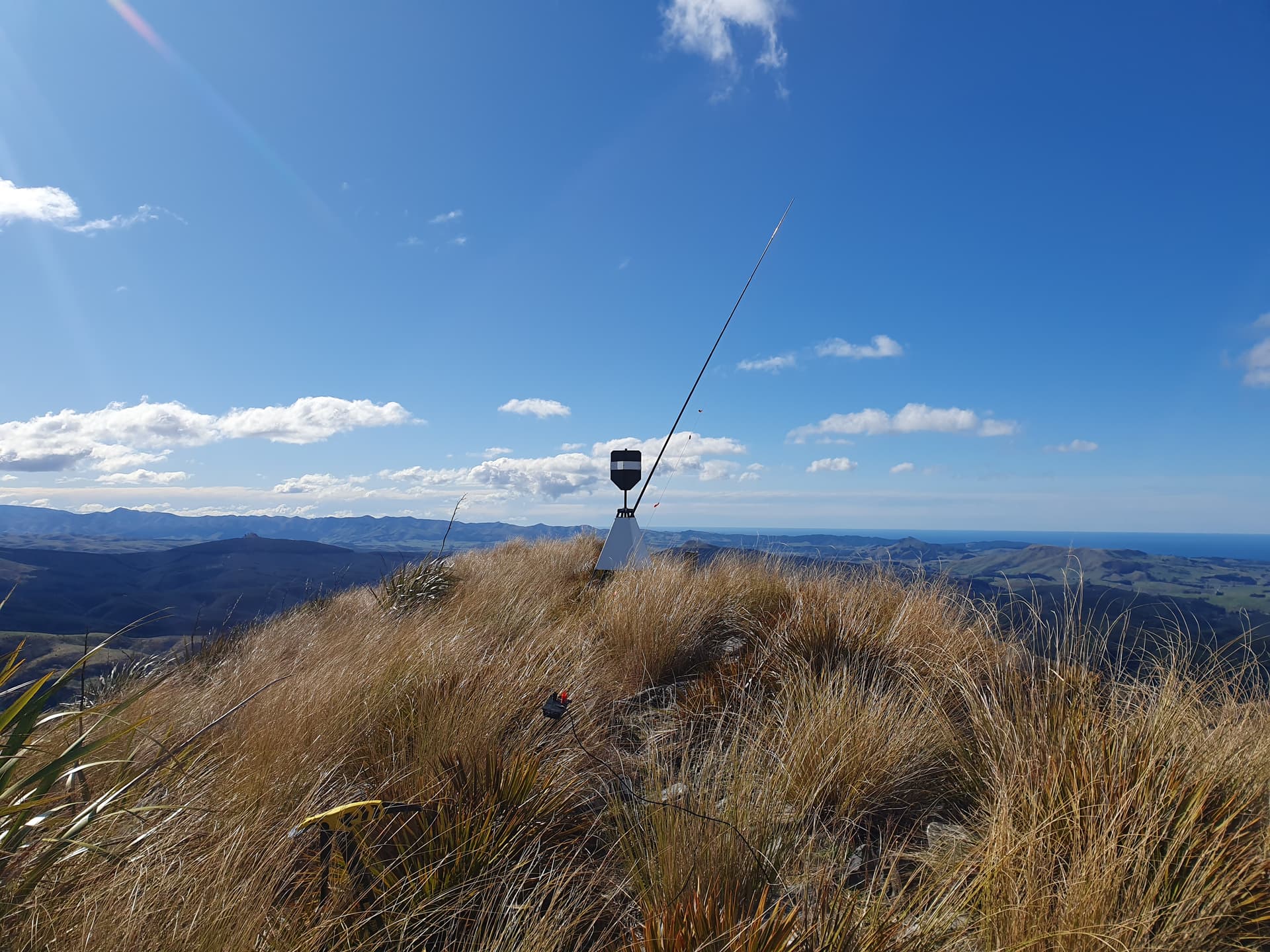
A council-owned reserve climbs the eastern flank of Hikaroroa / Mt Watkin from the road to its summit. From a distance the extents of this reserve are clearly visible: it’s that bright-yellow block of solid gorse amongst the otherwise tidy rough grazed pasture. We park up at an old quarry, and nose up the western fenceline - which is thankfully mostly still clear of gorse. There is no track, and it is a hard, slow climb up the steep loose volcanic rock through a mixture of roly-poly tussock waist-high scrub.

The usual TX500 + EFHW + SOTApole does a fine job and we get 24 in the log in a lazy half-hour - VK’s now thankfully awake and out activating.

Dunback Hill
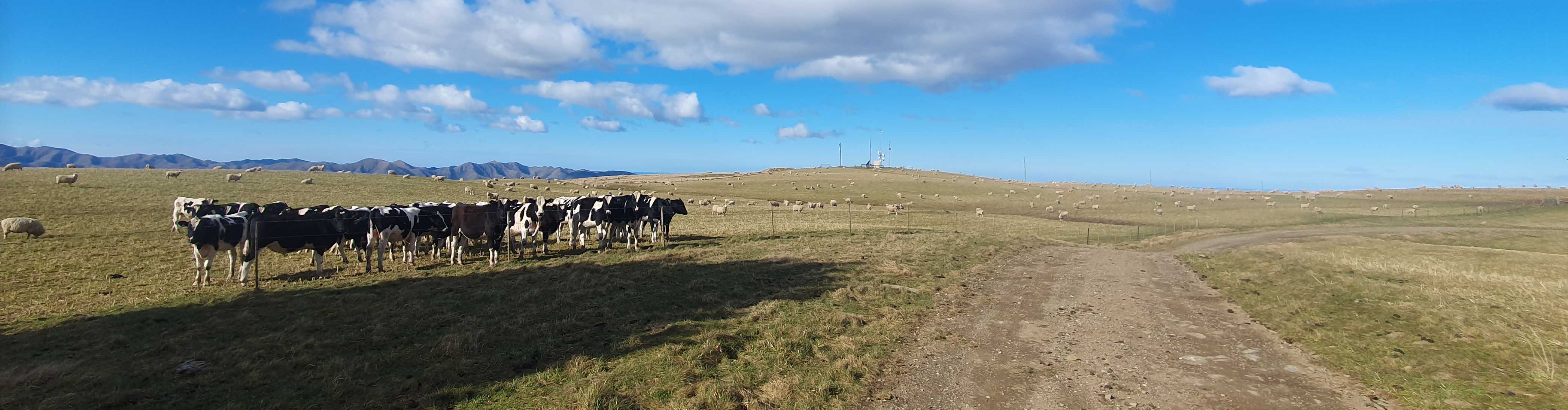
A final drive-up HEMA summit rounds off the trip. Golden Bar Road has been cut-off by the Macraes gold-mine at it’s western end, but the eastern end still gives access as far as the summit of Dunback Hill. 15 contacts include 3 VK parks.


All said and done, my trip to the East Coast didn’t exactly go to plan, nor was it filled with enjoyable iconic tramping. The Silverpeaks are Dunedin’s back-yard and classic tramping for people of the city. But their scrubby, post-logging nature means that they really are restricted to on-track tramping - limited to the few loop tracks that have been established. Silverpeak, and Swampy Summit (previously activated) both would make good SOTA day trips from their respective roadends, and the overnight loop was an unnecessary extravagance. Mt Allen - for those really keen, would be best activated with permission from the forestry company from private forestry roads - I would not recommend following in my footsteps (hand-steps, knee-steps, elbow-steps).

The trip did however, open my eyes to some new country and when I get too old or tired for SOTA, I can see myself spending an enjoyable week in the motorhome picking off all those volcanic cones for the ZL Volcanos award.
13 Likes

Trip 2: The one that got away

Forwarded message follows:

From: zl4nvw@ontheair…
Subject: [ZL-SOTA] Failure on ZL3/OT-530
Date: Fri, September 5, 2025 5:49 am
To: zl-sota@zl-sota.org,“OZSota” ozsota@groups.io

Apologies for the no-show today on ZL3/OT-530. Things did not go according to plan.

It was raining at home when I got up at 7am, but the forcast showed the wet weather stopping at the Dunstan Range and not extending any further east. So a trip 100km NE to Danseys Pass to pick up one of the new CB/OT-border summits added last year seemed like the plan.

After a 2 hour delay trying to get answers from work colleagues about next week’s plans, I finally left at 9am. The rain front was spilling over the Dunstan Range by this time and soaking the Manuherekia.

The rain proceeded to follow me all the way to Danseys, and strong winds and a light drizzle greeted me at the cattlestop that marks the access point for OT-530. An old zigzag pack-track takes you across the stream draining Danseys Pass onto the terrace opposite the cattle-grid, but from there on you’re on your own pushing through the untracked tussock to the summit 400m above. I sweat up to the summit in waterproofs - a lose-lose call: wet from the rain or wet from overheating. Only to be near blown off my feet on arrival on the exposed ridgeline. Not really a SOTA day …

Thankfully a nice sheltered terrace just in the lea of the ridgeline gave a spot to activate and the EFHW went up, radio sheltered in my pack. Time to get the phone out and spot. Ah …

No phone. Yet I recall it being in my jacket pocket when I took my glasses off near the start and went to stow them in the same place. Mentally sit stewing over hassle of replacing phone, sim, credit card, driver license, firearms license, NZMCA card, and all the random other stuff in there.

Grr.

Ah well, might as well try and put out a call and see if we can qualify the summit whilst we’re here. Nothing to log on though …

Grr.

Convince myself I can memorise the 4 calls/times needed for a qualified activation, and put out a CQ call …

Wind gust snaps the antenna wire at the uphill end, tension released the SOTAbeams mast comes tumbling down, …

Grr.

Scramble down to resurrect the mast, slipping on the wet tussock and slide onto the mast snapping the middle segment in two.

Grr.

Swear loudly and longly. Throw toys back in pack and stomp off back down the hill.

===

The one saving grace: Tell the dog to ‘track’ - her one useful skill is to retrace our route. 1km of stumbling through knee to thigh high tussock later, we come across the phone lying in a small open gap in the tussock. You’ve earned you marobone treat today Pip-squeek!

Matt - ZL4NVW

ZL-SOTA mailing list ZL-SOTA@zl-sota.org
http://zl-sota.org/mailman/listinfo/zl-sota_zl-sota.org|

8 Likes

Trip 3: Eastern Kakaunui

This third trip was even more speculative than the first. Some may recall my previous attempt to traverse the Kakaunui Range in winter - stopped by soft snow after 3 days, having failed to reach the Day #1 objective of the Half Moon Hut

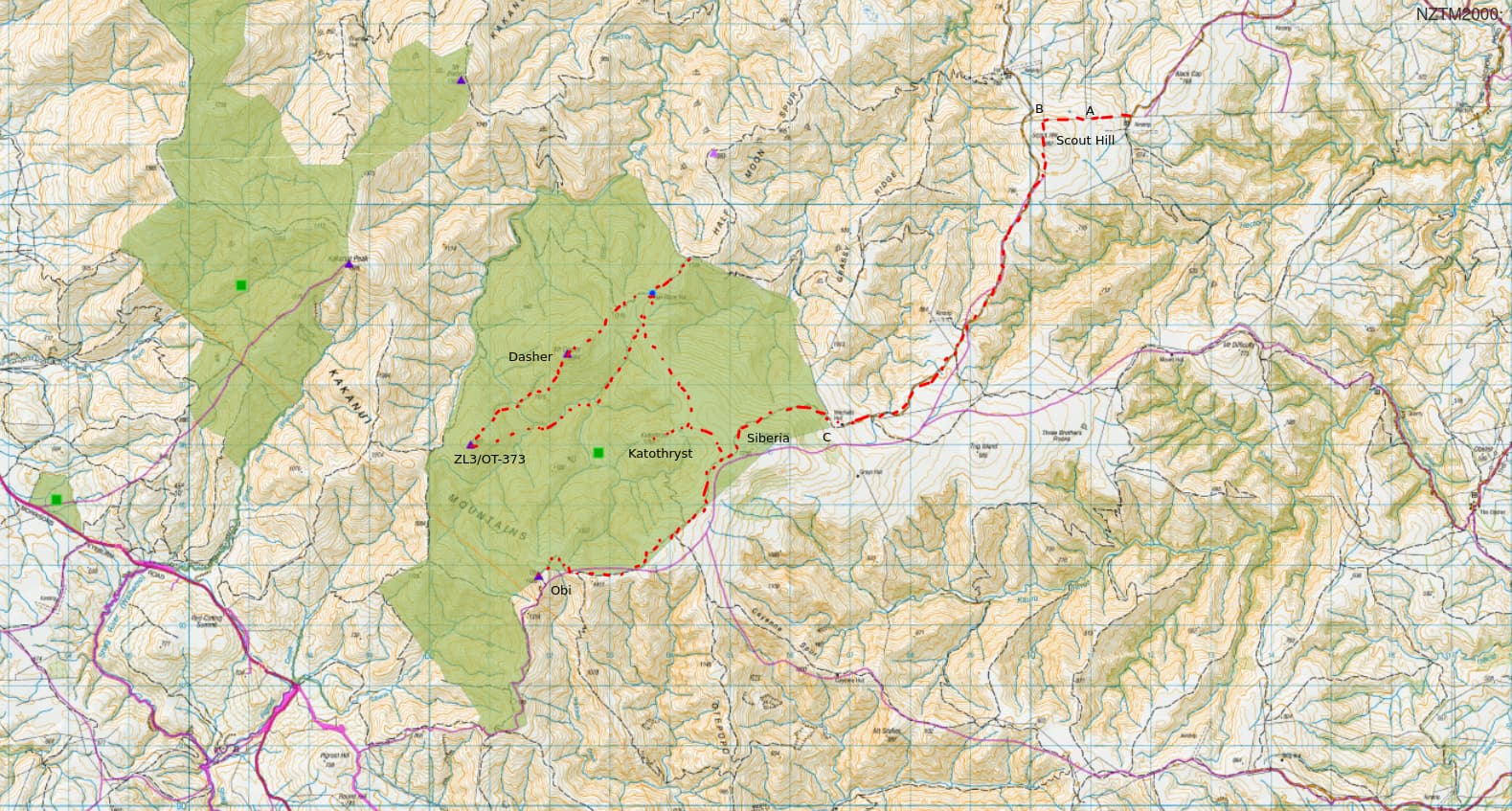
Legal access to the Kakaunui Conservation Area exists in several places off the Pig Root highway. The designated route in, when the park was created, was up the legal road to Mt Obi. True to form, this legal roadline differs widely from the formed farm track, so DOC set off to survey and mark the legal road when the park was created. The adjoining landowner (currently using the crown-owned roadline for unofficial grazing) threatened to pull out the survey pegs, and the whole matter got passed on to the Walking Access Commission where it has languished ever since. Given the above conflict, I’ve been uneasy about using the official access route ever since. Having the law on your side does not always count for much when confronted by an angry cocky, as our Welsh friends have been recounting recently.

A couple of creeks have crown owned marginal strips that may also provide access - but both are steep and tight, and such legal access is only 10m either side of the centre-line, meaning that whilst legal, access may not be feasible.

Finally, there is a 2nd documented access from the Oamaru side: a public access easement from the end of the legal Black Cap Road**. However, again the legal and formed roads diverge in places, and a locked gate many kilometers before the end of the road is a real possibility.


Green - public conservation land, Pink - legal roads


Day 1

I set off early Saturday morning to scope it all out and see if any of the above are possible, a 100km drive to the stone fireplace that marks the former Pig Root Hotel site.

  • A farm vehicle and quad-bike trailer is parked at the bottom of the creek access, clearly farm activities are in progress up there.
  • Pregnant ewes are grazing the flats at the base of the legal road

Stop, scratch head, think.

  • A quick check with Waitaki District Council confirms that they grade / maintain Black Cap Road all the way to the airstrip where it ends - meaning it should be public and open. Great!

A further 100km drive follows, to the coastal town of Palmerston, skirting the eastern end of the Kakaunui range, and approaching again from the North-East. True to their word, the council-maintained road runs all the way to the airstrip, and we park up on the verge and finally set off on our walk. 11 am.


The ‘ABC easement’ follows the dog-leg fenceline** east then north over Scout Hill, its summit crowned with more basalt organ-pipe rock formations and volcanic debris.


Scout Hill, ZLV/DUN-055

Scout Hill is known as ZLV/DUN-055 in the ZL Volcanos programme. and I stop to activate it - finally we’re playing radio.

Joining a farm track, a further 8km of good walking follows to the park boundary, climbing steadily but easily. The private Mitchell’s Hut site just outside the park, and looks well built and tidy. Gale force winds greet me as I hit the ridgeline and follow it a further 6km to Mt Obi, then final 2km on crisp old snow.


Mt Obi, ZL3/OT-343 - Hiding behind the repeater shed

A walk-in freezer serves as the repeater hut, and provides some shelter from the howling wind, which whistles and moans through the rigging. The SOTA-pole, half-extended gets stropped to a fencepost, directly downwind, and the activation commences. By the time the callers start to drop off on 40m, I’m keying the mic by squeezing it between my two hands - there is no sensation left in fingers, and my logging has gone to pot. Still, I alert on 20m and bring in another 11 callers before I finally call it quits. I end up resorting to using teeth to unknot the guys from the fenceposts.


Pacific Ocean, Waitaki Valley and Katothryst from Mt Obi tops

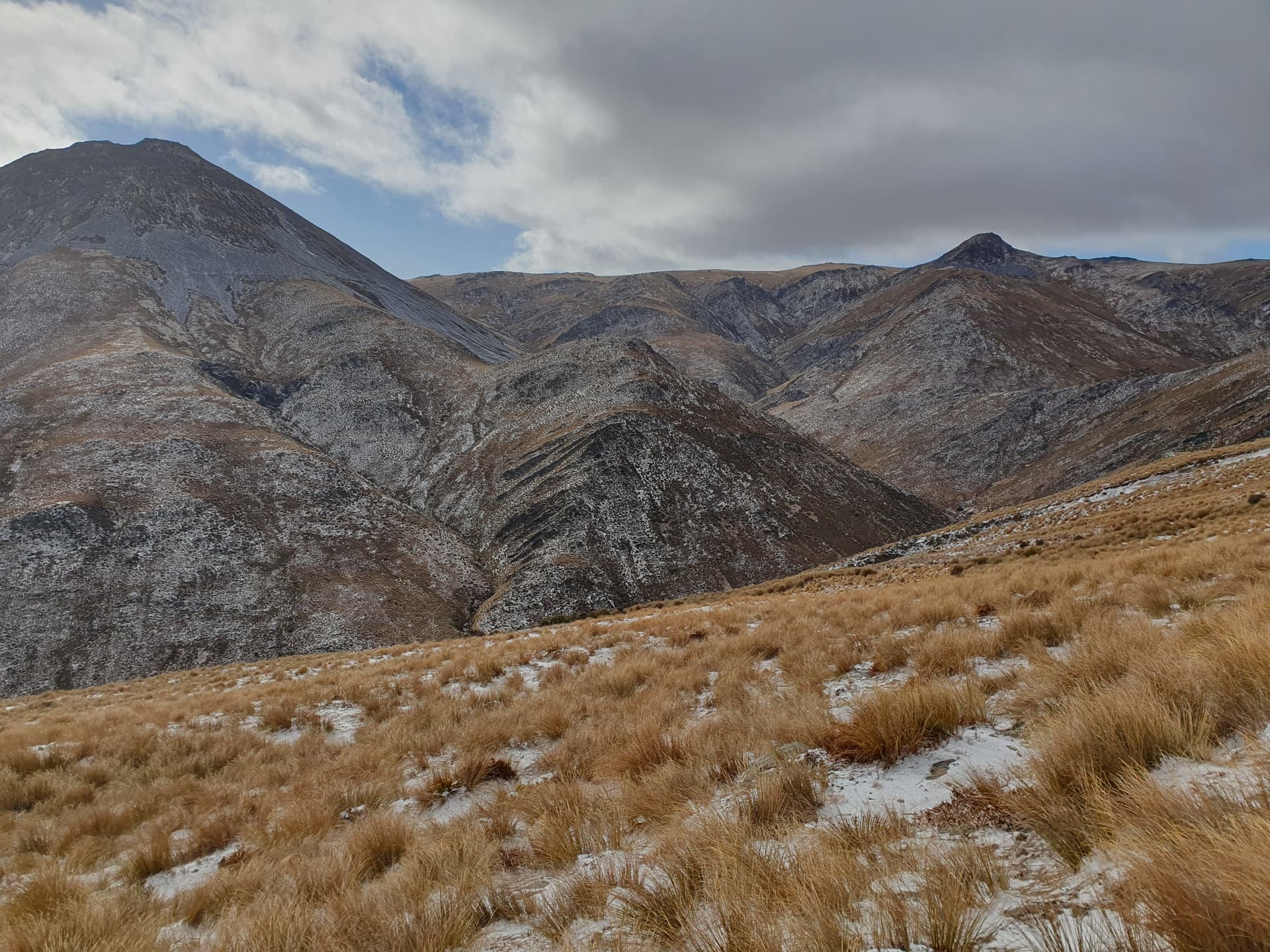
The views as we walk back down the track towards the turnoff to Half Moon Hut are stupendous. The high plateau is not only dissected by deep creeks, but dotted with the conical remnants of old volcanos. Deep reds and browns of volcanic rocks contracting with the usual weathered grey of the schist. Golden tussock spurs descend to the rich green expanse of the Waitaki Valley, beyond it the glinting blue expanse of the Pacific Ocean.

We turn off 2km before hitting the park boundary and drop down Half Moon Spur towards the hut. The most prominent volcanic core, Katothryst, lies just south of our path, and deserves an activation.


Katothryst, ZLV/DUN-028


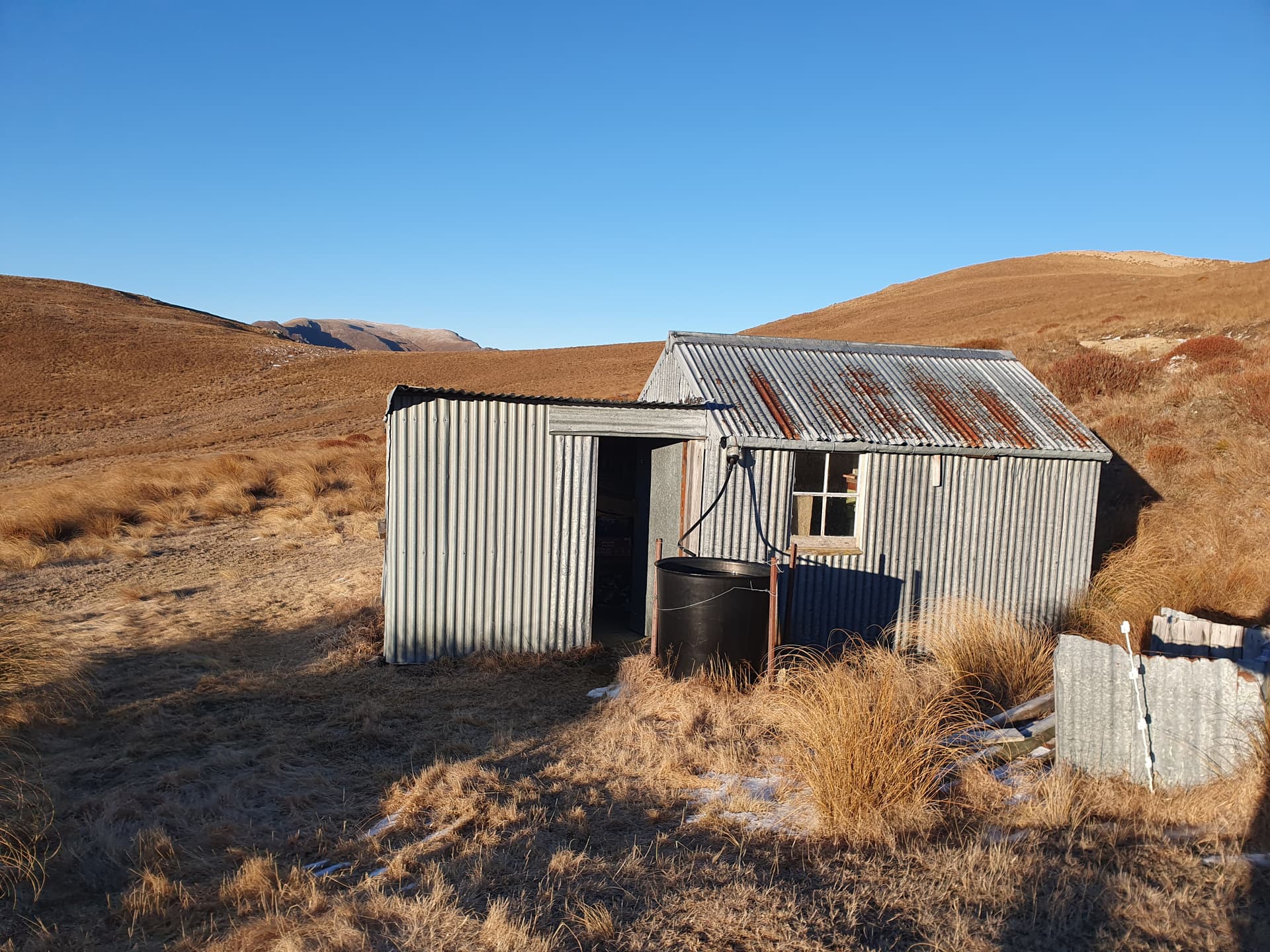
From a 7am departure, it’s 5pm when I reach the hut, the wind swirling and battering the tussock, rattling the iron roof and walls. A quick wash under then tap to remove the sweat of the day, and a rough antenna deployment along the fenceline, and we’re inside, into warm dry thermals, and dinner is on the stove.

20m opens to the EU around 5:30pm and we play with the DX for half and hour, netting 14 calls and 8 European countries, before switching to 40m for an evening catch-up with the local callers.

Day 2

Snow falls overnight, a 60mm coating at 3am when I briefly wake. By 6am the wind has picked up, 50kph, gusting to over 100kph - crouch-down and hold-on stuff. The show swirls and blows - the hut vestibule full of the stuff as it filters in through unflashed roofing-iron ends and ill-fitting doors.


Mt Dasher (left), Katothryst (right)

It takes some convincing, but I finally head out the door at 8am, bound for Mt Dasher 2km away. I’ve neglected to bring gloves, but some spare woolen socks make effective, if clumsy mittens. I allow 1hr for the untracked trip in the snow, but the wind has blown the exposed ridgeline clear and I make fast progress, summitting by 8:30am before scuttling quickly down in the sheltered lea before setting up for the days first activation - antenna strung low between summit rocks and a low bush on the terrace below. there’s a bit of QSB on your signal …


Activating Mt Dasher - ZL3/OT-359

Temperatures are well below freezing - my water bottle has part frozen in the half hour from the hut, and the 50kph+ winds add a good wind chill factor despite the low humidity. So the activation is brief - five in the log in 10 minutes before frosted hands say ‘no more’ and we pack up and re-don the socks!


Mt Dasher (left), Half Moon Spur (centre) from ZL3/OT-373

Loose volcanic scree, coated in snow and ice, drop steeply into the head of Deep Creek, making for a tricky descent, even with the aid of the ice-axe. The buffetting winds do not help - clinging to tussocks is fine, until you run out of tussocks. But I make it to the shelter of the valley floor in one piece, and ascend the more protected face beyond to the 2nd summit of the day: ZL3/OT-373. I’m 2 hours early for the activation, it being only 10am, but a good number of chasers are around, as well as a couple of summit-to-summits with other ZL activators. The cold, again, forces me off the peak without attempting 20m for contacts further afield.


Half Moon Hut - home again!

Day 3

Day three was intended as an easy walk out, back up Half Moon Spur and down the access easement. However, nearing the track, I stumble on the basalt core of Siberia Hill, another ZLV/ volcano - sited some distance from where maps suggest. Another activation beckons!


Siberia Hill #1 - ZLV/DUN-028

Despite the delays, it’s barely 10am when I arrive back at the truck and start off down Black Cap Road - time to squeeze in one more on the way home?

I’m stopped 5km down the road by a cocky in a tractor.

  • Did you have permission to be in there? - forcefully spoken

I explain that I’ve followed the ABC easement from Black Cap Road into the Kakaunui Conservation Area, and that no permission should be required. The information came from LINZ, the official registrar of land titles in NZ, and the definitive source.

  • The government have stuffed up. There’s never been legal access through there - and we start down the age-old conversational path.

I’m privately skeptical** - how many times have we heard that story (e.g. the Welsh example cited above). But remain polite, and stick to my point that I’ve done my best effort to check with the authoritative source for access rights, and followed the information they give. The tensions ease and the argument becomes a conversation, the farmer re-iterating that the easement ends at his property boundary and the legal road ends at the airstrip where I parked, and - despite what LINZ say - there is no legal road for the 600m between the two. We part on good terms, with promises to contact ‘The Hectors Station’ if I want to return, and to pass that information on to any who needs it.


I’ve been longing for coffee, dreaming of its taste and smell, but there are no cafes, no businesses at all along the Kakaunui Valley Road and all the way to the provincial boundary at Dansey’s Pass, so I stop at the summit for a brew of instant and some toasted peanut butter sandwiches on the gas stove.


Views along the Kakaunui range towards Danseys Pass from Half Moon. Mt Cook peeking over the horizon


The site of ‘the summit that got away’ is 2km down the Otago side of the pass, and I pull in again at the cattlegrid, 3 days after my last visit. Drop down the old zigzag-track over the creek and climb the dense tussock slope to the summit of ZL3/OT-530.


Activating ZL3/OT-530

The wind this time is gentle, the sun shining, and I finally qualify the summit with 14 contacts, no losses, breakages or failures to report!


On arrival home I bring up mapspast and check out the cocky’s claims. To my surprise, he looks to be correct: LINZ most likely have stuffed up. Older cadastral maps show a property boundary running along the 600m of fenceline (solid line), and also the boundary of the Dunedin Mining District (dashed line) running parallel to it. At some point after 1949 the dashed line on the maps has transformed into a 2nd solid line - two side-by-side solid lines indicating (probably mistakenly) a legal road. So LINZ may have indeed stuffed up, and for once the farmer was quite likely right is saying that the legally documented public access does not exist (for the first 600m from the roadend).

** So for any that follow in my footsteps, you need permission from The Hectors for the first 600m of your 20km walk in to Half Moon Hut.


11 Likes

Well I really enjoyed that… enthralling as all your accounts are. For some reason I didn’t expect there to be GOMLs (get off my land) in ZL.

2 Likes

Thanks for a superb write-up and photos of your recent SOTA adventures. A hugely enjoyable read. Well done on your resilience and persistence!

73, Matthew M0JSB

Another excellent read Matt. I guess we have it easy here in EI

Colm - EI9KY

Things have certainly got worse in the last 25 years. We don’t have a ‘right to roam’ enshrined in law, but on the other hand the trespass act defines trespass as failing to leave when asked (in person) to do so. So you can legally wander, so long as you are not causing damage, but that doesn’t mean you’ll be welcome.

The legal vs formed road thing is an absolute pain. Blame changed attitudes, or blame improved mapping? I’d say very few farmers knew that the legally gazetted roadline and their farm track did not follow exactly the same course until the ability to superimpose property boundaries over airphotos came online!

I really hoped that the Walking Access Commission, when it was established 10 years or so back, would resolve all of these through negotiated land swaps backed up by the threat that they have the ability to impose public works act orders to make it happen (ZL’s compulsory purchase order legislation). But they seem to have preferred the ‘long game’ of dialog and agreement, and getting no landowners off-side: agreements and co-signed easements instead of resolving the actual inaccurately defined property boundary issues. Waiting for farmers to die or retire so that they can try again with the next generation.

3 Likes