Hello Peter,
alright, thanks. From a technical perspective, would it be better to go for a 12V or a 9V build? The power output would be almost the same anyway.
How much capacity does your battery pack have?
73,
Julian
I think it’s a matter of preferences, technically there is little difference. I choose 12V because I don’t want to get close to the minimum voltage in transmit when the battery is almost empty.
I have two small packs for hiking, 650mAh and 450mAh. The 650mAh lasts a couple of hours at least in my experience. The 450mAh is 40g and is definitely good for one activation for an hour+. Since I rarely do more than an hour, it’s fine for me. Both are not only light, but also incredibly small.
Agree that there is no point looking at the power differences, not noticeable in any case at the receiving side.
73, Peter
Hi Peter,
awesome, thanks a lot!
In the end, the main question I should ask myself is: do I want a more common setup with a wider voltage range — in which case I’d go with the 12 V build — or do I want to maximize the device’s output power, which would mean going with the 9 V build?
After that, I just need to decide whether to use cells directly or a power bank with a trigger adapter.
73 Julian
Take care. Mostly this power banks give you big interferences.
73 Chris
I chose 12V because my other rigs all work around 12V, so my present line in battery packs are all 3S LiPo, and I wanted to have the flexibility. If I’d built mine for 9V then I’d have had to mess about with different battery packs for different rigs…
Me too. 3x18650 Li-ion cells are handy for QMX, QDX, KX2 and trusdx and many others.
Losing one cell to save weight will be counteracted by a couple of stones stuck in the tread of your boots, or if it rains and your pack gets heavier.
I really don’t understand why 9v is even an option. 12v just makes sense to me in terms of alignment to the power requirements of most of my other rigs.
3S LiPo radio control model batteries are so cheap and perfect for the job, it’s not really worth messing about with power banks and trigger cables.
There are bands that I’d not use no matter which version I selected… so that’s what I ordered.
Building it will be fun. 
There’s another argument in favor of the max. 9V version. The lower voltage reduces the risk of damaging the BS170 power transistors in the event of a gross mismatch.
73 Chris
Guys, thanks for all the input, but I still haven’t decided 
Lots of pros and cons… I think I’ll go ahead and build the radio first, and when it’s time for the transformer, I’ll have to make a decision…
73
Julian
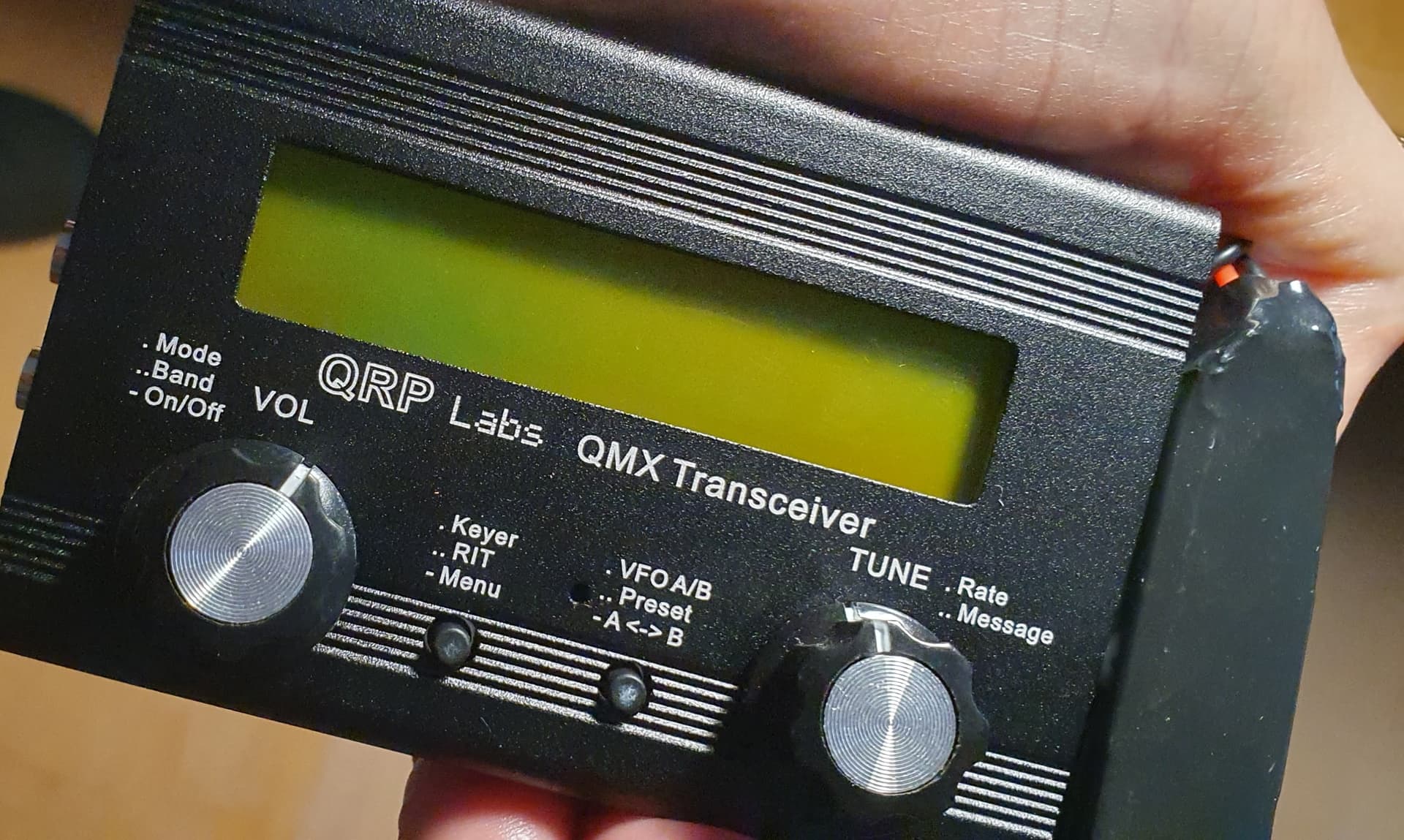
So the QMX 60-15 kit arrived eventually… and I got to building it.
Reasonably straightforward (SMPS boards were a PITA), but the top part of the case was slightly curved… so I had to squeeze it with my hand (as far as I dare) to get the screen assembly to fit in the grooves. It’s still not quite perfect, but once I screw the case on (squeezing it all together to get the screws in) it’s OK. I’ve lined the bottom half of the case with Kapton tape just in case
It took a few goes once powered up to get my Mac to recognise it as a USB drive, then I had to be quick about getting the firmware into the ‘drive’ because it kept self-ejecting.
Once powered up, the firmware loaded and everything appeared OK… I went into diagnostics and noticed that there was 0w tx power despite the voltage on the amplifier being correct… an SWR sweep with a dummy load, revealed bizarrely high values on all bands. 
So I headed to the T507 SWR bridge - two of the pads has no continuity between their opposite sides. During assembly testing, I must have placed my testing leads onto the cut portion of the enamelled wire, not the pad. I reflowed them for a good 10s at a higher temperature, and it all checked out.
From there, back into diagnostics - I got TX power on all bands bar 60 and 40. 
So I headed to the L506 and L511 toroids. Sure enough, there was one toroid with no continuity between the pads - once again, I had tested it incorrectly when assembling it. I reflowed them and it all checked out.
Back to diagnostics - I’m getting between 4.2w and 4.9w on all bands at around 11.5v. 
All I need is some decent weather to get out and activate a summit. Excited.
Hi all
For anyone interested, I notice that Hans, G0UPL will be giving a talk at the RSGB convention this Sunday. The subject is his journey to produce SSB by Polar Modulation.
It will be available on video at some point.
Rick
So my answer is “none of them?!”
After a suggestion on the SOTA-NA slack group, I’m looking into making a “technician” compatible QMX to use with my daughter, e.g. 40m, 15m, 10m as the critical bands, and even just those three bands would be acceptable.
I think for the low pass filters I could just pull the design for 40m and drop in in to replace 20m, but I’m a bit more stumped about the bandpass filter. Can I just cram in a pile more turns on the multi-tapped torroid and swap caps?
Making my way through https://www.ai6xg.com/post/a-40-10-meter-qmx who did something similar but not on a de-novo build.
Any advice Thoughts!
It has been done Tony and I am following the same plan .
You have already found the source at https://www.ai6xg.com/
Dan Koellen’s (AI6XG) very clear piece about changing a standard high band QMX to do 40m ends with a section on starting from new. Only a few changes to capacitors and one pair of the LPF toroid windings. Mainly this uses exactly the same components as the standard 40m QMXs.
I can not report properly on mine as I am just at the stage of completing the main board. I can endorse the QMX for portable use as my mid-band QMX is now nearing 500 summit contacts using (mostly) a 40m HWEF aerial. No problems if handled carefully.
Good luck with the project.
73, Rod
Thanks, I missed that paragraph in the conclusion. Let me know how it works out for you. I”m doing the build with an 8yo so it might take us a little while 
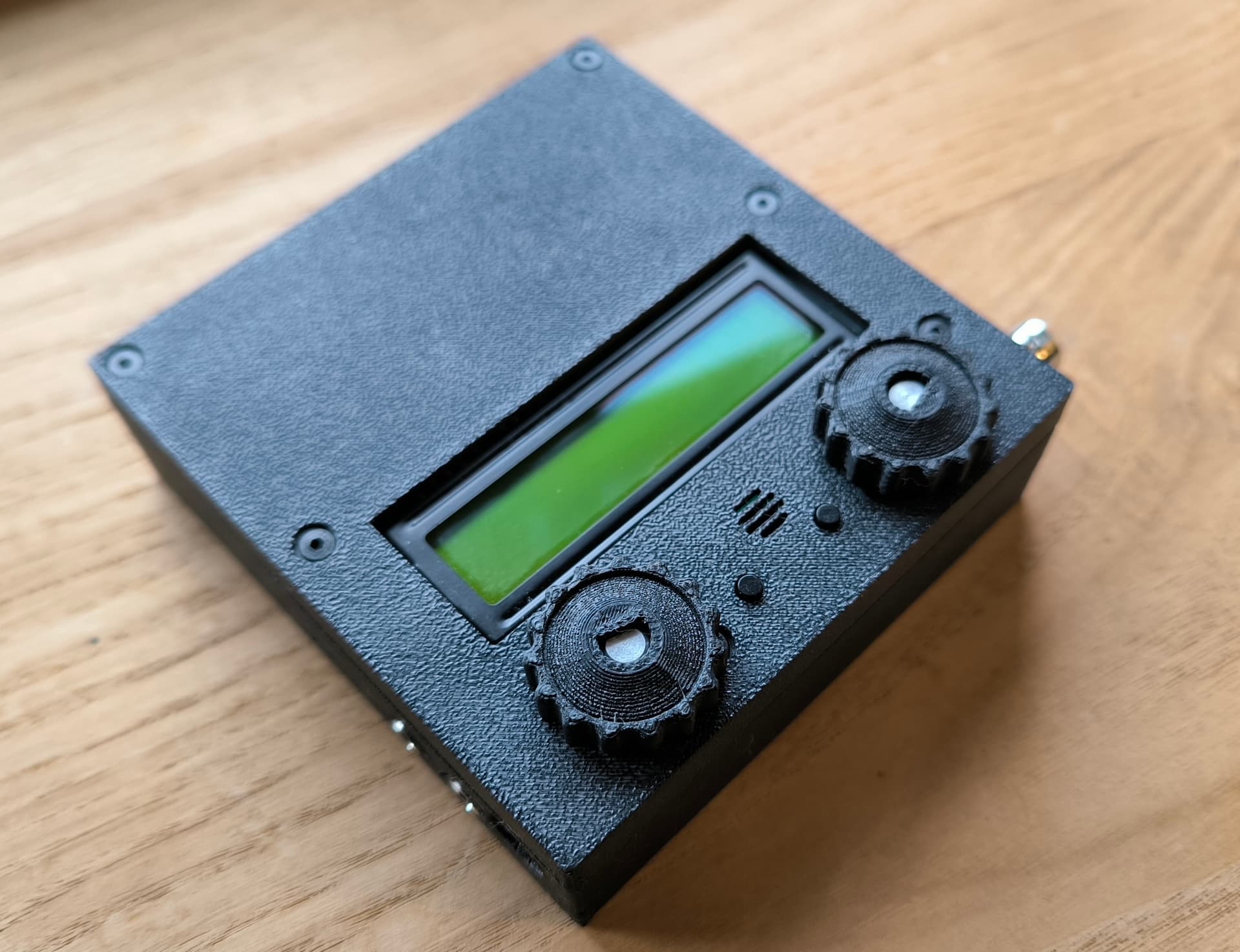
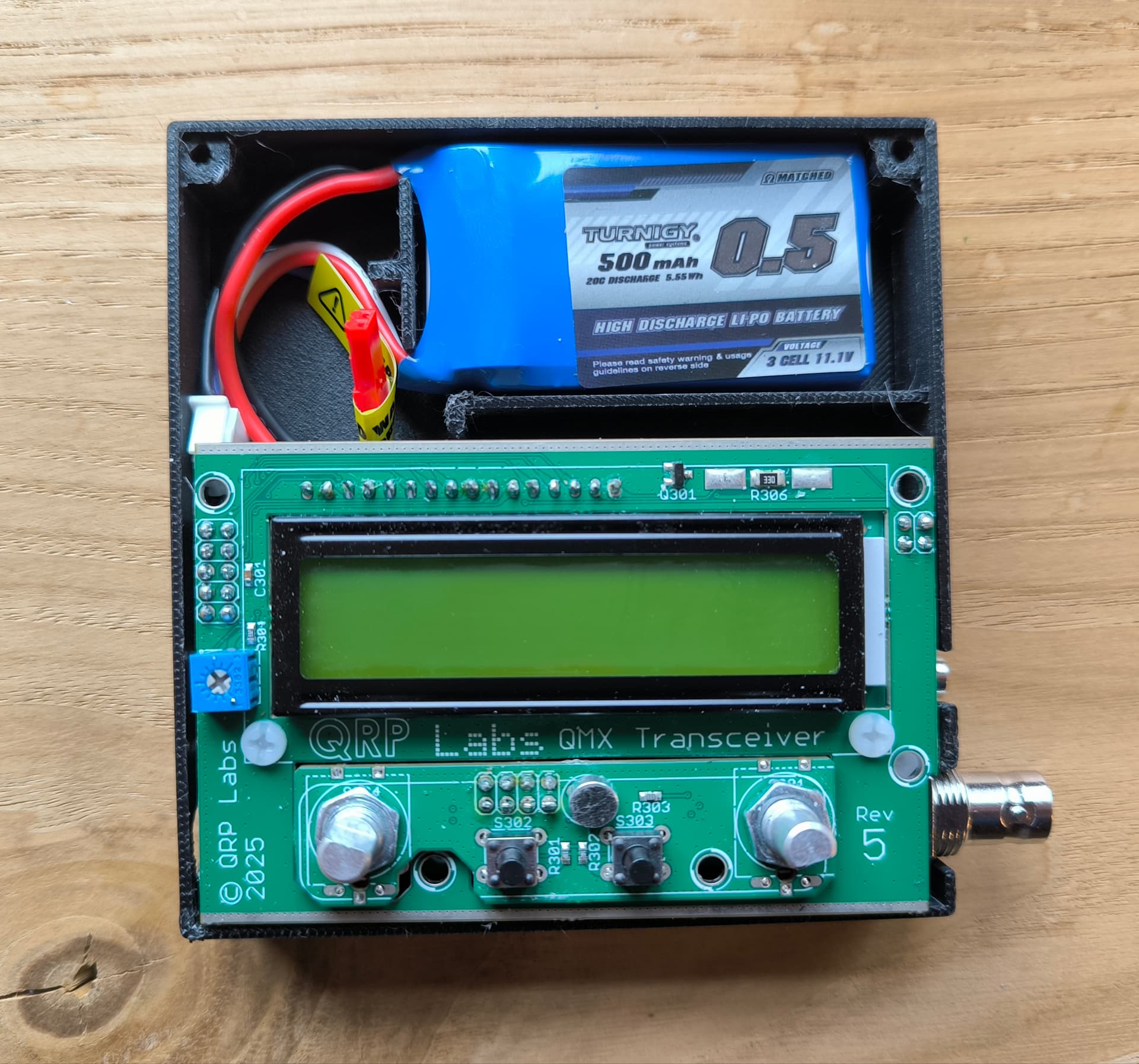
Hey, does anyone have an editable 3D-printed case design to share? I’ve only found one by by Mel0, non editable though. I could try designing one myself (I’d like to include the battery), but I can’t find the schematic with the dimensions of the PCBs.
I use this one. I printed it in white PETG. Not sure if it is editable though but can attest that it is an excellent case/stand/log combo.
https://makerworld.com/en/models/610700?from=search#profileId-533810
Thank you but I’m looking for the enclosure itself. Not a box to put the radio in