Tossing Rocks Over Tree Limbs

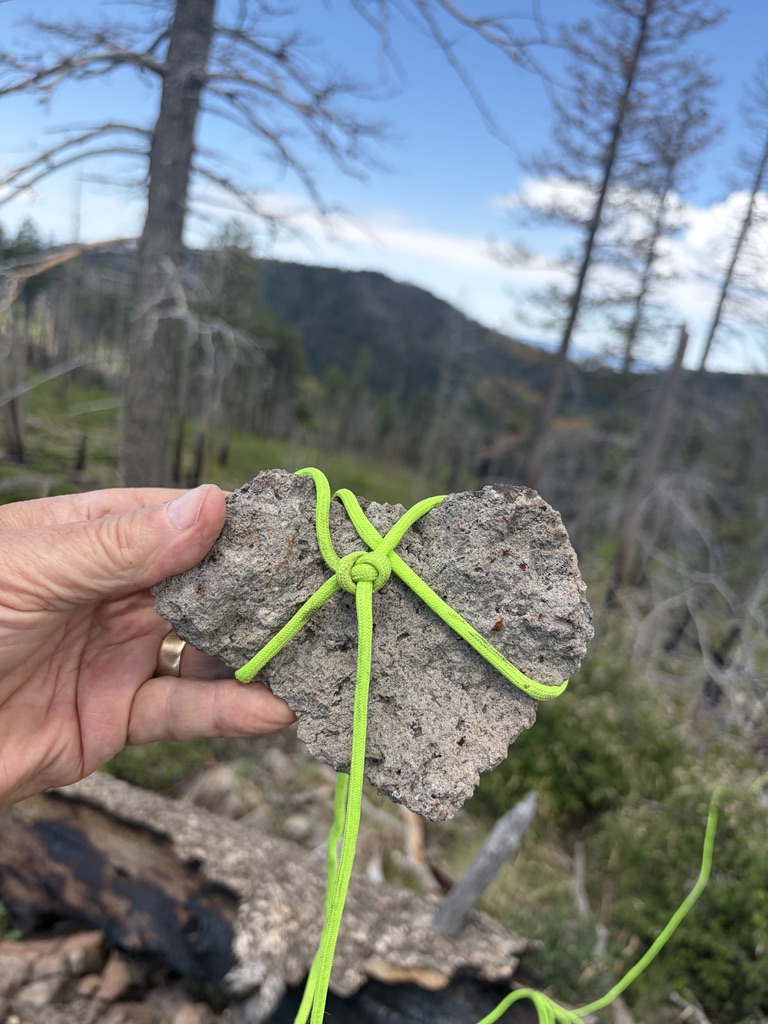
One of my SOTA Mentors Scott, WA9STI suggested carrying a little bag to load up with rocks to use a as an arborist’s throw weight. I suppose that is a good idea in areas where a poor selection of rocks is available. Here is New Mexico most summits have a variety of well-shaped rocks and I eschew the bag and just tie the paracord directly on to a suitable projectile.

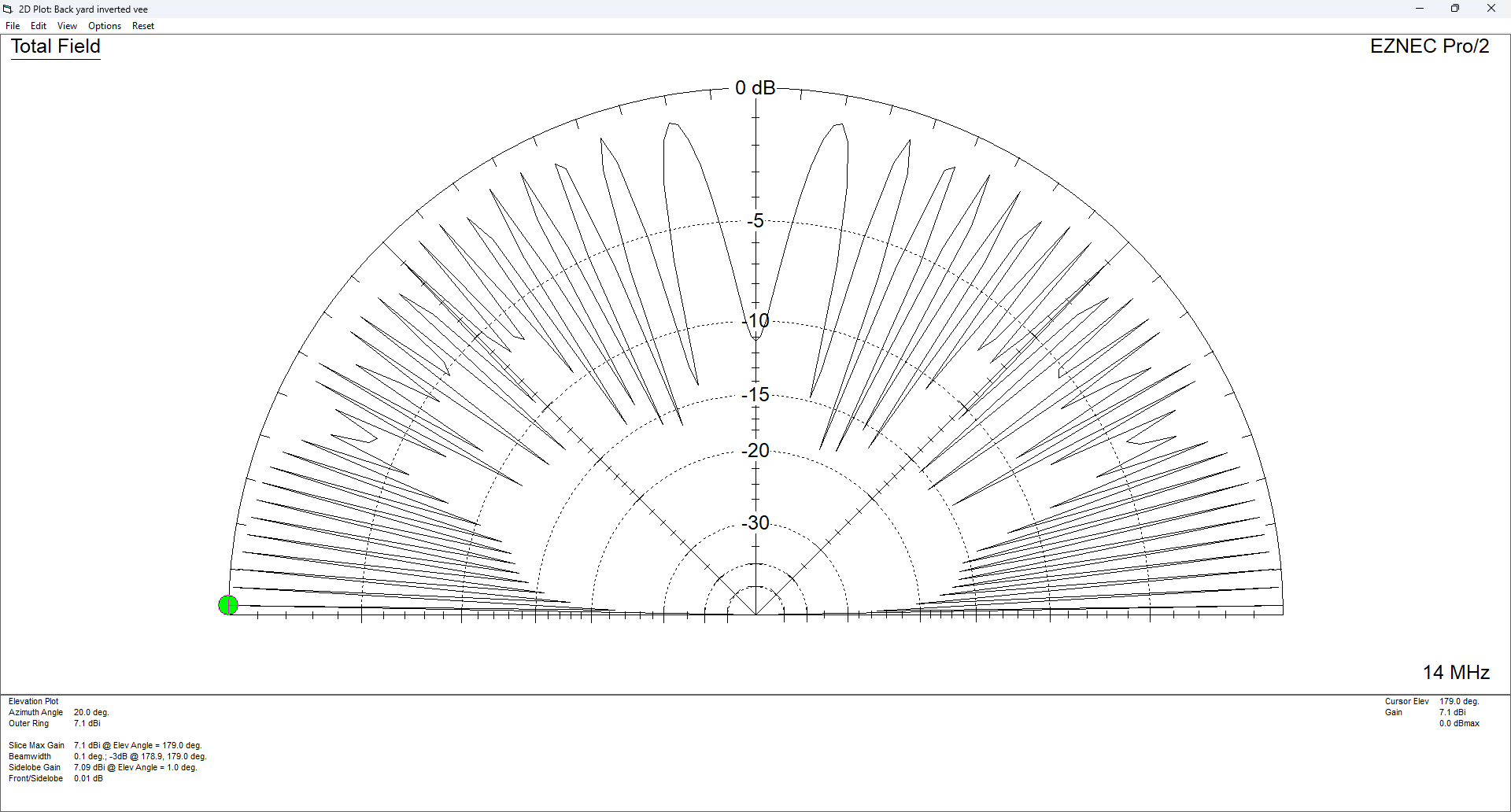
However, I am rethinking the idea of getting the wire as high as I can on summits. Fred WT5X suggests that deep nulls are formed in antennas that are actually too high over electrical ground. The drop-offs around many SOTA summits actually raise the effective height over ground. To be sure the radiation patterns have serious lobes interspersed with those null. This “spiky” radiation pattern is prone to steep, deep QSB as the incoming signals vary between the lobes and the nulls.

Here’s a chart from Fred where the end fed thinks it is at 1,000’:

This goes against what I’s always assumed: the higher the wire, the better. What do you think?

Eric KG6MZS

The easier the better.
Why would I bet on stones to throw over trees that are there or not. Bring a 6m (what ever that is in feet) fishing pole, a resonant endfed or vertical (upper outer antenna) antenna and spot yourself. Keep it simple. I have the feeling people have the urge making things too complicated?

Joe OE5JFE

2 Likes

In that spirit Joe, why even carry a fishing pole? IIRC Fred KT5X just uses his walking stick. He is convinced one doesn’t want the wire all that high. Fred is a master at this game.

That also works but I think there is a sweet spot between a decent signal and keeping things too simple. In CW maybe a solution. In solar circle lows and bad propagation on SSB it might be not enough.

1 Like

I threw a stone and line up a tree when I forgot to pack my mast.

It’s still there.

3 Likes

Some good options from Acme:

:star_struck:

4 Likes

I’ve come frighteningly close to this a few times in the hundreds of times I’ve done it. I’m a “take-only-pictures…” kinda guy and I would not want to leave my Day-Glo paracord on a summit.

I’m not sure that the signal suffers from a low slung wire. Seems counterintuitive but there is evidence to support NT5X’s notion that staying low in the activation zone away from drop-offs and keeping the wire low is actually better for one’s signal.

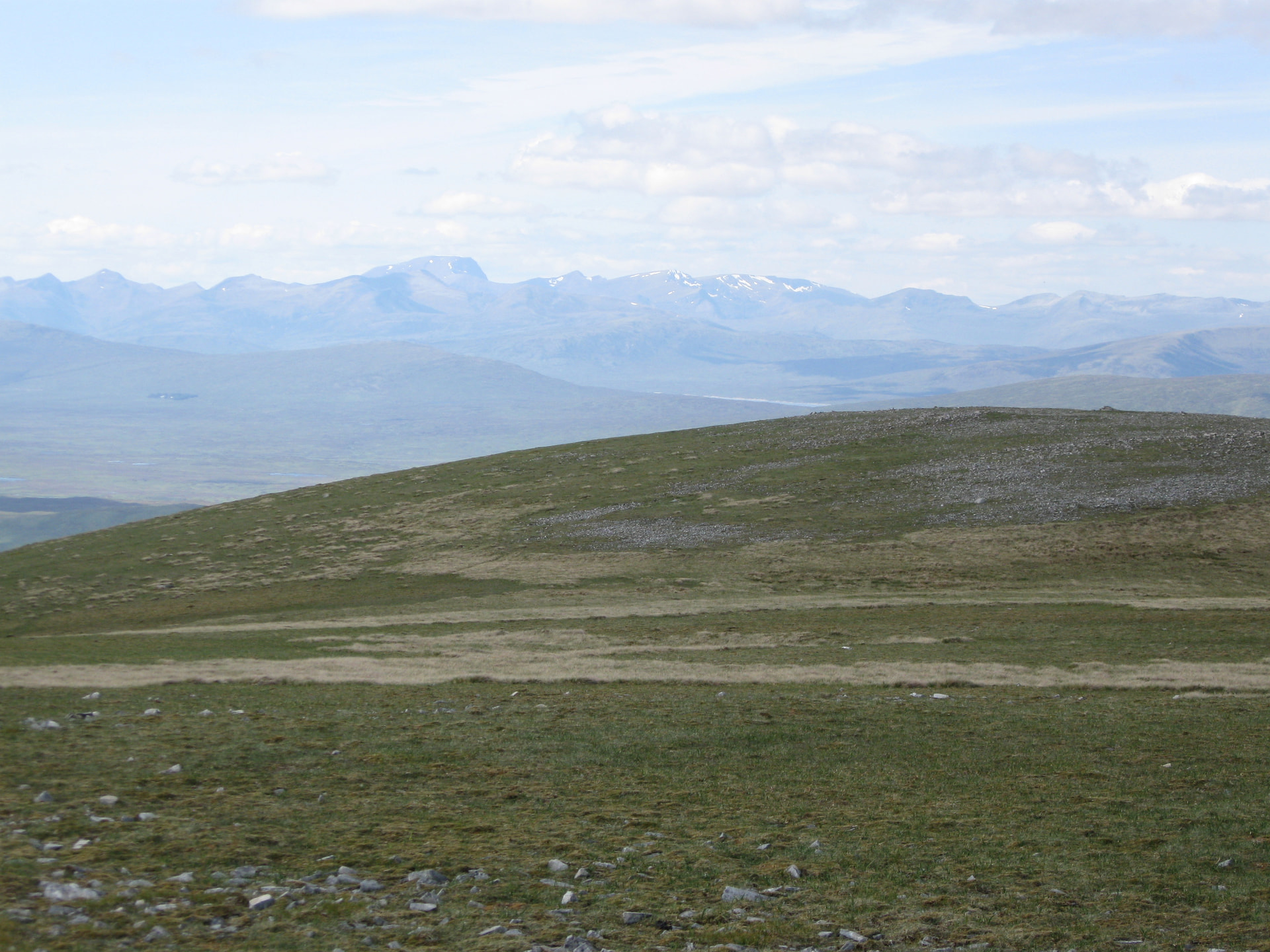
Typical tree density on 85% of Scottish summits.

Use a short pole? Works well on summits were rock is effectively at the surface such as old volcanic summits. Again, an awful lot of Scottish summits have lots of earth at the top making low antennas much less effective.

2 Likes

I used to rely on rocks (most of the places I go to have trees). One day in my wanderings I found a great lunch spot: a picnic table on low bluff with a tree overhanging salt water in Tasmania, just right to hang a vertical dipole for 10m. Except that I couldn’t find any rocks: everything was sand, or sandstone that crumbled in my hand when I picked it up. In my searching, however, I found an old sock and filled it with sand, which worked just as well.

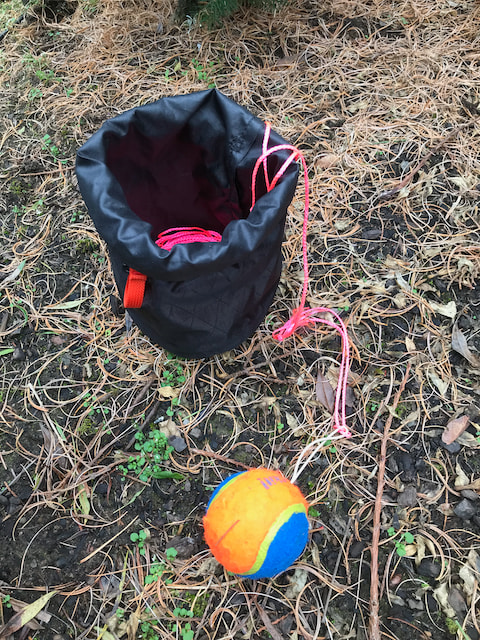
Well, not quite as well… A bag of sand or small rocks doesn’t bounce off the tree the way a rock or weighted ball does, instead losing momentum that can help pull the weight back down. Sometimes that’s the only option. Now I might carry a tennis ball with rope attached, and a slit in the side that lets me fill it with local materials when I can’t find a rock of the right size.

I’d also choose braided mason’s twine for the throwing rope rather than paracord - it has a smoother finish, and the weight comes down easier.

I still carry a chalk bag for throwing, however: I put the rope in it, and it comes out with a minimum of tangles.

The vertical radiation patterns of antennas on hilltops are not easily modeled, however. They depend on the steepness of the slope and the distance to the edge, and other details of topograghy. A low dipole near the edge of a steep slope (or, even better, part way down it) can give a good low angle of radiation. (See Moxon’s HF Antennas for All Locations.) But it isn’t the same as a dipole the same total height over flat ground. Being close to the edge of a steep dropoff is often better than being at the highest point of the hill, especially when the top area is relatively flat. The HF Terrain Analyzer (HFTA) software helps, but often the terrain data is too coarse to model it accurately, and it doesn’t account for reflections from sloping hillsides that are off of the path being analyzed.

And, yes, you can be too high above sloping ground. My friend lives on the side of a hill and put up a 4-element 20m yagi on a 55m tower. It worked very poorly. When he analyzed it with HFTA, the problem was that the angle of maximum radiation was below the horizon, and his RF was being reflected by the next range of hills. It turned out that 17m was the optimum height for the slope of his hill, and a 3-element yagi on top of his barn works much better.

So it isn’t as simple as it might seem. Of course, it also depends who you are trying to work: for stations out to a 1000 to 2000km, it isn’t as critical. Trying to work the East Coast of the US from the West Coast on Field Day (~4000km), we need all the low angle help we can get.
1 Like