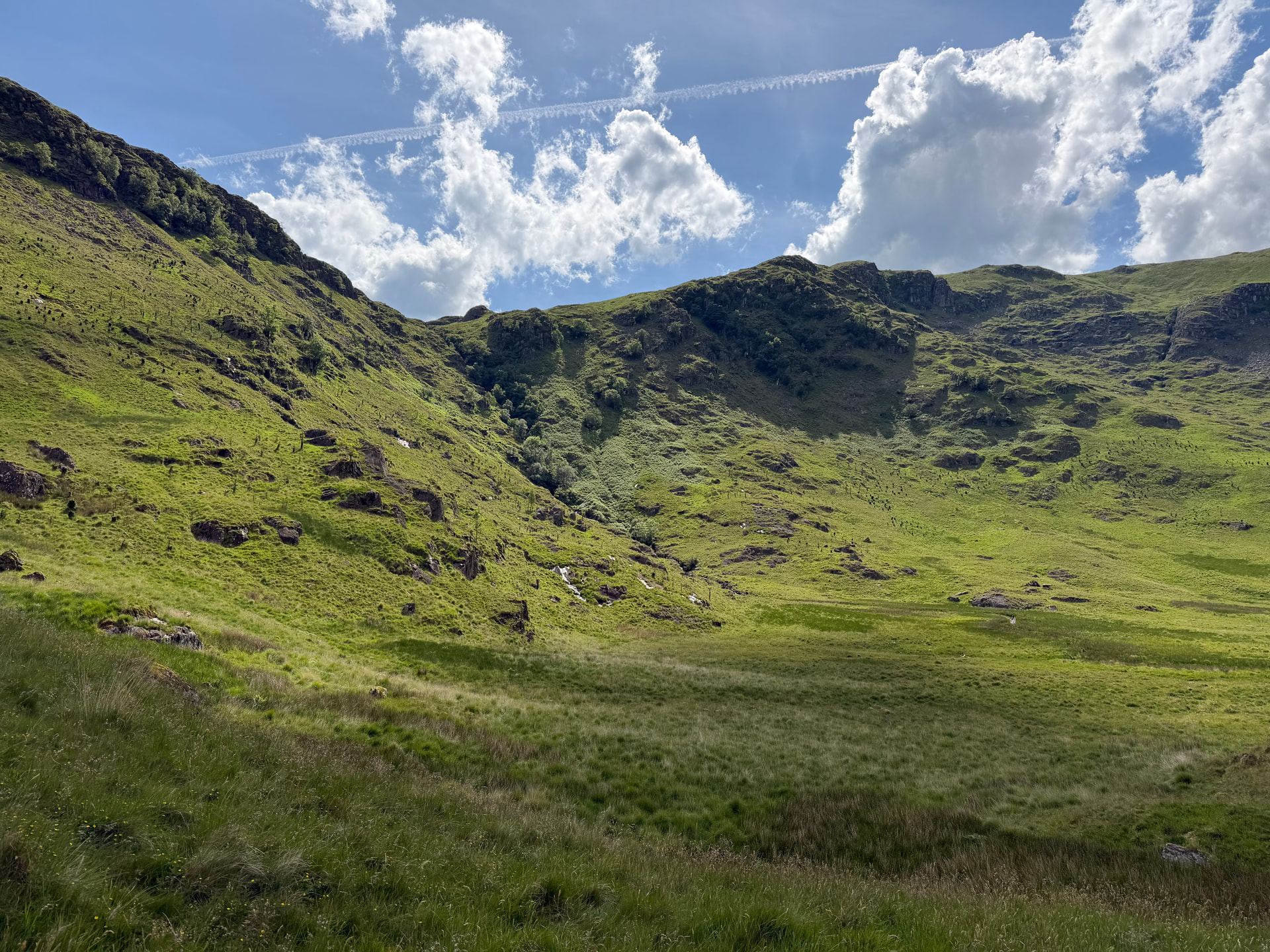
Tarn Crag, G/LD-26, what a summit!
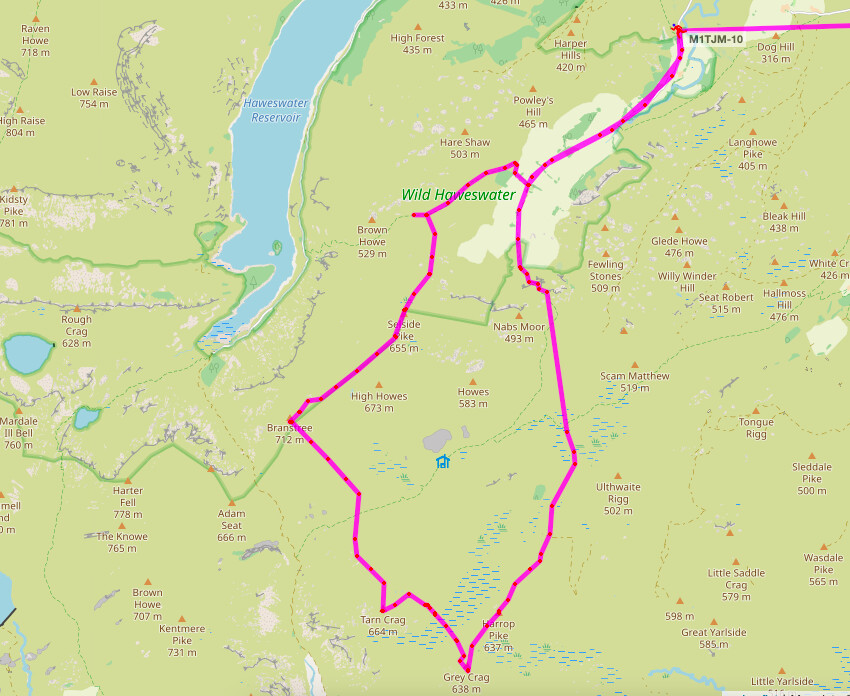
I opted for the G4OBK route, which ended up being a rewarding but exhausting 22km round trip. I’m sure many are, but I am incredibly thankful to our talented SOTA community who take the time to publish routes to SOTAMaps. Whilst they aren’t always completely up to date, they provide a great base for creating your own route. 
Tarn Crag was paired with three additional Wainwrights, which allowed me to also participate in another OTA scheme called Wainwrights on the Air. Selside Pike, Branstree, and Greg Crag were the Wainwrights on this route and it made for a great circular.
Once you arrive at Grey Crag, the final Wainwright of the walk, be prepared for a long, boggy, and wild walk back down to the finish line. I felt like I was crossing a tributary every 5 minutes or so! It’s safe to say, if you’re doing this outside the height of summer… pack the SealSkinz or even wellington boots! 
For the first time, I decided to track the route using APRS. I’ve recently purchased a LoRa tracker for the 433MHz band but it hadn’t yet arrived. The spare phone I usually bring has a lifetime data bundle which gives me 500MB for free each month, so I installed APRSdroid on it, which allowed me to use SmartBeaconing™ to upload packets that could then be viewed on sites such as aprs.fi. A few chasers actually commented on this and said they enjoyed following me around, allowing them to know when to pounce so to speak!  Looking forward to the Heltec LoRa 433MHz tracker arriving, for use on 439.9125MHz - I have already 3D printed its little case.
I used the -10 SSID today as I was tracking via APRSdroid rather than RF. I would generally use -7 when using the handheld, but find that 2m packets are somewhat unreliable - especially for an entire route from the valley to the top. You can see my route below:
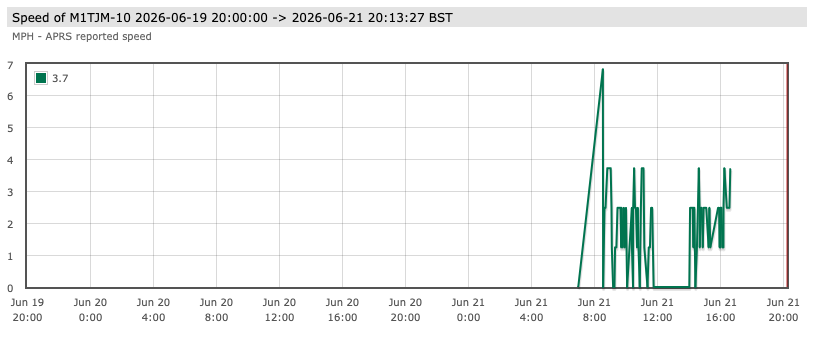
Another cool feature of APRS is the data you can send with that packet. Mine included speed and altitude, which allowed me to see the following graphs below:

Tarn Crag is a lovely summit. The views across towards Heysham and Fleetwood were incredible, but the view of High Street and the other adjacent summits topped all of that of course. I was able to set up VHF/UHF and HF stations to run at the same time, and got to test my homebrew 40/20m linked dipole out. I’d made a few dipoles recently and brought the 40m monoband dipole along to the past few activations, but I greatly missed speaking with our european and… American friends?! That’s right, I was well chuffed to get a contact with K1CL into the states and get a 57 signal report from my 10w of power. It seems my dipole is doing a great job!
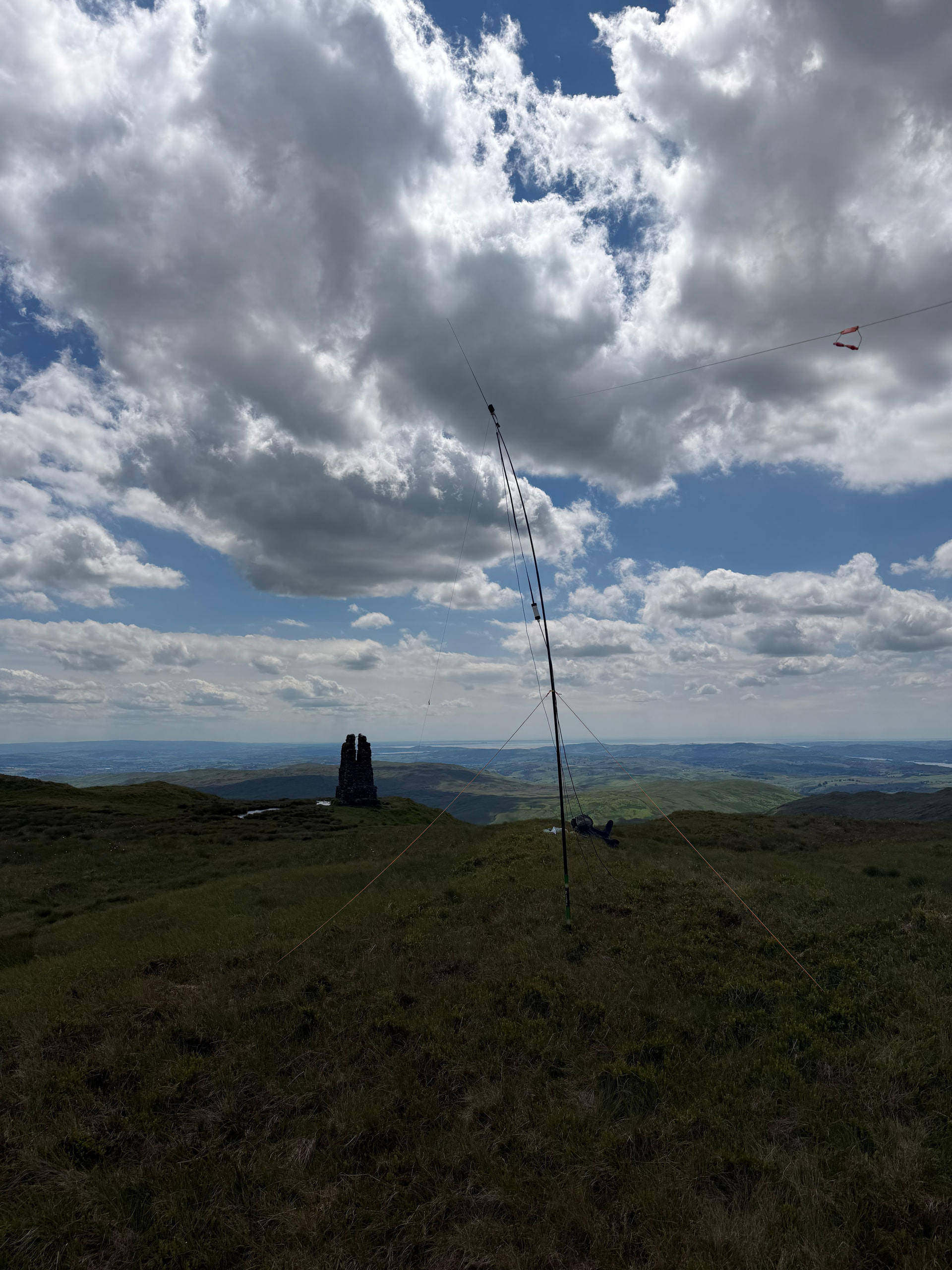
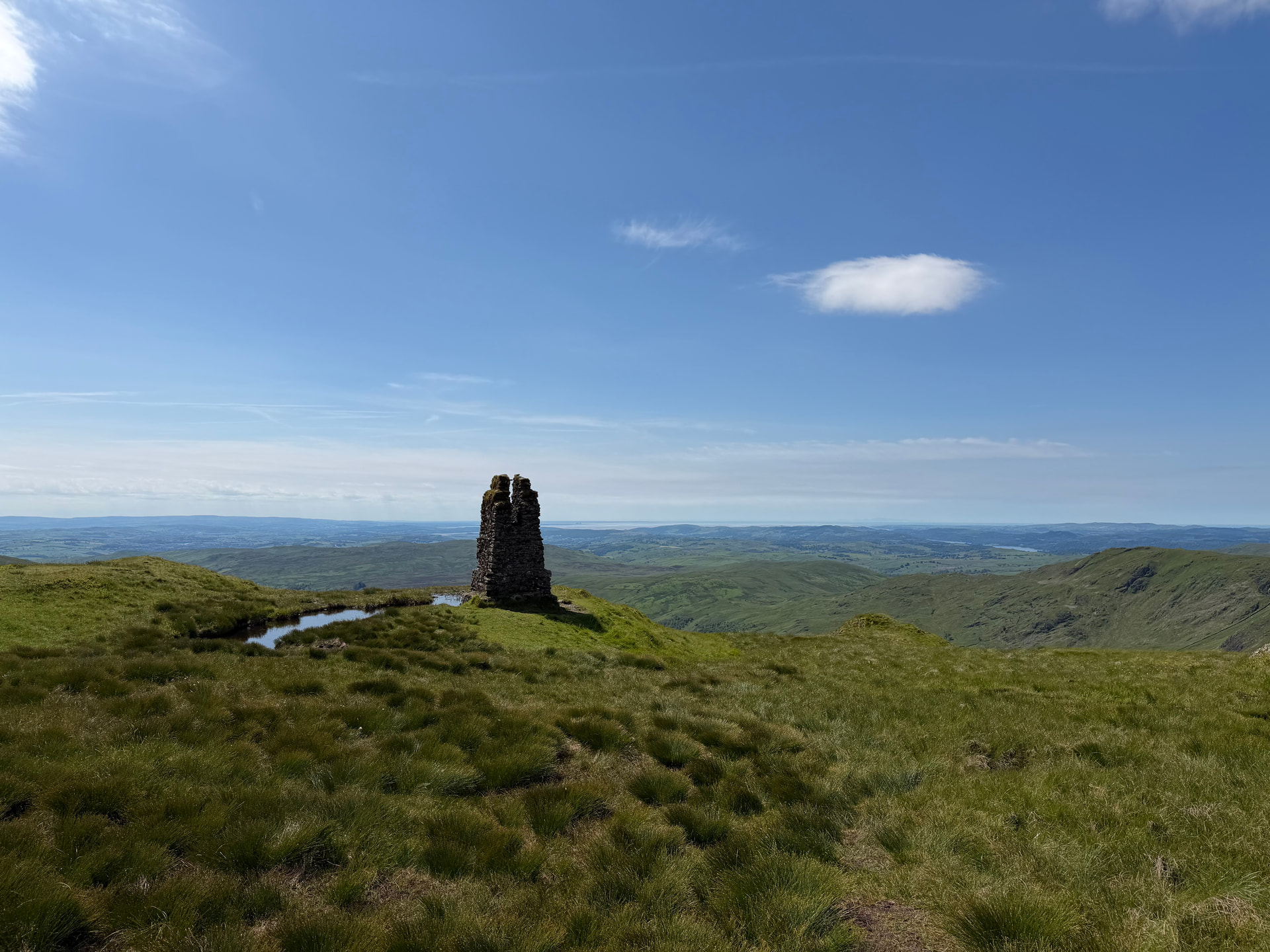
After a long and exhausting walk, it’s easy to get into the routine of setting up and making contacts. But surely one of the main purposes of amateur radio is experimentation? I’d love to see even more of it on summits. I absolutely love the challenges… a big shout out to the MT for keeping these challenges engaging and reporting on the statistics - it even got me out with an old almost-3kg mobile rig just to try out 2m SSB! But lets do more experiments on the summits. Now, we have Extreme SOTA by @M1BUU - we can’t really top that  but today I tried something a little new with the power.
We are taught to “only use as much power as needed to make the contact”. So whilst those ‘59+20dB over’ reports are cool, they aren’t necessarily required. The inspiration came from Alan, M8GYO, who asked if I could test his power options with him. Alan was in Ormskirk, so not a million miles away, but still a fair distance. He was very happy with the results, so I of course asked to repeat the same task.
HIGH / LOW3 / LOW2 / LOW1 (5W / 2.5W / 1W / 0.3W) are the options on my Yaesu FT3D
From Tarn Crag, I was heard by the following and provided with signal reports for my 0.3w of power from the Yaesu FT3D and Slim-G combination:
- M8GYO in Ormskirk: 23, perfectly readable with 1w, but audio took a hit at 0.3w
- M6KWB in Blackpool: 55, which I am very pleased with
- GW4HMR in Bethesda: No signal report, but could hear me on 0.3w
These were remarkable 2m FM contacts and I would encourage activators to really have a play with the power settings on your radios and experiment. These really could’ve been the top contacts of the day, but I got on HF and things got even more cool 
I have a few radios for SOTA. I have a Yaesu FT-891, which is brilliant for summits that don’t require much exertion, but I have recently added a Xiegu X6100 to the mix - great for my back as it only weights under 900g including a battery! I unclipped for 20m and called CQ. A station from Austria called in right away, Alex, OE1DXU. I just knew I had to try this experiment with him! I was running 10w from the X6100 and Alex had given me a 59 signal report.
A wonderful thing about this radio, is that you can actually change the power mid-QSO - I could test everything in just one over and then ask when he lost me. 5W produced the same 59 report, so we went to 4. It didn’t drop much, so we went to 3… same story. It started getting choppy at 2W and then 1W. but incredibly I was still receiving a 31 report on just 0.5W. My voice travelled all the way to Vienna in Austria on half a watt  That’s crazy! My television at home draws this amount just on standby.
I was incredibly chuffed, pic below to prove, and packed everything up after a total of 50 QSOs.
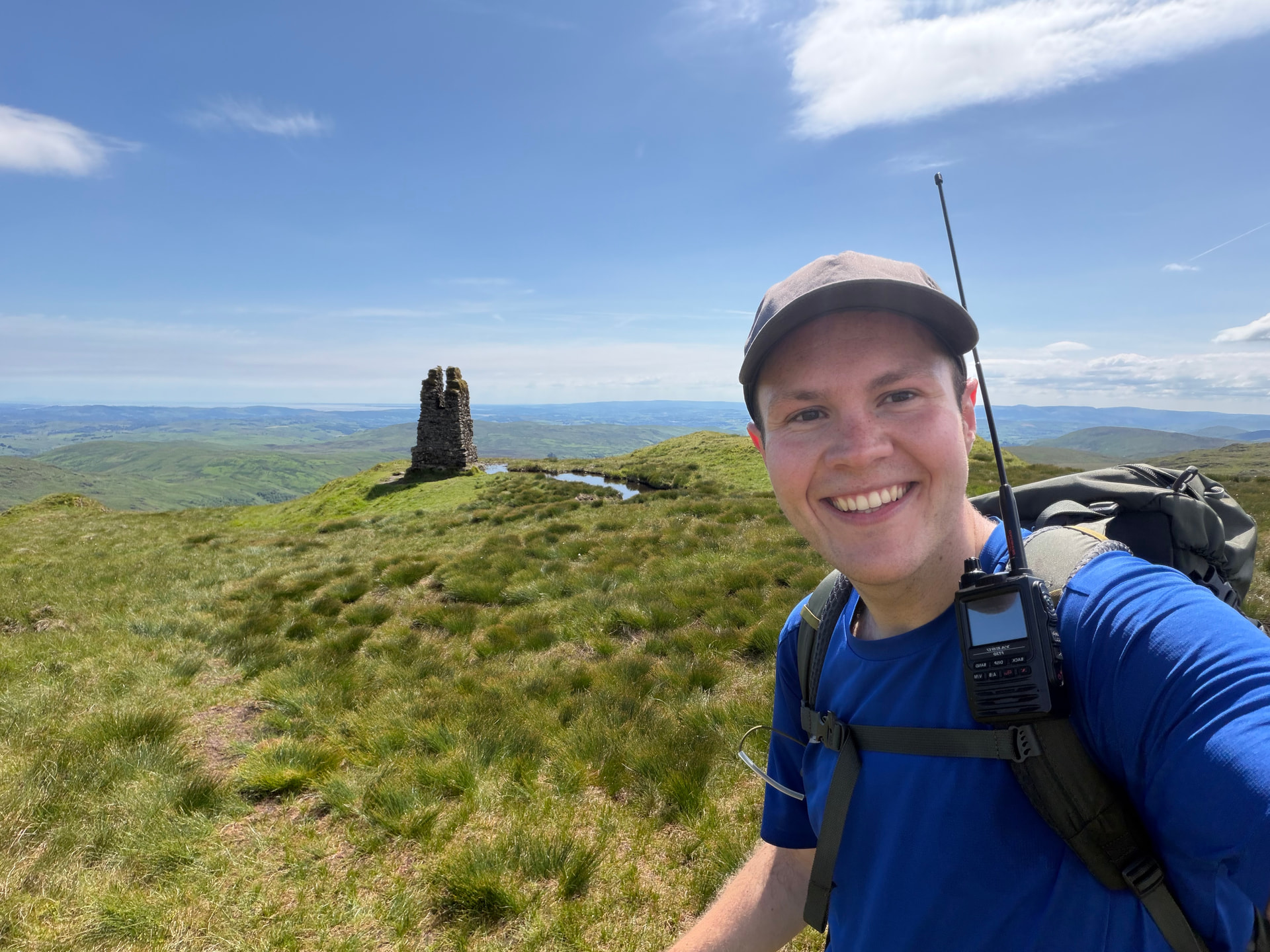
Power experiments are things I want to do more of in the future. It’s truly incredible how far a signal can reach with hardly any power at all. Keep experimenting and keep enjoying SOTA. My life has drastically improved since discovering this wonderful part of the hobby. The community of activators and chasers alike - it is just unmatched with anything else I know.
Thank you for reading and 73,
M1TJM, Tom