For the 18th running of the Trans-Atlantic S2S event I had intended to head north into Scotland, but as is usually the case, my plans would be very much dependant upon fine weather. My outline plan to activate Auchnafree Hill GM/SS-039 would require a departure from my house in Northumberland in Northern England at 05:20 local time, with a 162 mile (260km) journey ahead of me which would take 3 hours and 15 minutes. I had scheduled 2 hours 40 minutes for the 7.3km (4.6 mile) walk to get me to the summit in time for a start around 11:00z. All good in theory, but the forecast was for 80% rain throughout the day with 15mph (24kph) winds with gusts to 40 mph (64kph)….and that was in the local town of Crieff, not out on the hills. I really didn’t fancy sitting getting wet on the summit with another 7.3km walk and 162 mile drive to get me home, so Plan B was put into operation.
With considerably better weather forecast for Northumberland, I decided to take the easy option and activate the local summit of Long Crag G/SB-008. With just a 3.4km (2.1 mile) walk in on good tracks and paths, it was a no-brainer. I decided that I could afford to carry a little more weight and therefore packed an extra 4.2AH battery and the 40m end fed half wave in addition to what I had planned for Scotland. In all, I shouldered 13.5kg.
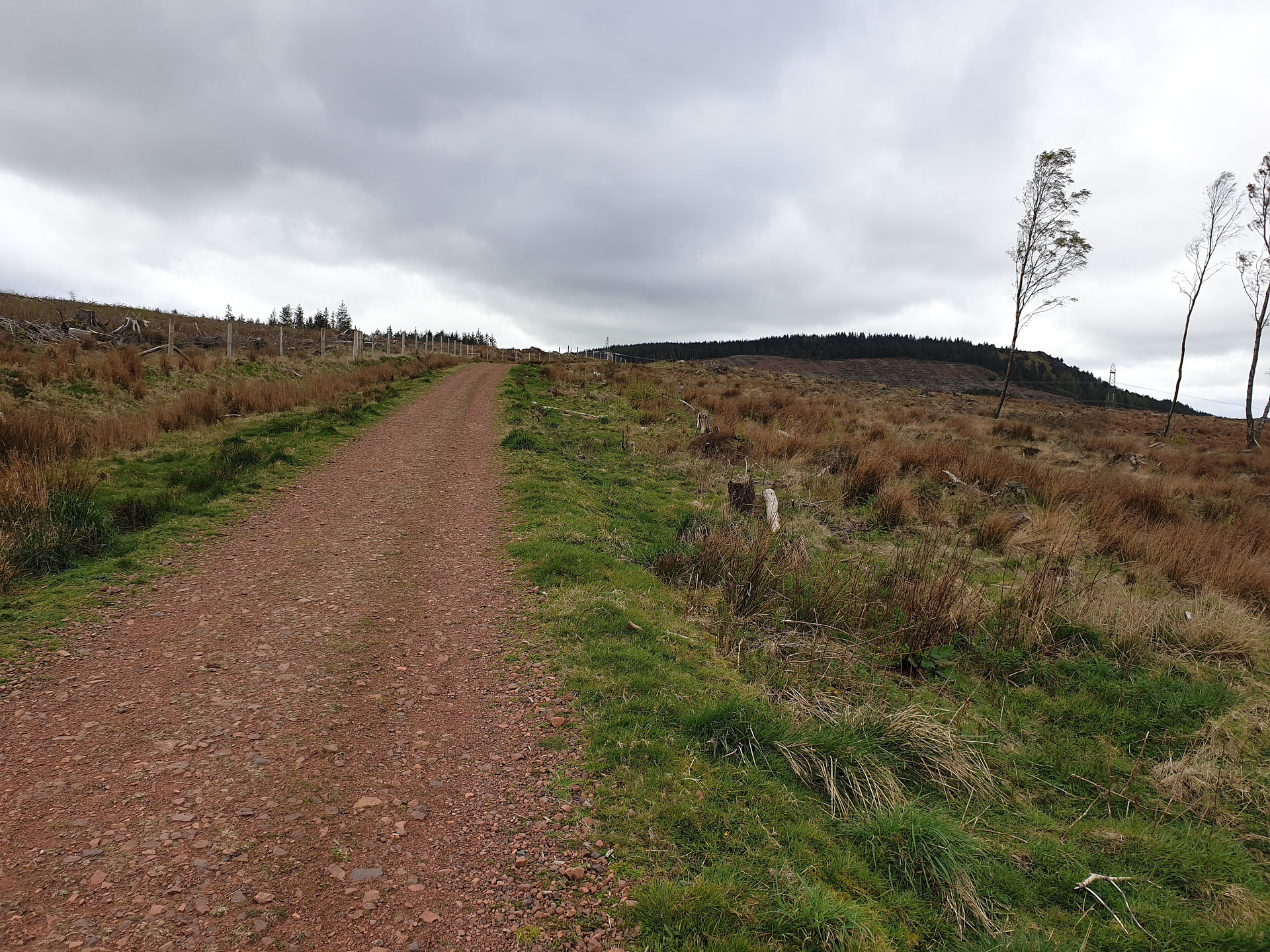
When I arrived at the parking spot for the hill, there were already 11 cars with people preparing for walks and runs. I spoke to several people as I got ready for the ascent. Of particular note for me was the extensive forestry harvesting since my last visit to this spot.
This was a track through solid forestry when I last walked this way.
It was 08:50z when I set off and 1 hour later I was at the trig point. From there I walked around 30 metres north to set up in a convenient area near the top of the crags where the vegetation was considerably lower than the surrounding heather. My first task was to set up a rudimentary shelter against the rain that was forecast… just a 30% risk for this location.
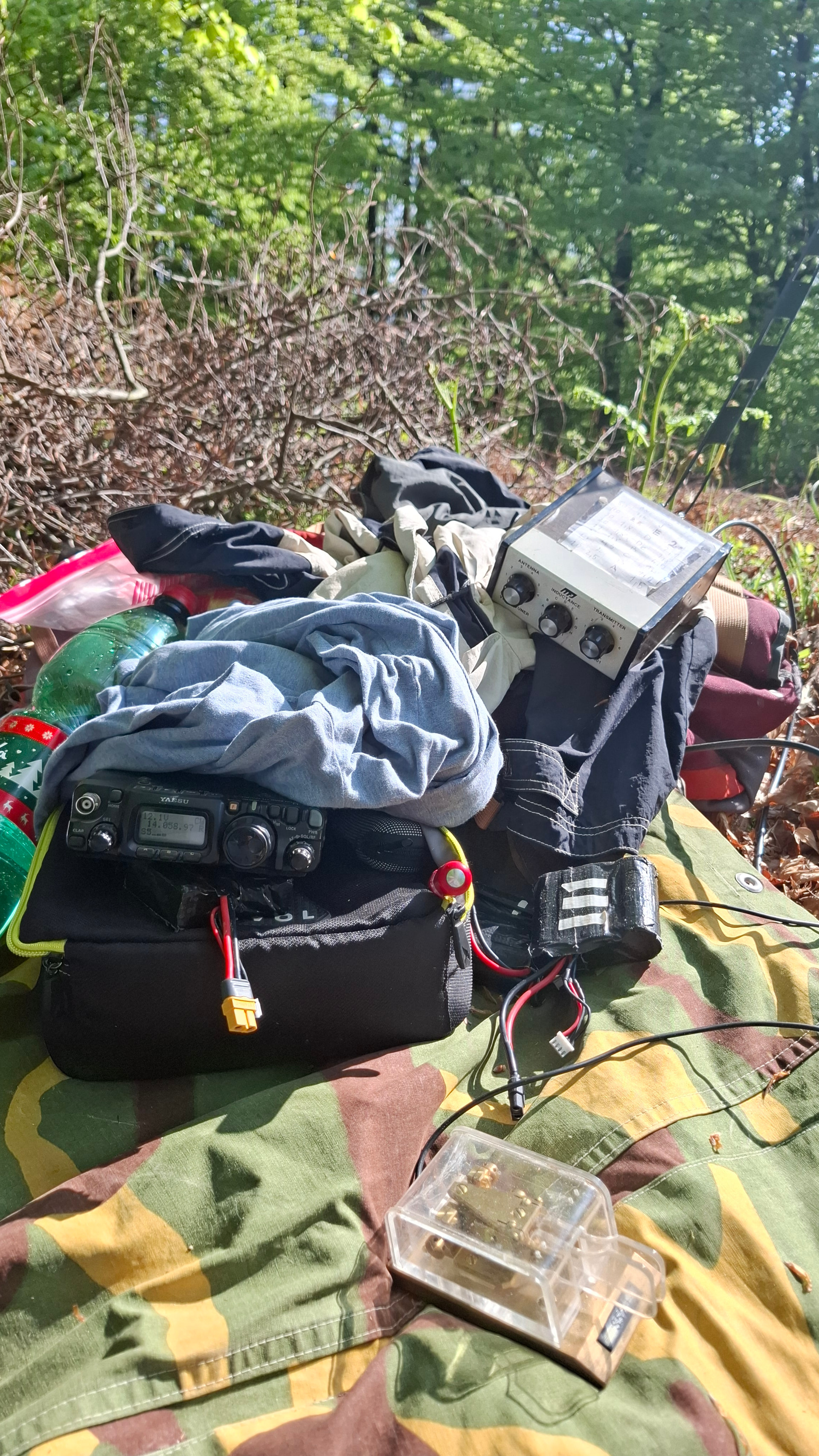
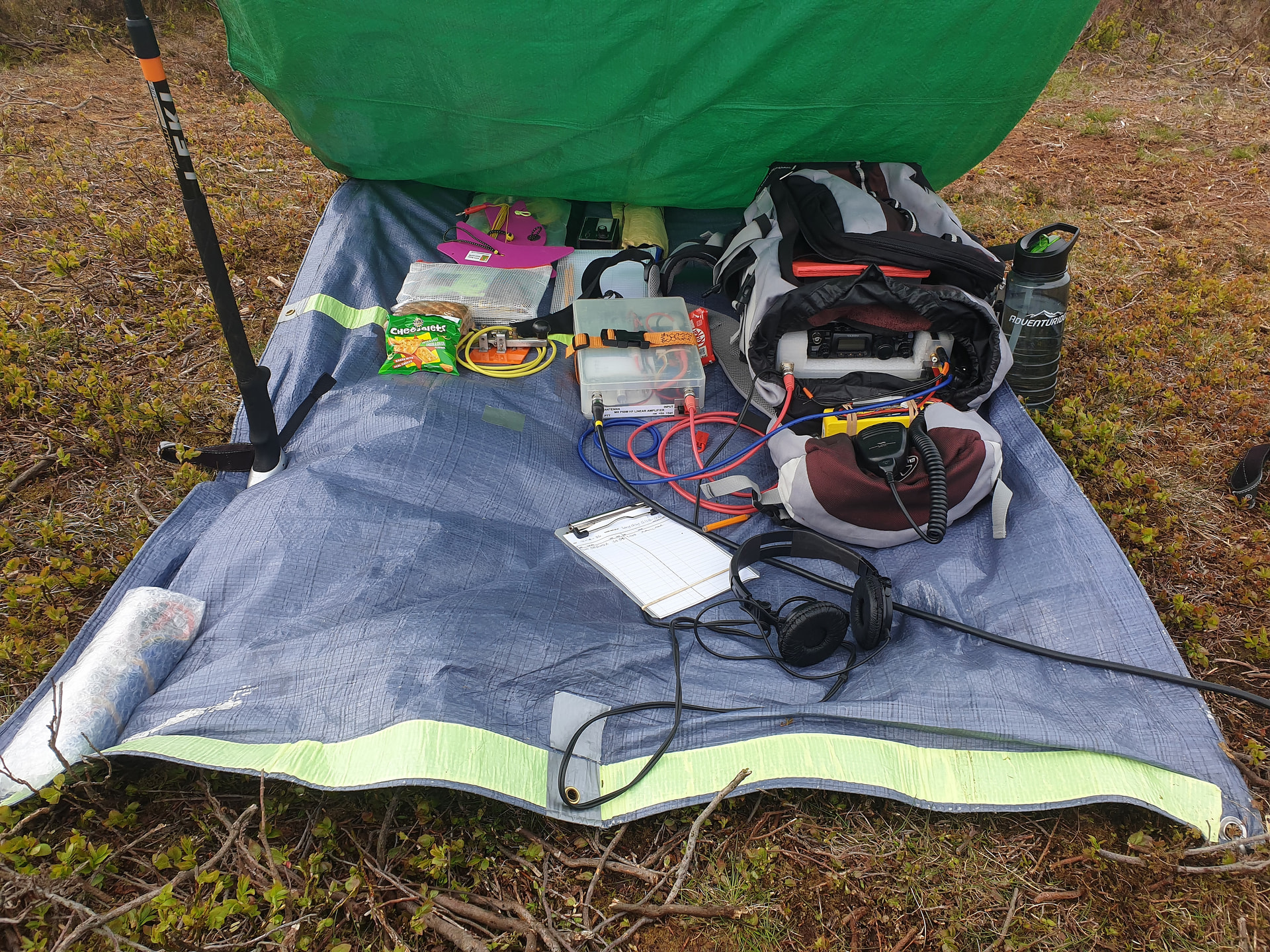
My shack for the duration.
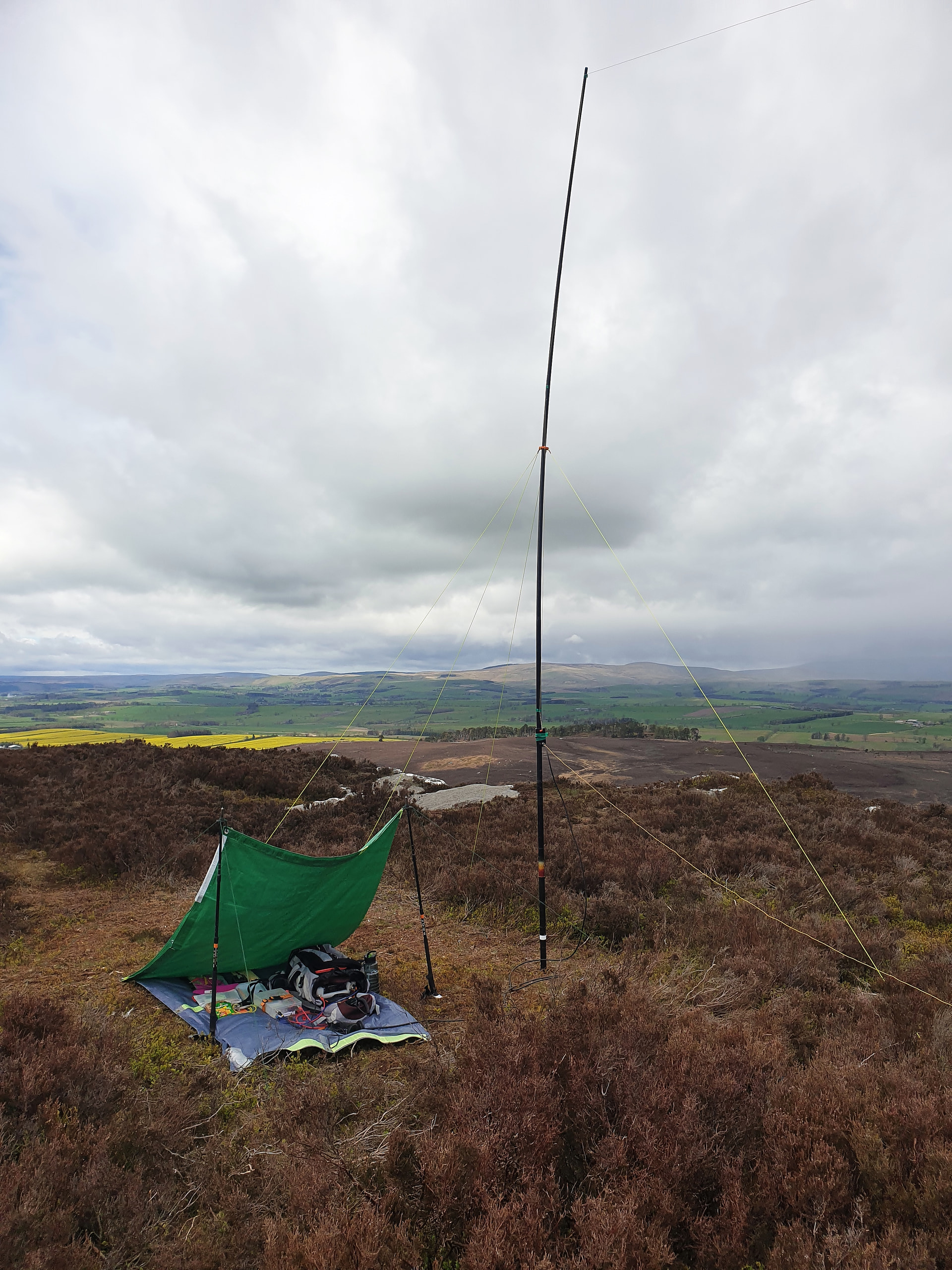
Once I was set up, I erected the pole with the 40m end fed antenna and went on the band on SSB. I was QRV a little after 10:30z finding the band long skip. Before I could make any contacts, a change of frequency was necessary due to QRM. I re-spotted, but my calls attracted no-one until Anthony 2E0WGA called me. We chatted for a while and then I continued calling CQ, but gave up on SSB at 11:30z. Changing mode, my first contact on 40m CW was with Juerg HB9BIN/P on HB/OW-021. I then moved off to find my own calling frequency and a fairly steady run got me another 7 contacts, with S2S coming from TM4S on F/AM-473 and SO9TA/P on SP/BZ-066. Working the south of France on 40m in the middle of the day said it all. The propagation was more like 20m.
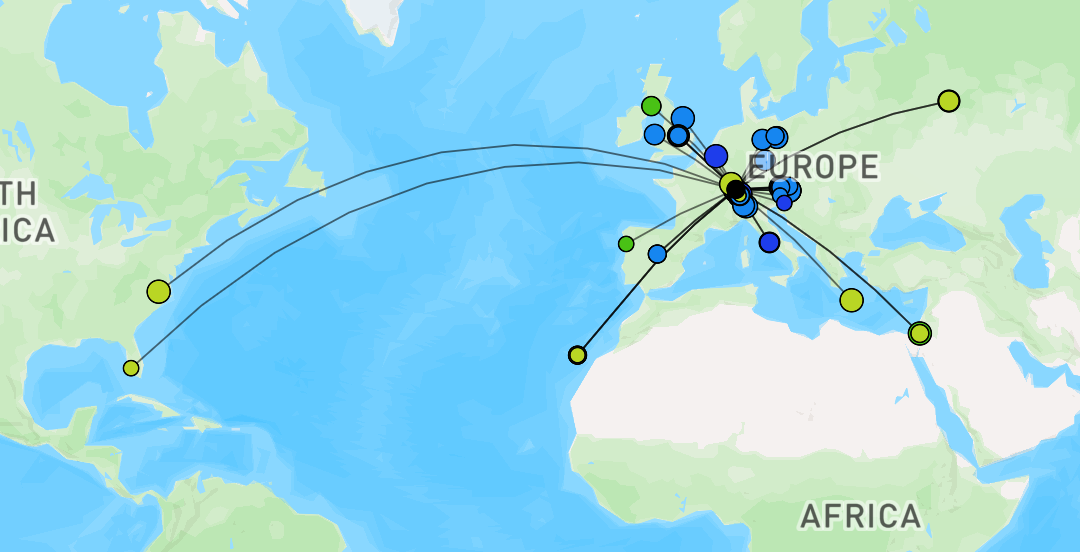
At 12:15z I decided to change the antenna and set up the mast mounted Slidewinder vertical, which together with lunch took some time. Starting on 20m CW at 12:40z, I worked YO5IR/P on YO/EC-610, OE/DL5AZZ/P on OE/TL-040 and EA2WX/P on EA2/BI-057. At 13:30z I moved to 17m CW and was surprised to be called by LZ4GL at 599 both ways. A few minutes later at 13:40z Roy WN3F called me, his signals briefly peaking at 439, but mainly on the noise level. I had to request a repeat of my report of 419 due to QSB. Then a few minutes later, Pat WW4D called me, but his signals were very weak and all I could give him was 319. Unfortunately we were unable to complete the contact as a station started up about 50Hz away without any announcement and he obviously wasn’t hearing either of us. I stayed on the band for a while, but the meagre conditions seemed to have dropped out.
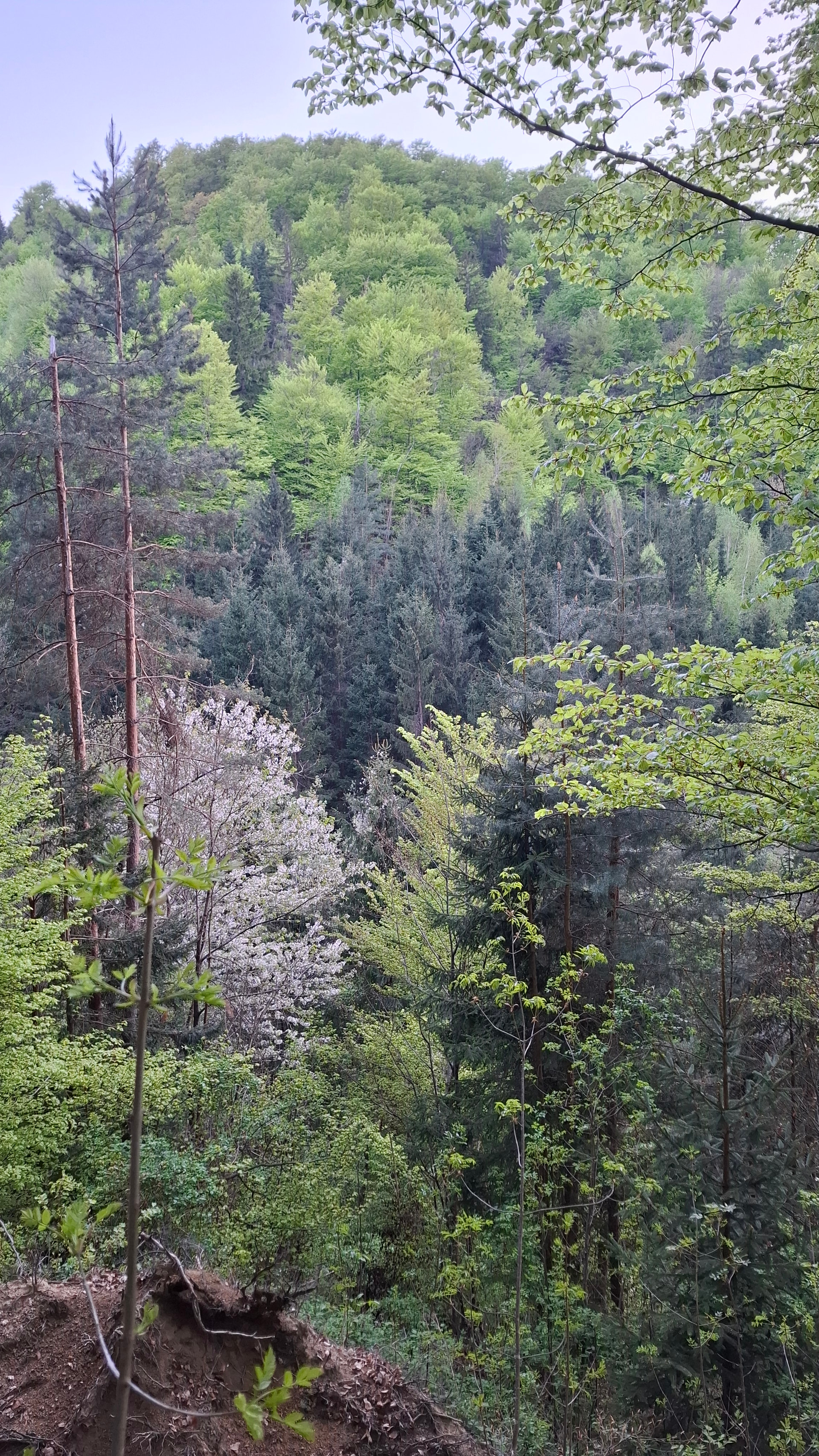
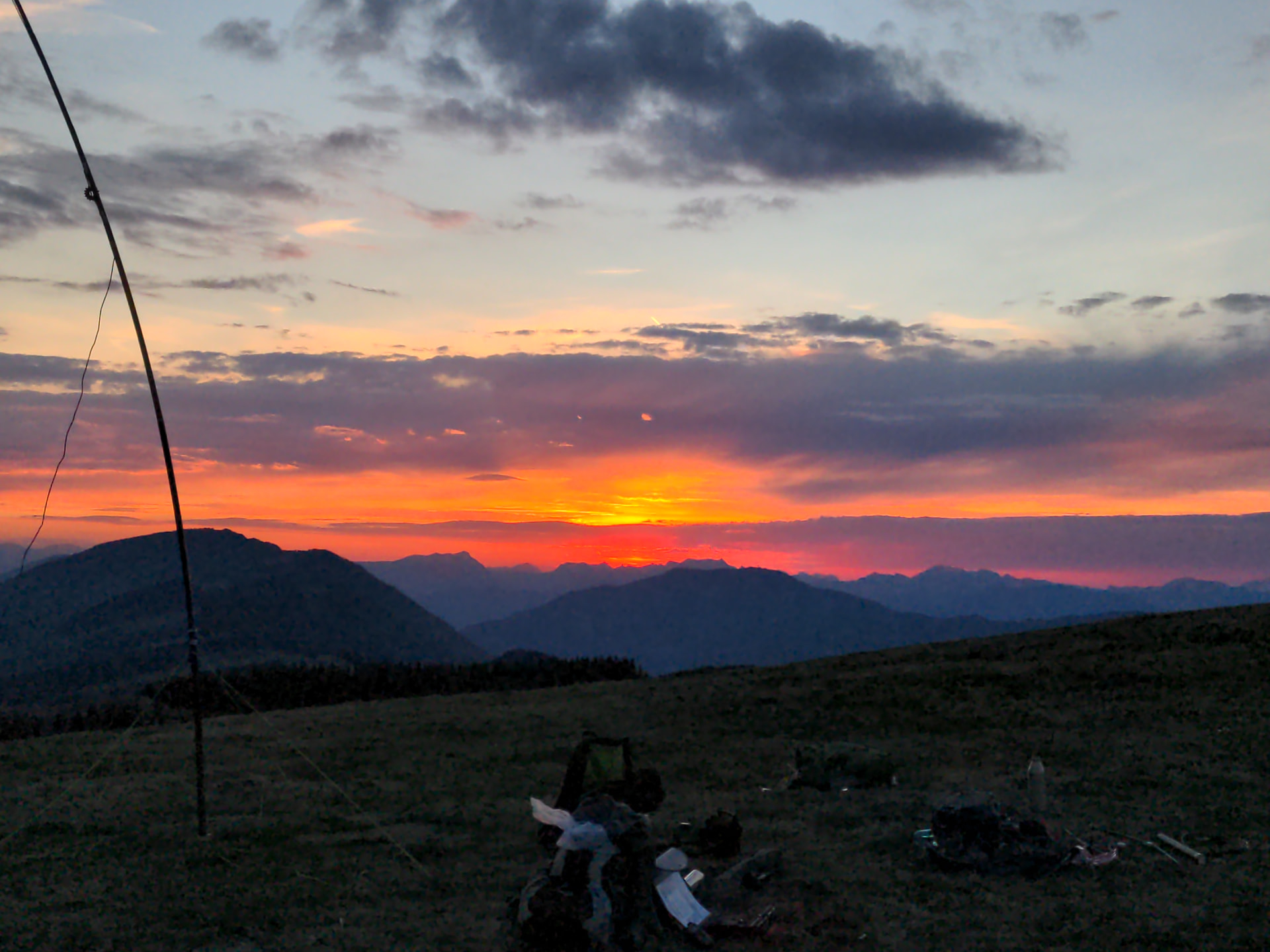
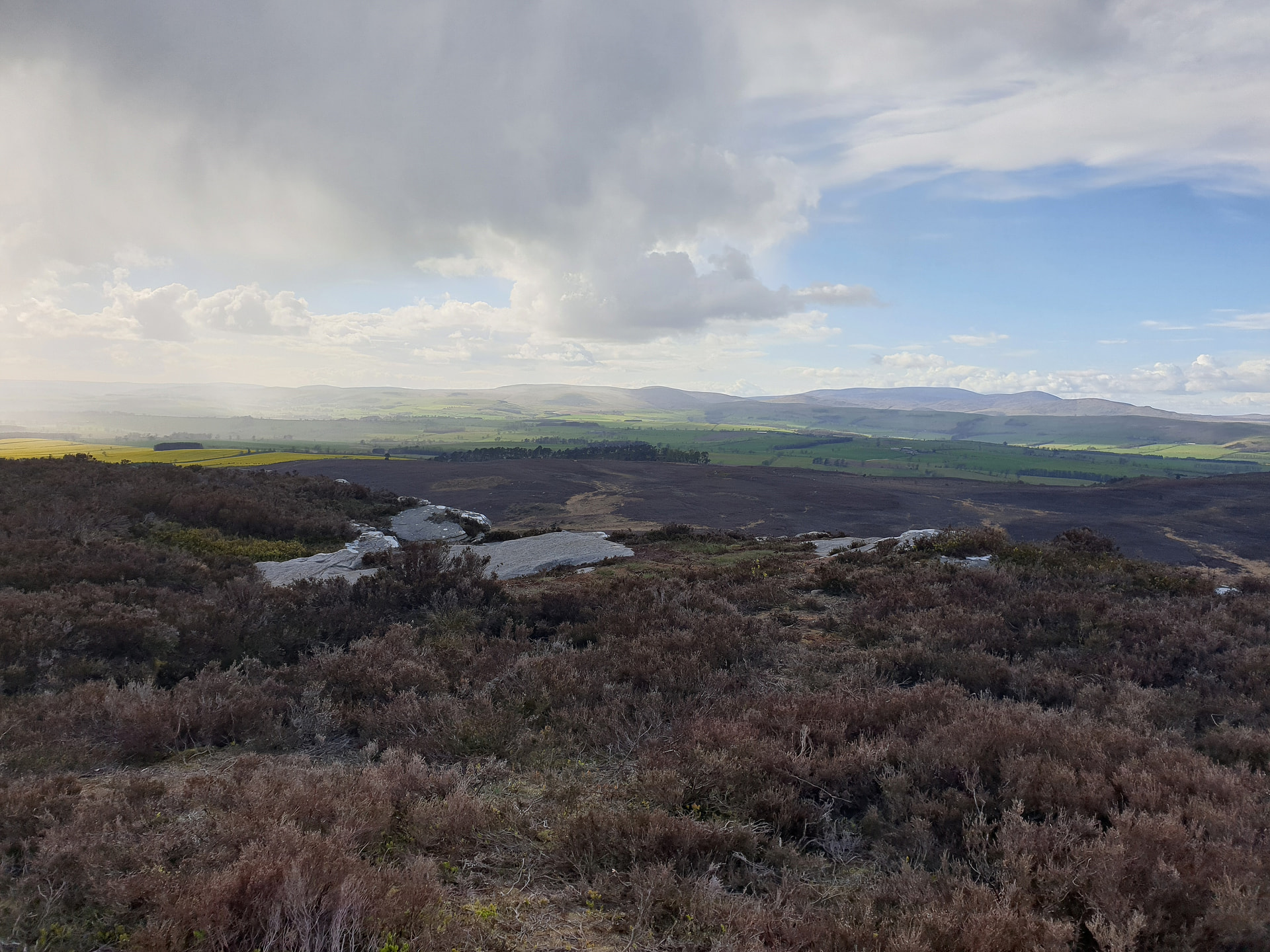
Looking roughly in the direction of takeoff across the Atlantic.
I wondered whether 20m CW might provide an opportunity for more Trans-Atlantic contacts, so I changed band at 14:00z. The next hour was the most productive for me in terms of the number of contacts, netting a further 5 on CW and 2 on SSB, all but 1 being EU S2S. So had DX propagation gone up in frequency? Calling on 15m CW at 15:00z provided me with a contact with Richard G4TGJ/P on G/NP-006, but that was all. Back on 20m CW, I added just 1 more EU S2S to the log before I decided that I had had enough and I closed down at 16:00z,
Weather-wise I had 10 minutes of light rain at around 11:00z, no more. The wind was stronger than forecast and my mast collapsed 3 times until I resorted to taping the joints. My shelter blew down several times and in the end I just gave up with it, just lying it over the kit in case any more rain arrived, which it didn’t.
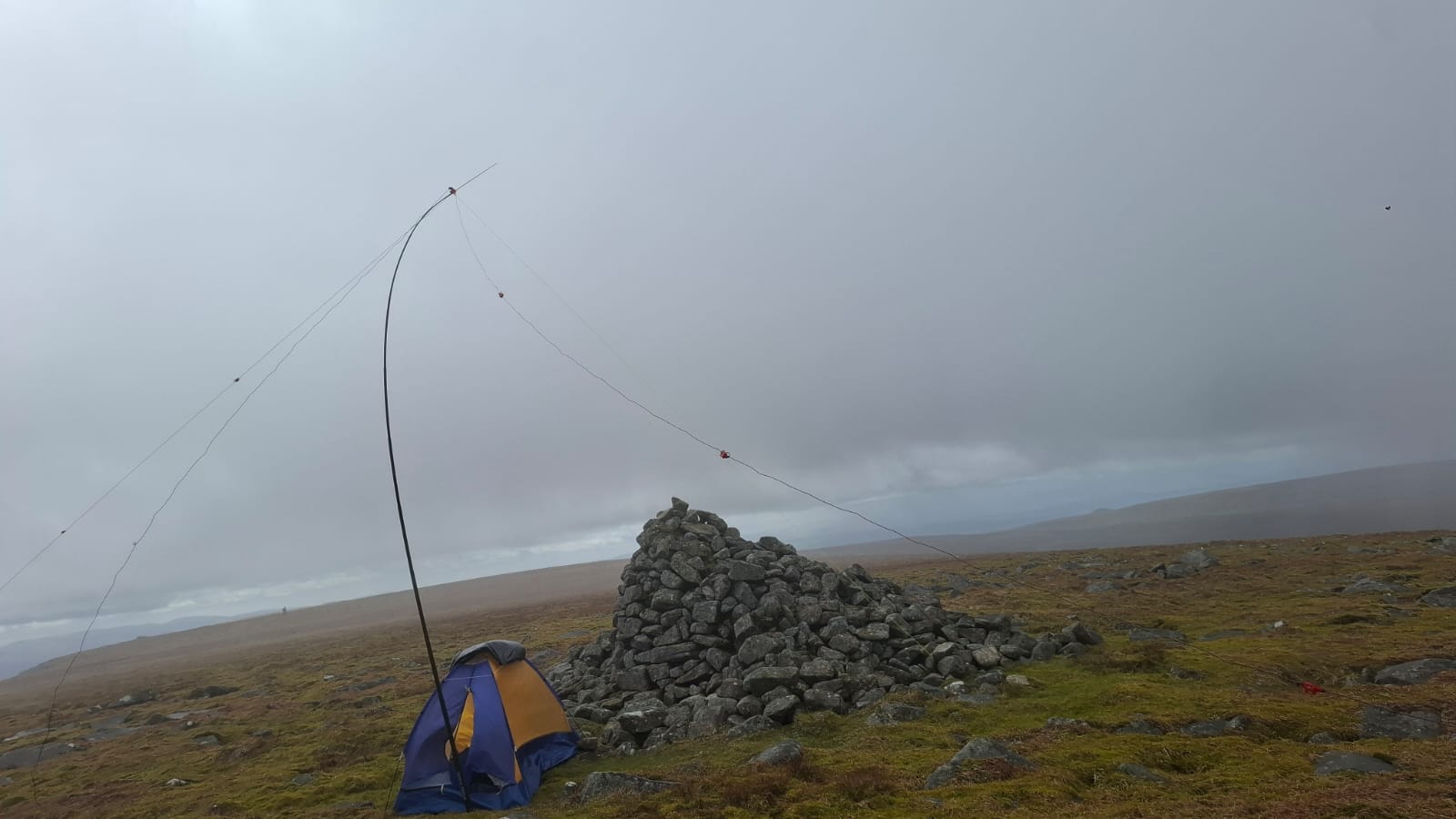
Potential rain on the way… which it didn’t.
So what can I say? The conditions were worse than they were in April 2019, my worst performance previously, when I managed 1 Trans-Atlantic S2S and had 3 Trans-Atlantic chases. There was noticeably less interest this year and looking through the April results for each year since 2017 I do wonder whether it is worthwhile running the event twice a year. The November event always produces much better results, even though it has other challenges in terms of the weather and daylight.
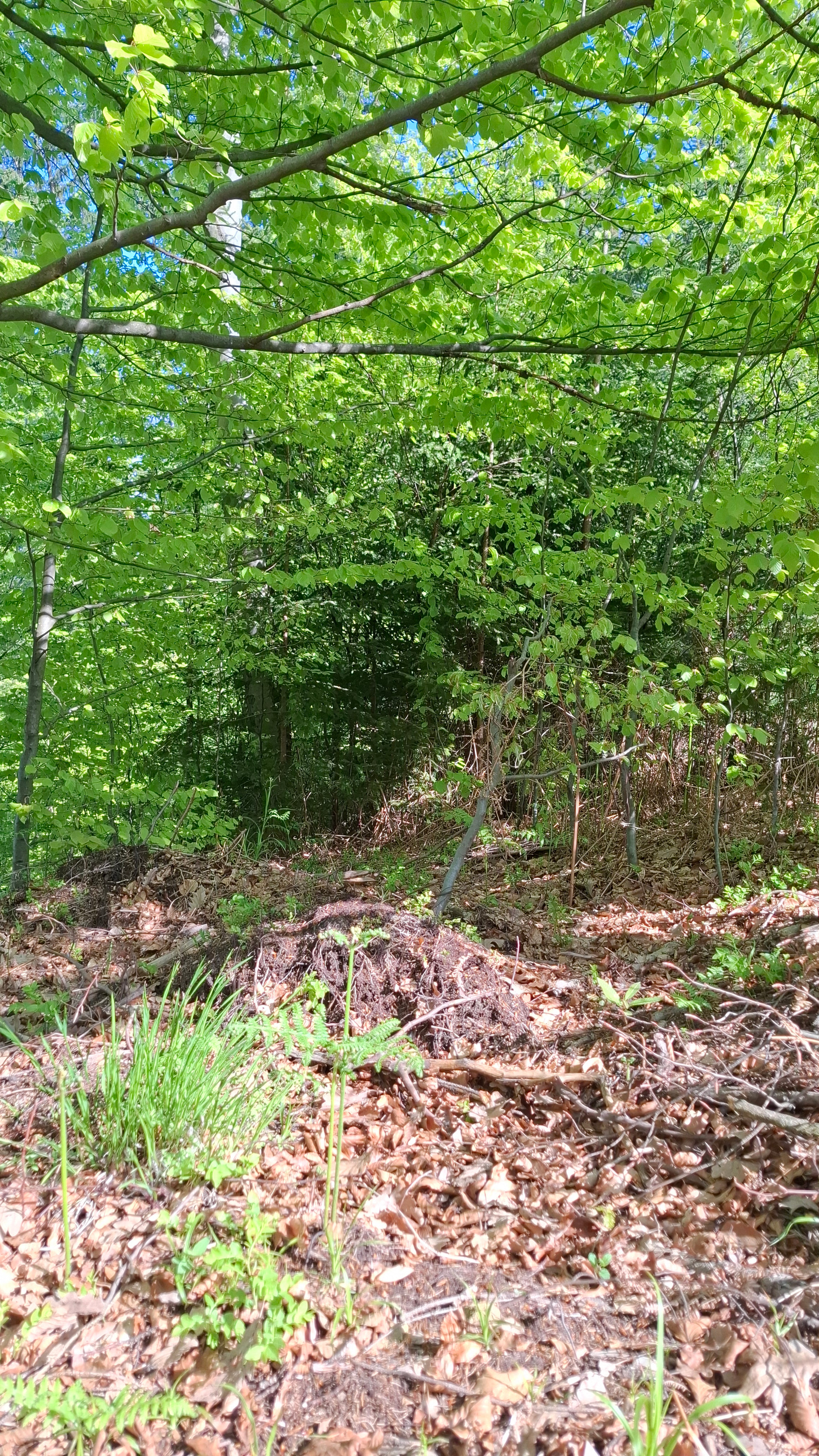
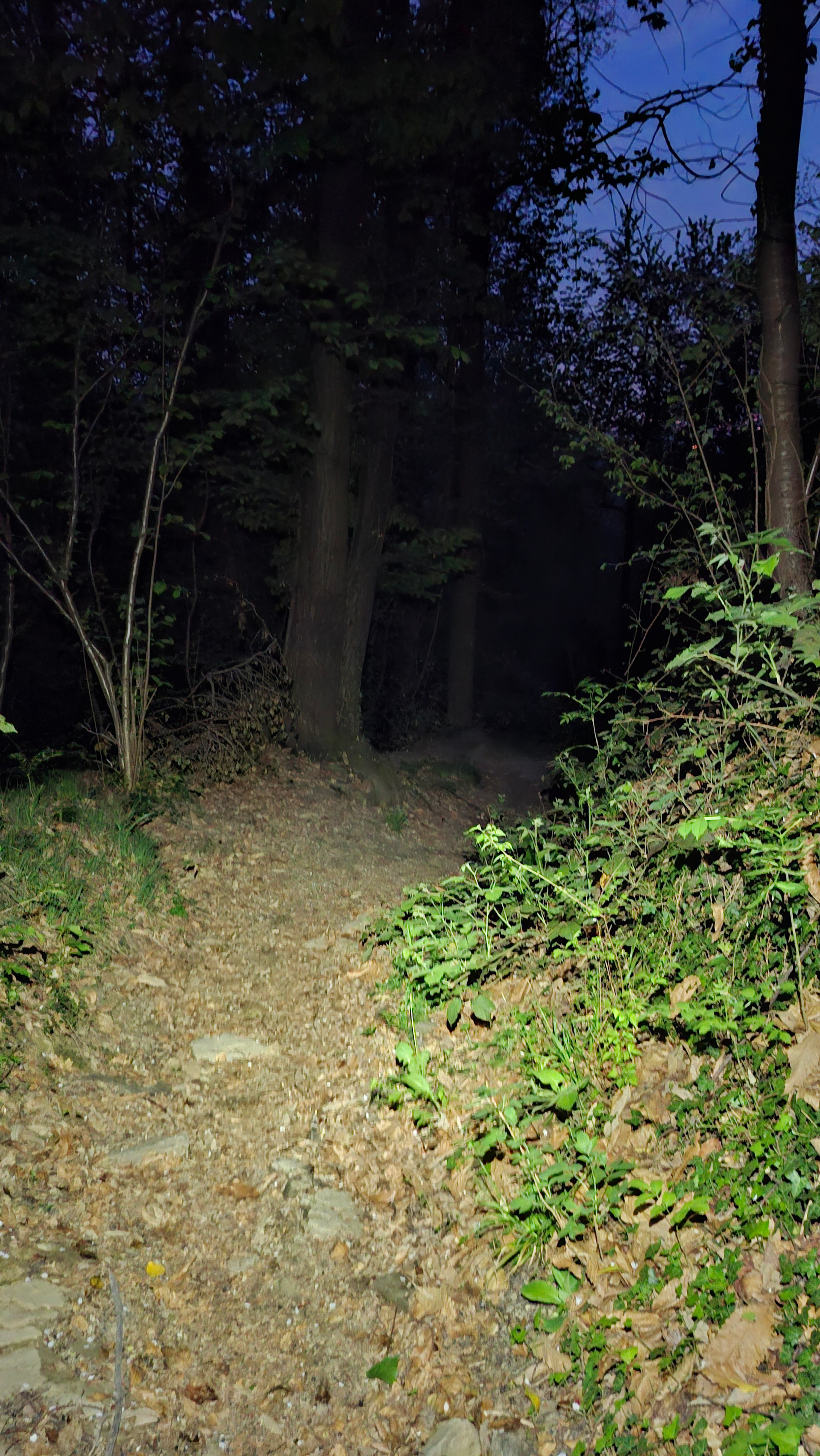
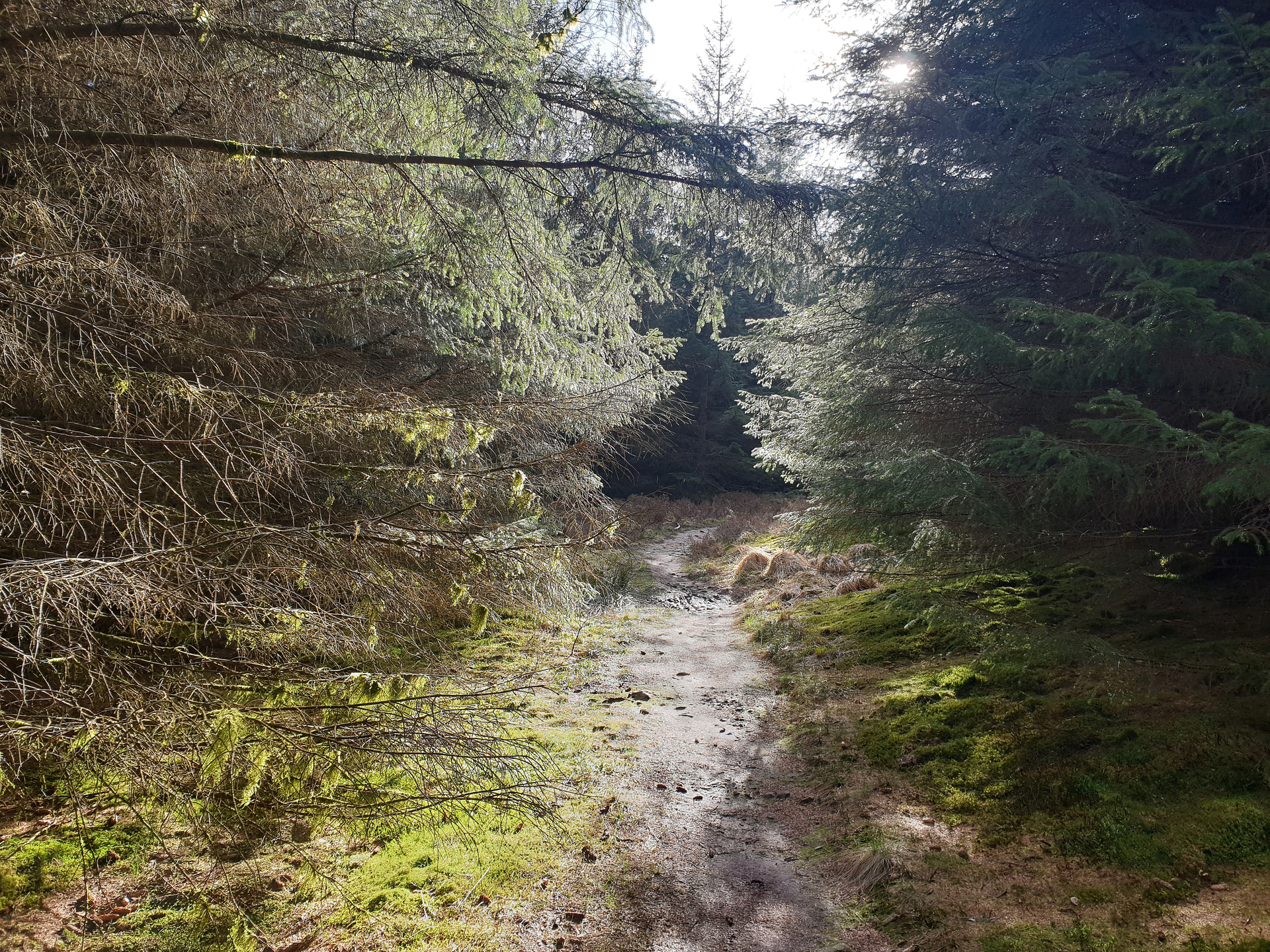
The pleasant walk back through the section of the route that is still forest.
Despite the lack of propagation and the low number of contacts, I did enjoy the event immensely. The only downside for me was that I didn’t hear Mike WB2FUV call me on either 17m or 20m, though I did hear someone calling in the noise at one point. As they say, it is not the winning, but the taking part that matters. Personally, getting out to sit on a hill, even one buffeted by wind, did me a whole lot of good. I hope others that participated got something positive out of the day.
73, Gerald G8CXK / G4OIG
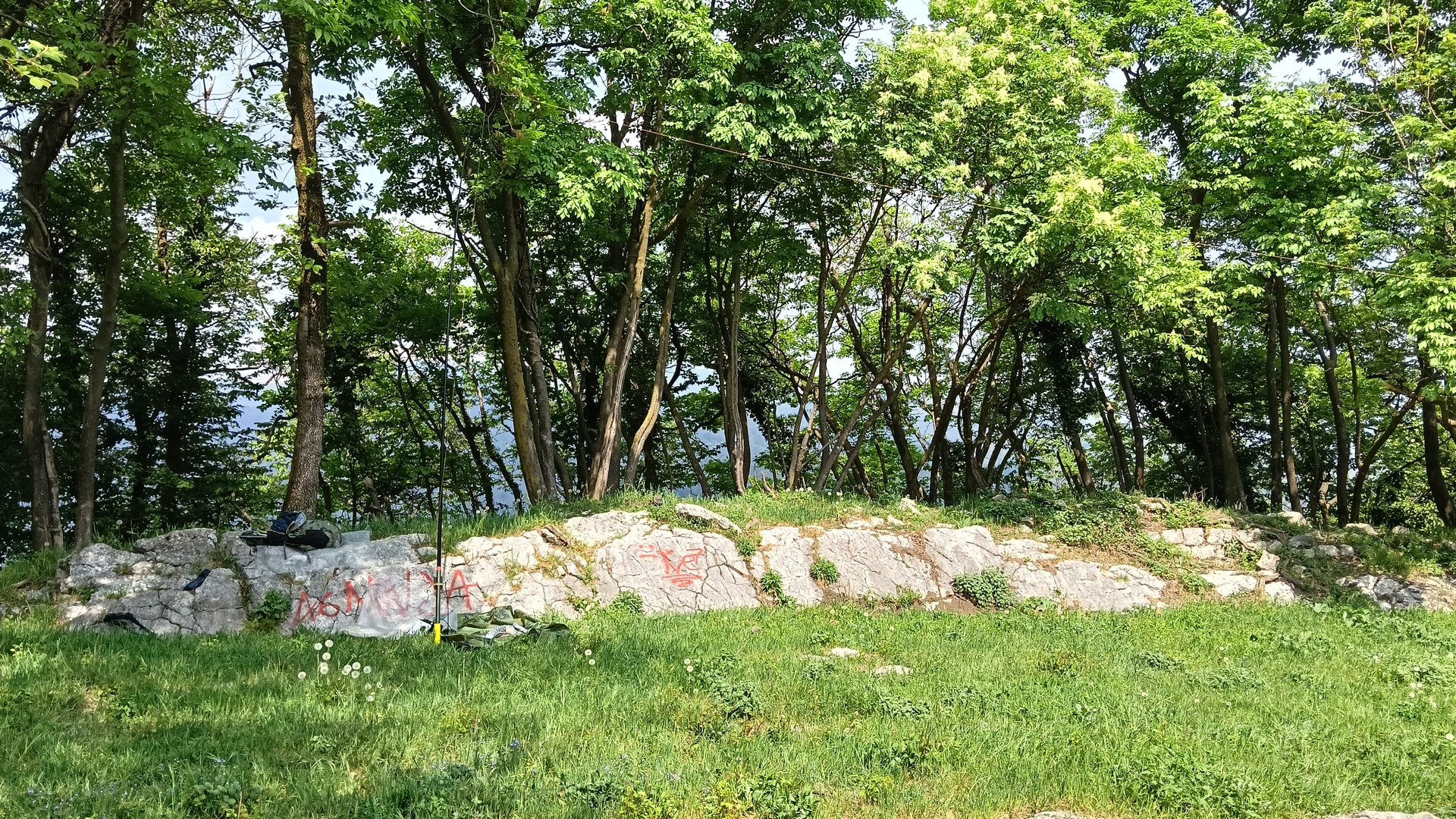


 I was really surprised to be called by you Richard as the band seemed to be pretty much dead, but it was worth trying.