In my younger days I worked two long summers outdoors in the islands of Southeast Alaska, where the city of Ketchikan averages about 4m of rain each year. As surveyors, we were out walking through the forest up to 70 hours a week, with no option to wait until it stopped raining. (That was my first exposure to Rite-in-the-Rain notebooks.)
Standard attire was commercial quality rain gear (bib overalls and jacket made from polyurethane-coated nylon fabric), and “red rubber boots”, made by one of two tyre companies (Goodyear and Uniroyal, I think). Unlike other wellies that I’ve tried, these were designed with good foot support: I think mine lasted over 20 years, although they had gotten a bit nicked by then. We basically lived in our rain gear when outside, whether at work or on our days off. If it got too hot, we’d open the front of the jacket.
True, this didn’t always keep you dry, if you happened to fall waist-deep through a hole in the muskeg, or wade down a creek through the remains of spawning salmon (although with enough survey flagging holding the bottoms of legs against the tops of the boots, you could manage for half an hour or so).
By contrast, the loggers, who were also out in the same weather, wore woolen shirts, “tin pants” (multiple layers of canvas soaked in wax to protect against thorns), and leather “cork” (caulk) boots coated with Hubbard’s Shoe Grease, and laughed at us for being sissies.
These days I’m generally happy to stay indoors instead.
Snap. I remember trying to break them in before taking a week walking in the Cairngorms. They were hell for feet, but as tough as iron. I had them for many years and never got them to be comfortable.
Currently my winter boots are Berghaus Kibos bought in 2011. Two minor lace fitting repairs so far. They are pretty weighty for fabric boots, but I never get wet feet with them unless snow gets under my gaiters which I wear in all but the hottest weather as I like the protection them provide against vegetation… and I would like to think maybe help if I ever suffered a snake strike, but every adder I’ve come across has been happy to let me pass by unmolested. I only just avoided treading on one on Islay when walking across trackless ground between summits.
My usual boots are Kayland Ferrata bought in 2015 which are 3 season boots. They are nowhere near as good as the Contact 1000s I had before them. For light walks, local stuff and generally dry days I bought a pair of Mountain Warehouse Field boots in 2020 when they were half price at £70. At that price I didn’t expect much, but I have been pleasantly surprised. Maybe the longevity of my boots is down to the care they get after each outing, but also I’m a relative lightweight at 83kg, though that weight is carried by small size 45 (with 2 pairs of socks) feet.
Maybe I need a 4th pair of boots… persuade me otherwise.
The question has certainly provided plenty of info and views in this topic and hopefully some of this will be useful to others as well.
I think as a starter I will get a new set of gaiters and waterproof over trousers and work upwards and see if this stops water getting into the boots/helps reduce soggy feet. In addition some better socks may help.
Socks? I have been wearing Bridgedale Summit socks and Bridgedale Coolmax liner socks since 2008. They’re not cheap but good. I’ve not yet worn holes etc. in them and you have to accept that socks wear out in that they loose the cushioning capabilities. Especially supporting my lardy bulk. The 2x 2008 pairs are now relegated to “dogging” use or wellington duty on contests/gardening support to Mrs. LLD. There are two pairs about to be retired.
The Summit range are now called Bridgedale Explorer and the price makes my eyes water but I know they work for my feet.
Agree with all the comments about materials and getting wet eventually, so comfort whilst wet matters.
Another important factor in conjunction with the boot is the sock material. Feet sweat too, more or less depending on the material used. I find wool/merino and synthetic best but not cotton.
Two boots that have served me very well are Meindl (Bhutan for rocky terrain) and Scarpa (Terra for more easy going). Expensive yes but effective and worth it.
Another vote for Meindl Bhutan MFS here. I always wear gaiters too. Can’t remember what they are. Every hill, whatever the time of year. Keeps the water and ticks out.
I’ll second the Bridgedale Summits, they’re my usual winter sock of choice. As Andy says, pricey but worth it. Handy to know they’re now called the Explorer.
In the summer and especially with the lighter boots, I like the Smartwool Light Hiker. Although jeez, if you thought the Bridgedales were pricy…
Another vote for Bridgedale socks. I have several pairs of liners and outer socks. I have had them for many years and they are still going strong. And they are made in the UK.
I have a Mountain Equipment Lhotse jacket, which is made using Gore Tex Pro fabric, it is genuinely the best jacket I’ve had for breathability and it does a fairly decent job at keeping out the wet too.
Gear is a complex subject and everybody has opinions. From experience, buying a better product does provide more comfort on the hill, but price does not always track with gear performance. I had a pair of The North Face waterproof trousers made from own label fabric and they were great, I got a pair of Rab waterproof trousers at twice the price and they’ve been very disappointing.
We’ve reached ‘peak gear’ and now we’re on the decline. The old fabric technologies were full of forever chemicals, which worked well but had health and environmental risks. If you have a Gore Tex jacket from a few years ago, hang on to it, as it will perform better than any newer replacement. I think it’s too late to worry about any health effects from old clothes, the damage has probably already been done.
Mountain Equipment has a factory shop disguised as ‘Magic Mountain’, you can often get samples in decent fabric for much less than you’d pay on the high street. Every so often Magic Mountain has a sale, you can get really good stuff for bargain prices.
Berghaus is now owned by Pentland Group (JD Sports, Go Outdoors, Blacks, Millets etc). It does seem to be a multi tier brand though, rather like The North Face. I’m lead to believe that The North Face Summit Series is still OK stuff, whereas the rest of it is now just fashion wear. (Logo size is an indication- have you seen the size of the logos on stuff in JD Sports? The bigger the logo, the more ‘high street’ the gear!)
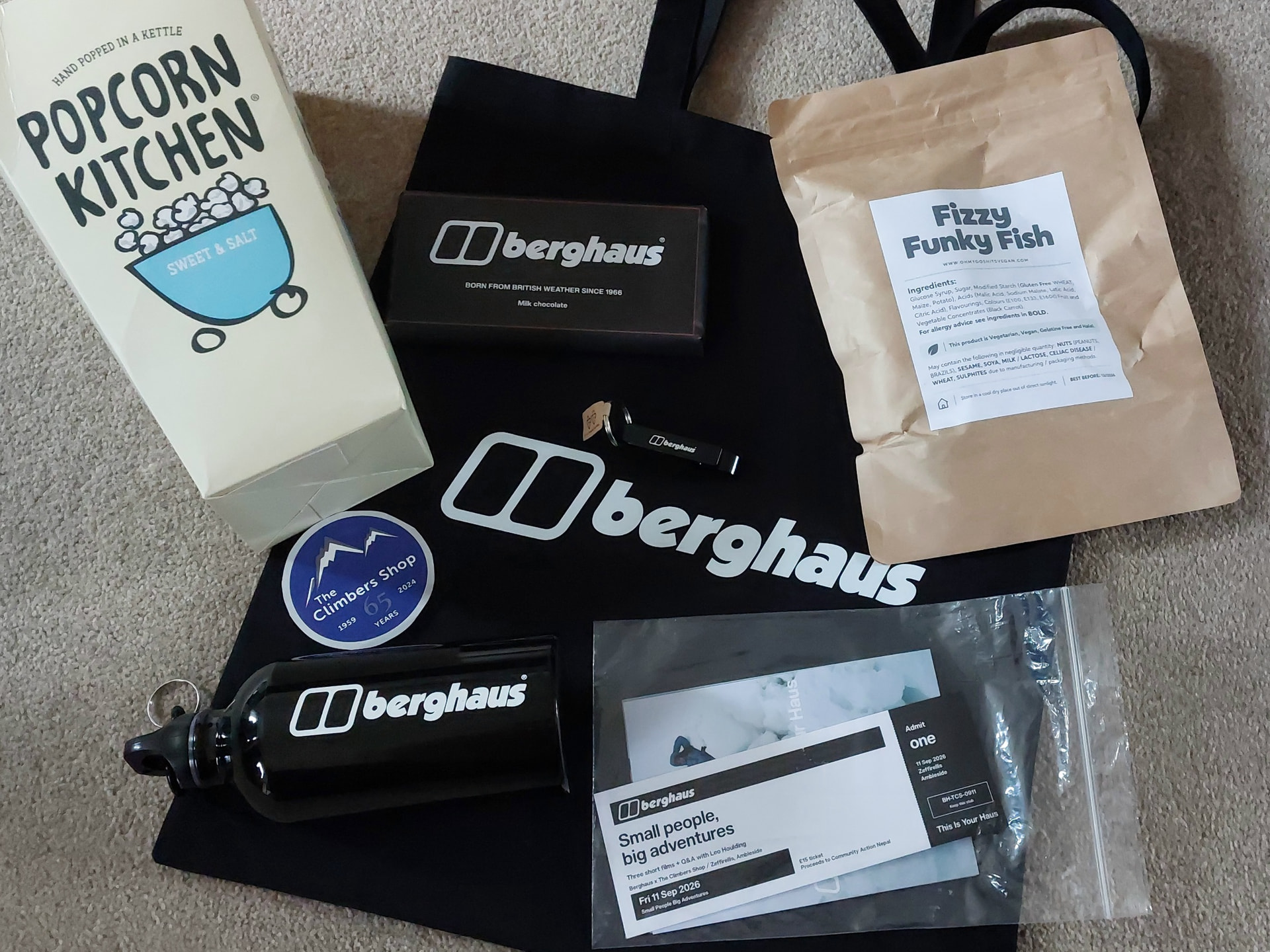
Berghaus is celebrating 40 years of Xtrem, I went to an event on Wednesday night, it appears as though they’re still trying to make decent stuff.
They are? Can you visit them direct to buy or is it just manufacturing and distribution? I’ve heard good things about their socks - mainly the running socks - so am keen to try them out. A quick blitz up the M1 won’t take too long.
Big fan of Injinji here. Used them for years and on some long trail run stuff. They are the invidiual toe type socks so may not be for everyone. They are brilliant for prevention of chafing and foot swelling. They do ‘outdoor’ (their words) socks too that might be of more suitability for hiking, the main focus though is running but they could still work well for hikes, walks etc I think.
If they are good enough for Courtney Dauwalter, they’re good enough for me!
EDIT: Seems Injinji do have a hiking range. Here ye are:
I was a dyed in the wool () Bridgedale sock fan but now they’ve changed the recipes. I’m probably going against the grain but I don’t like merino wool. The newer Bridgedale socks don’t last as long as the older ones. The merino wool socks can soon go like felt (matted, stiff) if you’re not mega conscientious when you’re doing the laundry.
I love my older Bridgedale socks, but the newer ones, meh.
Bridgedale is under Burton McCall, like Mountain Equipment, so naturally I feel a bit of brand loyalty, it’s cool that they’re still made in ‘Norn Iron’. There’s some videos on YouTube of the factory, explaining the wool technology and sock making machines.
I prefer traditional, minimal-seam leather boots over modern fabric-and-membrane footwear for 3 out of 4 seasons hillwalking in the UK. I wear the latter only in summer and only on non-grassy/short-grassy trails or for walking ‘around town’.
The global outdoor gear market is heavily dominated by US-centric designs, where the hiking conditions are often vastly different from the UK.
[Sweeping generalisation alert!] In upland areas of the UK (particularly in the NW) you have lots of bogs, peat hags, wet marsh, bracken and miles of long wet grass often coupled with western maritime weather, ie persistent drizzle or driving rain and high humidity, that prevents your gear from drying out. By contrast, the USA often has well-graded, dry dirt trails, rocky switchbacks and sandy or rocky terrain. The (continental) weather is usually intense but brief bouts of rain or thunderstorms followed by dry air and often baking sunshine. [Obvious exceptions: Oregon, Appalachia]
You need a different approach to these different conditions: A lightweight, multi-panel synthetic hiking shoe with a waterproof membrane is ideal in Colorado or California. But in Cumbria, Wales or the west of Scotland you want to keep the cold, heavy moisture out at all costs. Gore-Tex and similar technology work only if you have a sharp humidity gradient between inside and outside. My feet never sweat in leather boots and [even in my 70s] I don’t feel the weight of a heavier boot (compared to shoes) even on long day walks.
Re waterproof jackets, the only one that has never leaked in persistent heavy rain is my North Face (Gore-Tex) ApexFlex. All my other cagoules have let water in mainly on the shoulders – probably there due to the friction with the body made worse by wearing a rucksack.
For last couple of decades I have used Berghaus Explorer, or its earlier predecessors. With a regular waterproofing regime, they can still get a bit damp inside on extreme days.
I switched to Altberg Keld’s last year, and although not as comfortable as the Berghaus explorer, I have never had wet feet in them yet. The comfort of the Altbergs was improved by adding the Svarts absorber footbeds that Altberg
sell.
But credit where credit is due. The stitching on my Berghaus boots has scuffed and came undone. Berghaus re-stiched them free of charge. I now use them when walking in dry, non rocky type conditions.
Also another vote for Bridgedale socks, I have different variants for summer or winter walking.


 ) Bridgedale sock fan but now they’ve changed the recipes. I’m probably going against the grain but I don’t like merino wool. The newer Bridgedale socks don’t last as long as the older ones. The merino wool socks can soon go like felt (matted, stiff) if you’re not mega conscientious when you’re doing the laundry.
