For me, too. C64 was so terribly unfinished with the basic programming language that I immediately started digging into the 6502 machine language.
And was so open with the I/O that I immediately built an A/D converter and was then able to use it to measure the frequency response curves of my homemade speakers.
How exciting that was!
73 Chris
By the way, in Germany the C64 got the nickname Brotkasten, which means box for bread
Yep, in the UK and Ireland the original version was also nicknamed the bread bin.
I never had that version, I arrived to the C64 fairly late and got the Night Moves bundle for Christmas one year.
It came with a whole bunch of games, including Night Breed, which never seemed to load properly! It had Midnight Resistance included too, which was AMAZING!
One year I was lucky enough to get Robocop 2 on C64 Cartridge. A C64 cartridge was a big deal back then. Usually only purchased by the 1% and people who wear crowns. So it stayed in a drawer, only to be played if you had visitors over. Like when your mum would only use the good plates on a Sunday, or the coffee percolator when guests were over as any other time “it takes ages”.
The Rowlands Brothers were absolute God-tier developers with Thalamus and Apex. I don’t think they made a single bad game. Legends.
The C64 was also home to Miami Chase, released by Codemasters. That game is criminally overlooked. Personally I think it was probably a massive influence and precursor to the original Grand Theft Auto games (GTA 1 and 2).
Then there is the demo scene. Blackmail, Crest, Entropy and so on. Even today there is still stuff being made for the C64 both in software, demos and hardware. Great to see people still squeezing out new things from it that you would have thought a little 8 bit computer would never be capable of.
That’s why I think it is the greatest of all-time, as well as the nostalgic factor of course.
Computer games were never my thing. I was more into programming, and later on, I also worked on the Amiga.
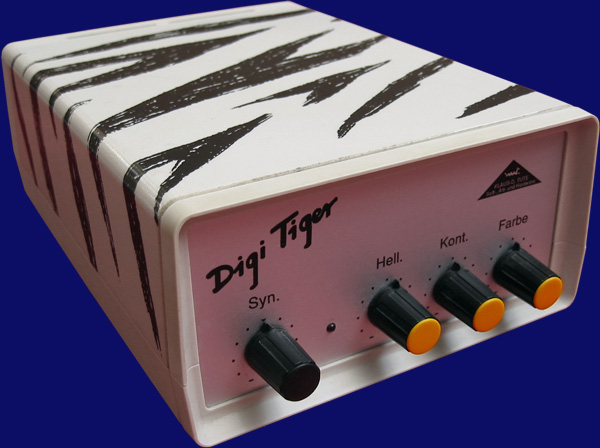
The highlight was a video digitizer. I was a teacher, and a former student founded a small company and sold hundreds of the devices. They cost 300? Deutsche Marks. You can buy entire computers for that price these days.
But the ability to digitize an image captured with a video camera and edit it on the Amiga was still very unusual in the late 80s. And the Amiga had a real graphical multitasking operating system like Windows and no more C:\>
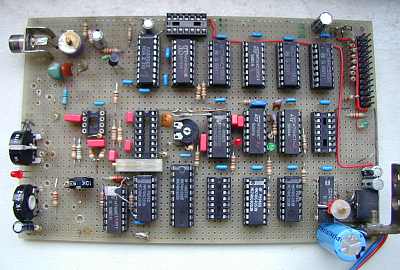
The pictures show the product and the first prototype. Of course, there was a printed circuit board, still hand-drawn. Then it was manufactured by the global company Siemens. For them, this was, of course, a small series.
73 Chris
Back then, it actually cost an incredible 698 German marks, which is about 700 euros today.
And in the early 2000s, I was able to sell thousands of Windows shareware software worldwide for 29 euros, with limited options.
The Times They Are A-Changing
I offered to have Richard Stallman stay at my house whilst on a visit to Preston - apparently he really likes free - but in the end he stayed closer. When i told a work colleague he said ‘that’s like having God in your attic’. I’m not sure he would have been too impressed with all the DEC VAX/VMS manuals i had littering the place at the time
I’ve recently installed Omarchy which is a linux distribution centred around Arch and Hyperland - got to try and keep up with the cool kids and ‘just say no’ to mouse use for anything. Neovim is the editor the cool kids use these days if you want to flex.
However, i can still operate emacs on muscle memory alone.
I was an Amiga user after the CBM-64. My mate spent loads on his as he was working whilst i was a poor university student and one of his purchases was a Genlock card.
When I started working at British Gas on the X-Window based Gas Based Network Analysis software (GBNA) I set the icon to a screen grab he’d done from Alien of Jones the cat, just for giggles. Twenty years later I was contacted by a developer still working on the program, so that icon will still be appearing on users screens.
Given recent statements by DHH, I’m not entirely sure the cool kids are hanging around in there. Unless by cool you mean snazzy brown shirts and blond hairdos. Let’s not even go into RMS’ viewpoints on the age of consent.
TBH I had no idea about the creator, so that’s news to me (and educating thanks). I don’t credit him with too much, given it is Arch Linux and Hyprland bundle with extras. I’d previously done it all by hand.
I’ve used many real Unices (the silly plural for Unixes!) and many Linuxes. Started with Suse, then (stupidly) ran Gentoo on a slow system (Gentoo compiles everything from source) then came the moment of enlightenment with Debian. I’ve tried others here but eventually go back to staid, old, changes slowly Debian. The fact you can do in-situ full upgrades makes it a favourite of mine and having been running it since 2004, I know where the knobs are and what they do. Currently running Debian 13 (headless) on 2x cloud instances using Xeons (the SMS server, SOTA cluster) and one local machine (NAS and old Linux desjtop) using an i5-4th gen. Graphical machines are the main desktop Debian 13 i7-12th gen, laptop #1 i7 8th gen, sacrifice laptop #1 i5-6th gen, sacrifice laptop #1 i3-2nd gen. Debian 12 on a Linx 1010B and Debian/raspbian/raspios 12 on a Pi Zero W (external SSH gateway) Let’s see that’s Linux run on PowerPC, Arm32, AARCH64, Atom, x86, AMD64, Sh3 & SH4.
I use RH and Alma or Rocky Linux at work. Some old VMs still run Centos for customer testing. I’ve access to a many hundreds of Linux machines and a few hundred Windows boxes (10/11, Server 2019/2025). I have to stop and think when using the RH inspired machines as the knobs are different!
All the Linux distros and desktops are a personal choice. I like Debian + Mate or Debian +Xfce4. Best move is what I should have done a long time ago, dump Windows as a main home OS. It’s easy when you commit to it. Yes, it’s not a full cold-turkey dump of Windows… I have 2 Windows programs that don’t run under Wine… Garmin Basecamp and Anquet Maps so there is a 200GB Win10 VM just for them. Apart from them and my work Win11 laptop, I have nearly cleansed myself.
I still have my old W10 machine to run some SOTA software which is soon to be EOL and my next job is to swap Mrs LLD (ex-Mrs. FMF) to use Debian instead of Win11 on her laptop. I’ve weaned her off Edge and Chrome to Brave so we’re on that journey except she doesn’t know yet
Is it still supported? I thought it went EOL a while back?
Only other distribution I use regularly is Kali (for work, and with a ToE in place of course) and occasionally Pop! on a stick. I’d like to try Qubes but it is too much of a faff to be a daily driver and I’d be having to buy tin foil every day for my hat. Tails works well enough over Qubes I think.
As you rightly say though Andy, Linux is indeed very much a personal taste OS. What works great for one person may be a non-starter for others. Example, everyone and their nan raves about Arch. I personally can’t be bothered to faff with it, and need a family-friendly OS as I’m Windows-free for years now (minus Bottles for Garmin Express etc). So Ubuntu and Mint more than comfortably meet that requirement.
No, it’s long since EOL. However, we have many vintage setups because a customer ordered some semiconductor IP or SOC or semiconductor simulation and they used version 10 of our tools and are still doing work with that release, it’s easier for them to pay for long term support than move to new OS/tools. So we charge them money for support and keep old software tools/OS running. It’s crazy because you end up backporting fixes rather than letting old stuff die. But customer X pays $$$ so we do it for them.
Handy number! I envisage a shift in legacy life support though and within 5 years or less, particularly with Q Day on the horizon. Of course that’s coming from a PQC angle entirely.
It’s not so much EOL as changed its position in things. It acts as upstream for RHEL where as Rocky/Alma/Scientific are downstream clones.
The change was largely made to provide a proper development stream for others building stuff on RHEL as before there wasn’t really a vehicle as Fedora was too far removed from the development process to be used that way.
So now, work done on CentOS by whoever flows down into RHEL, removing or at least reducing the need of going through Fedora and Red Hat customer needs first.
Hand-wound instead of soldered. I was quite surprised 45 years ago when the cables in my first Luxman HiFi amplifier weren’t soldered.
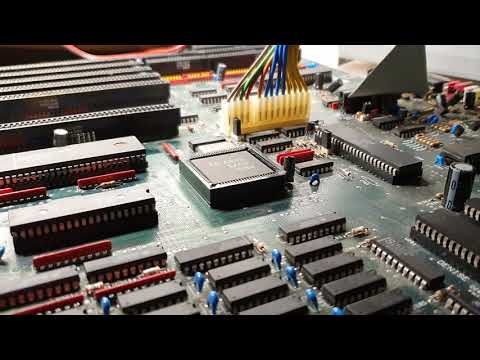
But seeing the Amiga’s custom chips hand-wound is amazing.
Incredible that it worked without any loose connections. And all without, or with only rudimentary, computer assistance. Respect! I myself preferred the soldered solution. But my board had only 15 chips.
Well I never knew that Andrew. We used primarily Centos or RedHat and then the change to Centos came and no new Centos machines have appeared. All new RH-flavour Linuxes have been Alma or Rocky here.
I had a quick look at my part of the data centre in Europe, the machines I can access. I see 62x Alma, 5x Rocky, 73x Centos (7.3 or earlier) 16 Ubuntu and 10x RedHat. That’s 13364 64bit Xeon or AMD Epyc CPUs to use. Glad I don’t have to pay the electricity bill. That’s just to support my bit of the domain, simulation software. The actual chip design and test department’s machines (Verilog/VHDL etc.) is significantly bigger!
All those old Centos machines are kept because we have software we still support and customer support that was released on that flavour of Centos (and gcc/clang and tools). It’s simpler to have them available so regressions and backports can be quickly tested and shipped.
That doesn’t include VMs… oh there’s many of them!
There’s quite a few Windows servers too, about 2/5th as many Linux servers.






 I envisage a shift in legacy life support though and within 5 years or less, particularly with Q Day on the horizon. Of course that’s coming from a PQC angle entirely.