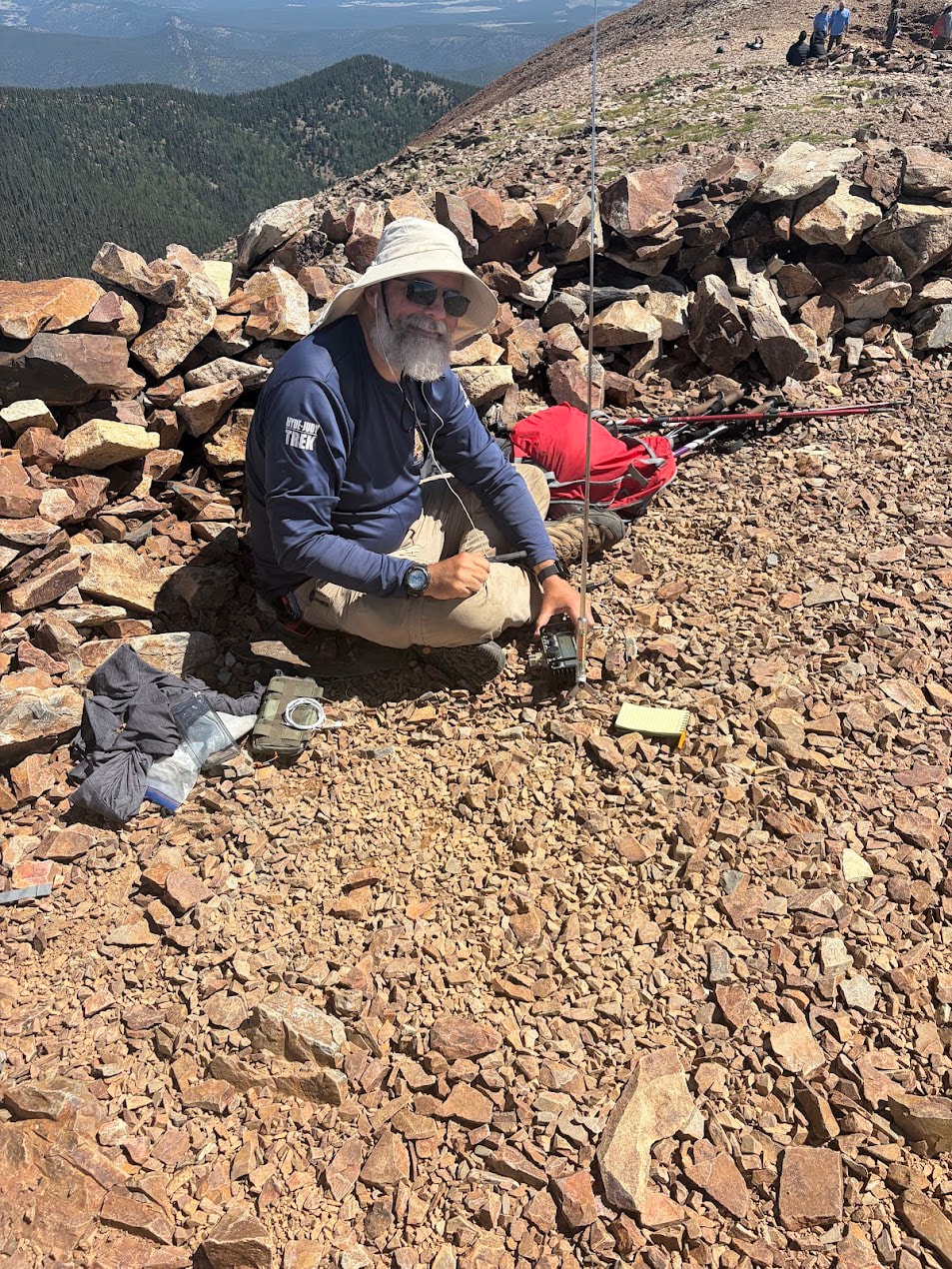
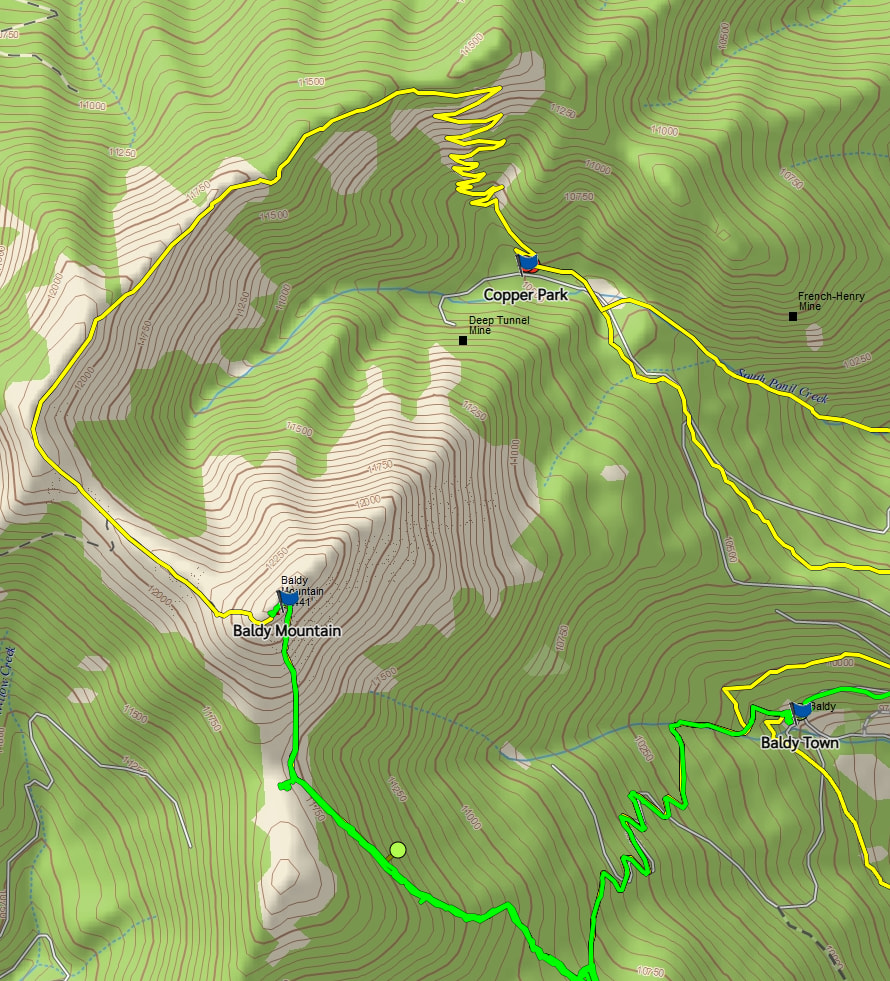
I just wanted to send a big thank-you to all the chasers who helped make my activation of Mount Baldy, W5N/CM-002, a success earlier this week. (20Jul2026)
We summited Baldy on Monday as part of our 12-day backpacking trek with Scouts and leaders from Troops 520, 193, and 524, along with Crew 520. Carrying the radio equipment up the mountain was well worth it, and making contacts from the summit made an already memorable day even more special.
For some reason, Baldy Mountain seems to have a habit of earning me low RST reports. Perhaps I can improve things the next time I make it to the summit. Any advice from more experienced activators or chasers on improving my signal would be greatly appreciated.
Thank you again to everyone who listened, called, spotted, and worked me from the summit.
Mostly indifferent performance of a portable can be put down to the antenna efficiency. That rock you’re sitting on dosn’t look too good for RF, so unless you have several invisible ground radials spread out, I’d suggest adding some.
The vertical is only half the antenna. If you have no radials you are using the radio, mike, battery and your body as the ground, which is unpredictable and not a good shape for radiating RF.
There was one counterpoise radiator off of the radio; however, your point is well taken. More ground plane radiators should help. Thanks for the advice.
It may help to regard the radials as parts of the antenna, they (should have) current flowing in them, so represent part of the available transmitter power and what you do with that power is important. This is why I prefer elevated and tuned radials insulated from the (usually very lossy) ground. Gravel and stones are not loss-free so I suggest keeping radials well above such materials. Remember the pioneers in electricity and their experiments showing magnetic and electrostatic fields around conductors carrying current. Place a wire carrying current on the ground and those fields will be absorbed by the lossy ground and the power is just going into warming the ground.
Never ground the end of a quarter wave radial, it is a high voltage point so grounding it reflects a high impedance at the feed point so hardly any current will flow into it and it might as well not be there.
Non-resonant wires contribute reactance to the feed point impedance and force the use of an impedance transformer and/or reactance cancellation, often called antenna tuners. These are not simple or perfectly efficient devices and have considerable losses in many cases. All that loss can be avoided by using resonant antennas with predictable non-reactive impedance.