Living on the edge (of the AZ): Becs de Bosson HB/VS-161

Becs de Bosson 3149 m HB/VS-161 consists of two principal peaks, Grand Bec (the main summit) and Petit Bec. The two are almost the same height, differing by less than a meter. Most people visit the Petit Bec only, as it is considerably easier to reach than the Grand Bec.
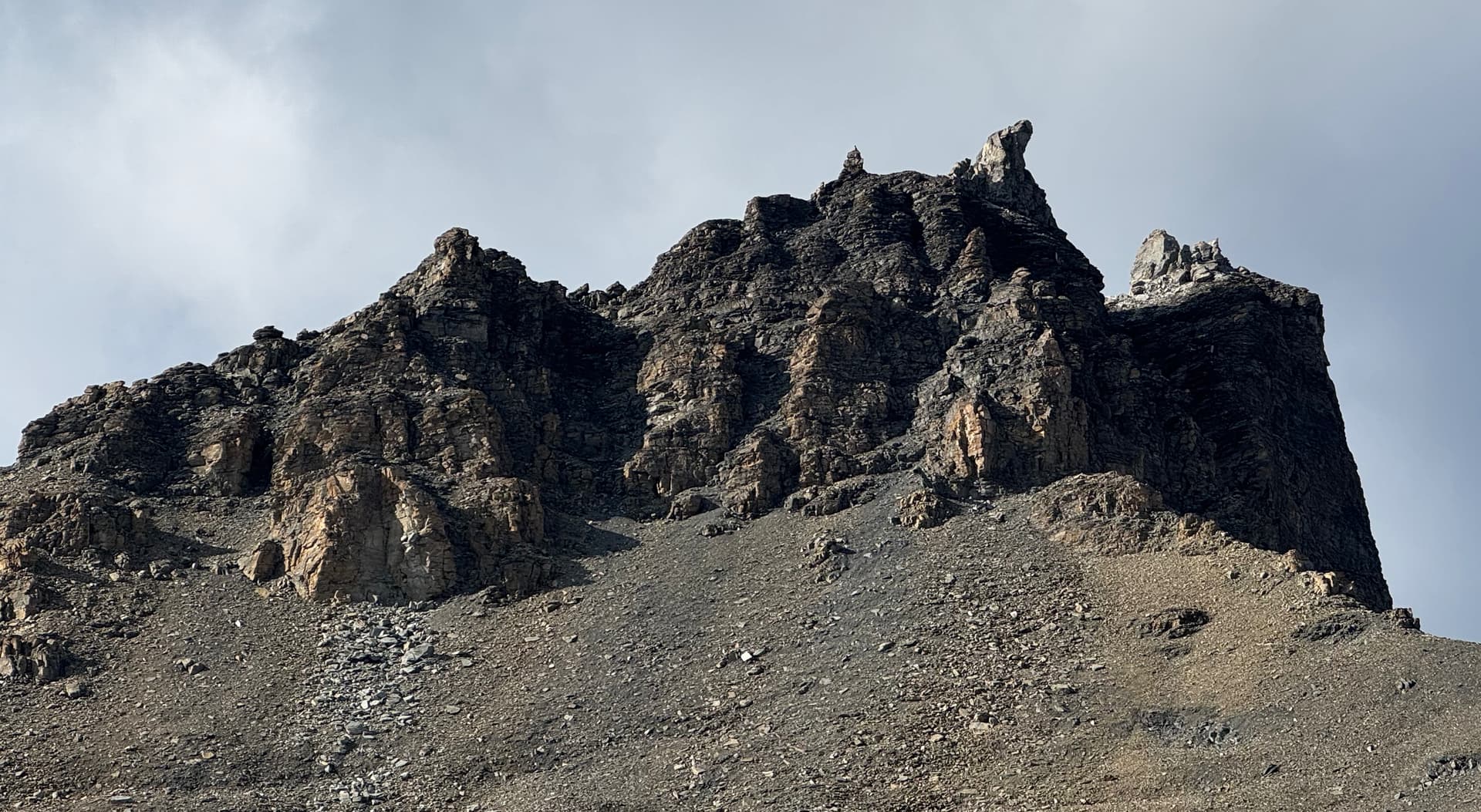

Becs de Bosson seen from NE – the main summit (Grand Bec) is the crooked “horn”

The current swisstopo map correctly shows the main summit location on Grand Bec, and gives its altitude as 3149 m. I found it interesting though that the AZ polygon currently shown by SOTLAS only encompasses the Grand Bec, as I was sure I had seen the Petit Bec included in it when the HB AZ polygons were first published. So I checked the swissALTI3D DEM data, and there has indeed been an update for the region in 2024. Now, the situation looks as follows:
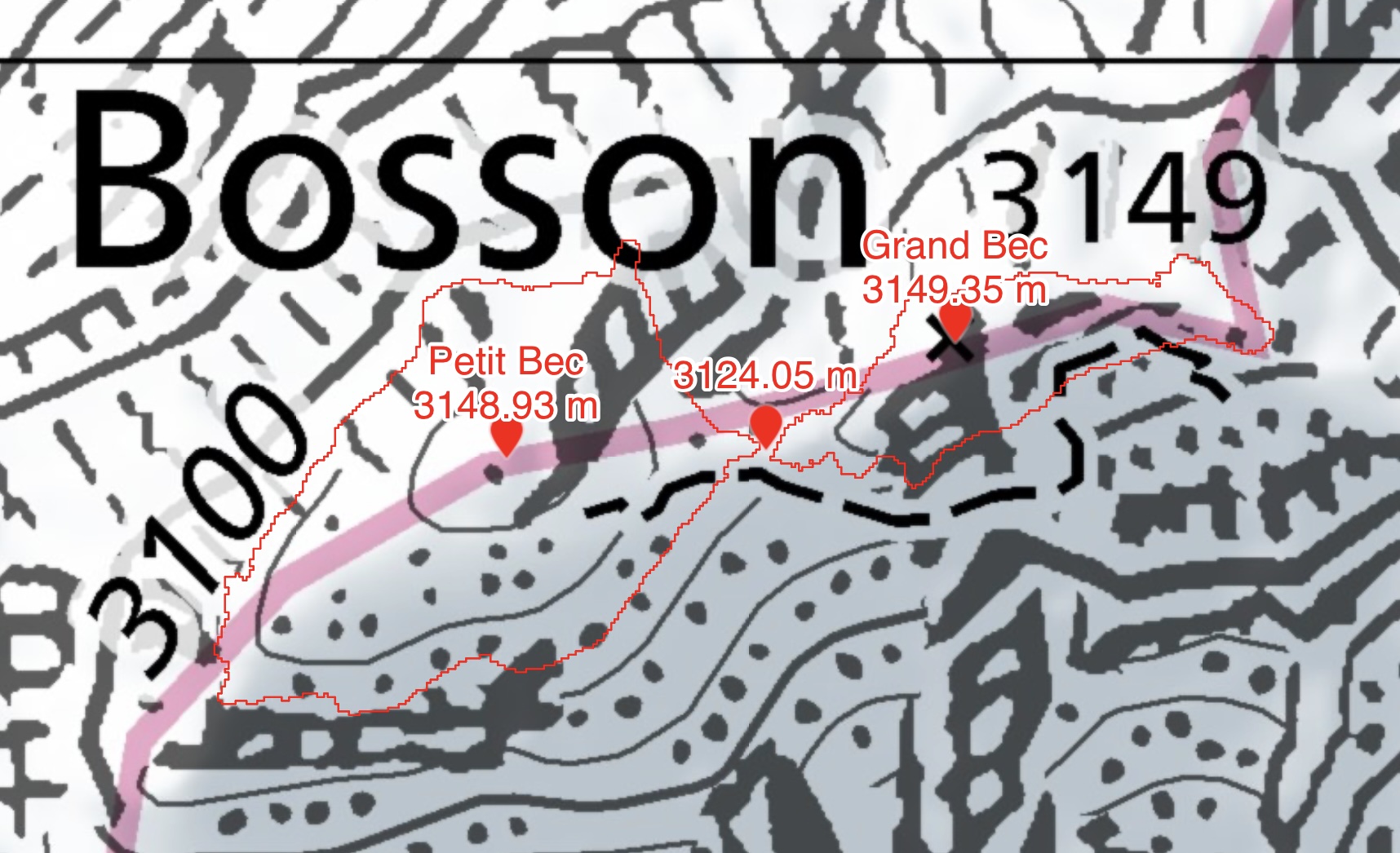
The red contours encompass the points >= 3124.35 m. The areas are disjoint, with the col a whopping 30 cm too low for Petit Bec to still be in the AZ. Of course this is very much at the limit of accuracy of the DEM, so it might as well be that Petit Bec is in the AZ after all, or that it lacks more than the 30 cm.

Today I climbed Grand Bec together with Stefan @HB9HCS. We decided that instead of “living on the edge” as far as being in the AZ or not is concerned, we’d rather “activate on the edge” :joy:

Some scrambling over blocks leads to a chimney that is climbed in order to reach the summit (III+). It was windy, so we kept the activation relatively short. The KX2 + AX1 combo came in handy – while I don’t particularly like it as it gives chasers a much harder time (especially on 40m), it is quite useful on such space-constrained summits.
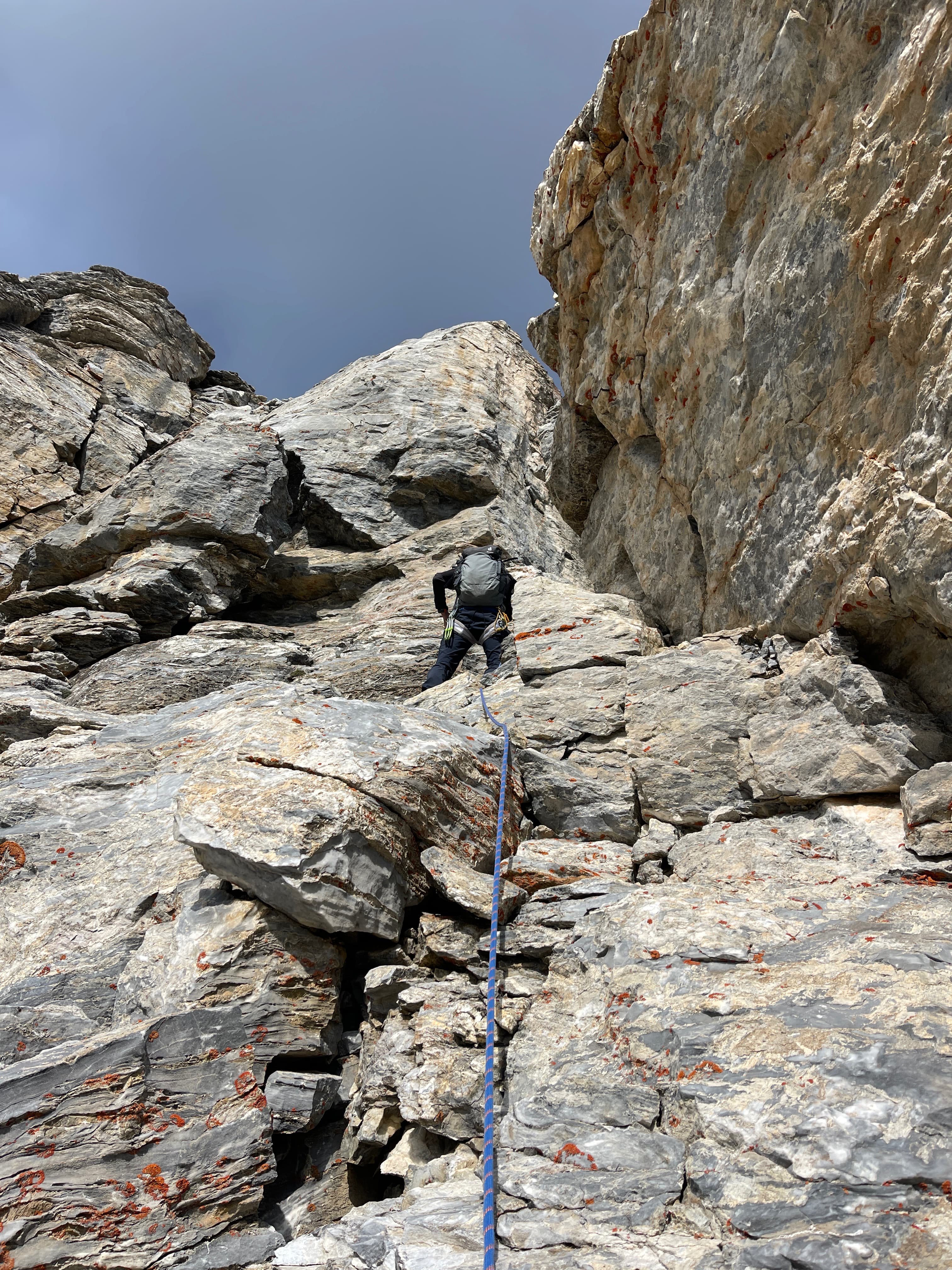

HB9DQM in the first part of the climb before traversing into the chimney
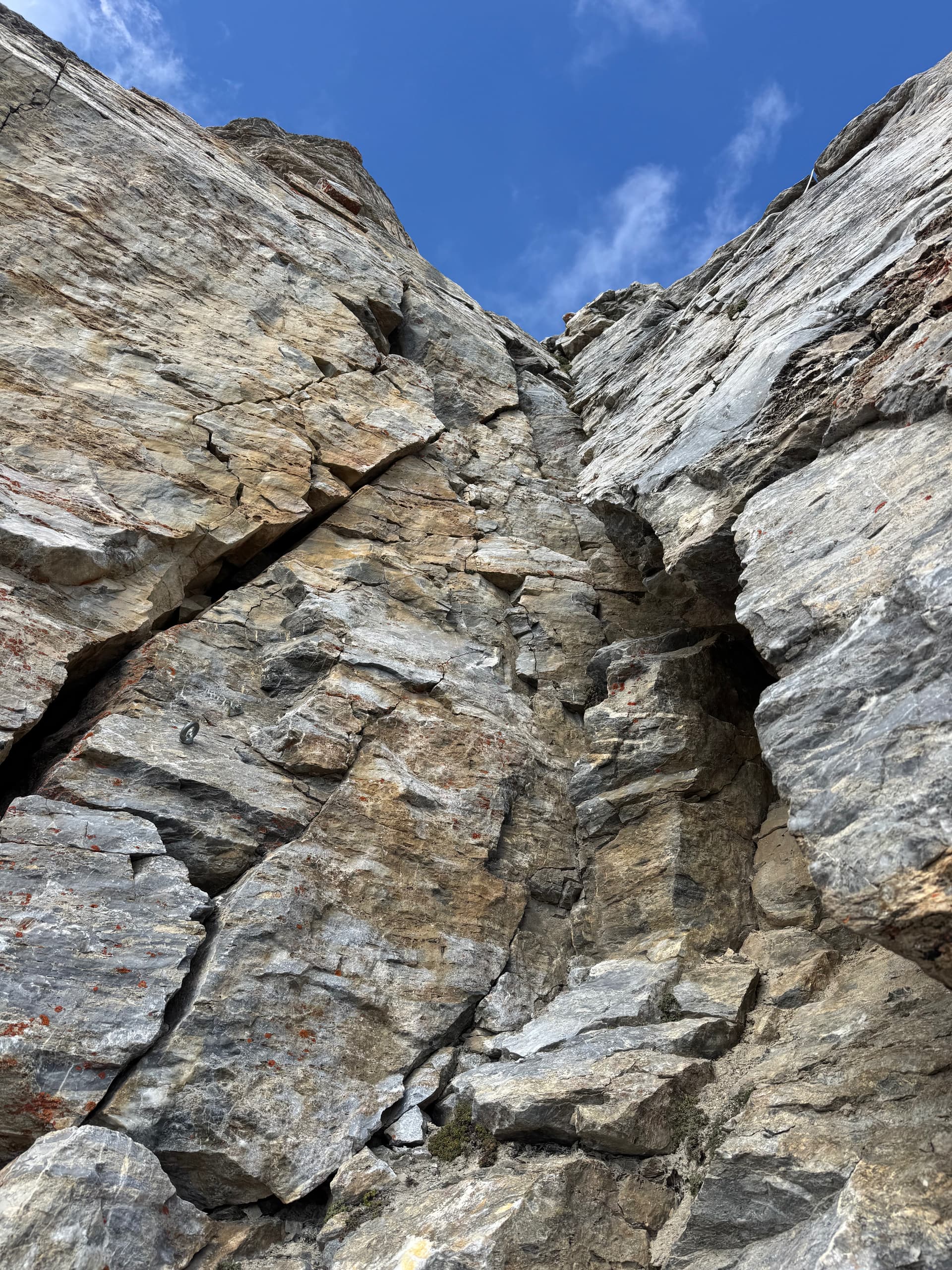

Looking up the chimney; bolts to the left
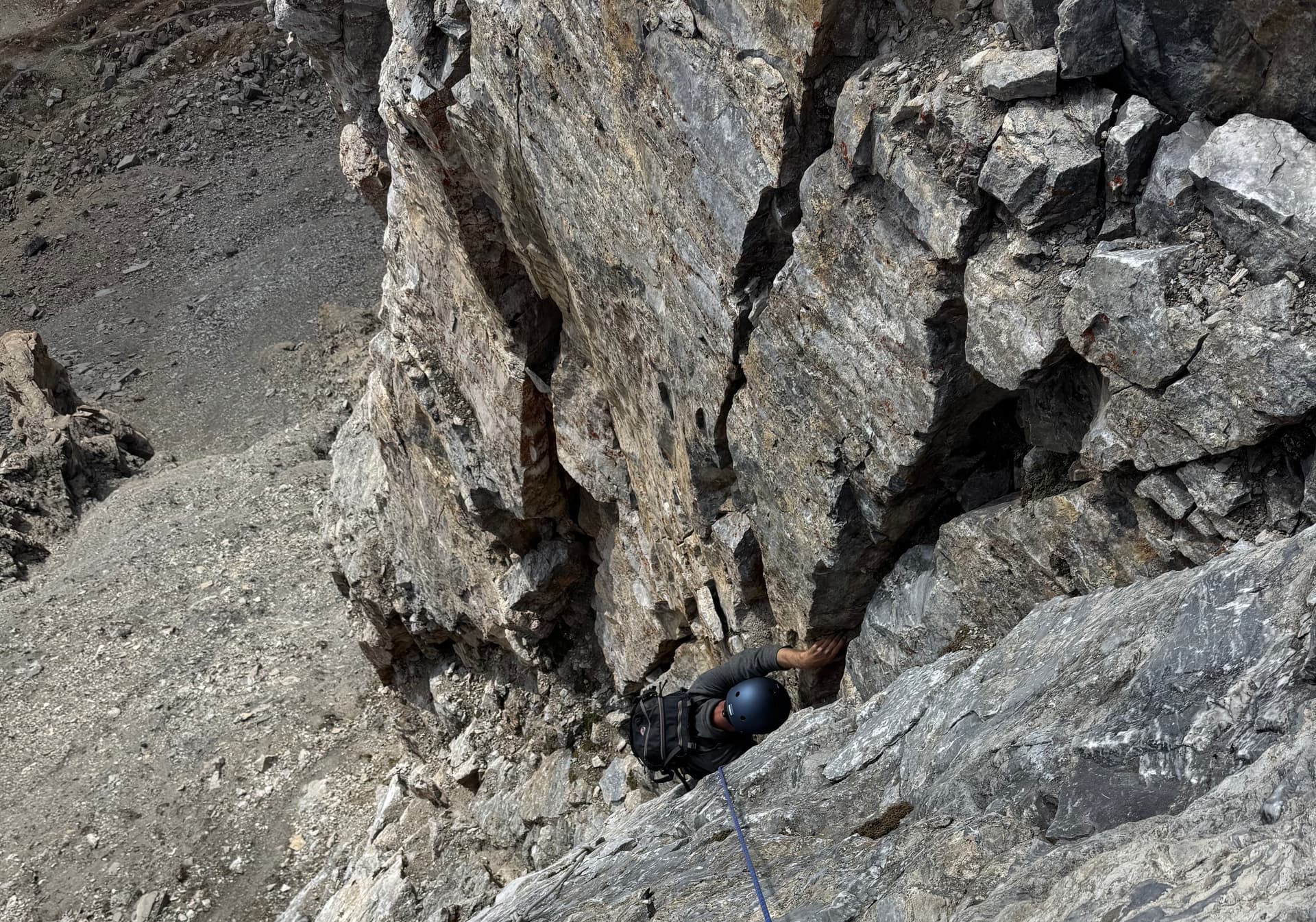

Stefan following up
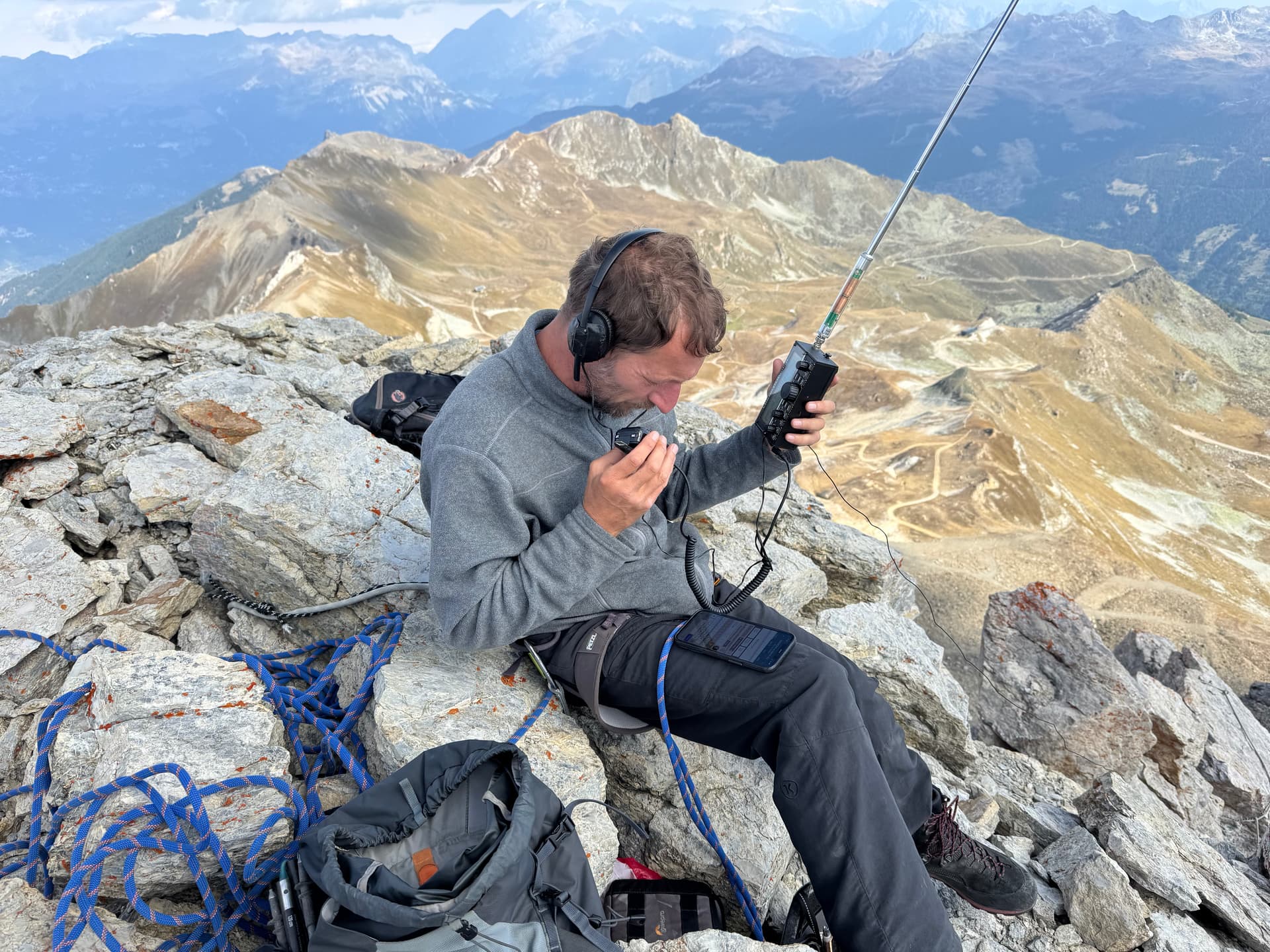

HB9HCS activating

An abseil down from the summit block got us back on the path below Grand Bec. My 50 m rope had just the right length, with not more than a meter or two to spare. Given that the tower isn’t exactly vertical, this means that the altitude difference between the summit and the path must be something slightly short of 25 m.
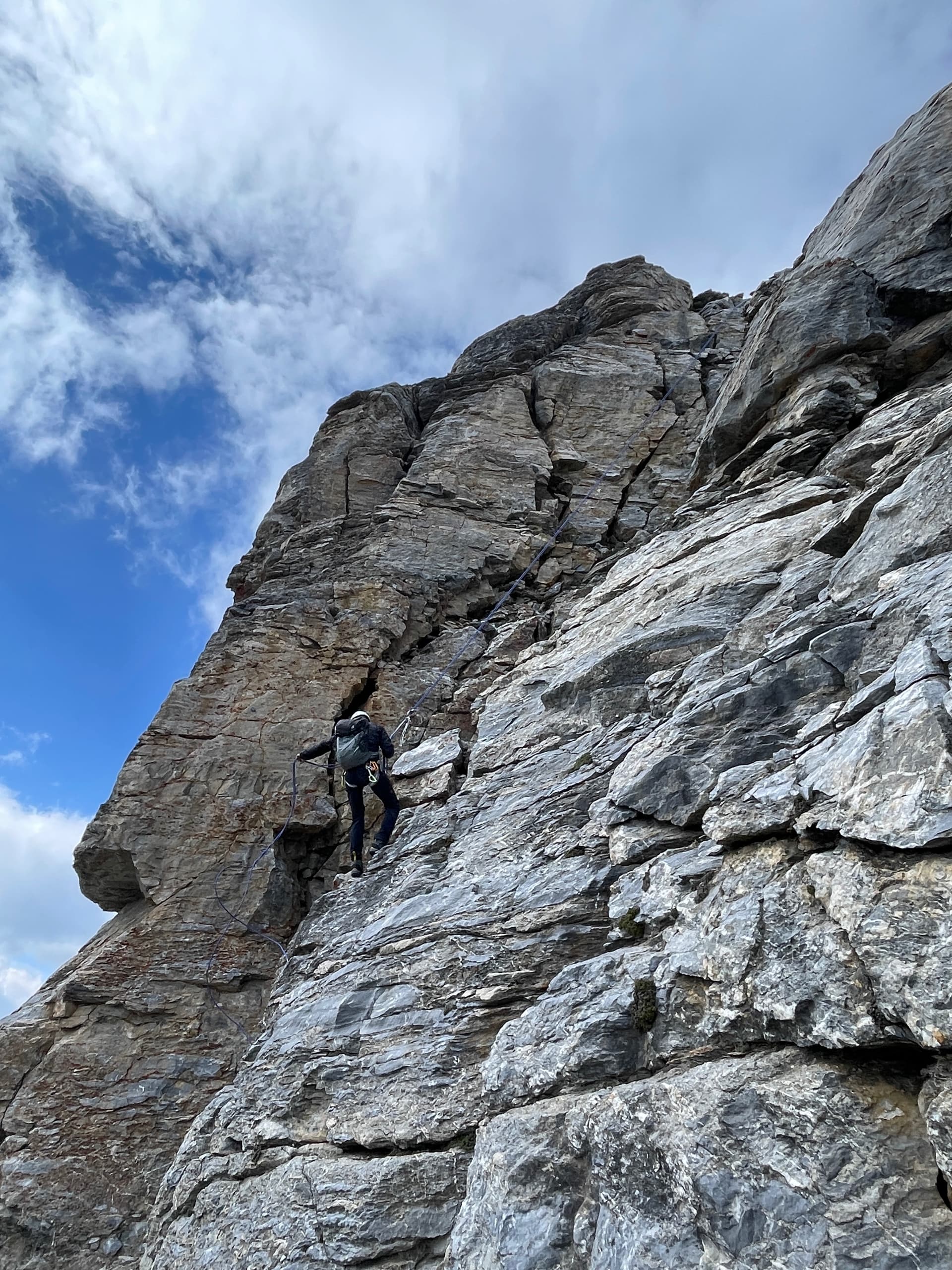
Therefore, those that are determined to activate the summit without climbing the tower may find that a small section of the path just below Grand Bec is probably in the AZ (which can also be seen on the map above), although not an ideal place for an activation. One could also scramble up a bit from the path towards Grand Bec; the first few meters are easy. On the other hand, activating on Petit Bec is not guaranteed to be in the AZ.
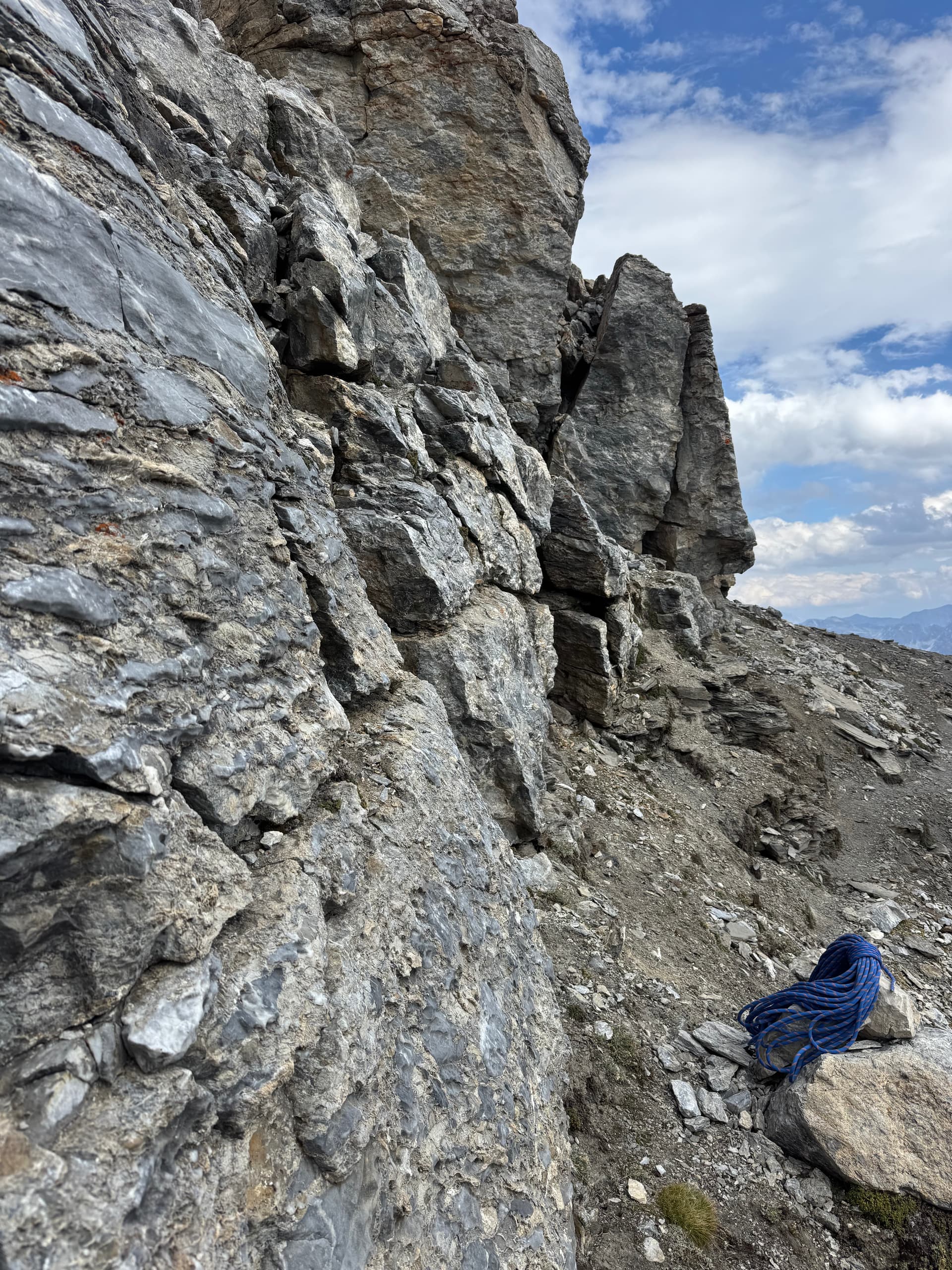
I’ll leave it to the previous activators @HB9AFI, @MM0YCJ, @HB9NBG, @HB9FZC to determine if they were activating from within the AZ :wink:

73,

Manuel HB9DQM

26 Likes

Thanks Manuel for sharing your observation.

An interesting detail, based on the current geological situation and measurement accuracy.

It’s probably no secret that the height of mountain peaks will continue to change in the future, and measurement accuracy will improve further. Therefore, it may be sensible to periodically adjust these changes in constructs based on them (e.g., SOTA).

Based on these constant changes, in my opinion, a reassessment of past achievements based on the then-current state of knowledge would be neither appropriate nor necessary.

73 gl, Heinz

Below are some changes in the height of mountain peaks (1990-2023) found in the Swiss press

HB/VS-052 Pigne d’Arolla
-15 m

HB/VS-059 Téte Blanche
-13 m

HB/VS-029 Fletschhorn
-8 m

HB/VS-020 Mönch
+11 m

4 Likes

Hello Heinz,

Yes, that is how the HB association handles it. Every couple of years, the association manager (currently @HB9CEV) compares all summits with the current swisstopo map to determine whether they are still valid, and updates the names and elevations if necessary. If a summit becomes invalid due to new information, the previous activations remain valid, as per the way the SOTA database works. And sometimes a new summit pops up because it was found to be a meter higher, or a col was found to be lower than before.

The question about activation zones is a slightly different one, although related. While an activator may activate a summit that is currently listed as valid in the database in good faith that it fulfils the criteria (prominence etc.), and may keep their activation/points even if this is later found not to be the case (anymore), they are on their own when it comes to determining the extent of the AZ. There is no official information about this in the SOTA database, therefore one has to turn to third-party sources like SOTLAS, or perform one’s own measurements.

The question is how much effort an activator must spend to determine the extent of the AZ in cases where they are unable to reach the actual summit.

Anyway, one can also be too pedantic :wink: But to me, it’s a fun thought experiment, and summits like Becs de Bosson, where it’s a very close call and one could quite easily (in theory!!) shift things by building a larger cairn, throwing a few rocks off the summit, or taking a pickaxe and shovel to the col, are somehow fascinating.

73,

Manuel

7 Likes

Manuel,

That’s exactly what I thought.
You could call it mountain chess, because it’s primarily a muscle workout :sweat_smile:

By the way, I’m aware of the effort involved in updating the ARM-HB at HB9SOTA.
In my above post, I reflected on the situation in general and didn’t address any criticism or suggestions for improvement to HB9SOTA.

6 Likes

Interesting article and a nice activation!

I was up there 20 years ago, well before SOTA for me. It was used as a location to test my skills on managing groups on steep ground as part of my International Mountain Leader assessment. I think we must have climbed the easier summit.

My main memory was the lovely overnight stay in the refuge below, where the long suffering guardian had to put up with all of us asking questions in various degrees of broken French - again, part of our assessment. She, of course, spoke perfect English.

Gerald

4 Likes