Few things are more pleasant than travelling in the great outdoors, in all its majesty, spending time with good companions, in all their magnanimity, and eating great food, in all its magnificence. So it was on a gourmet radio hike on the Stoney Hills Loop Trail east of Duncan, BC on July 8 with fellow ham Byron VA7BYR and hiking buddy Don (from Nanaimo, BC). Over the last few years, I have tried to improve and expand the food experience during my radio hikes. This has evolved into a kind of pot-luck field charcuterie, where people bring a variety of tasty treats to share. It’s always a surprise, as there is no planning. This last outing has certainly set the highest standard for us. I thought I would share our menu with you.
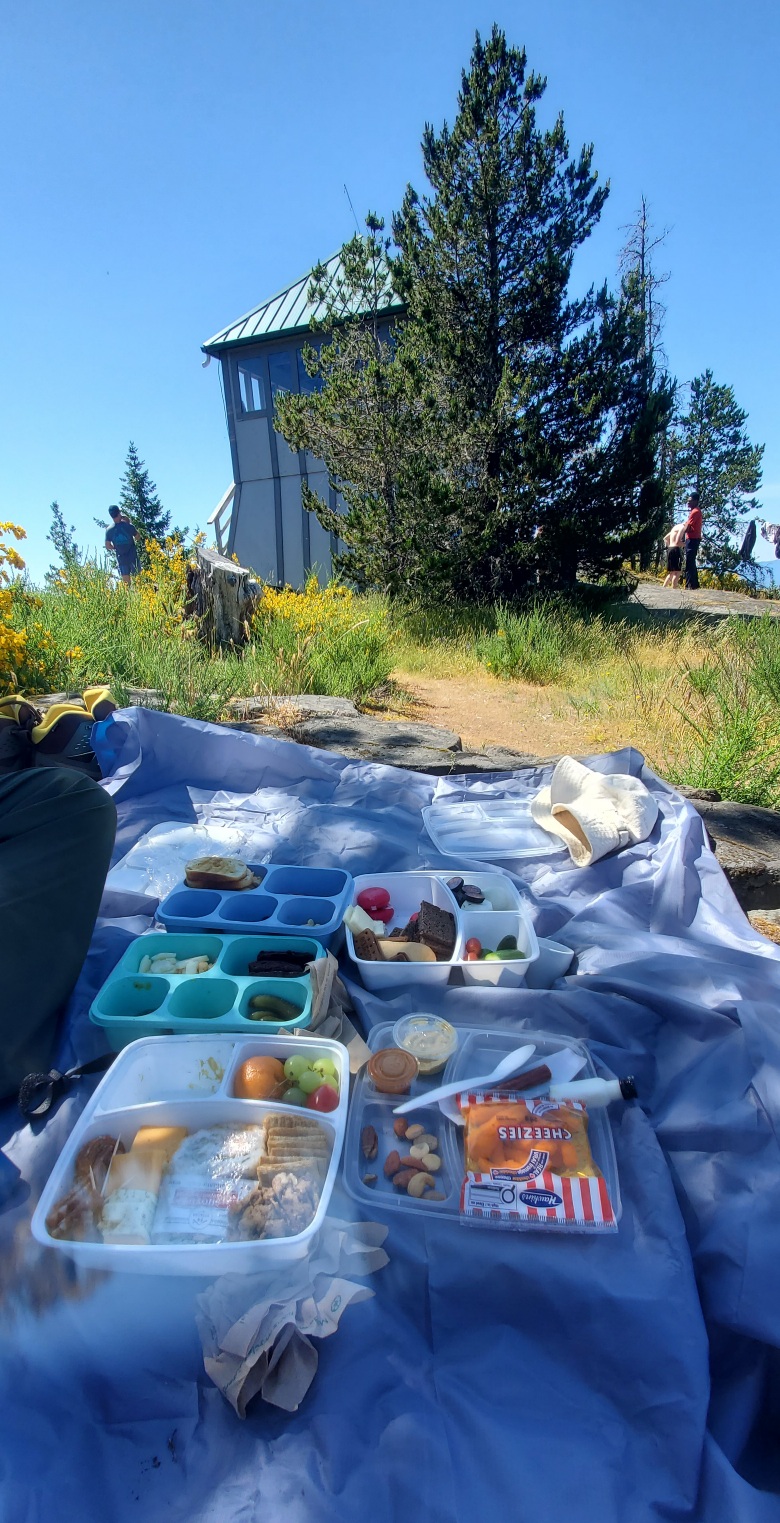
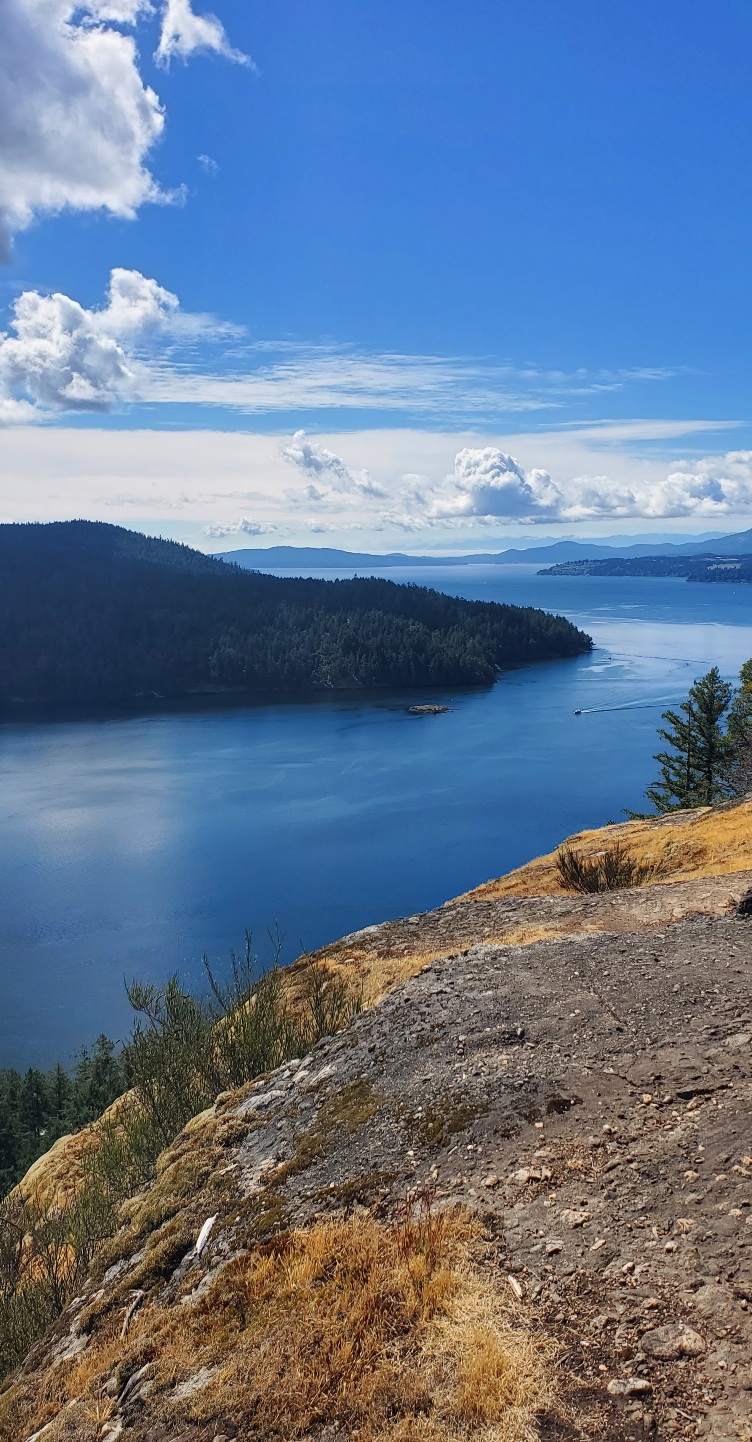
This photo shows our lunch setting, from the “mainland” part of Vancouver Island (Cowichan, east of Duncan) looking southeast past the southern end of Salt Spring Island toward Washington state in US in the far distance. A gorgeous day, calm and 21C.
Here is our spread, with descriptions:
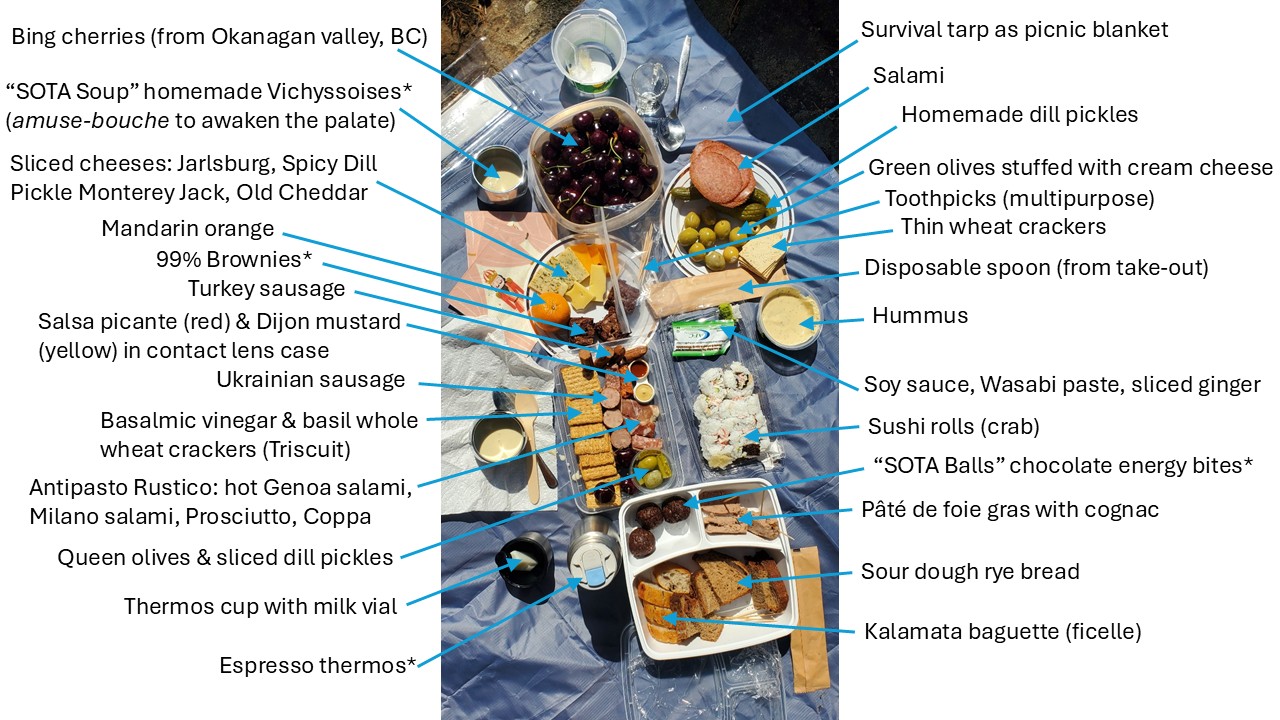
Notes *
- SOTA Soup was a cold Vichyssoises handmade by Byron. He had lived in Provence, France and learned elements of French cooking. In basic terms, Vichyssoises is leek, potato, and onion soup, pureed, and served chilled. Sounds simple, but there is much more to doing it right. This soup was served amuse-bouche, that is, in a small quantity at the start of the meal to excite the palette. It certainly did - it was exquisite. The labour to make this means it is a once-a-year delicacy.
- 99% Brownies are my contribution. Named because family members think they are 99% perfect. These are the best I have ever tasted, but there is always room for improvement. They are best eaten at the end of the lunch, with espresso. If anyone is interested, I’d be glad to share recipe.
- Espresso coffee has become a standard on our hikes. Rather than get swamped in field preparation, stoves, etc. I elected to invest in a great thermos (Thermos brand), and make the coffee in the morning for drinking at midday. The key is pre-heating the thermos with boiling water. The coffee is still piping hot at midday. 12 oz is enough for a small cup for 3.
- SOTA Balls - Byron’s name for these chocolatey high-energy bites. There are many recipes. This one was very good. Presented below for you to try.
SOTA BALLS
Chocolate high-energy bites developed to improve your /P radio experience…
(modified and compiled by VA7SNJ from recipe from XYL of Byron VA7BYR)
Ingredients
- 1 ¼ c pitted Medjool dates, roughly chopped
- 100 g bar of 70% dark chocolate, chop into 1/8” granules
- ¼ c dried unsweetened tart cherries, diced
- ¼ c mixed nuts, coarsely chopped
- 3 Tbsp unsweetened coconut flakes
- 3 Tbsp mixed pecans and sliced almonds, finely chopped and lightly toasted on cookie sheet in oven until aromatic and slightly browned (watch them!)
- 1 ½ tsp olive oil
- 1 tsp vanilla extract.
Directions
1. Place dates, chocolate, and dried cherries in food processor. Process until finely chopped (~1 minute)
2. Add nuts and coconut. Process until blended
3. Add oil and vanilla. Process until mixture comes together.
4. Roll into 12 balls (or more if you want more smaller bites).
5. Refrigerate covered at least 30 min before serving. Store in airtight container in fridge or freezer.
If propagation is poor or weather is rotten, eating one of these will improve your world view.
We spent an hour over this lunch and marvelled how food always tastes better outdoors and that pot-luck dishes always seems to be different; hardly ever a duplication!
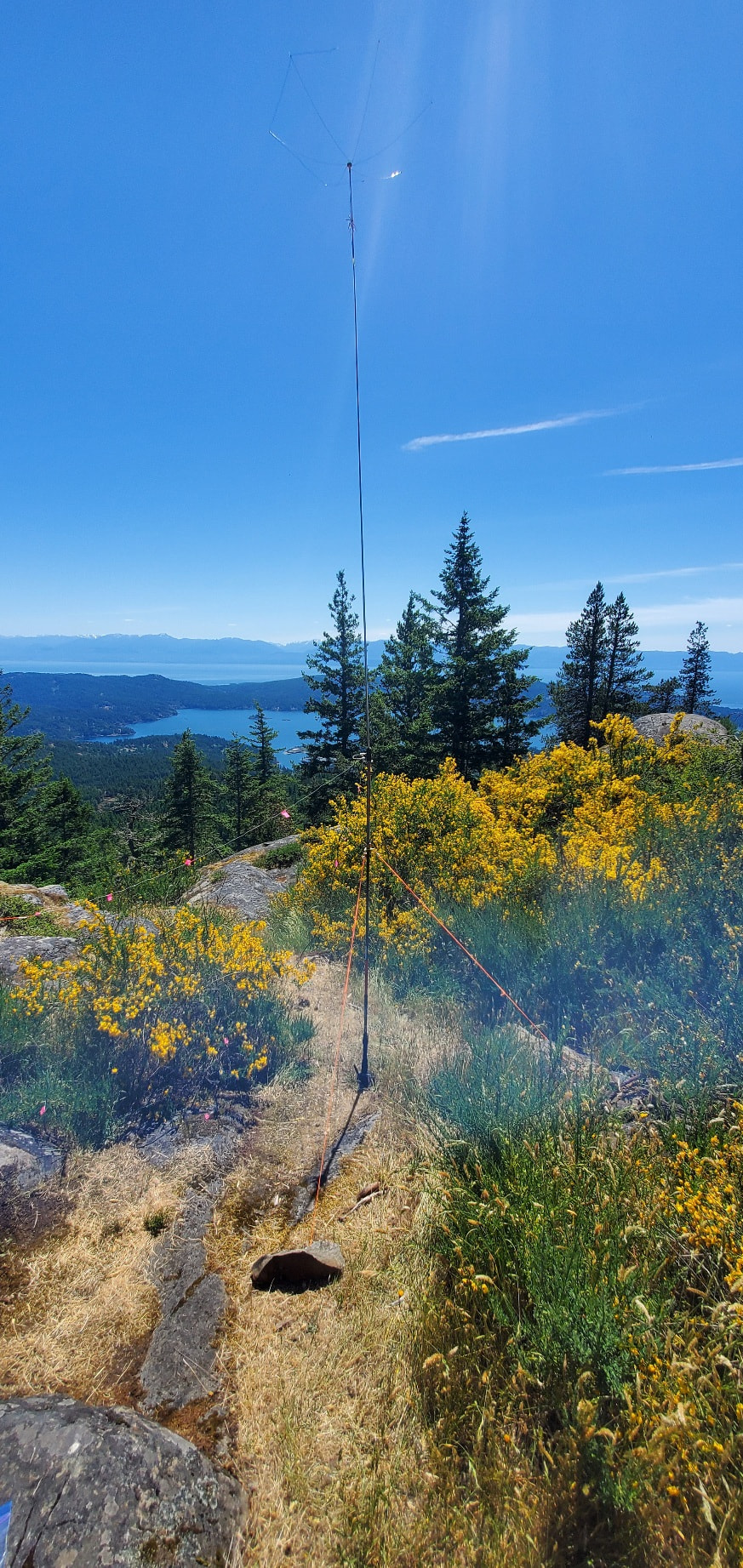
Radio: I had my IC705 along since not a long hike. I set up a 58 ft EFRW as an inverted L (18 ft vertical with cord to a tree limb; the rest of the wire sloping down to bush), and 16.5 ft radial raised 5 ft above ground and tied to nearby bush. 9:1 impedance coupler, then 4 m of RG-174 coax to a homebrew L-match, then to QMX. For the geologists in the crowd, we were located on a glaciated, well-cemented alluvial cobble conglomerate with subhorizontal bedding. This unit was highly resistant to physical weathering and glacial erosion, and forms the bluff we were hiking on. There is no surface water nearby so I suspect the rock was dry with very low electrical conductivity. My raised radial was essential for RF current return.
20 m was open and I made several SSB contacts into southern California (about 1000-1500 km) with this little gem of a radio. RBN showed CW signals 4 dB to 12 dB at distances of 1350 km. So this antenna system was working fine.
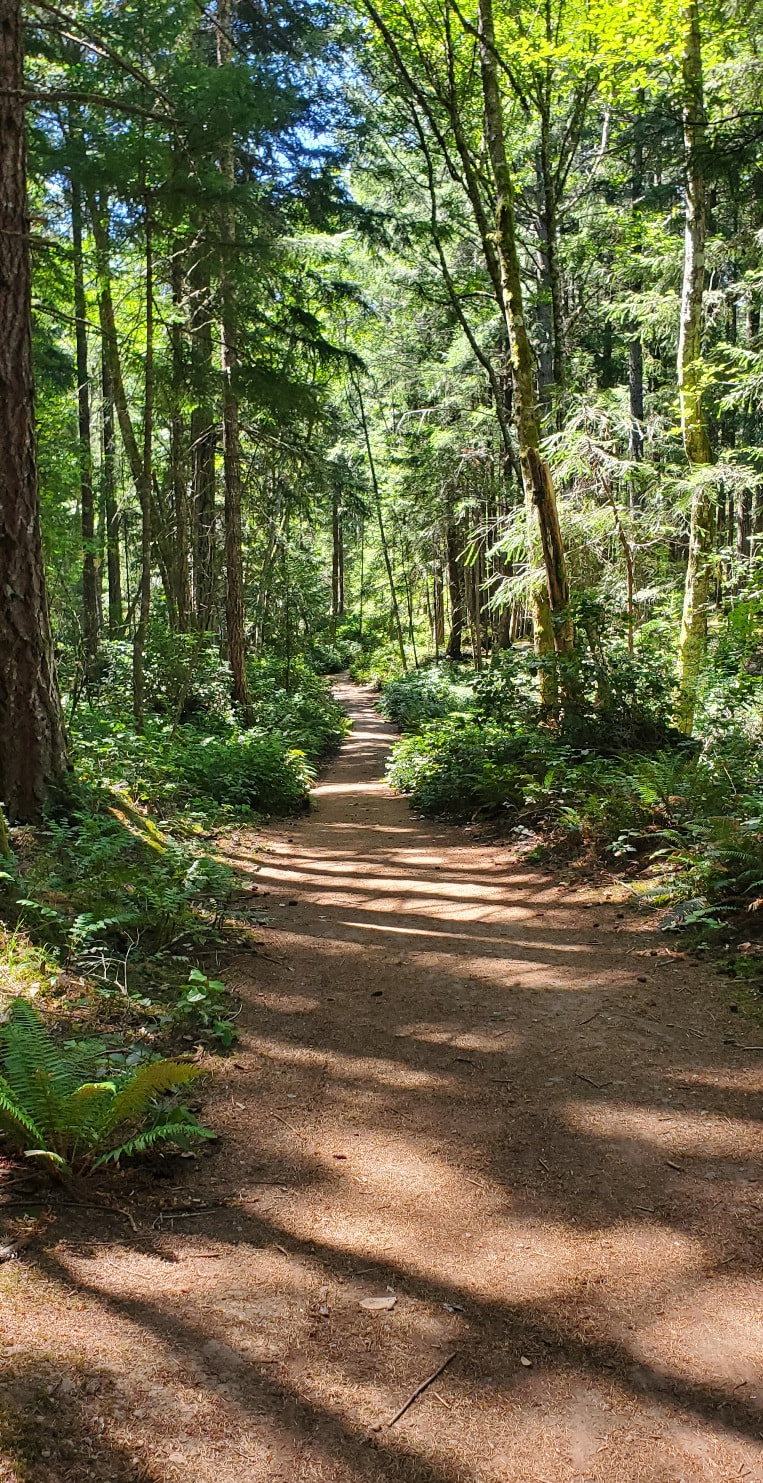
Several passers-by were intrigued and asked about our radio set up. Radio communication remains fascinating. We hiked out along the trail below, with great memories of a gourmet radio hike! Any others out there mixing haute cuisine with haute frequency…?
72, Scott VA7SNJ
 ).
).


 and forks
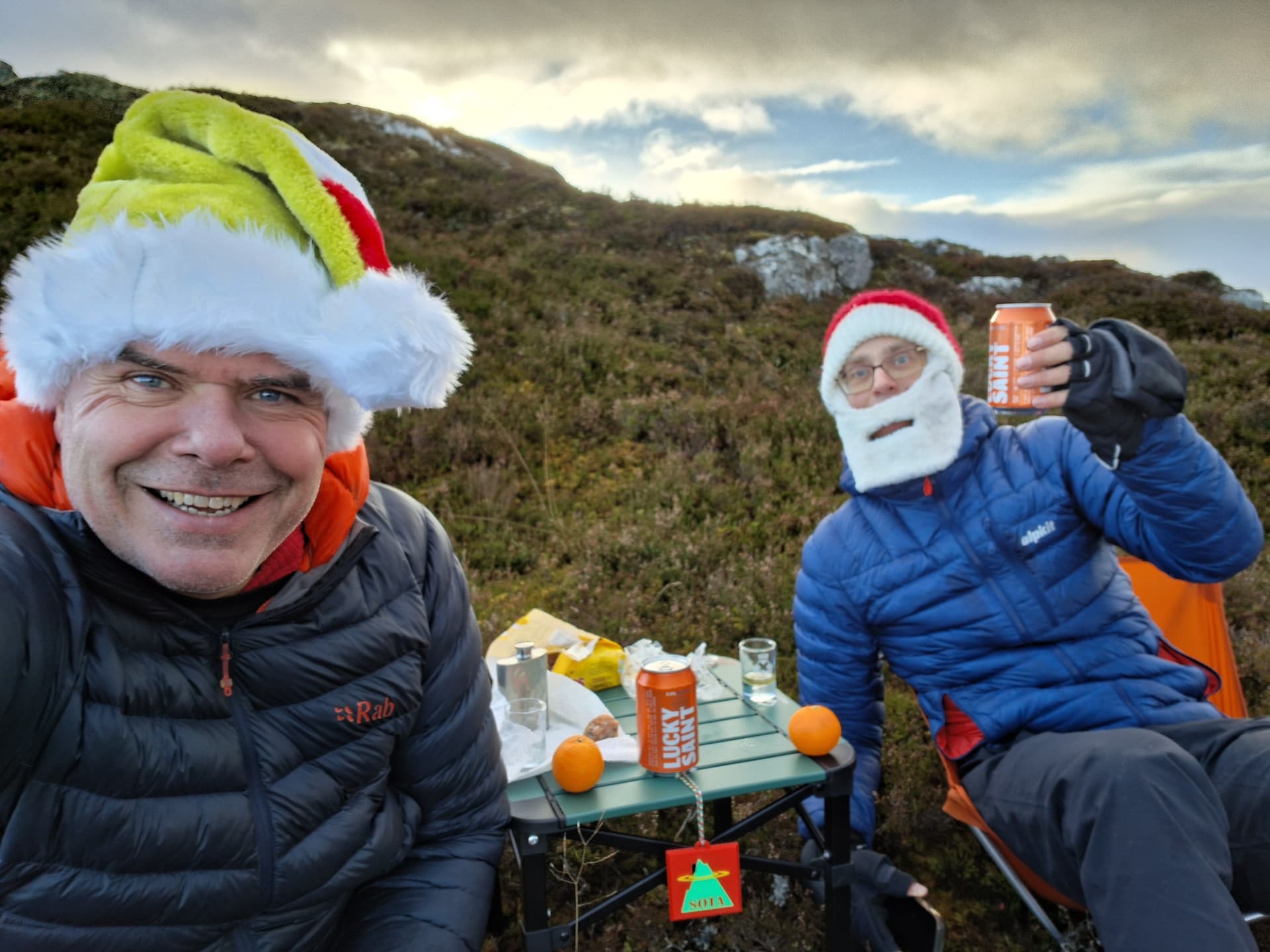
 . Among the innumerable badges in SOTA - how come there’s not a single badge for SOTA gourmets ? Food for thought?




 But they do taste good.

 )
)