G4YSS: PA/PA-006 Signaal Imbosch (Solo) on 22-09-26
Issue-1 pse rprt errors
Activation of SIGNAAL IMBOSCH PA/PA-006 - 1 point
Tuesday 22nd September 2026. G4YSS using Callsign PA/M1NNN/P
QRO on: 15m-CW, 40m-SSB, 40m-CW, 20m-SSB & 2m-FM (2m-SSB-Nil)
Also activated on 19-09-26
All times: CET (UTC plus 2hr, UOS as ‘z’)
EQUIPMENT:
FT817ND HF/VHF/UHF 5W Transceiver
MX-P50M, 50 Watt HF Linear Amplifier (RX fault)
Link dipole for 40m & 20m (30m & 15m) on a 5m Alloy-CFC mast
HRB 11.1V/ 5 Ah Li-Po (No9) battery (est 90% discharged)
RM TC150V, 50W Linear Amp for 2m-FM/ SSB (modified) 0.54kg
Yagi: H/B 6-ele for 2m, 510gm (basic design by M0UKB/ DK7ZB)
Backup (not used):
HRB 11.1V/ 5 Ah Li-Po (No8) battery
Vertex (Yaesu) VX-150 2m-band 5W H/H
UV-3R H/H. 2-Band, 2W-FM H/H (shirt pocket)
J-Pole vertical for 2m-FM
Other:
Garmin GEKO-301 GPS
Folding chair (800gm)
Pack weight:10kg (22 pounds) approx
INTRODUCTION:
This, my second activation of PA6 in three days, was carried out from our base, the Bilderberg Hotel, Oosterbeek, Arnhem. For the first activation see report 41870 of the 19th-Sept.
For obvious reasons the reports are rather similar (much like all my reports) but they are all meant to stand alone with all detail incorporated and despite repetition.
EXECUTION and ROUTE:
After a morning visit to the Hartenstein Museum and Oosterbeek Cemetery, the drive to Pavillion de Postbank took just over half an hour. Most of the preparation was done in the morning at the hotel and further time was saved because walking boots are not needed for this particular SOTA.
The walk started at 14:02 following the route summarised below. For more detail see my PA6 report 41870 of the 19th-Sept 2026. Pausing for photographs on the way, it took 27 minutes (net) to reach the summit along sandy paths. As before I used the road for the first part rather than the cycleway.
Route (abbreviated):
Start at the Pavillion de Postbank (6691JM Rheden). NW end of the car park N52.02931 E6.02232. Further waypoints: N52.03124 E6.01974; N52.03320 E6.01856; N52.03479 E6.01497. Turn right at N52.03516 E6.01324, keep left at N52.03607 E6.01338. N52.03509 E6.00859; N52.03572 E6.00439; N52.03719 E5.99838 Short path to the right. Summit is at N52.03825 E5.99877 (110m ASL).
SIGNAAL IMBOSCH, PA/PA-006, 110m, 1pt. 14:29 to 19:01. 18C, zero wind. Overcast. No rain. LOC: JO22XA. POTA: NL-0007. Good phone coverage (EE) most of the time
Setting Up:
At the summit proper. Once again the 40m band link dipole was strung between trees with a 5m mast at the centre. A rare luxury only for PA6 - a small folding chair.
21.063 CW - 3 QSO’s:
Making maximum use of midday conditions I started on 15m, self spotting initially for 21.062 after carefully checking that the channel was clear. My attention was grabbed when I received what I thought were replies to my ‘CQ SOTA’ but after some initial excitement, I was somewhat crestfallen, realising that JA1VVH and KB4LCS were working one another and not me! I thought it was clear. It wasn’t.
Moving up to 21.063 and informing potential chasers of the adjustment via another self-spot, I began calling again. After a while this attracted the attention of N9DXP and we exchanged in QSB with 569 (optimistic) / 539. I should think his report of my signal would also have had a positive slant on it. This was George in Johnson City, Tennessee, a new state for me.
Next to call was JS2TNW Takeshi in Tsu City with 569/ 519 QSB. I can’t remember the last time my SOTA signal got this far if ever! What can I expect if for most of my SOTA career I’ve been skulking around on 160 and 80m? Great contact.
Rounding off this sortie onto 15m was KF9D Roger in Algonquin, Illinois 569/ 329. Power for the session was 50W to the 40m dipole and after some minor tinkering with connections following the last activation, the linear mostly behaved itself.
21.320 SSB – Nil despite a self-spot
A token effort with little in the way of expectation, ten minutes of ‘CQ SOTA’ fell on deaf ears or to be more accurate, it likely never made it to anybody’s audio stages well enough for a QSO. The band wasn’t wide open for sure.
7.170 SSB - 1 QSO:
While trying to find a clear spot, I came across M1GRY Gary doing POTA from his home at St. Ives, Cambridgeshire. He was 59 to me and I got 55 back. He seemed delighted to get the P2P (GB-5468 to NL-0007) and during the ensuing chat I found out he was from York. There was no need to modify my Yorkshire accent for this QSO as my home QTH is Scarborough.
On the latter subject Gary told me he was inspired during his visits to Scarborough for holidays as a youngster and would stare longingly into the window of the local radio shop on Columbus Ravine. Surprisingly my memory let me have the name of the man who ran it and whom I knew quite well. It was Des Wood and the shop was called Derwent Radio. Des’ callsign; G3HKO. Des’s brother perished high up on SOTA G/LD-030 Black Combe during a training flight in Anson LT-741 on 2nd of January 1945.
7.153/ 7.154 SSB – Nil despite self-spot
Another ten minutes with nothing to show for it. The 15m SSB failure didn’t surprise me, especially on a weekday but after working 26 on this band three days prior, this one did.
7.033 CW - 8 QSO’s:
First in the log on 40-CW was our old friend Fritz DL4FDM (Bensheim) so lot’s of 'FB’s flying about here. Fritz also has (or had) an HB9 callsign. I should think, along with many others, my M1NNN callsign wouldn’t be immediately recognized by Fritz so I sent my name. G4YSS/P and GX0OOO/P will be more familiar to most chasers.
Continuing on:
G4ZTX Chris - Rotherham; LA1KHA/P Kjell S2S on LA/TM-049; OK2PDT Jan in Velka Bites; DL3JPN Steffan - Oberlungwitz; G4CMZ Kevin - Norfolk; DL1LQZ Matthias and LA1ENA Aage - Stethelle. Power was 30W and reports were all between 579 and 599 apart from two incoming 559’s from the final two stations.
14.285 SSB - 8 QSO’s:
Apart from the QSO with Gary, 40m SSB had been a failure which I was hoping to make up for on 20m. In the log: EA3EVL Pablo - Tarragona; EA5JHW Francisco at Cartagena; EA4ACS Felipe – Granja de Torrehermosa; EA2DDG Jose in Arellano; EA7GV Jose - Ogijares; SV3IEG Dinos - Patra; EA1DHB Ricardo in Burgos and IK6CSD Piero - Lanciano.
Power was 50W for this session. Outgoing reports were all 57 or 59 with 55 to 59 coming back.
144.290 SSB – Nil despite a self-spot:
It took 20 minutes to assemble the portable Yagi and mount it horizontally on the two lower aluminium alloy/ carbon mast sections with a plastic conduit section added above for when the antenna is turned vertical. Who could know what would happen but going by previous efforts from this summit along with its abysmal VHF record, I wasn’t expecting much if anything. However, today I had brought along the best VHF setup I could muster. 50 Watts and my home-brew six element beam.
To be honest, though it only weighs 540gm inc a short RG58 patch lead, my 2m linear isn’t really up to much. It’s a cheap one which uses RF sensing. Although it has a switch on it labelled SSB, everyone knows that SSB with an RF sensing circuit is a disaster, so I got into the thing and gave it a PTT. I also made some mods to the switching which haven’t really worked. That said, it seemed to work OK today. No chattering of relays today, a problem which has caused terrible signal reports in the past.
After self spotting a freq of 144.290 (it’s one of the FT817ND’s memories), from 15:12z to 15:30z I called CQ in every direction but got nothing. It was a forlorn hope encouraged by a reasonable amount of power and gain.
Later at the car park I discovered an email from Thomas DF7TR asking how long I’d be on 2m? I sent a quick reply apologising but hoping I could try it again next year. Thomas replied that he’d been at the club station DK0PT that afternoon and would have been prepared to cycle back there to try it had my spot arrived in time. He gave the distance as 550km – a long way considering I was surrounded by trees and also dependent on his club station spec at the other end. He though that it may just have been possible with CW? He had logged the other PA summit in the past (over 500km) from an activator using 10W to a small beam. A lot depends on conditions of course and having the luck on chosen activation day.
Thomas suggested I set an alert for such things and he’s right. However alerts make me feel pressure. However this summit needs its bad VHF reputation breaking like happened with 160m.
145.525 FM – 1 QSO:
This was basically a repeat of 2m-SSB except with the Yagi turned vertical, hence the plastic top section of the mast. I swung round on every channel from 145.300 to 145.575 and did hear someone but by the time I picked up the mic they’d gone QRT. Again I swivelled the beam N-E-S-W plus all points in between while calling on 145.500 but no good.
Eventually I heard Hans PA0SWW. He was only a few km away so with our 50W and eleven elements between the two of us, the signal was enormous. I left the power up and kept swinging the beam in case it should attract some attention but that didn’t work either. However Hans and I had a nice chat until it was time to go. I worked him last year from PA6 and remembered him immediately. As I was driving off back to Rotterdam 2-days later, Hans came on 2m-FM to wish me a good journey.
The Descent:
What with an HF dipole, a 2m Yagi, two batteries and three different boxes all connected together plus the log, a folding chair and a bag with food in, it took me over half an hour to pack up and get everything into or onto the rucksack. The beam breaks down into eight parts so that probably took the longest. Like the summit, which had been deserted all afternoon, nothing apart from me moved until I saw life at the road in the form of a few cyclists and the odd car. Time at the car park was 19:26 and at the hotel 20:08
ASCENT & DISTANCE:
Ascent 32m (105ft) / Distance 2 x 2.5km (3.1 miles in total)
(Start point approx 94m ASL but dipping to 86m on the way if you go via the cycle track)
Distance driven, 10-days, door-to-door: 399.7 miles (640km)
Walking times etc:
Ascent: 27 min
Descent: 25 min
Summit time: 4hrs-32 min
QSO’s:
3 on 15m-CW
0 on 15m SSB
1 on 40m-SSB
8 on 40m-CW
8 on 20m SSB
1 on 2m-FM
Total: 21
COMMENTS:
15m excelled itself for DX today. Two USA stations and one in Japan. I think QRO helped. With these conditions, I doubt I could have done this with 5W. Yes, I was giving out 569 but signals were somewhat weaker than that and there was QSB.
40m-SSB delivered 26 QSO’s three days ago but what a contrast; this time just one. That was an interesting one however.
Unlike 15m, 20m-SSB was fully open for eight easy contacts, the same number as on 40m-CW which provided the one S2S of the day. That was with LA1KHA/P. My apologies for muddling up your callsign but we got it right in the end and that’s what counts.
There’s not much more I can say about the VHF part of the activation except thank goodness for Hans in providing the sole contact on FM. Once common as muck, 2m-SSB QSO’s have become a rarity since the demise of the UK ‘B’ licence and the abandoning of Morse as a licence requirement in most countries.
Thomas DF7TR was right in his email. Likely the best way forward, if I do try it again next year, or even come back next year, is an alert or better still a SOTA Reflector posting to get some prior attention. It could be an interesting little project.
Yagi:
My 2m/ 6-ele Yagi certainly doesn’t look much but it has proved to be surprisingly effective in the past. It is the same dimensionally as the one designed by M0UKB which is in turn based on DK7ZB’s version but it’s built of different materials. The 2m long boom is 20mm plastic conduit in two sections, one of which houses the elements for carrying in the style of a SOTAbeam.
The directors are ali welding rods; rather soft but I happened to have plenty of them in my shed. The driven elements are made from stainless welding rod. Drilling the boom to take the elements so they are all in the same plane and at right angles is very difficult without a proper jig or other aid. Mine came out slightly ‘drunk’ so the approach was to I call it a prototype; though it’s unlikely a replacement will ever be made. Weight is 510gm including 6.7m of RG316 coax and a BNC.
Between the two PA6 activations I gave my MX-P50M linear some attention. An ohms test in the hotel through the unpowered receive path including the coax leads initially showed open circuit. A sharp clout changed that to a fraction of an Ohm. Unscrewing and reinstalling the PL259’s seemed to help. Compared to three days prior I had little trouble this time but these fickle faults can come and go, usually at the most inconvenient times. Further investigation will be needed. It could be the coax connectors – I hope! If so why only a fault on receive and no one complaining my transmissions are going up and down? The answer? Watts of RF power often shrug off contact resistances whereas weedy receive signals easily get ‘tripped up.’ Just a theory?
Other Information:
This is from the first report but I’ll leave bit in.
Overnight P&O ferry from Hull to Rotterdam: An 11.5 hour smooth crossing leaving at 8pm. Cost £452 return (Std flexi. 2-persons, car, cabin and breakfasts).
We were third in the queue at Rotterdam so only had a 5-min wait for the iris scans and fingerprinting (on my left hand - my right hand has damage from engineering).
On the return we arrived at Rotterdam early and waited three hours to board at 14:27. In fact there were only two cars in front of us so we could in theory have arrived a lot later. Sailing time was 20:30.
Hotel Bilderberg (Oosterbeek):
1,480 Euros B&B for 2-persons/ 8 nights. Evening meals extra. Before leaving we made a reservation for 2027 but prices have risen markedly.
Petrol in PA:
Around 2.50 Euros per litre (UK price before we travelled on 15th Sept-26 was £1.70 - equivalent to 1.98 Euros but on our return 10 days later it had risen to £1.74 in England.. Diesel is approx £2 in England and more in NL. Having filled up in the UK for a trip which totalled 400 miles, no NL refuelling was needed. My XYL’s Suzuki S-Cross mild hybrid, with its 1.4 ltr petrol engine and battery backup, gave us 55 mpg for this trip. All the things that cause high fuel usage, such as acceleration and hill climbing, are taken care of by the battery which takes over or assists where required, recharging the rest of the time.
THANKS:
To ALL STATIONS worked and for the SOTA spotting service.
Many thanks to PA0SWW for the 2m QSO.
73, John G4YSS
(using PA/M1NNN/P)
Photos: 3-4-5-6-7-9-11-14-16-17-153937-153927-20-153945-154219-173226-173128-171952-175036
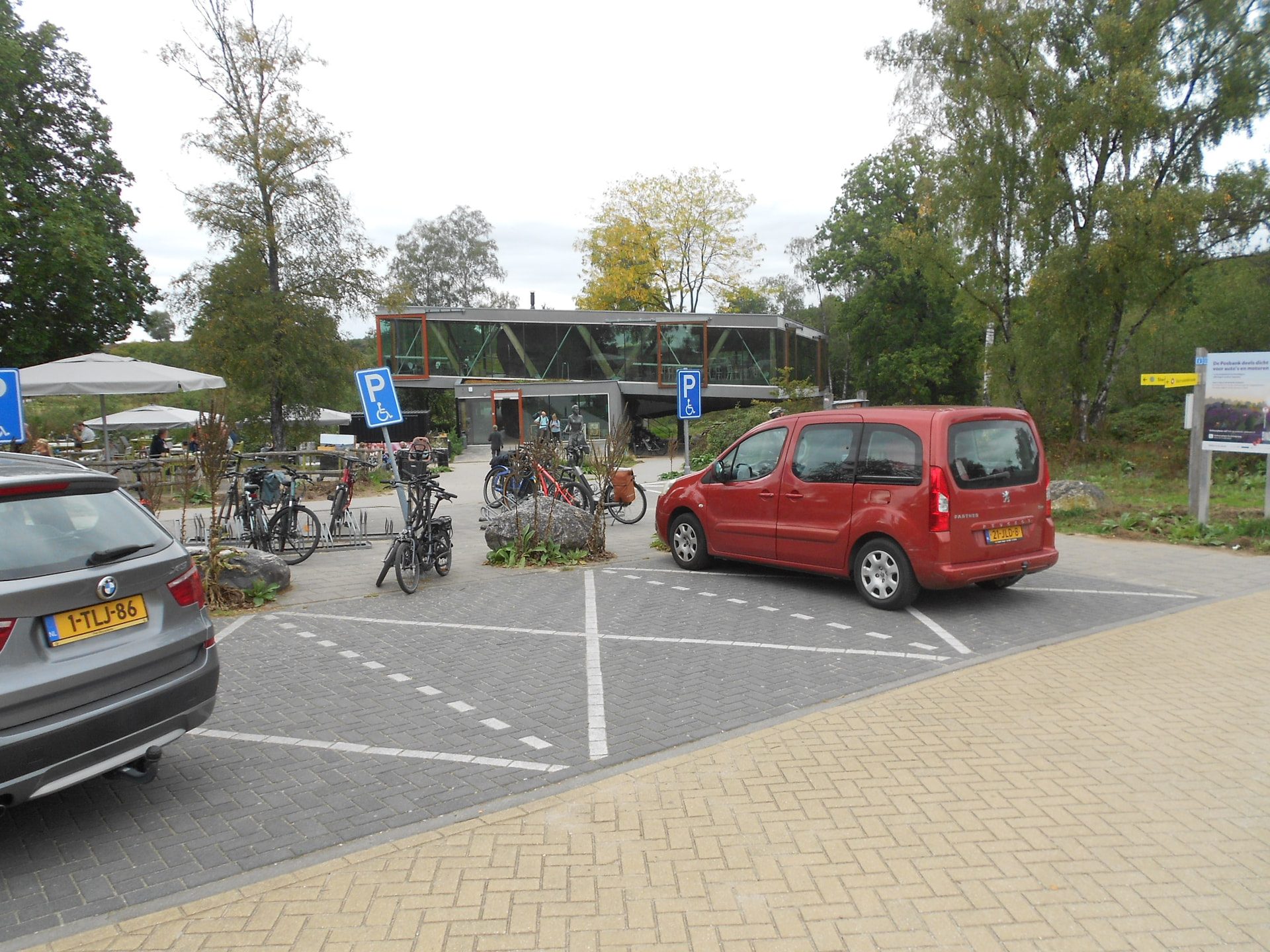
Above: Start at the Pavillion de Postbank (6691JM Rheden)
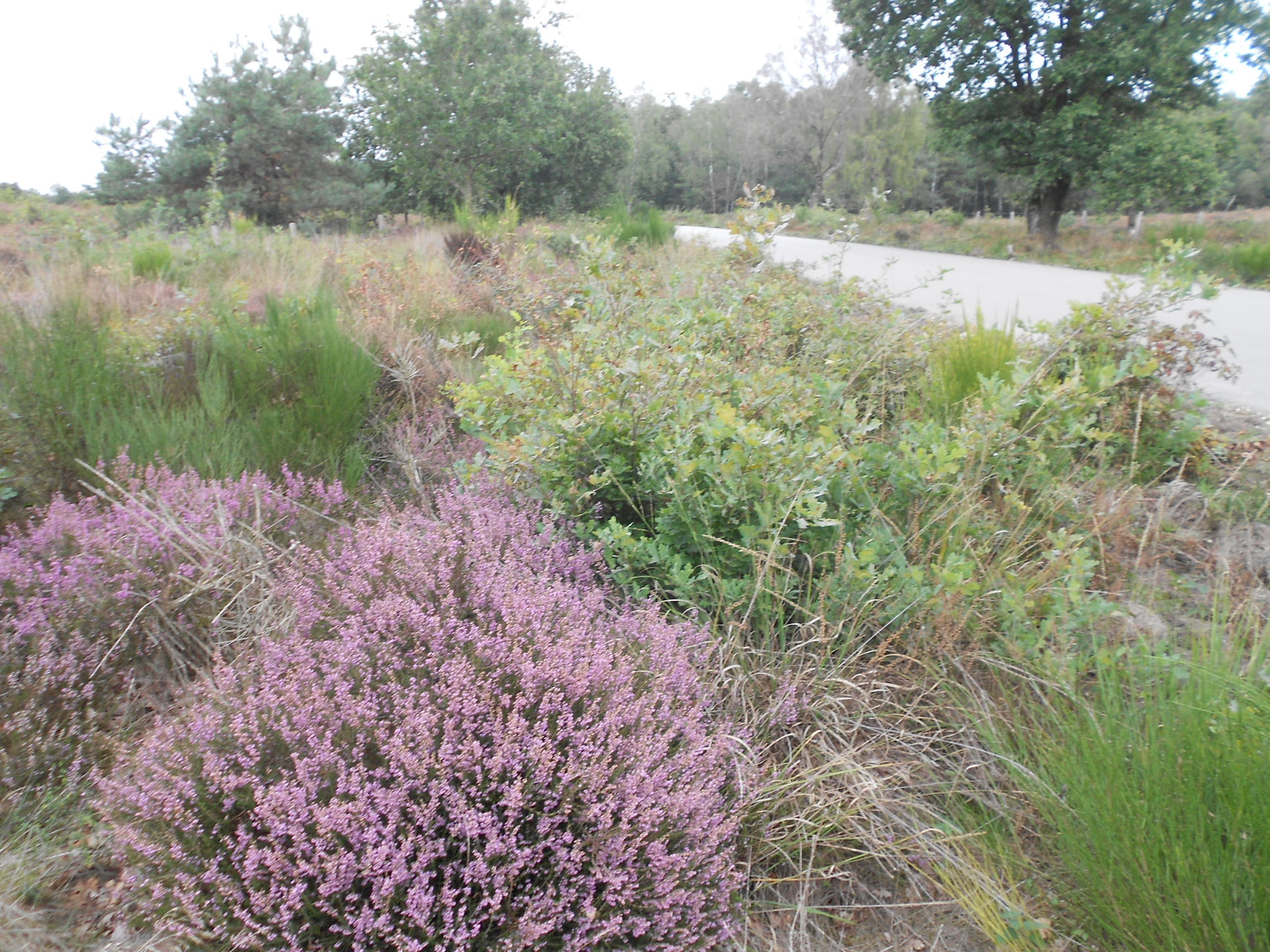
Above: Heather beside the initial road section
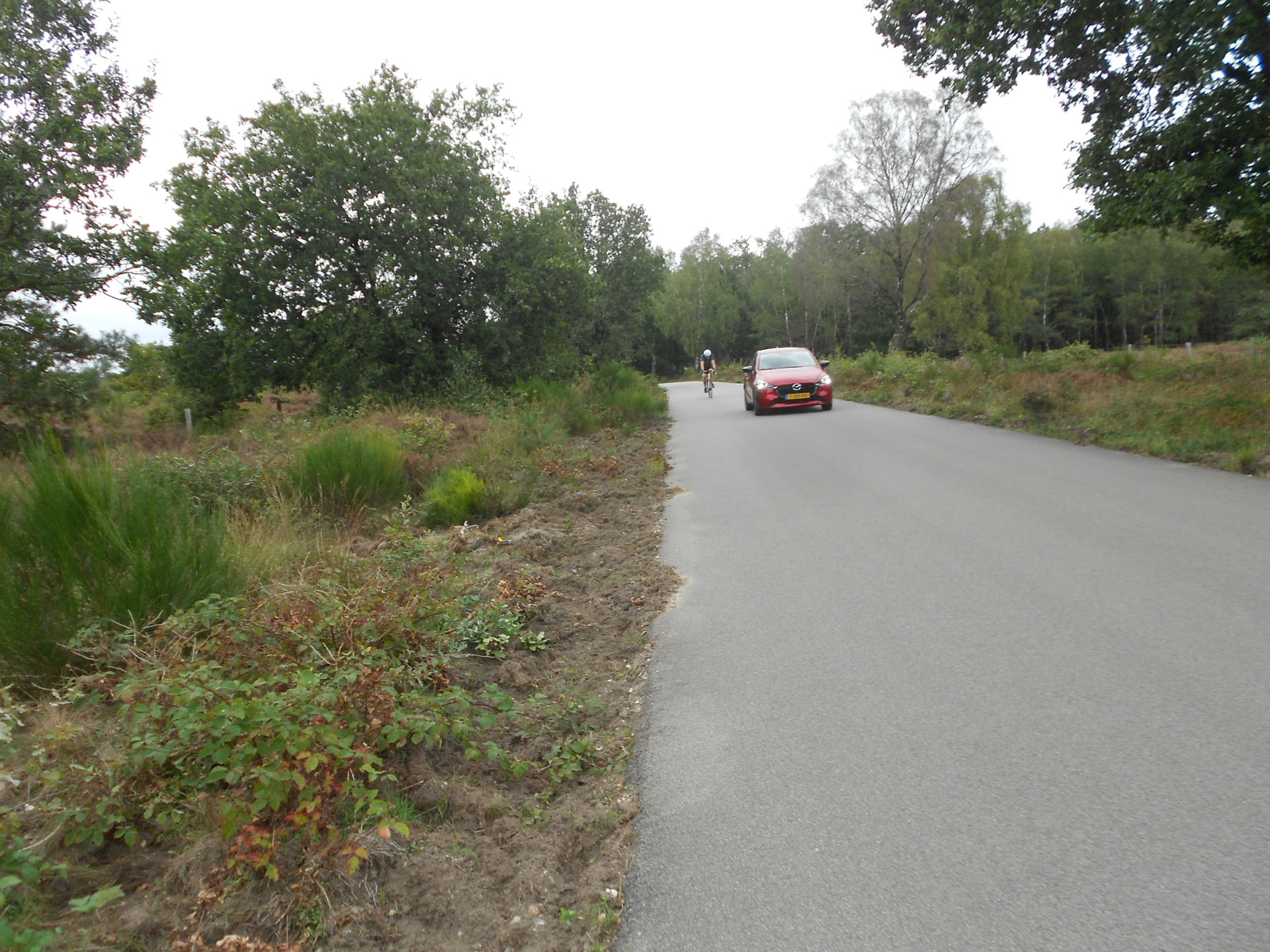
Above: The sides of the roads are extensively dug up by Wild Boar presumably looking for food
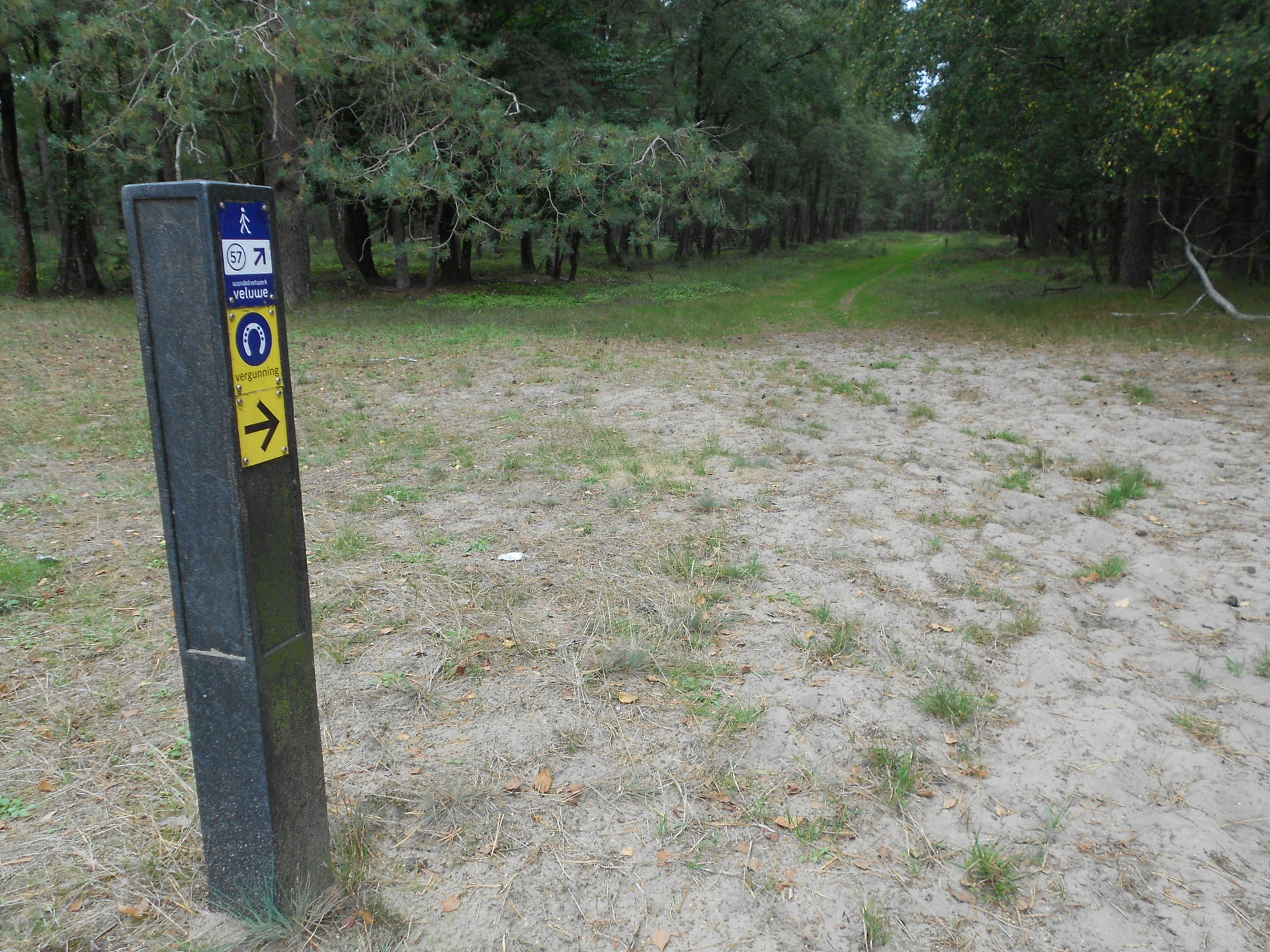
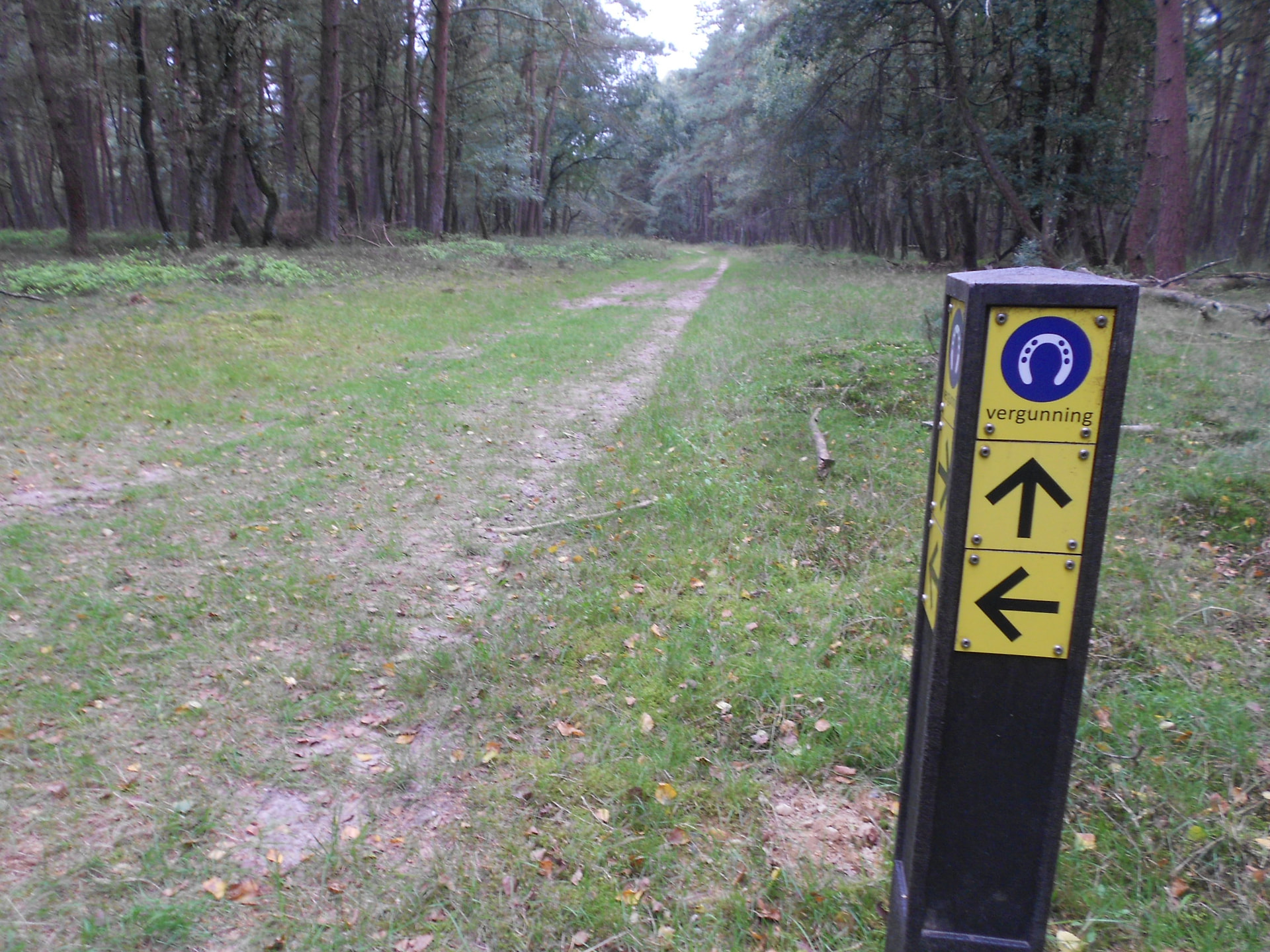
Above: Marker posts along the way
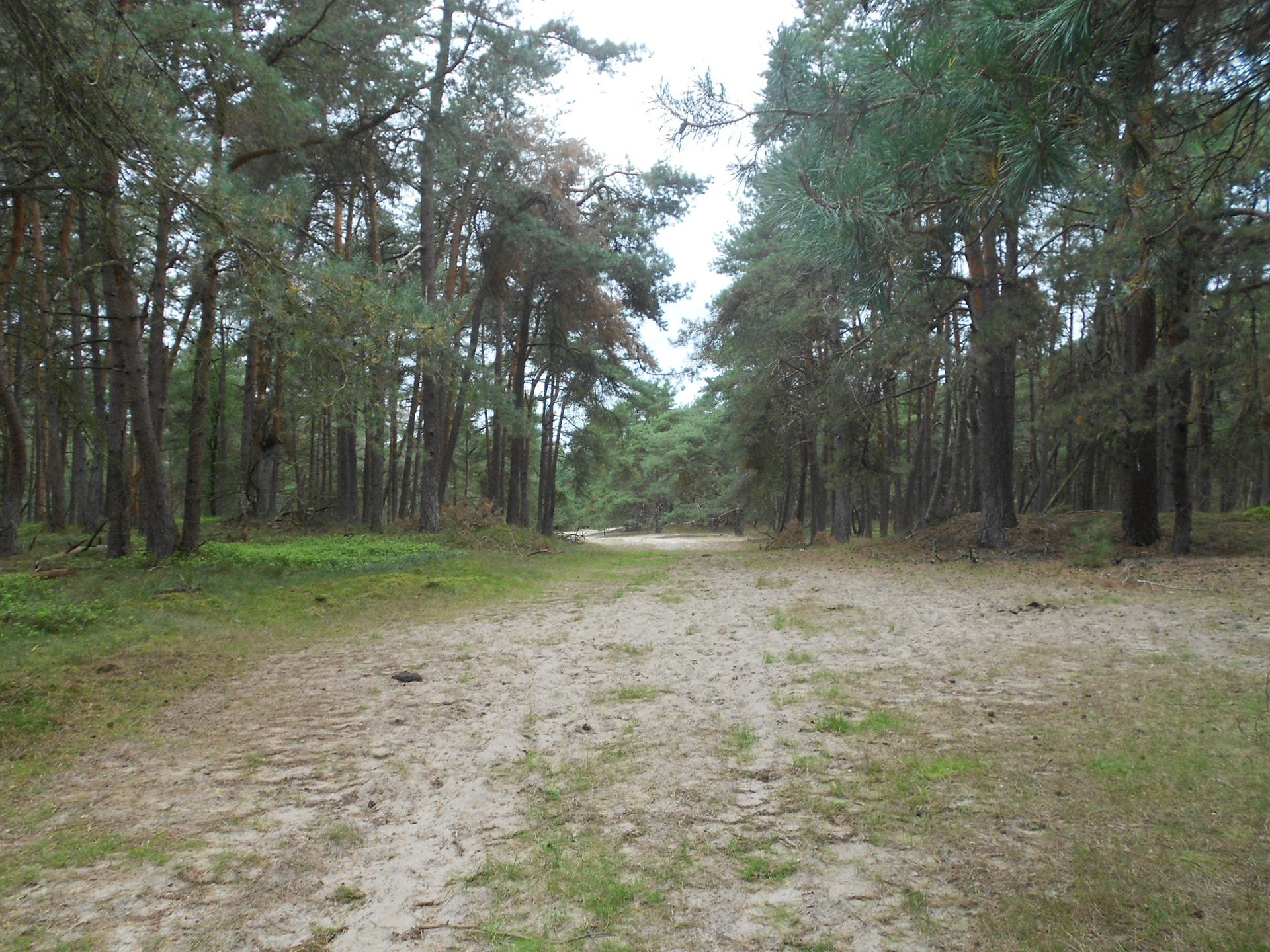
Above: Almost at the summit turn-off
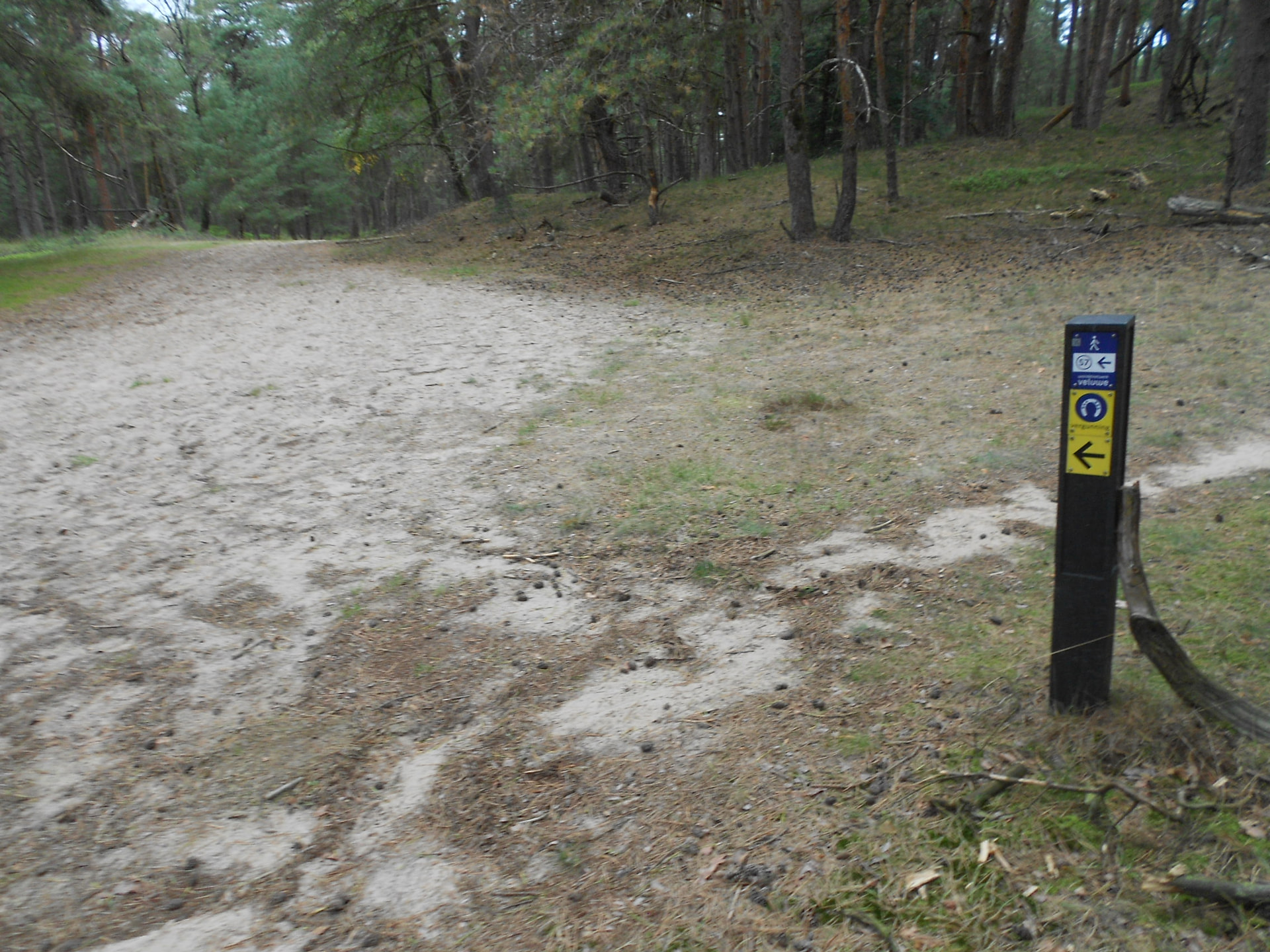
Above: Turn right on the short path to the summit
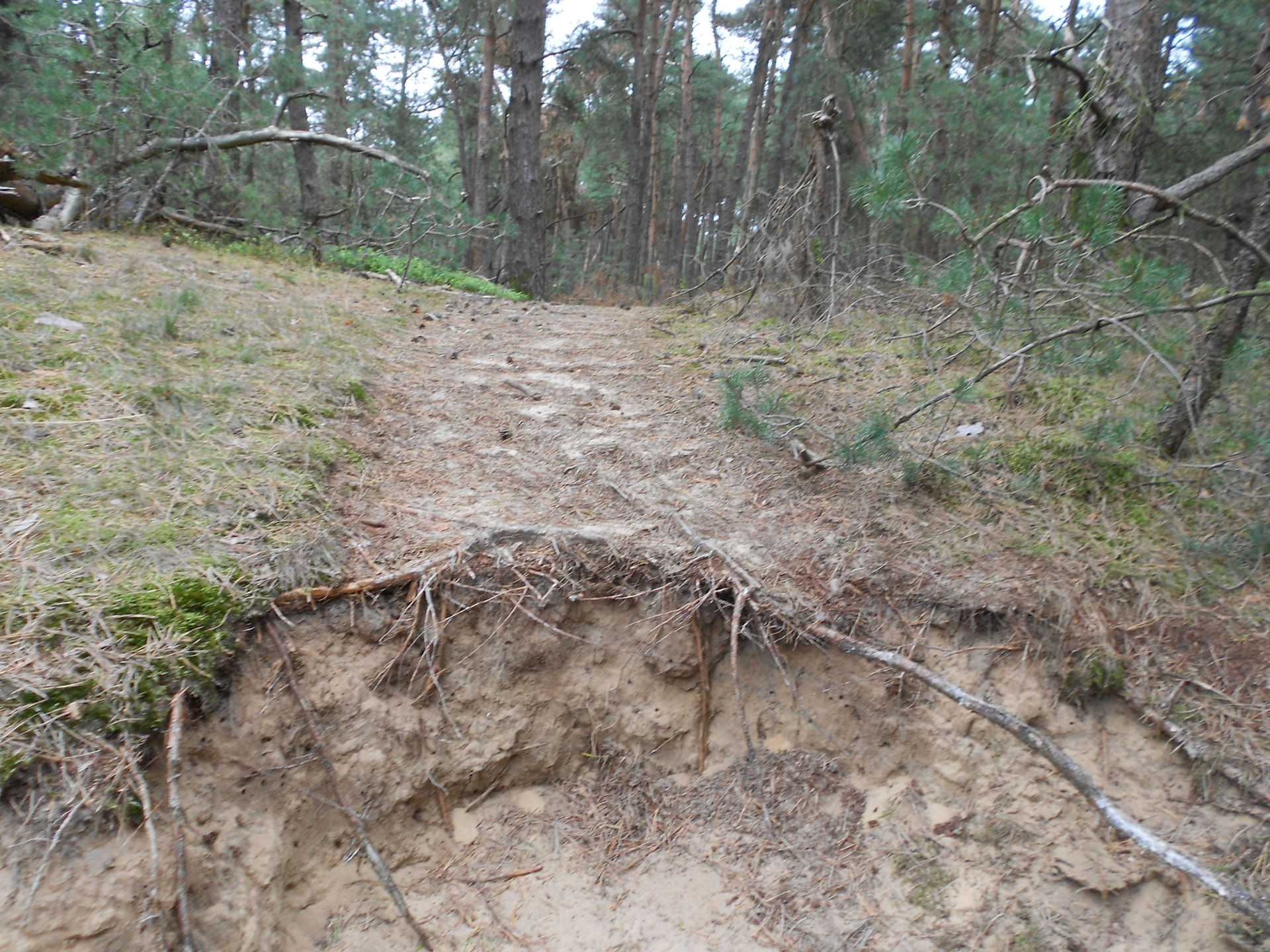
Above: A few metres to go
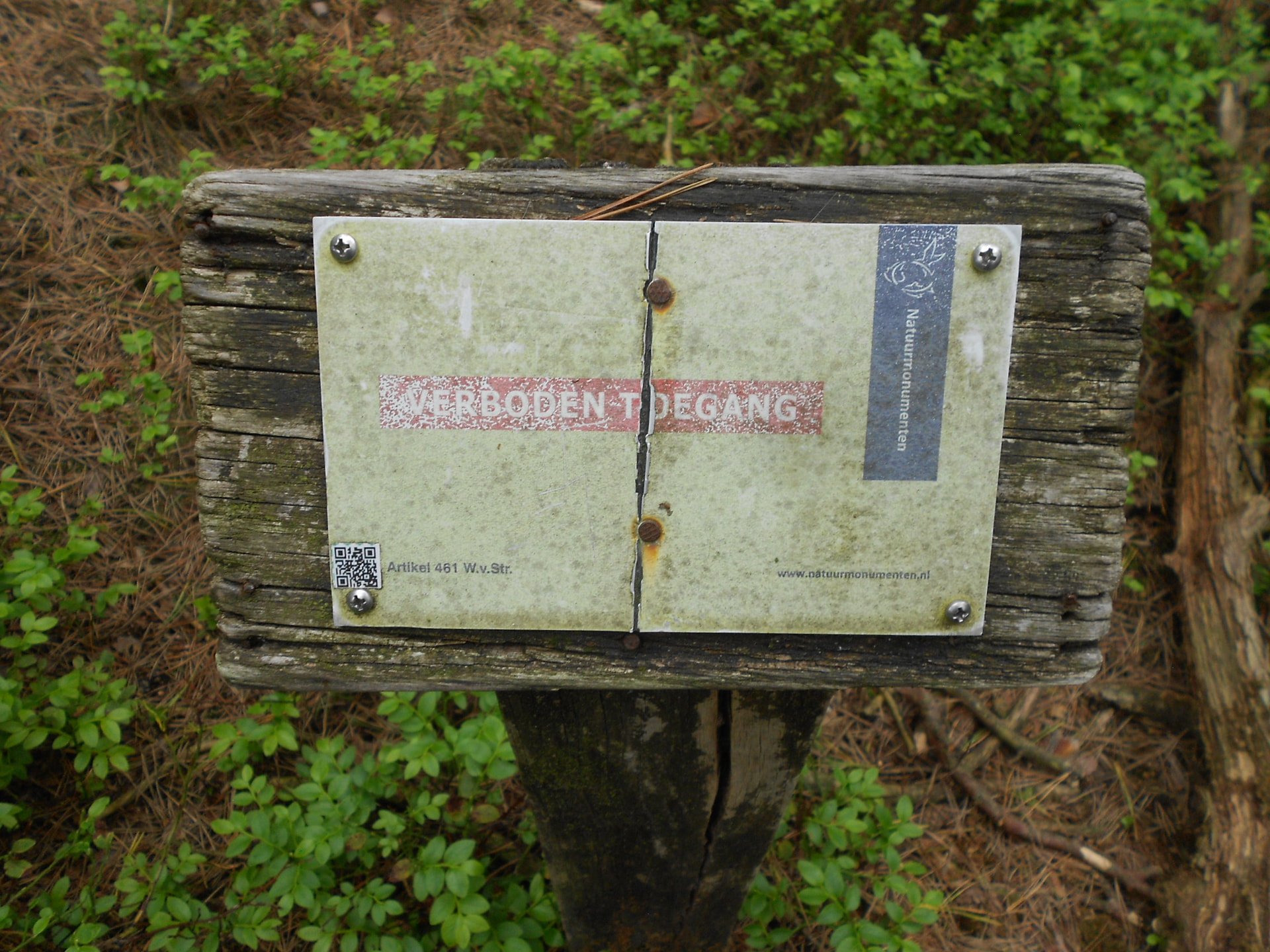
Above: One route off the summit is forbidden
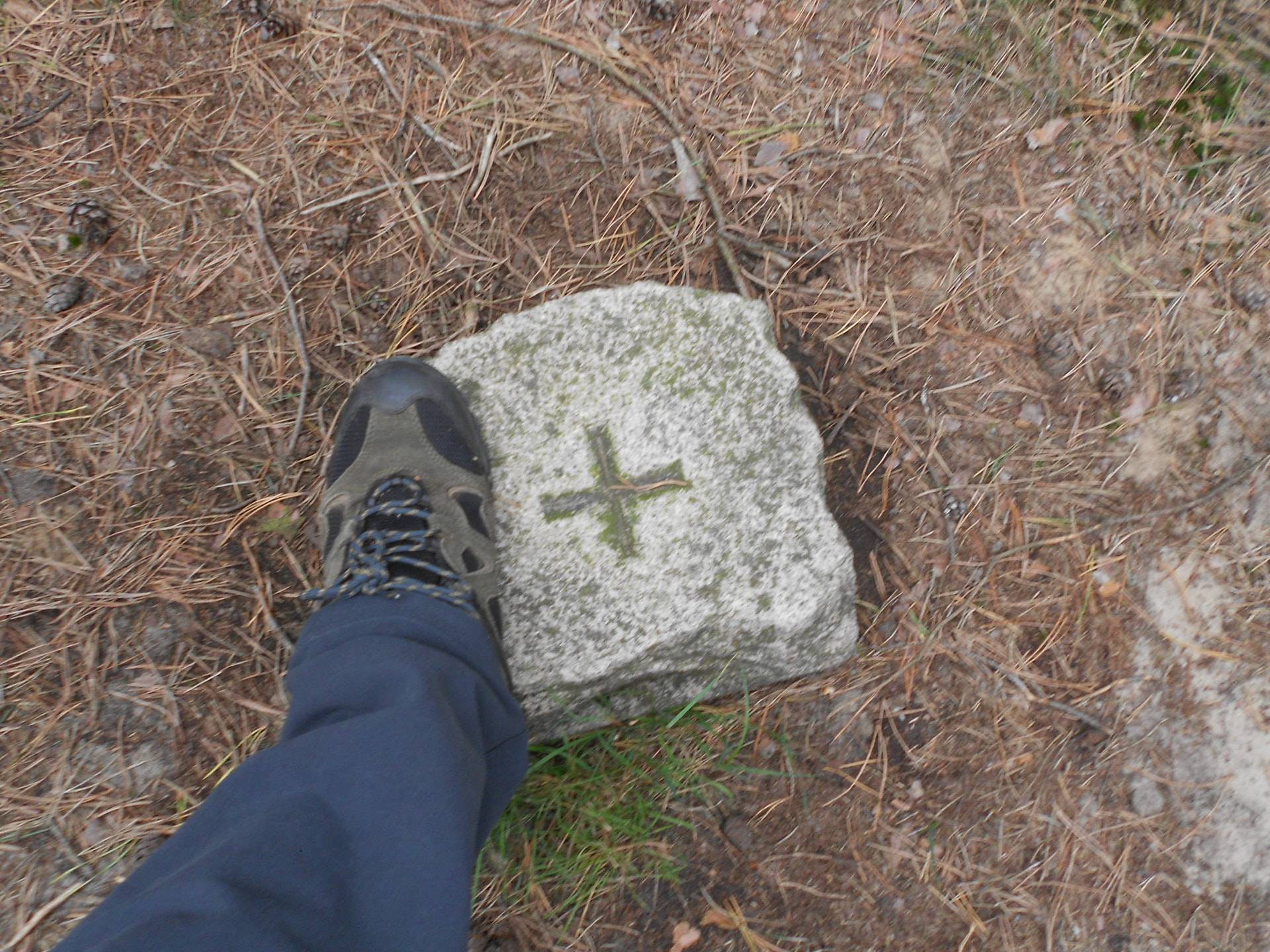
Above: The summit marker. Discrete and understated. Boots not required for this SOTA.
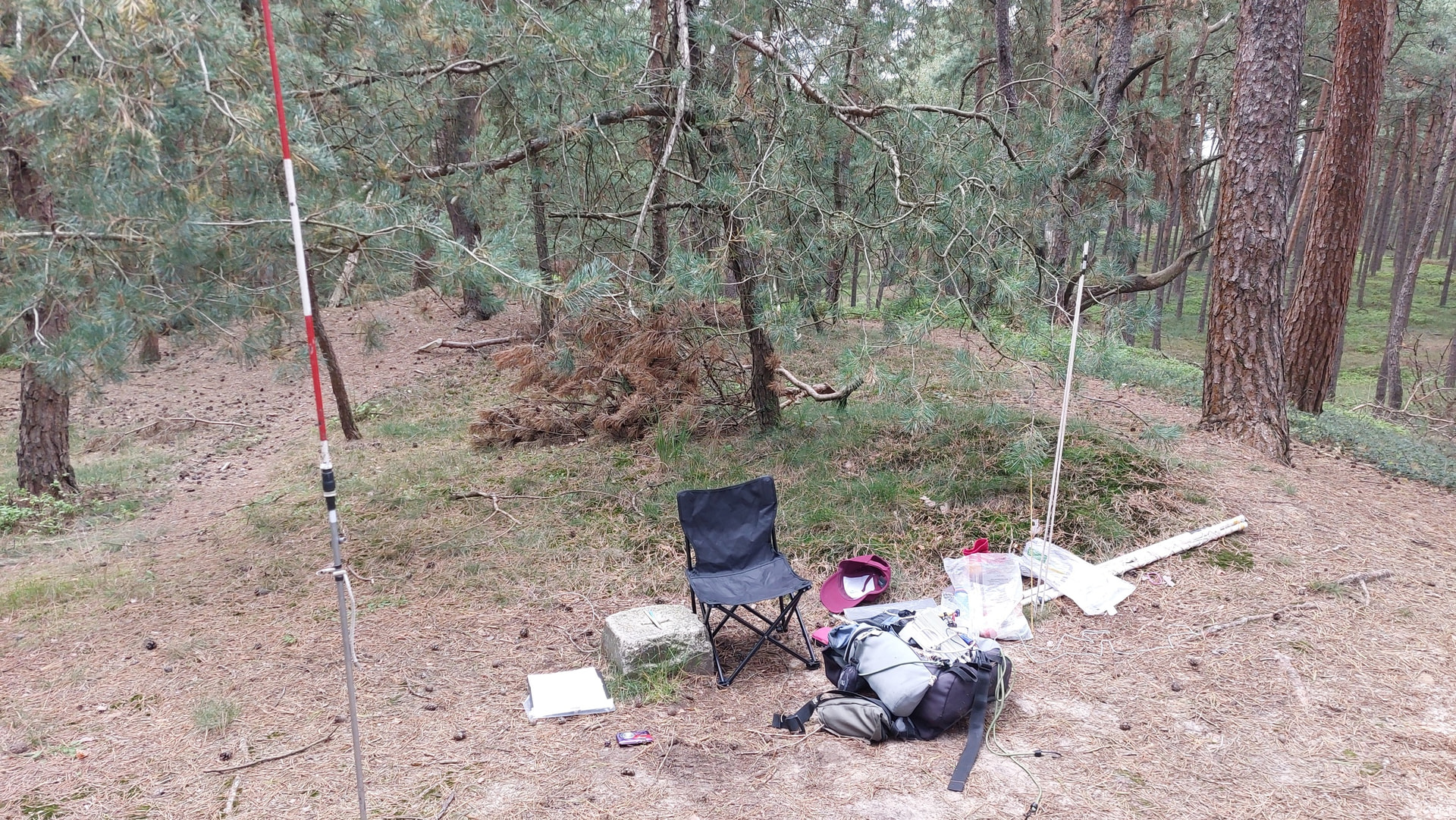
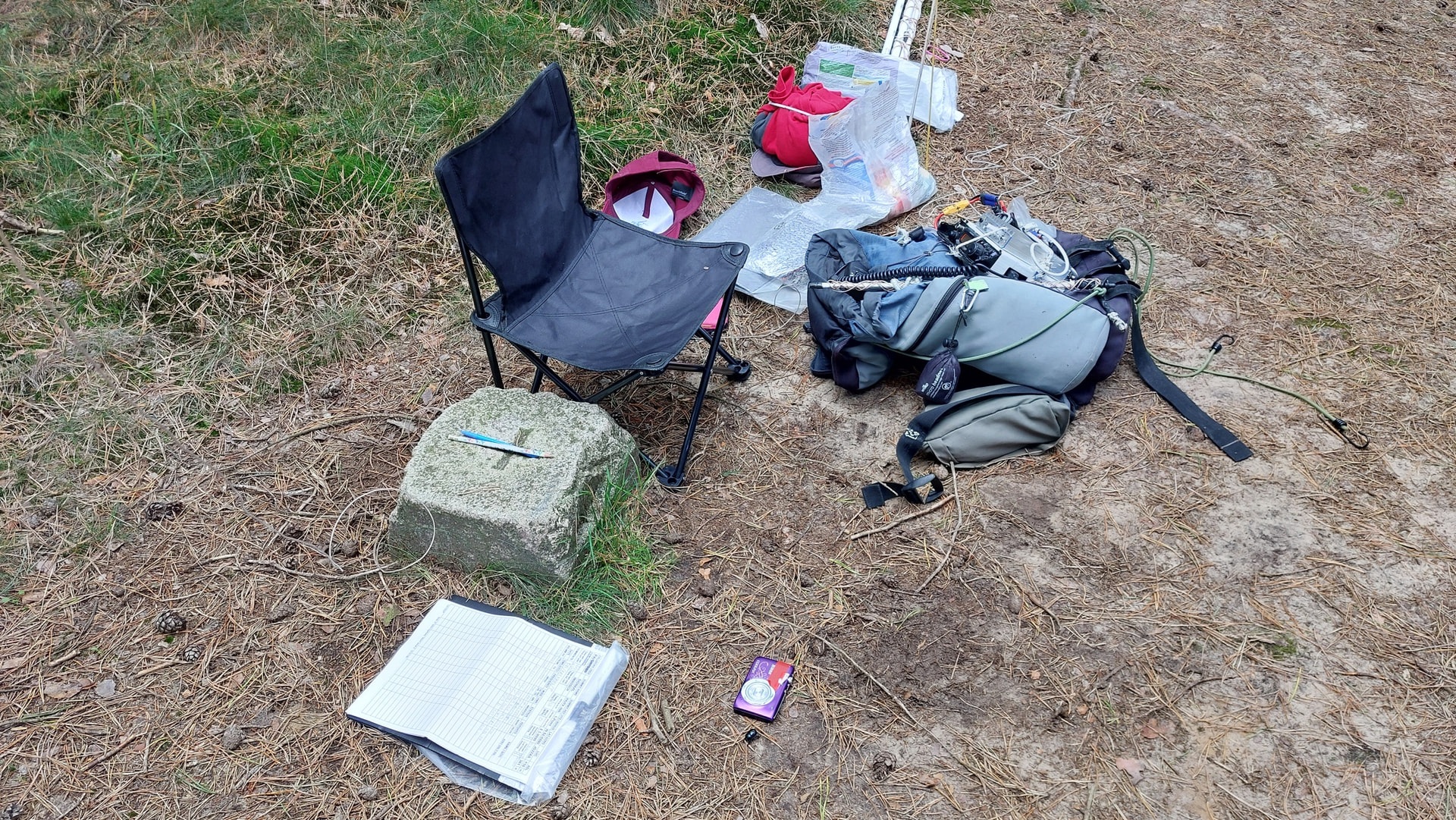
Above: A comfortable summit to work from
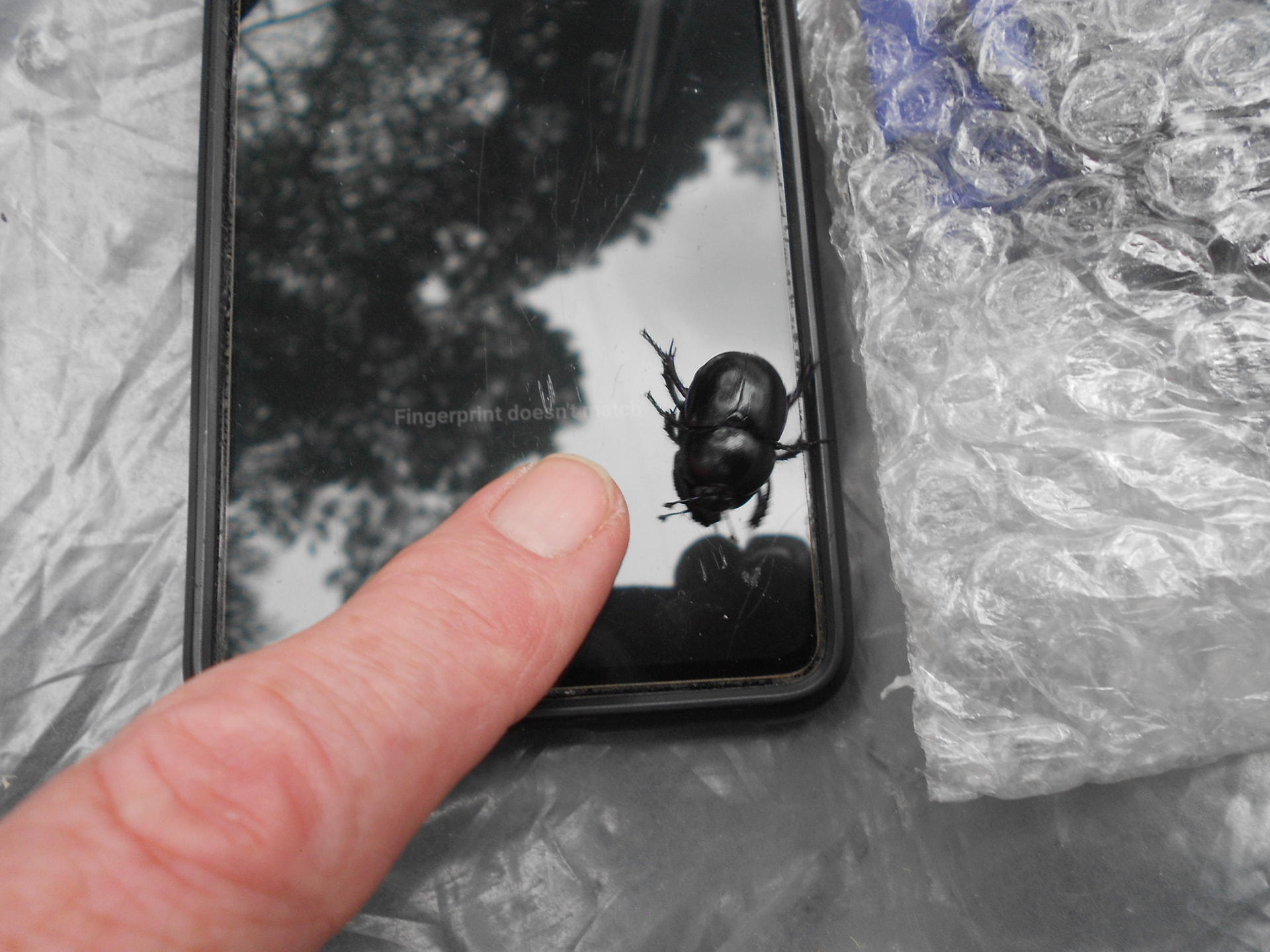
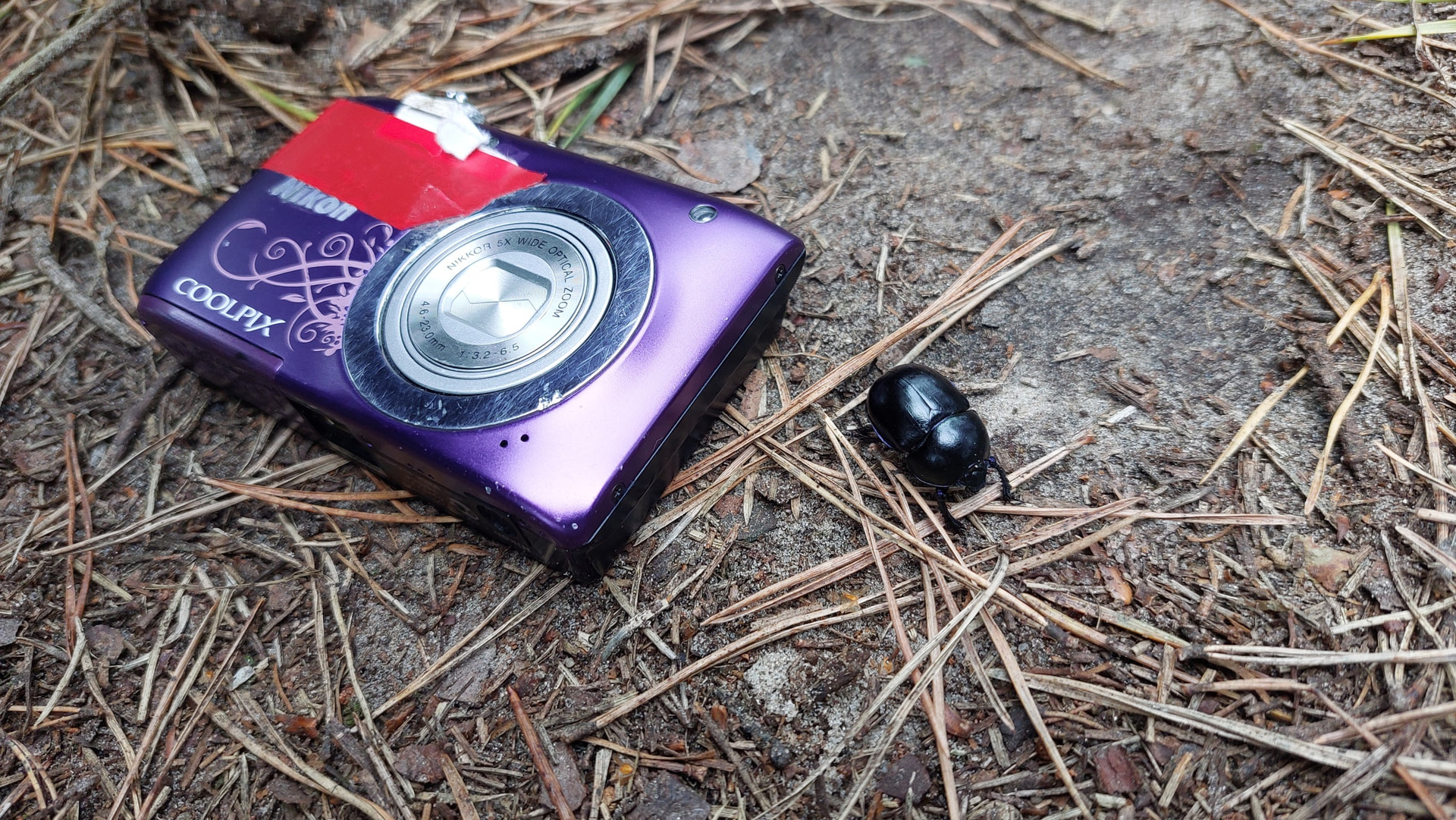
Above: My only visitor of the afternoon; for some reason attracted to my phone. My colour vision is poor but seemed like lovely colours underneath. Removed him to a place of safety.

Above: USA & Japan on 15m-CW
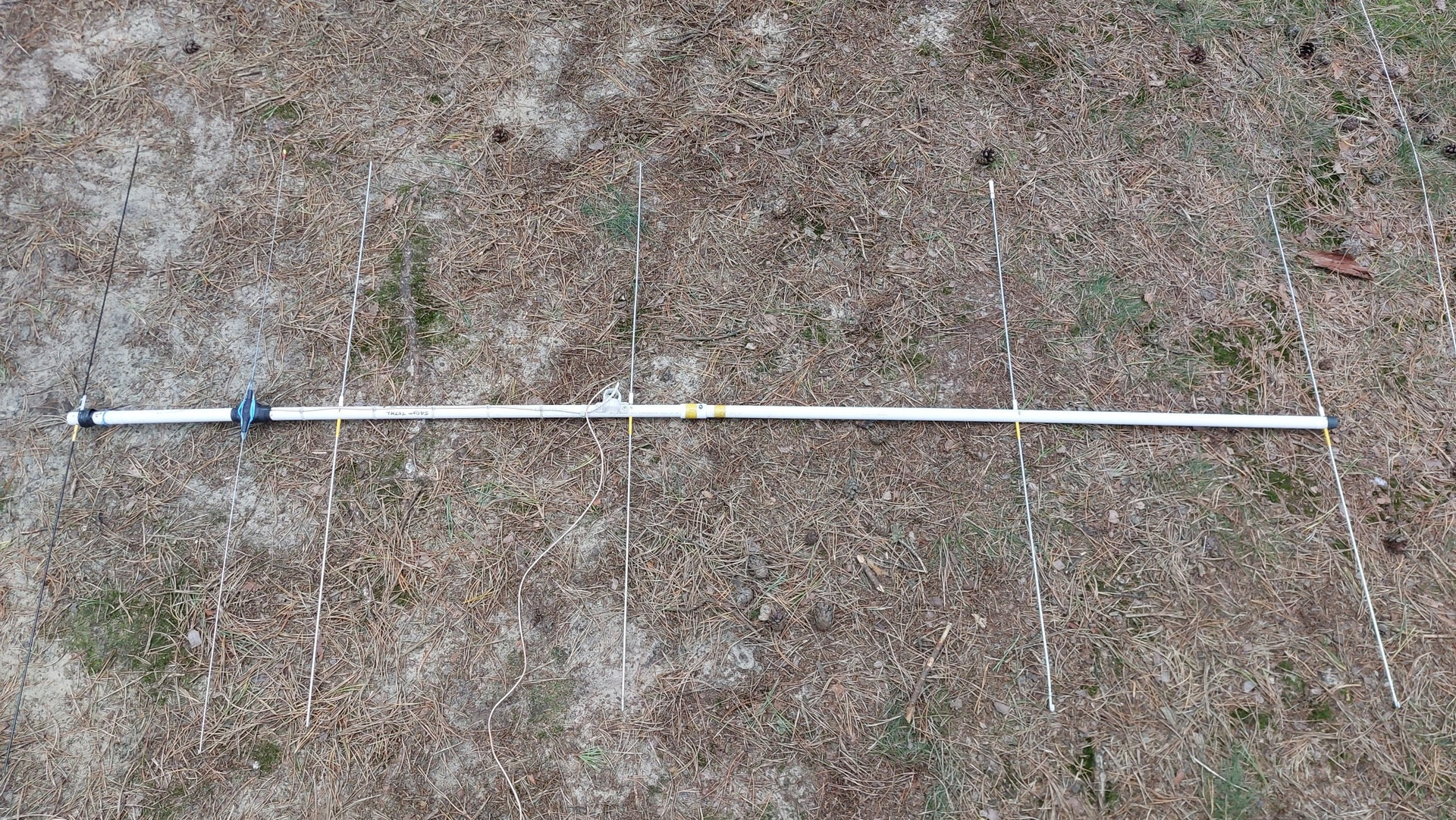
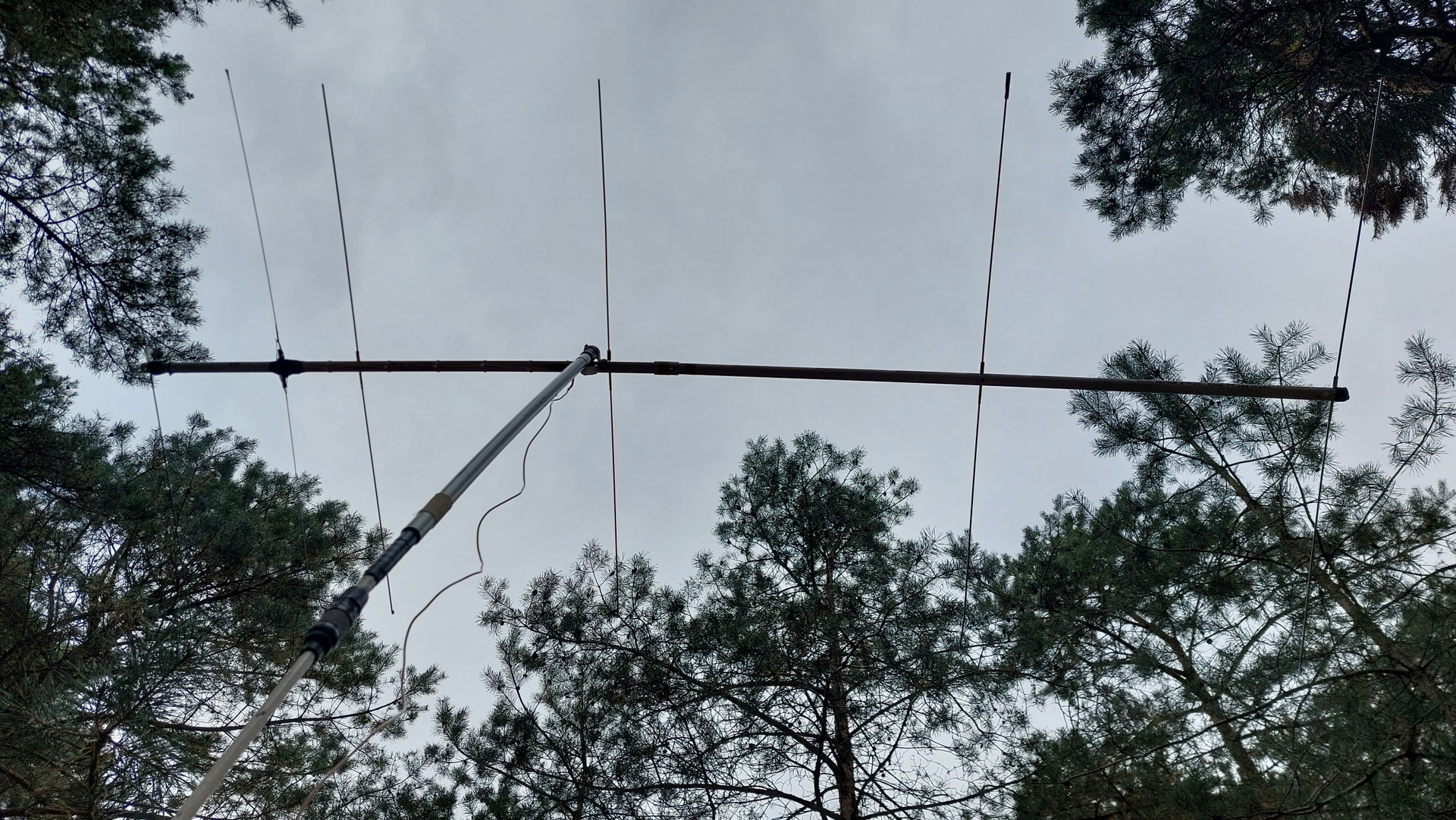
Above: The home-brew 6-ele Yagi for 2m-SSB (horizontal)
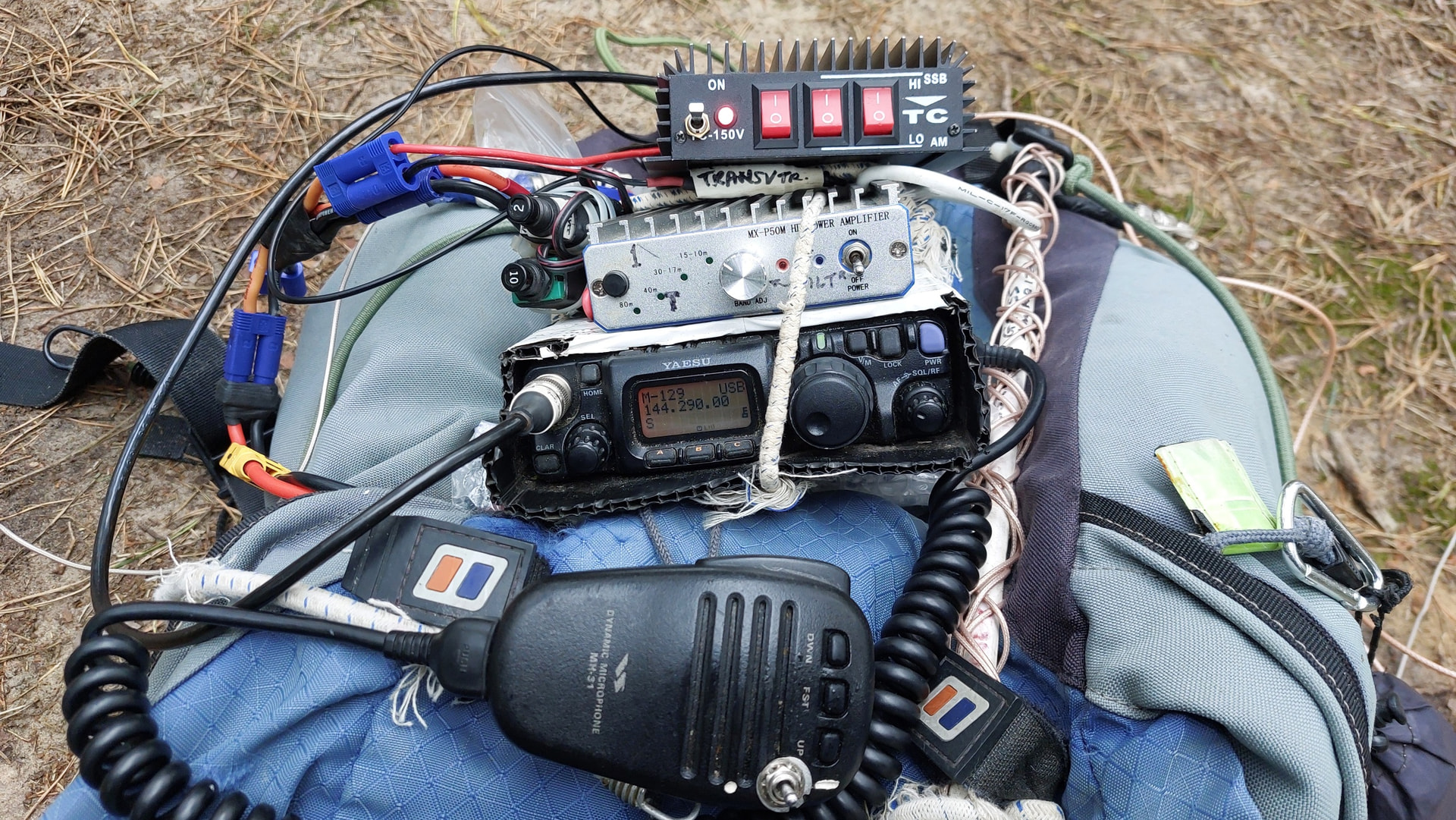
Above: Despite my best efforts over an extended period with 50W on all beam headings, NIL on 2m-SSB. Needs more up-front advertising next time.
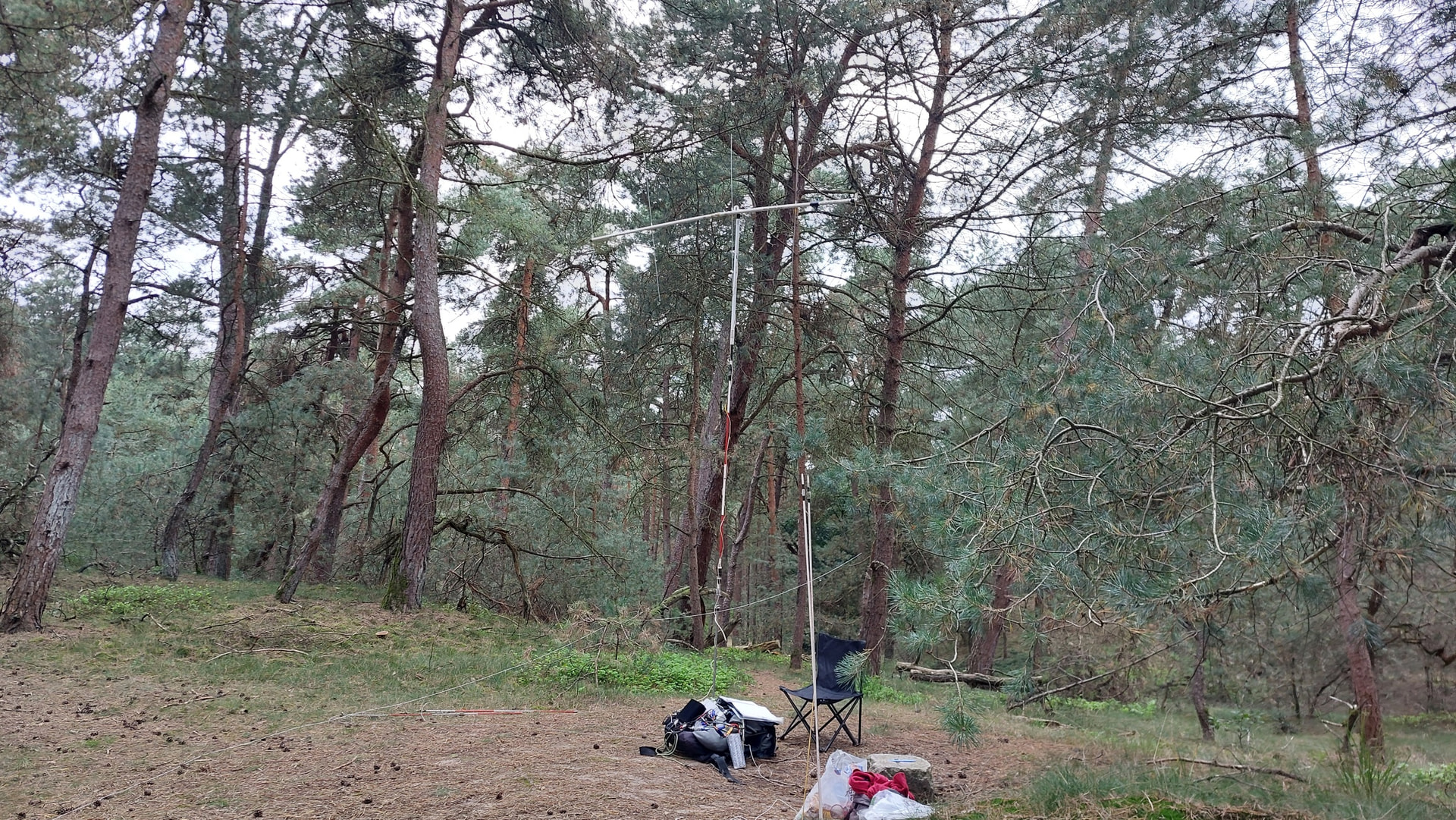
Above: With the beam turned vertical, it was much the same story for FM but I did log Hans PA0SWW in nearby Arnhem. Thanks Hans, you saved my VHF day!
Hope to be back next year for some more PA fun.
