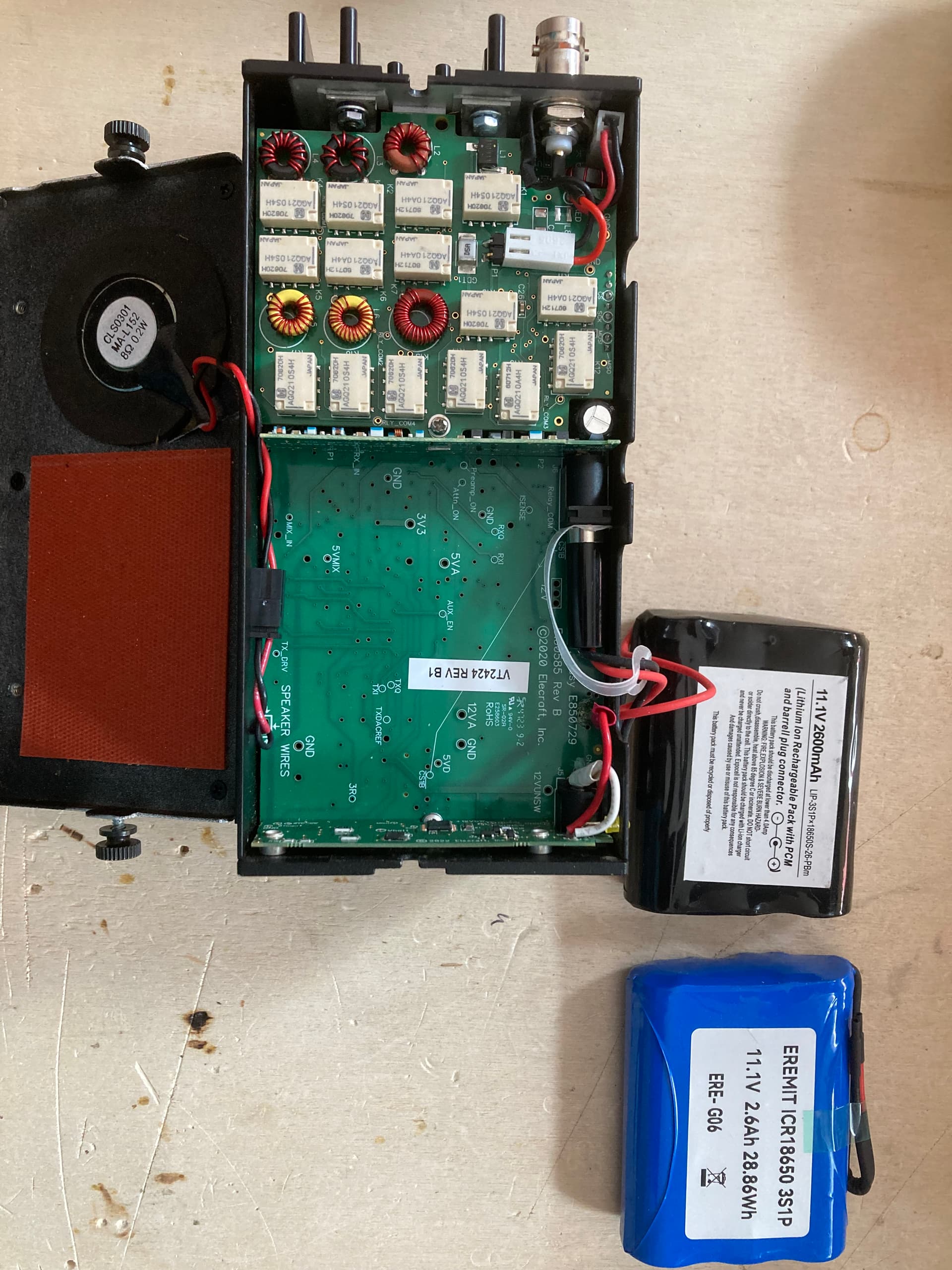
My KX2’s battery is weakening… so I started looking for a replacement.
Eremit has a battery of equivalent quality for a fairly reasonable price.
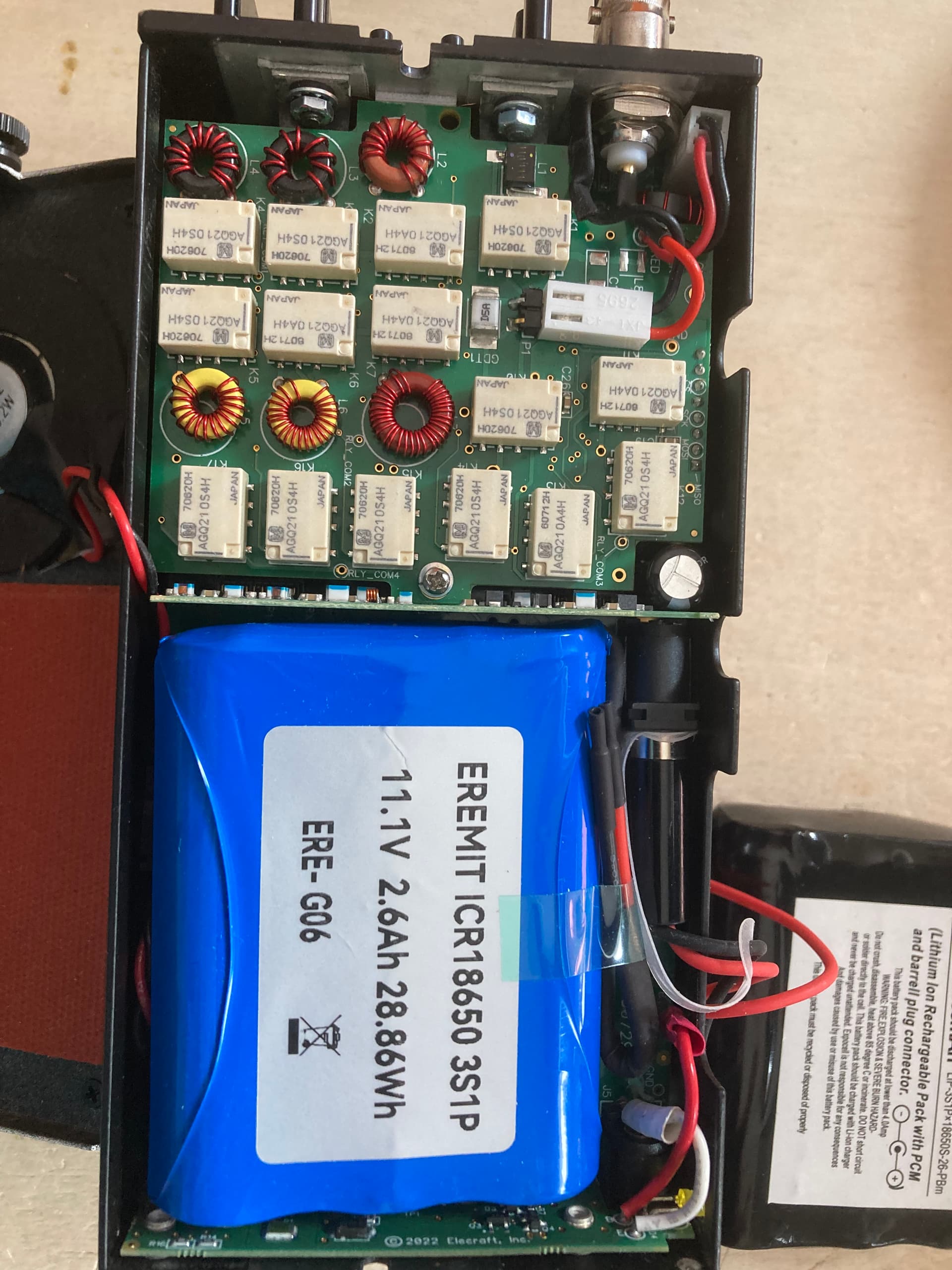
Unfortunately, there are always tolerances in dimensions… and even if a supplier publishes dimensions, they don’t necessarily have to be accurate when it comes to millimeters.
I knew that the Eremit battery would fit in a KX2… but I wasn’t sure if it would still fit with the charging option (KXIBC2) installed in the KX2. This reduces the size of the battery slot.
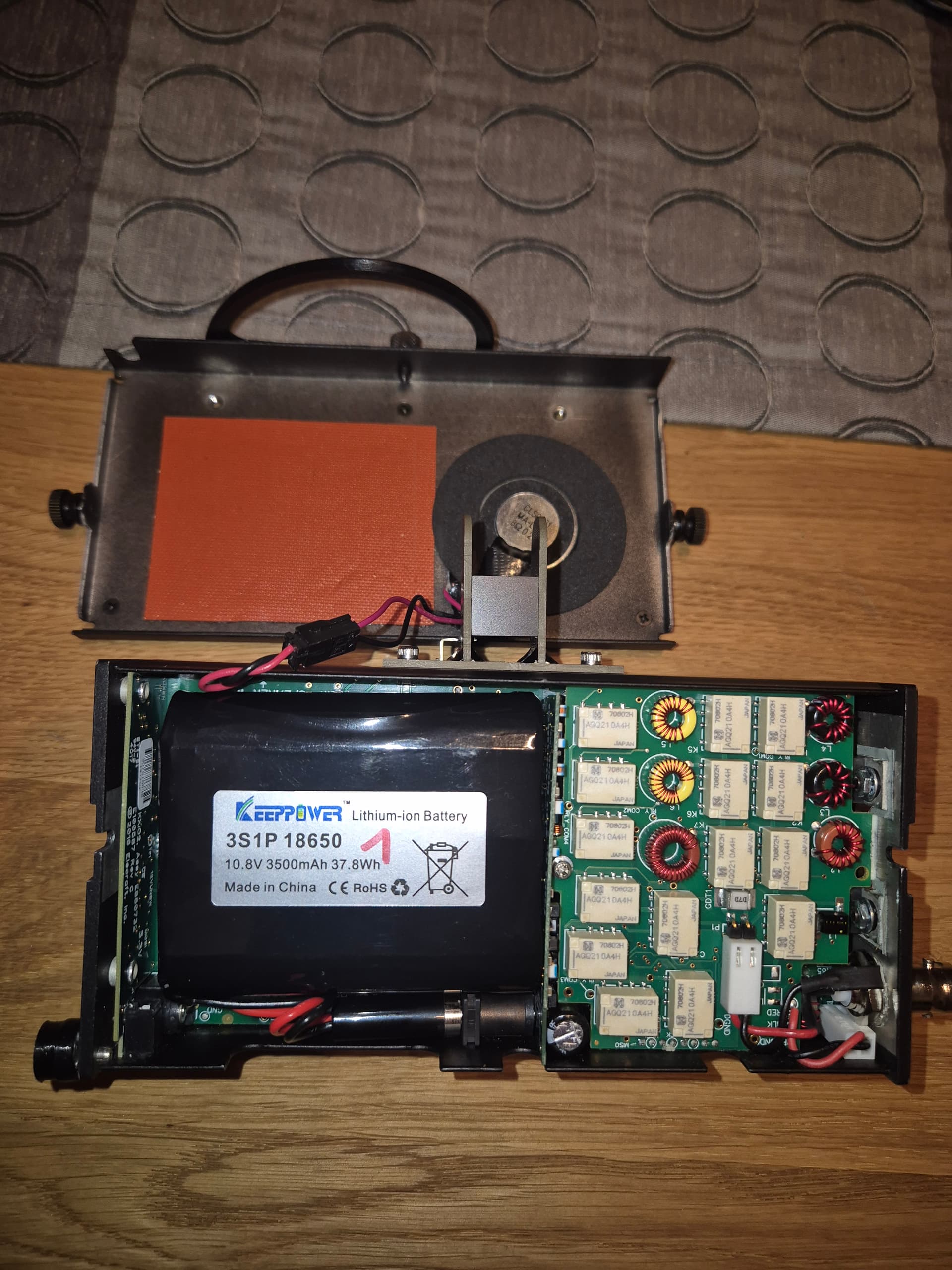
I recently got batteries from Keeppower with 3500 mAh for my kx2, kx3 and kh1. Fits perfect in all radios an i hope that the operating time will be extended a bit.
Since the availability of NiCd chemistry, there has been technological and, above all, price competition among suppliers with regard to battery capacity.
I’ve never questioned this from a scientific perspective or even tested it. My gut feeling always told me it could be just, or almost just, a brilliant marketing strategy (simply by changing the test conditions).
Today, you can read here and there from vendors that with today’s most powerful Li-ion battery, you can perform up to three OTA activations daily for a week – which isn’t exactly meaningful without specifying the transmit power, operating mode, ambient temperature, and number of QSOs per activation.
Yes, you’re right. I also believe in true facts. Unfortunately, I can’t compare them with the original Elecraft batteries anymore, since mine are also very old and definitely no longer have their full capacity. We’ll see.
If I consider experience using HobbyKing and Eremit supplied 4000mAh LiFePo cells and my KX2 the capacity claimed and what I experience fits.
KX2 TX consumption ~= 2A KX2 RX ~= 200mA
SOTA activations have a high TX to RX duty cycle, lots of CQing etc. 55% is not unreasonable.
From a W1HKJ webpage he suggests that for CW, the duty cycle of on to off is about 44%.
CW has a higher duty cycle than SSB so that will be worst case.
So a 1.5hour activation (typical for me) I would use (rounded up)
TX 55% x 90min = 50min and 44% carrier duty cycle = 22mins = 22/60 * 2A = 733mAh used
RX 45% x 90min = 41min and 100% duty cycle = 41mins = 41/60 *0.15A = 110mAh used
A 1.5 hour activation will use 843mAh. I know that my 4000mAh packs are good for at least 4x 1.5hr activations before recharging so these “guestimates” seem to fit experience with those packs. It’s reasonable to assume the stated capacity is in the region of what can be used.
Victor GI4ONL has said he has achieved 10 activations in a day on the KXBT2 pack. He is doing much shorter activations…30mins +/- and taking my figures of 843mAh for 1.5hr gives 281mAh for 30mins. 10 activations would 2810mAh and the KXBT2 claims 2650mAh capacity. So it’s feasible if some of the activations are shorter.
It is possible to buy cells where the stated capacity matches the real world capacity. But this only appears to be the case for full priced branded cells bought through reputable dealers. Otherwise you are at the whims of how honest the vendor is and many are not.
You can find LiPo power packs where the series voltage of the cells gets multiplied by the paralel capacity of the cells to give ridiculous claimed capacity.
And there’s blatant lies. Some years back the battery on my Wilefox Swift phone was failing. A replacement 2500mAh pack was bought via eBay and it had limited life. Strong complaints resulted in a full refund without me needing to send it back. I removed the stick on Wileyfox branding and 2500mAh label to find a 1500mAh cell underneath.
Being cynical I’d suspect many of the hi capacity 18650 cells to be dubious unless I could see the testing protocol to justify the claimed capacity.
Based on my Eremit LiFePo experience, it is nicely made and performs exactly as stated. It’s what many of us expect buying from Eremit as there are many SOTA people using their batteries, very high quality products and a good price. I doubt you’ll have any issues with it. Just a shame it’s so hard to get them in the UK unless you visit Germany.
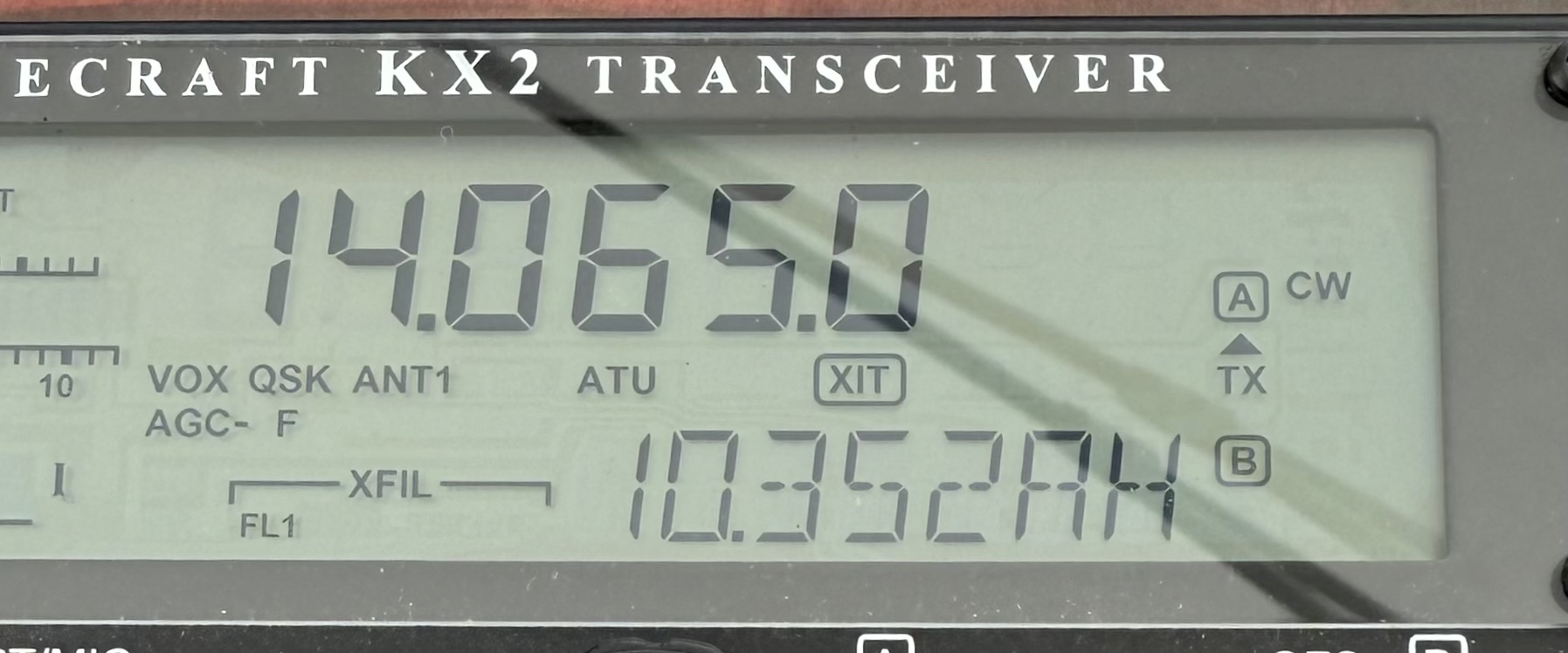
The nice thing about the KX2 is that we don’t have to guesstimate power consumption, it has a built-in battery charge meter that is saved in non-volatile memory and can be reset between charges.
A feature that would be very useful on most portable radios, especially with battery chemistries with a flat discharge curve.
Yes Carlo but I don’t have it on other radios and so I don’t use it. Mine will probably show the AH for the last 2+ years use. Showing the calculations is going to help people who don’t have a KX2 and aren’t sure how to work it out get some rough numbers so they can see if their battery is performing as expected.
Our descendants will probably only be able to read about battery charging/discharging in history books, provided the development of innovative battery chemistry is successful, perhaps based on this: Hexanitrogen chemistry
Over the last two days, I’ve activated eight summits… I tested the new battery for its capacity in everyday use. After the fifth activation… after 82 QSOs… and about 2.5 hours, it reduced the KX2’s power to 5 watts.
Of course, I could have continued operation, but I used my backup battery… to stay at 10 watts.
It might be worth noting that the KX2’s internal charging module charges at abt 250mA max. which means it could take up to abt 10h for the batt to be full. Way more convenient of course and can always be charged directly and faster when taken out of the KX2.
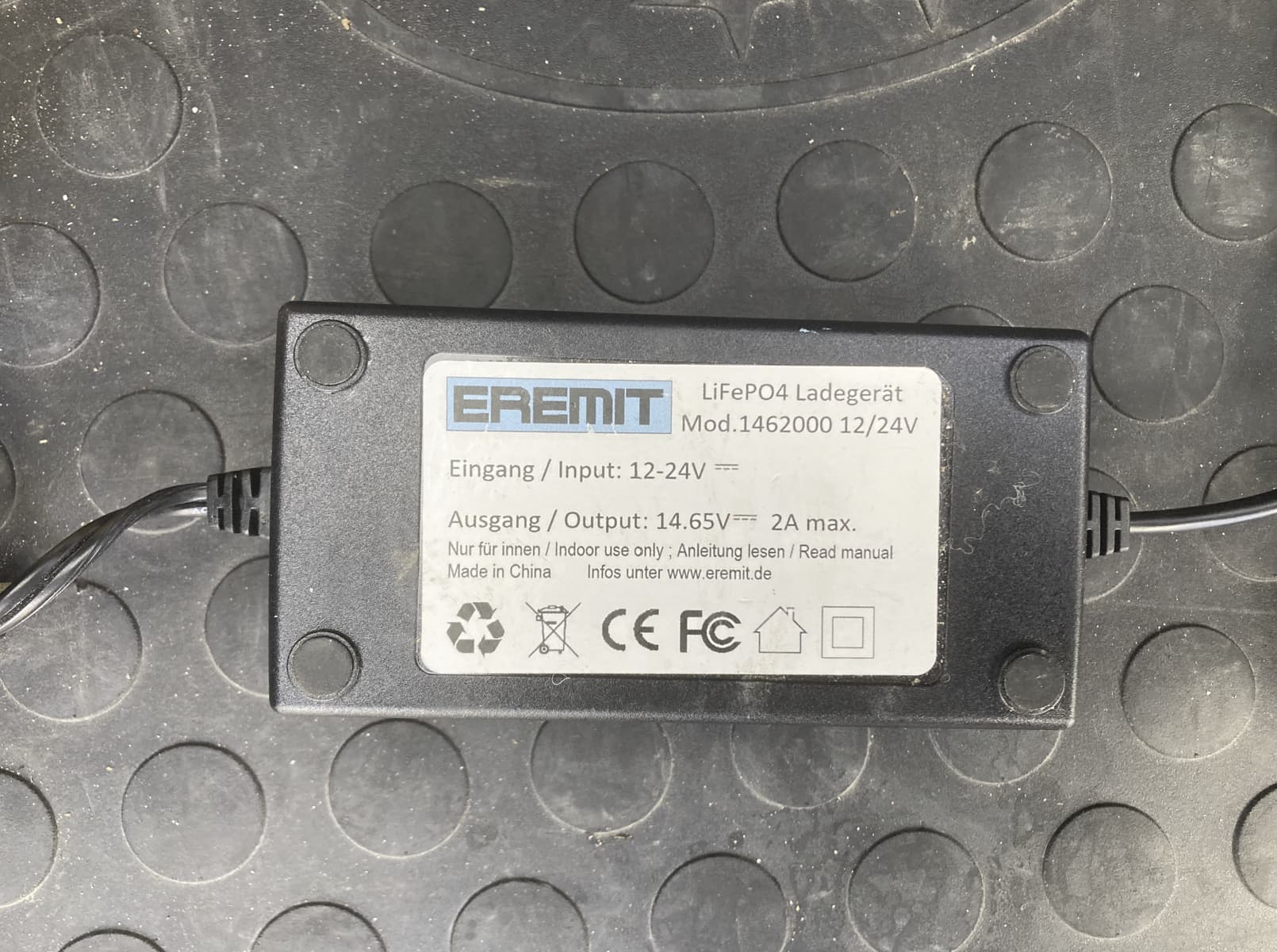
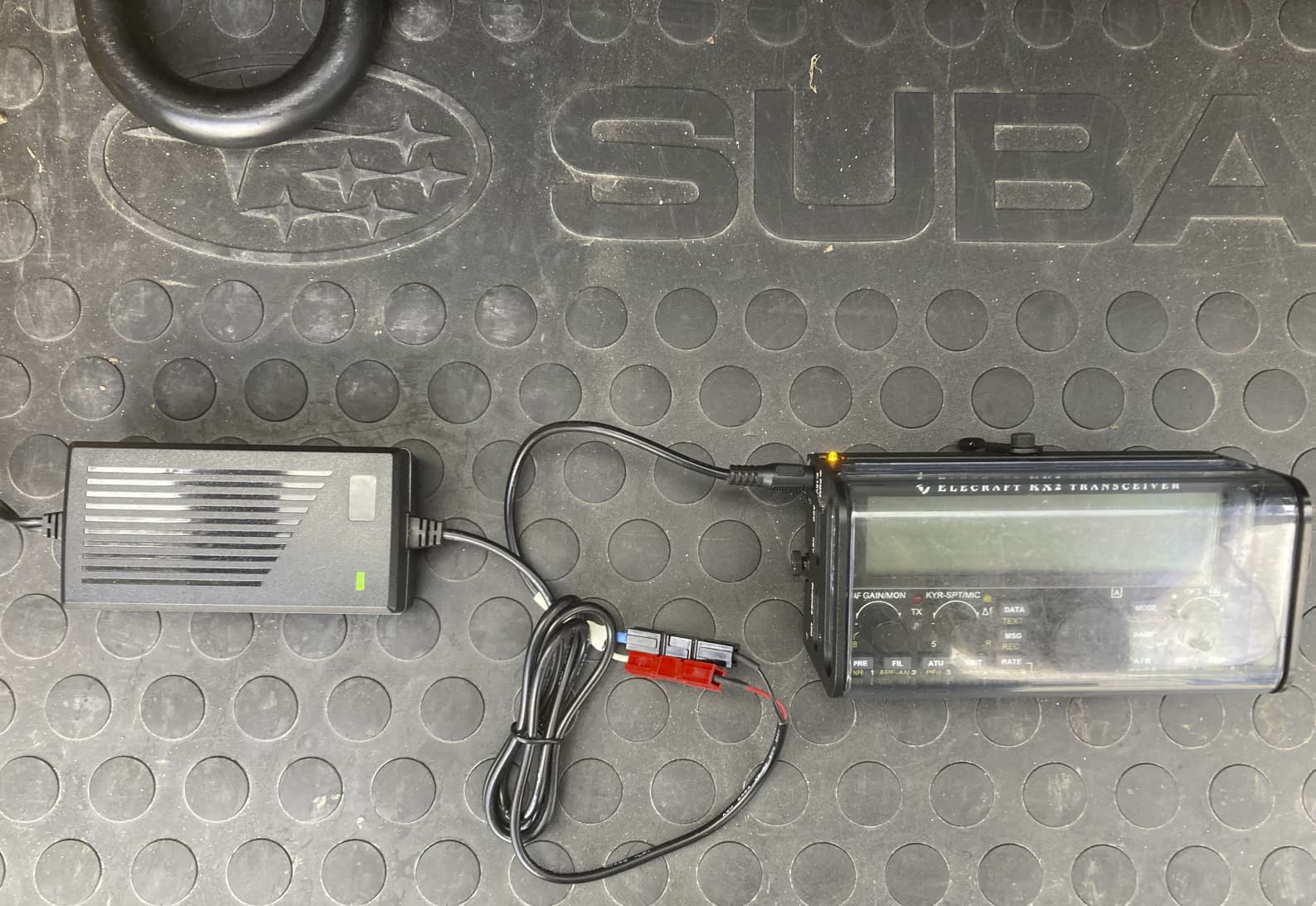
I have a few LiFePO4 batteries (and always a 2Ah battery in my KX2 bag)… and the car charger is designed for that, of course.
But it’s quite practical and convenient to use an internal battery. And if you don’t have easy access to charging (when camping?), this would be an option for backing up the battery on the way to the summit (or from summit to summit)… especially if you want to travel with a reduced weight in your backpack.
The LiFePO4 batteries have a higher charging voltage… and the charger can also be used to power the KX2.