So recently I got interested in Cubical Quad Antennas (as you just randomly do). I happened upon a riveting thriller of a book to learn more about them.
Upon opening the book for a snazzy read, I got a bit more than I bargained for.
It’s a bit long to post it all here so I put it up on my little blog (no its not a sketchy monetised link or an Ali Express affiliate and all that cobblers).
Just thought to share this little story in case it was of interest to fellow antenna and history nerds.
All About Cubical Quad Antennas by W6SAI - an excellent book. I have a 2nd edition, 3rd printing copy which I bought new in the late 1970s.
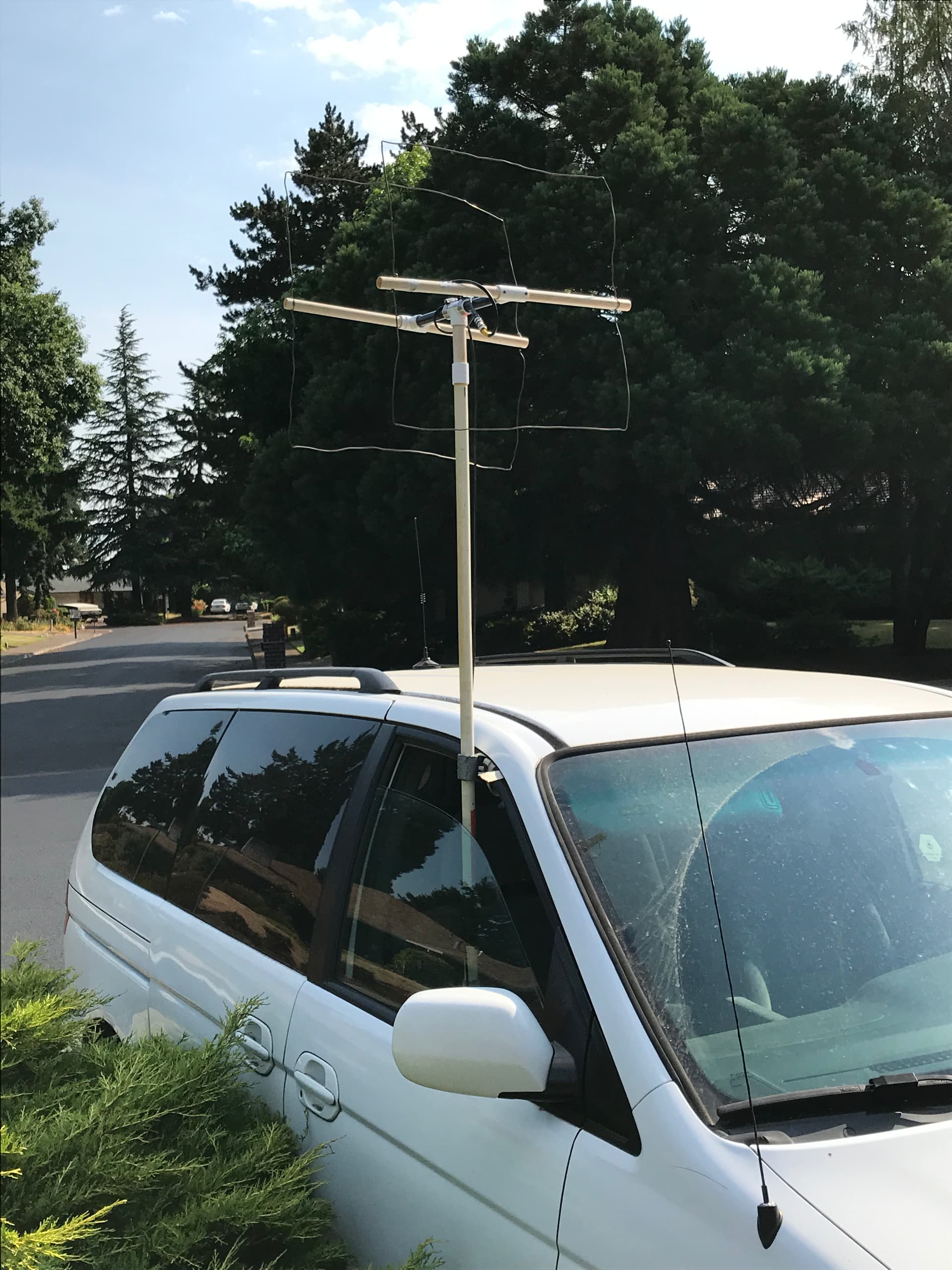
Back then, for /P work (involving trips over the Moors in an old rusty car) I had a 2-element 2m Quad (driven & reflector) fashioned from welding rods, mounted with wooden supports on an old broom handle. It used a gamma-match (with 3-30pF bee-hive trimmer) and a short length of RG-58. Tuned-up with a pal’s SWR bridge.
Worked great with my modified-for-FM Pye Cambridge which had rocks for S20, S21, S22 and the local repeater on 145.800MHz, plus a small after-market 1750Hz tone-burst.
Never under-estimate the value of ingenuity as a good substitute for a shortage of funds
73 Dave
PS A TX signal with inverter-whine is something never to be forgotten!
Also happened to stumble upon this handy calculator which might be of interest:
I quite like the idea of building a 70cm one and testing it on a repeater to see how it manages that. Or perhaps try and tune it down a bit towards the SSB and CW end of the band.
A cubical quad for 2 meters looks a bit unweildy but could be worth a try. I have a linear amplifier like what @G4AZS has (the MML 144/25 in my case) so could use it with that and a modified Quansheng.
I’ve used longer ones, but they are more difficult to rotate at full speed due to the wind drag. (The 5-element version barely survived driving a couple km down the highway, but that was before I put the broomstick inside the plastic pipe mast.).
I use the W4RNL formulas for up to 4 elements. Unfortunately, I can’t find the online calculator that implemented his formulas. (If a calculator doesn’t ask for the wire diameter, don’t trust the results.)
Construction article is here:
The elements unscrew from the boom so the whole antenna can lay flat, although that is still an inconvenient 2-dimensional package to fit in a backpack.
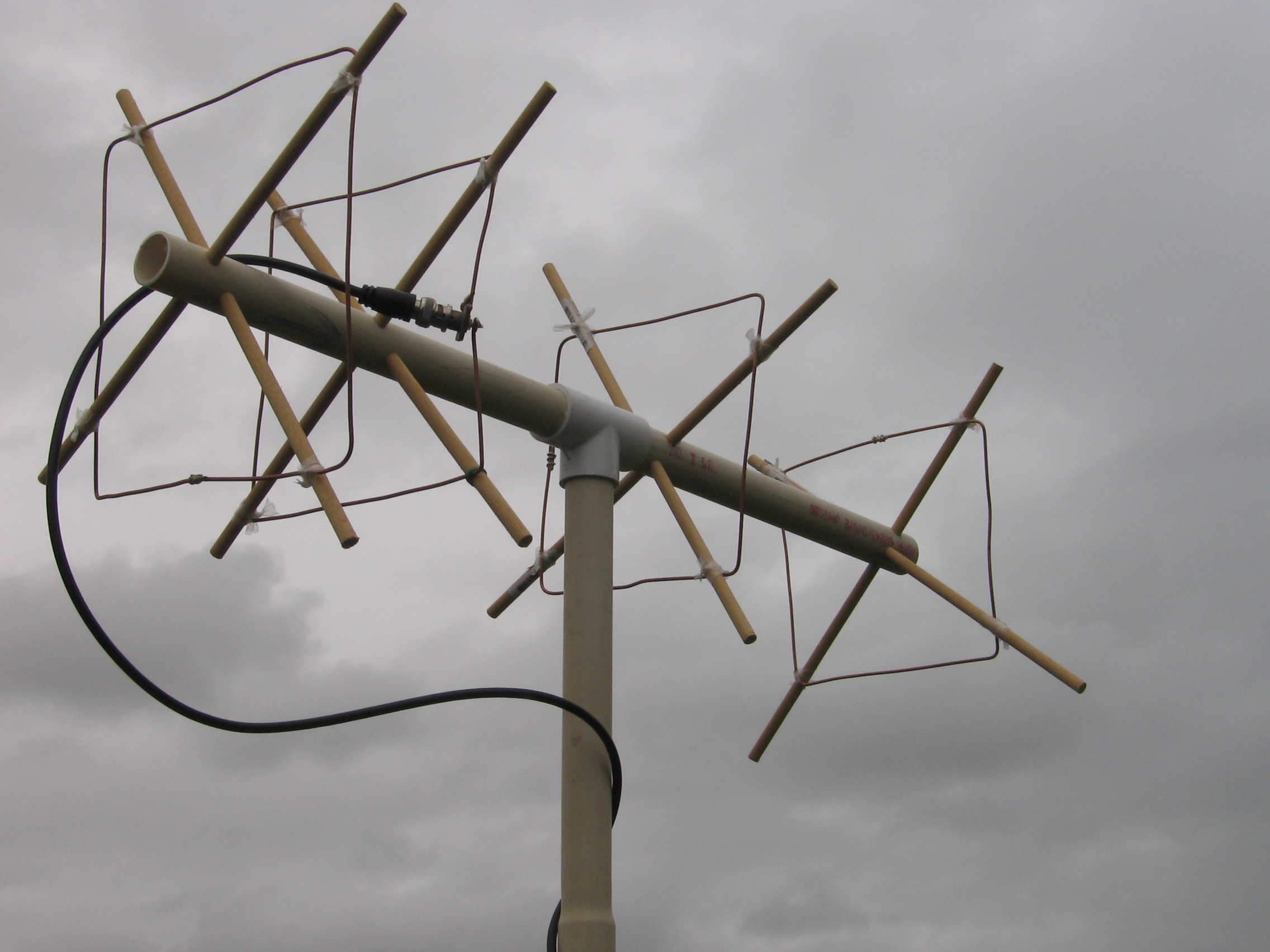
When I needed a 465 MHz antenna on short notice (as you do, of course), I used the W4RNL calculator, and it worked without any adjustments - even if I couldn’t drill holes straight through the plastic pipe:
I’ve also adapted some G0KSC 6m quad designs for other bands.
I used to use a gamma match, until I happened to model one and it showed that the polarization was rotated 45 degrees. So I immediately set out a transmitter and a quad, and used a yagi to check the polarization. The model was correct! Now I design the antennas for 112 ohms and use a quarter wave off 75 ohm cable for matching.
Those quad antennas look great. Definitely given me some ideas to try and build something.
That 2m quad you made makes me wonder if it could be adapter to be foldable, like the DL2MAN Moxon. Could be very useful for SOTA/POTA/*OTA portability.
There are many ways to make a quad more compact for travel, either by folding the elements, or using flexible wire strung around spreaders that slip through the boom.
The stiff wire version in the photos uses solid 1.6mm or 2mm copper wire (AWG #14 or #12). I’ve also used 3mm (AWG #8) aluminium wire, but it is more difficult to connect to without corrosion.
A commercial portable version used fiberglass rods for the spreaders with arrow nocks on the ends that a flexible wire slipped into. The basic construction was like the photo of the 465 MHz quad, where the spreaders slipped through holes in a plastic pipe boom, although other construction methods are possible. I’ve even seen versions where the spreaders are hinged (like the ribs of an umbrella) and fold up against the boom. (They will be slightly longer than the boom for this particular design, so will hang off the ends.) If you are clever, you should be able to have the elements fold without removing the wires from them.
If you use a delta loop design instead, with the points up, then you can hang both elements from a single top beam, with a spreader holding out the bottom corner of each element (and perhaps some strings between the elements so the antenna holds its shape).
Larger wire is good for performance and SWR bandwidth, but smaller wire will work. Note that the dimensions depend on the wire diameter, and especially, any insulation on the wire.
Quads can be designed for a direct 50 ohm feed, which may simplify construction. And the loops don’t need to be square, or even a regular polygon. Making rectangular loops that are taller and narrower can give higher gain (for horizontal polarization), but there are fewer published designs for such antennas.
It really doesn’t make much difference: pick whatever antenna you prefer, or happen to have on hand, or is easiest to make.
A 2-element quad has about the same gain as a 3-element yagi. As the antenna gets longer, the difference becomes less, and it is easier to add more elements to the yagi, because it is just cutting straight pieces of wire.
The yagi has longer elements; the quad is 3-dimensional, and tends to snag on branches, but has a shorter boom.
Personally, I use the quad in the vehicle, because it doesn’t stick up as far above the roof to catch on tree branches. (Not that it is immune, but the wire can usually be bent back into shape as needed.) Yagis stick up higher, and people have had yagi elements break off. For using an antenna while running the forest, I use a yagi made using tape measure for the elements, so they bend when I hit a branch, then snap back into place. But those tend to fold up at vehicle speeds. I quickly learned that the closed loop of a quad tends to catch more on branches in that situation. For SOTA, so far I have only used a wire gain vertical on 2m, but if I needed a beam, I’d probably build a yagi of some sort, depending on how much engineering time I had to work on it.
Returning to the letter, and the original owner of the book for a moment:
I have always lived in or near Shrewsbury, not far from Bishps Castle, so this caught my interest. I only discovered Amateur Radio in 1970, and have no recollection of anyone matching your description. However, talking last night to one of the longer standing members of our club, he remembered noticing a home brew (bamboo spreaders etc) cubical quad at a cottage close to the road near Bishops Castle - but never knew who it belonged to.
I read the article and also found it interesting. I met a woman on top of Queen Adelaide’s Hill last night whilst I was packing up from playing radio. She was trying out living here in a new development I was unaware of, kind of a long term hostel. The number of local connections I made from her short story was quite scary. For the number of people living in Windermere it sure can feel like a small village at times!
Just received a bit of an update today courtesy of a kind post from Joe EI4DN. Alas not an update on Margaret or Mr. F. Beamond, but a little bit of information about Little Newport Street.
Joe mentioned that this small street in Soho was a mecca for amateur radio equipment and military surplus shops in the 1960’s. It later became what is now known as Chinatown.
Casting my mind back I’m pretty certain I’ve walked that street before, particularly in the early 2000’s when shops were heaving with moody VCD’s of films not out yet in the UK and Ireland. Some great food to be had around there too - either in small restaurants or world food grocery shops, probably all gone now though and replaced many times over.
Nice insight though. I can’t find any archive photos of Little Newport Street around the time the book was published (1969) but hope to stumble upon the little shop some day!