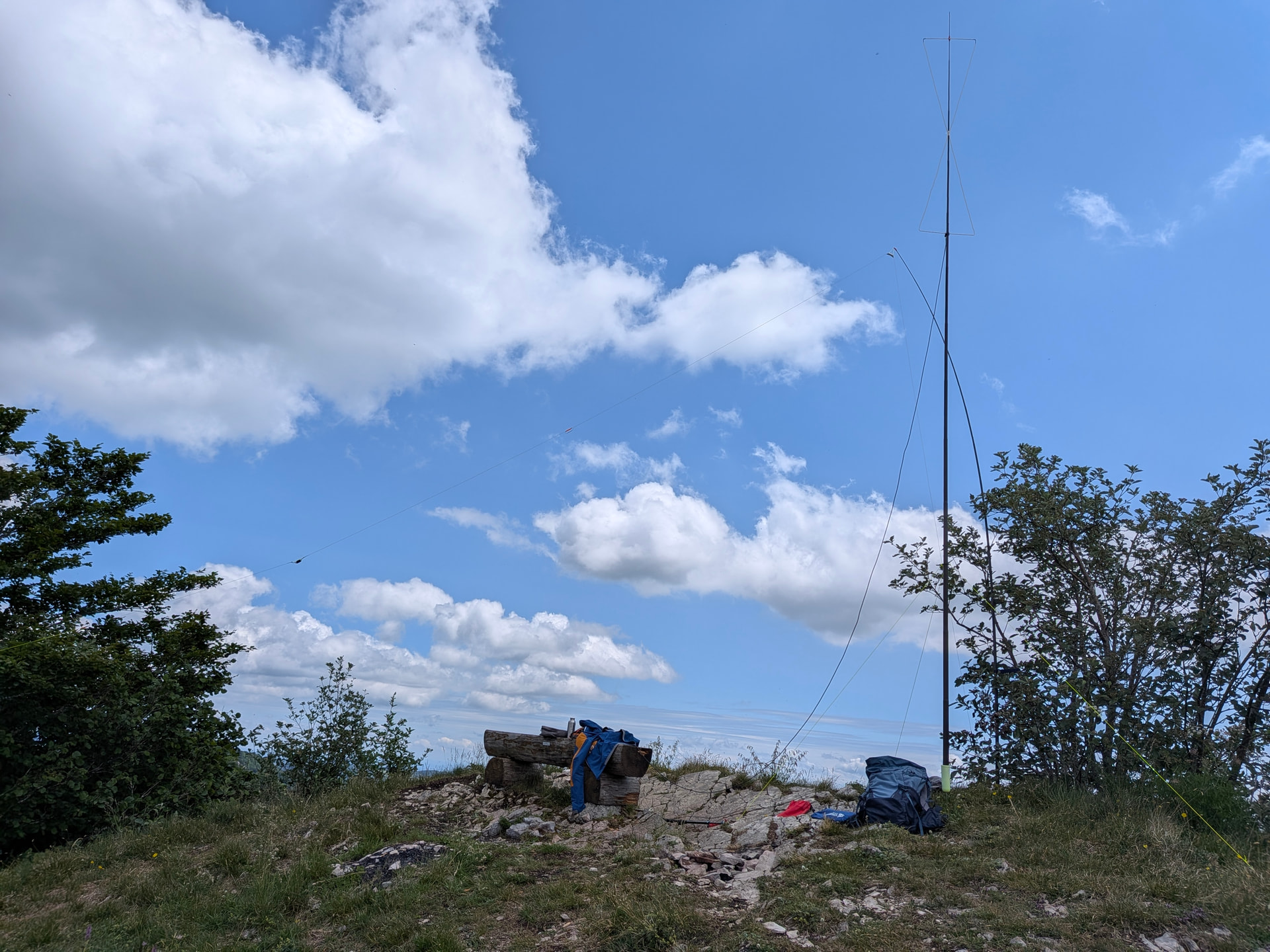
My last portable CW QSO was more than 10 years ago so it is very likely that, regardless of the keying method, it will be close to unreadable morse.
That said each unique call sign QSO counts for the 2m/70cm SSB/CW challenge, so I’ll pack my Palm Radio pico single paddle for the next SOTA expedition.
I think many VK’s are in that boat at this time of year. My shack is in an uninsulated, unheated shed where it is currently 5 C, so to send CW, I have to sit on my sending hand for a while, send quickly, then go back to gloves - not pretty!
Actually I suggest you look at fingerless gloves like those that the cyclists wear. While protecting the palm of your hand, they expose most of your fingers and you retain the ability to key, turn knobs and press buttons accurately. One of the sports shops at Toowoomba might have them. I’m surprised your temps are going so low at this time of year.
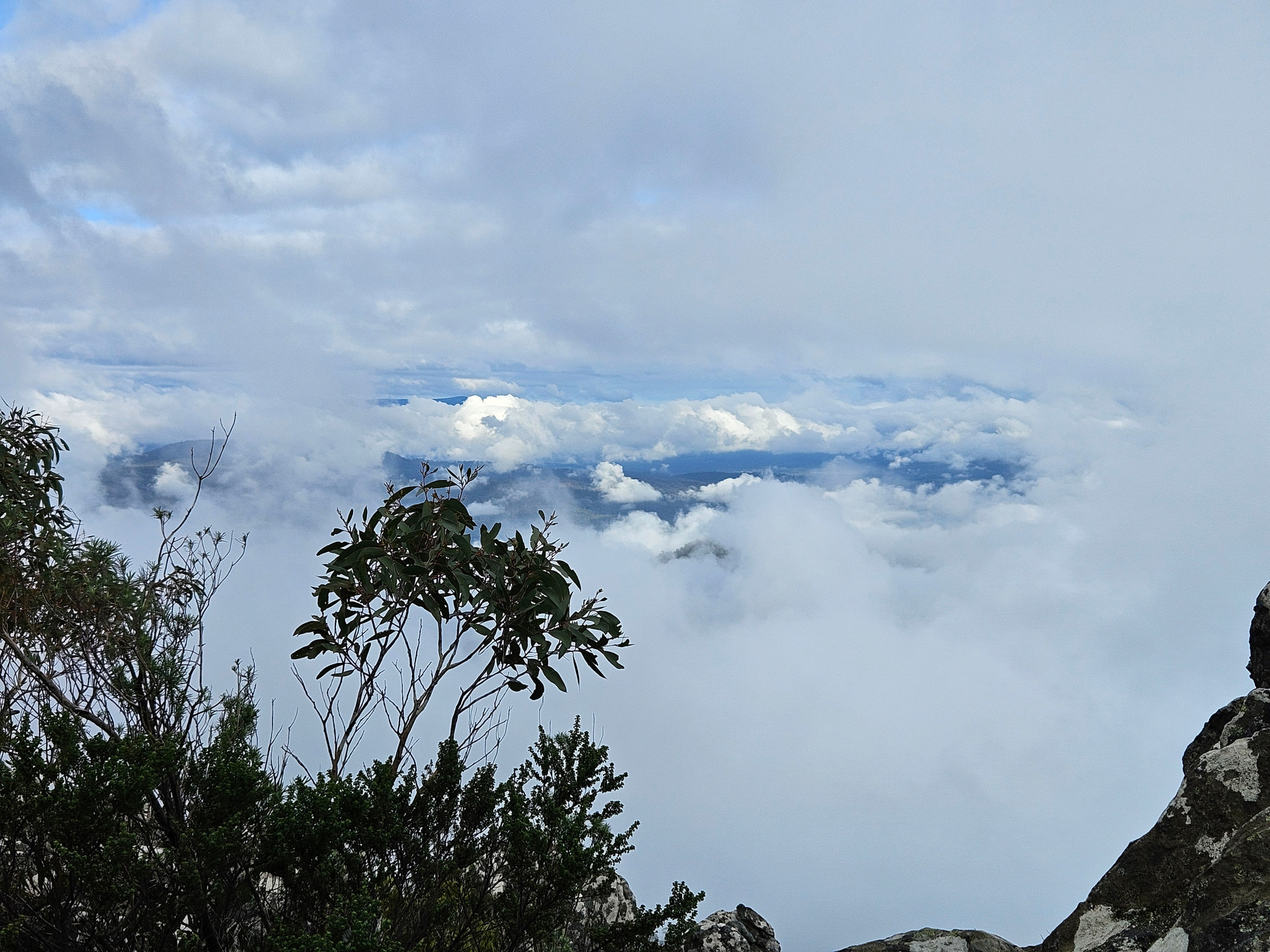
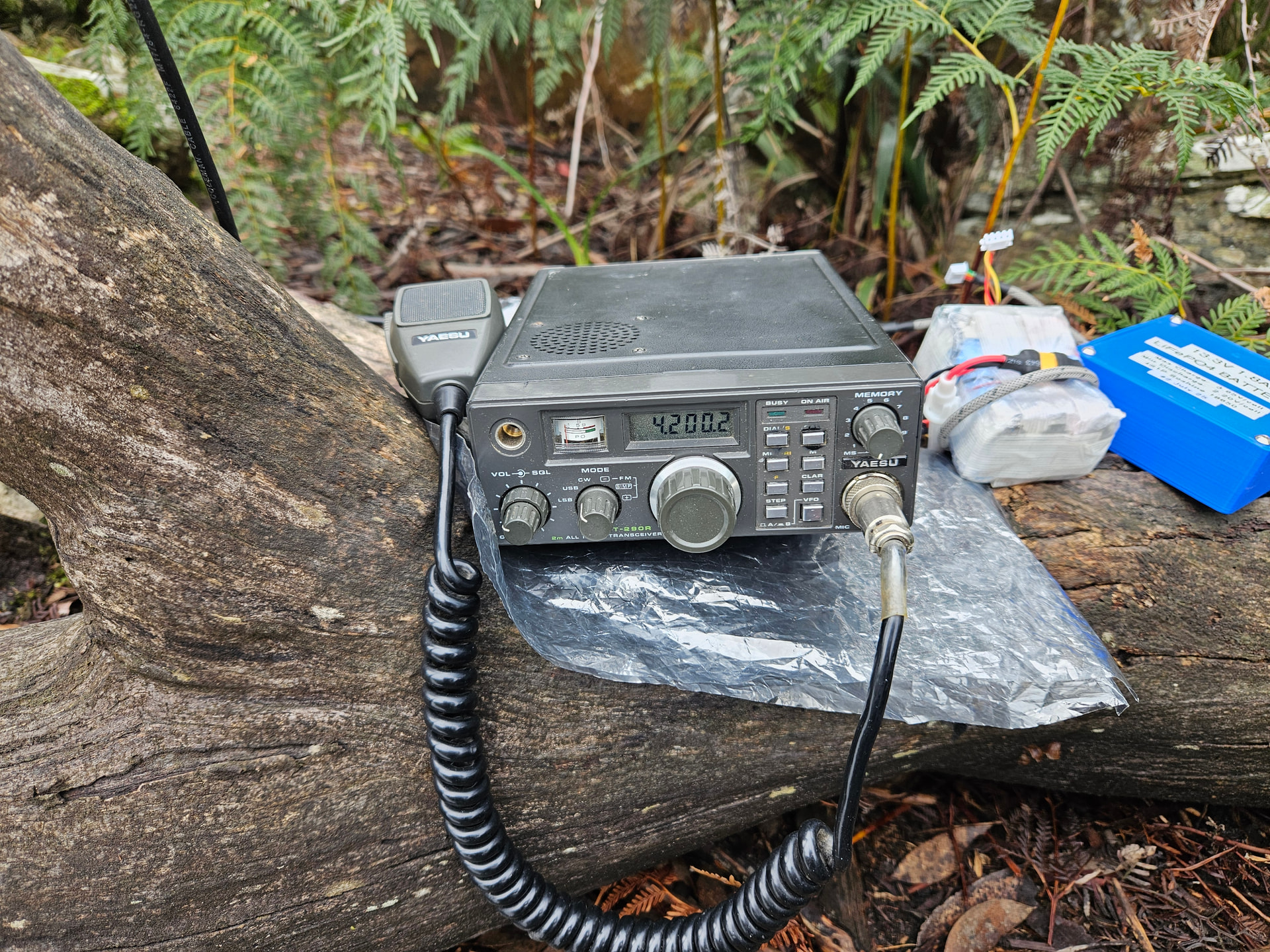
I visited two summits yesterday with my brother Paul, VK3HN. The first was Sugarloaf Peak, VK3/VN-011, a short but enervating climb to its summit at 950m. I took my FT-290r and lightweight HF CW gear, Paul took his homebrew CW singlebanders. I was set up by 9.35am local time, but unfortunately just missed a S2S with Glenn, VK3YY.
I only managed four contacts with VK3s in around 30 minutes of calling - we were pressed for time as Paul needed to activate too and we were interfering with each other.
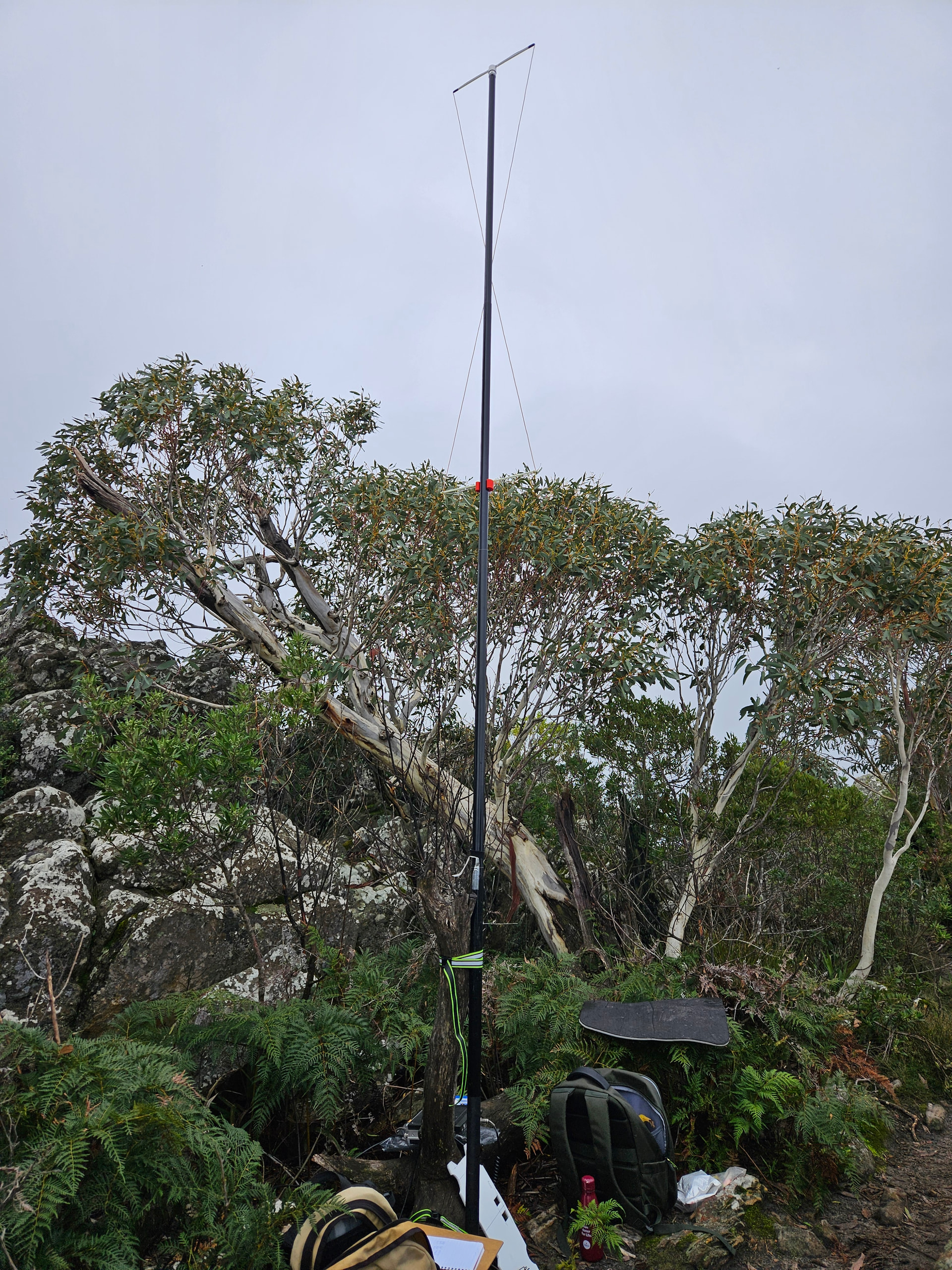
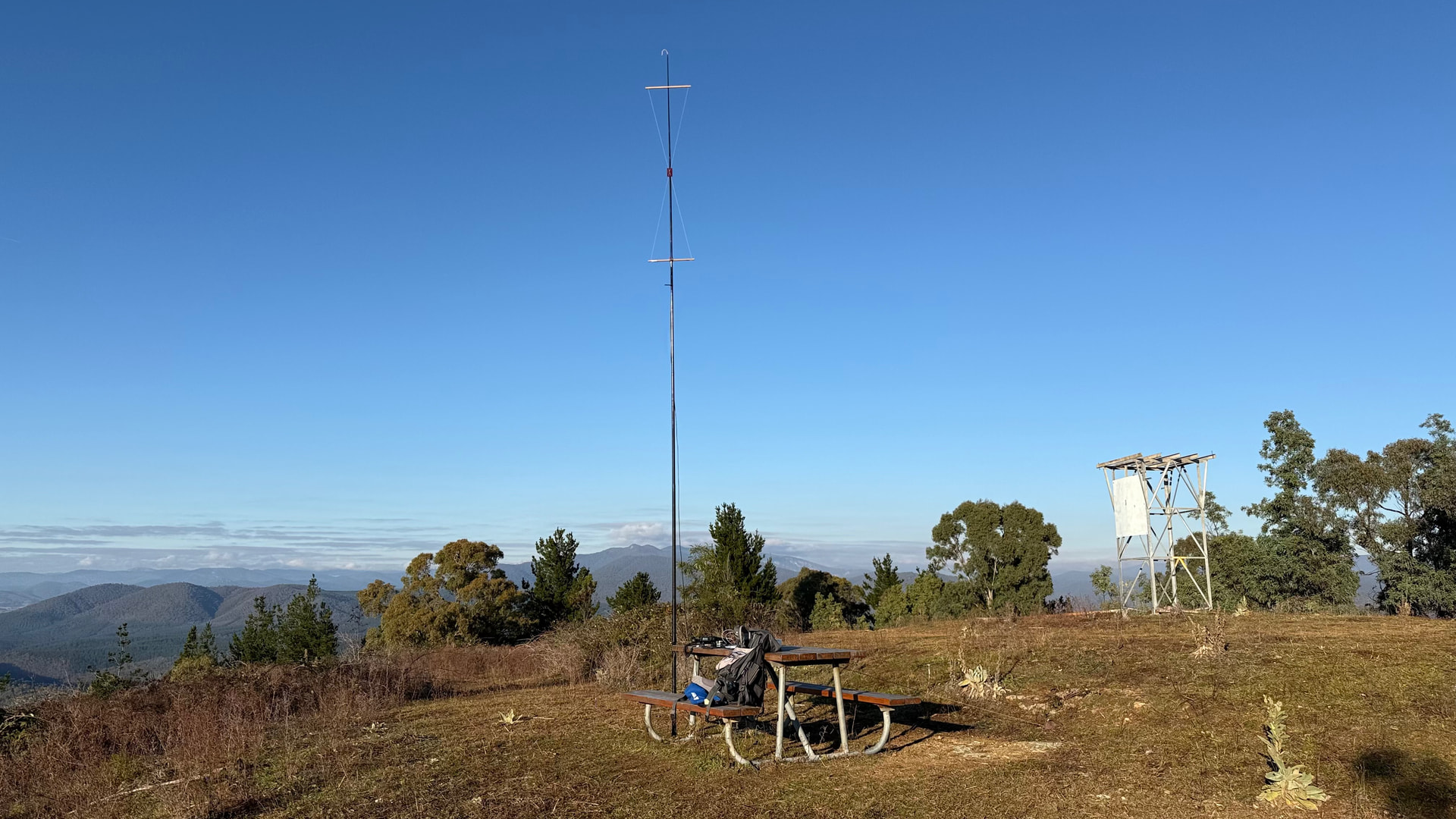
The Hourglass Antenna proved itself very suitable for the limited size and tree cluttered summit due to it’s small turning radius. I have had a 2m Yagi up there on past activations and it’s hard to find a suitable spot to mount it.
… but must have suffered from the bumpy descent in my backpack. When I set it up on the next summit it had developed a fault. A squealing noise and the S meter pinning the needle on receive and no output on transmit indicating a serious fault, I’ll add it to the workbench queue!
I think I worked you on one of the summits and Paul on the other.
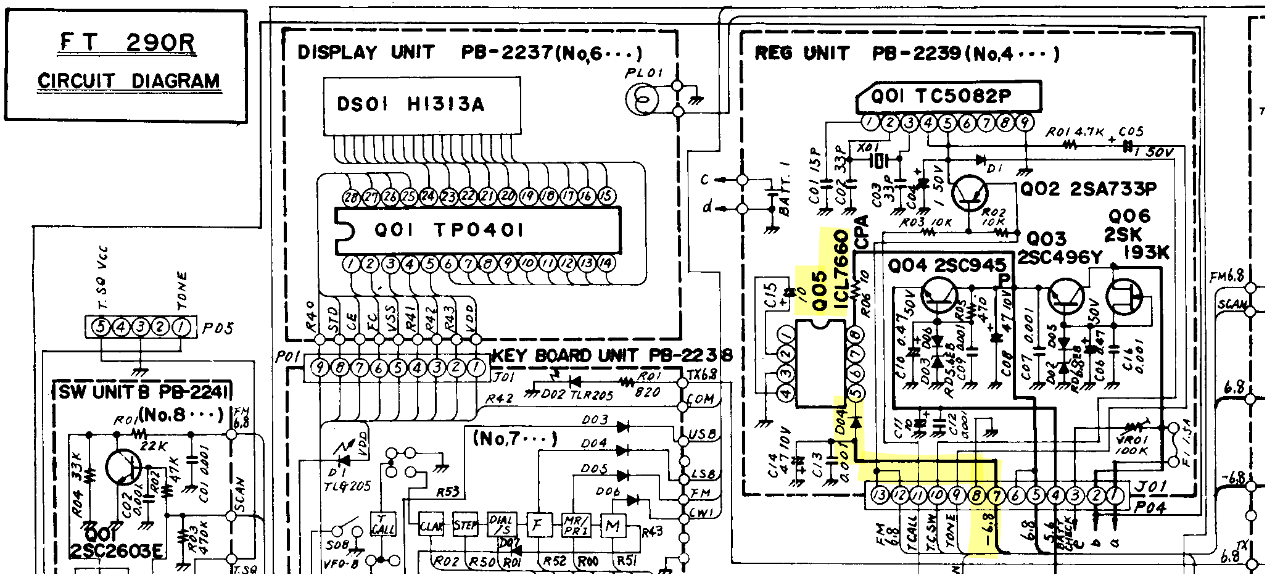
Re the fault in the 290, it reminds me that some of the icom radios have a negative voltage line derived from an inverter chip and when that fails, the AGC and S meter functions become inoperative but the S meter is pinnned against the stop. The same -9v may well be part of the tx ALC system, so its absence faults the tx function too.
I don’t know what the equivalent circuit is in the 290 but in case it helps, that could be something to look at when you get it on the bench.
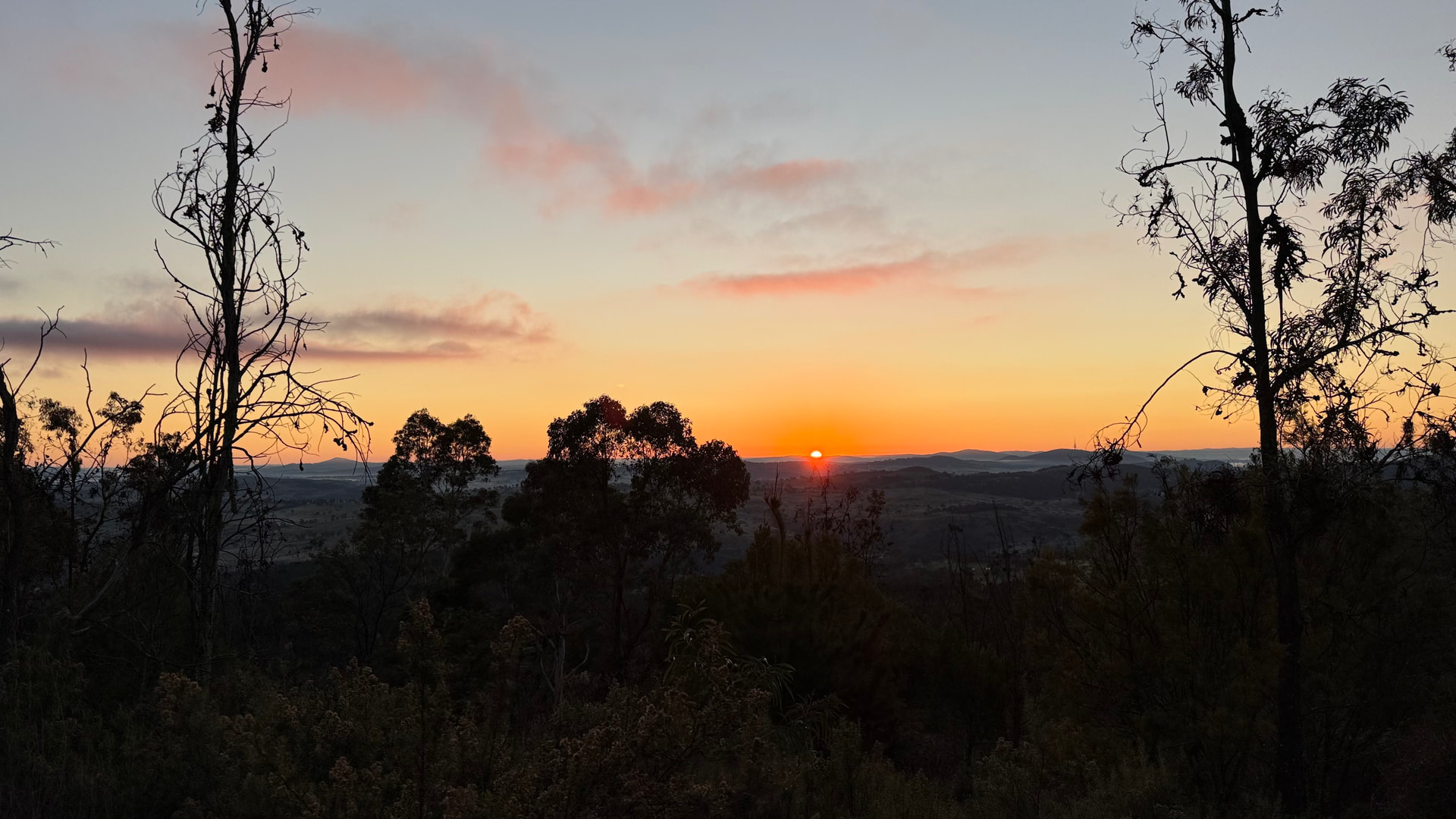
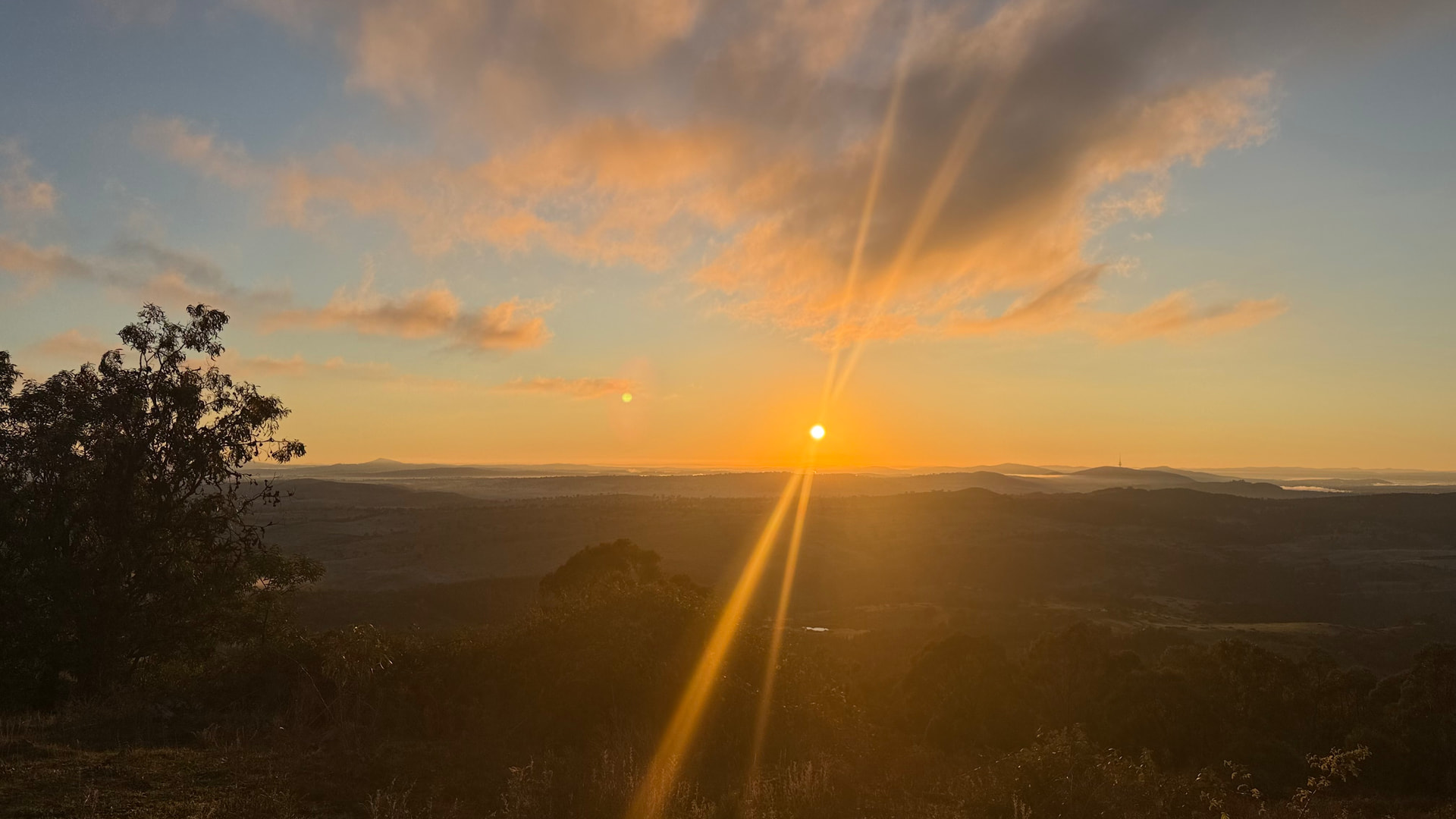
Earlier today, very early, I activated Mt McDonald VK1/AC-048. Left home at 06:15 am at which time the ambient temperature was -2.5°. Sunrise is at 07:08 local.
Arrived at the trail head at 06:40 (still dark) and set off for a 3.2 km walk to the summit in very chilly weather.
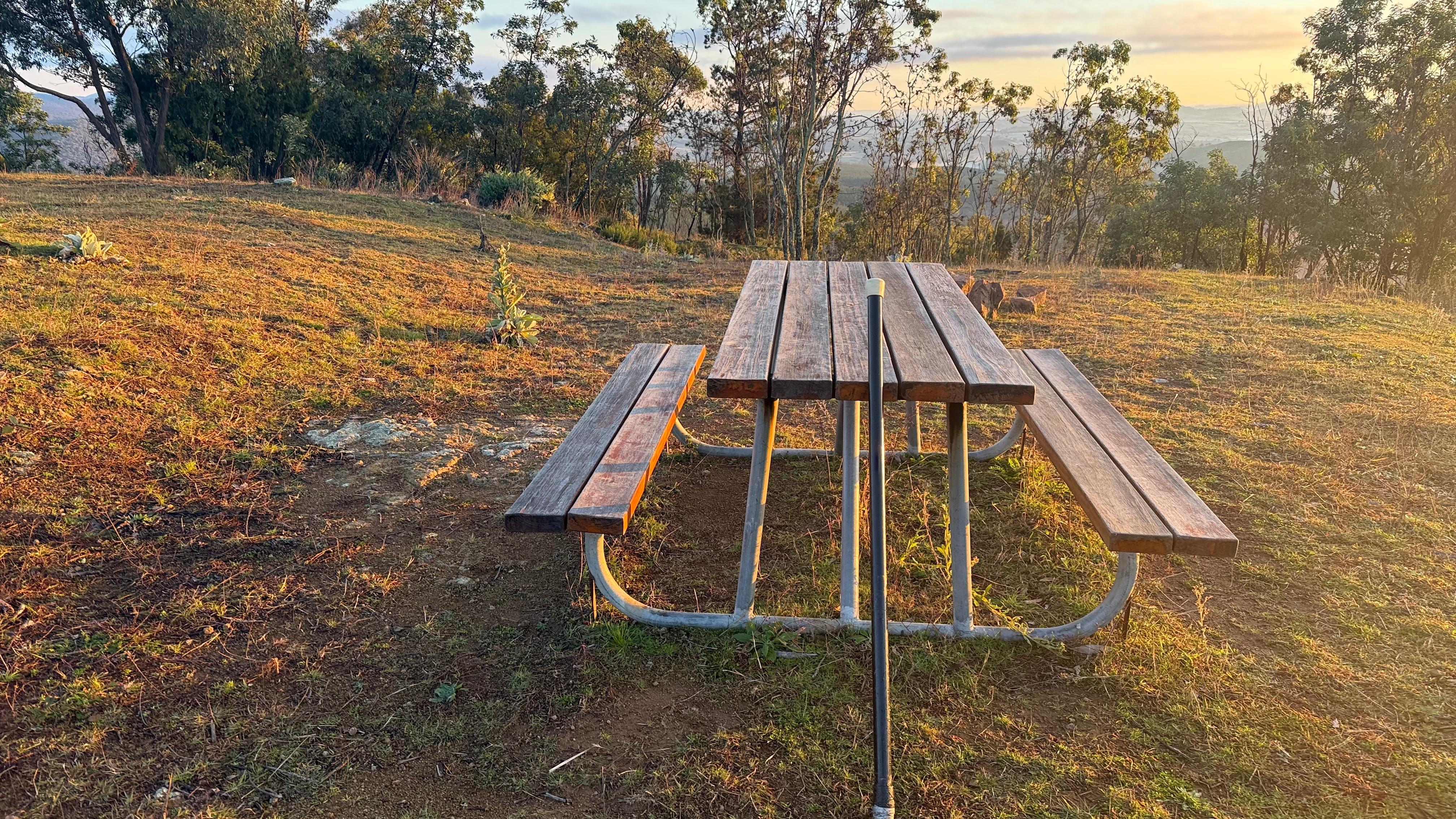
At the summit at 07:20 and set up at a very convenient and well place sturdy picnic table.
15 QSOs in the log ranging from 12 km to 308 km via aircraft scatter.
Edit: Geoff VK3SQ (below) and I completed three separate aircraft scatter QSOs (each 270km) hourglass to hourglass where the third contact was 5-2 each way
Hi Geoff, I’m confident we have proven the reliability of aircraft scatter propagation involving commercial size aircraft aka 737s. Thanks for the three unique 2m DX QSOs earlier today and hourglass to hourglass antenna contacts. Of course only one of the QSOs counts for the 2m Challenge fro Mt McDonald.
I see you are leading the 2m Challenge All VK chaser category. Fantastic achievement with the hourglass antenna.
Yes indeed, you worked Paul on Sugarloaf (30m CW) and myself on Mitchell (40m CW). Thanks for the contacts.
OK on the possible transceiver fault that could affect the receiver and transmitter, that’s a good suggestion. I’m left with the IC-706 for 2m SSB now, so won’t be hauling that up any long, steep summits!
There is a -6.8V rail in the FT-290R. It supplies power to several subsystems, though I haven’t yet managed to work out exactly which ones.
The negative voltage is generated by an ICL7660. I’ve already had to replace this component twice in my Ten-Tec Omni VI because it was faulty. I’d check, just to be on the safe side, whether the -6.8V is still there. In case not, it might be a good idea to swap nearby electrolytic capacitors as well.
With some valuable construction input from Arthur, @HB9CEV, I also built an hourglass antenna for 2 m.
I tested it twice on summits in my local area, both times using my FT-818 with 6 W SSB:
On HB/SO-009, where the ODX was over 413 km. I had worked the same station a few weeks earlier from a higher summit in central Switzerland, with an ODX of more than 450 km. But back then, I used only my attached RH770!
On HB/SO-008, where the ODX was over 402 km across numerous Austrian mountains! This was my furthest 2 m S2S QSO so far! On the same day, I made another 2 m SSB S2S contact over 190 km, with signal reports of 59 and 58, not too shabby.