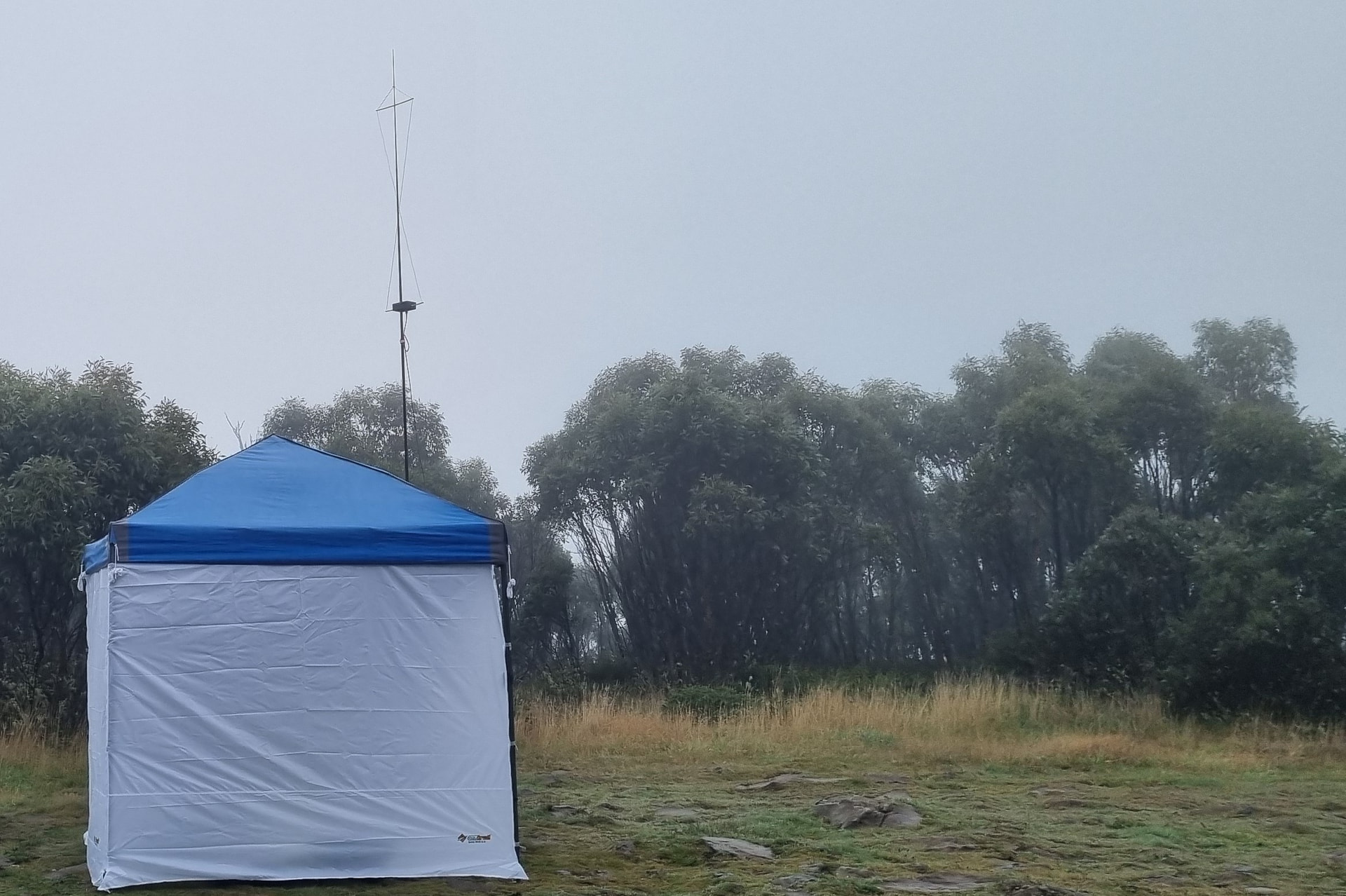
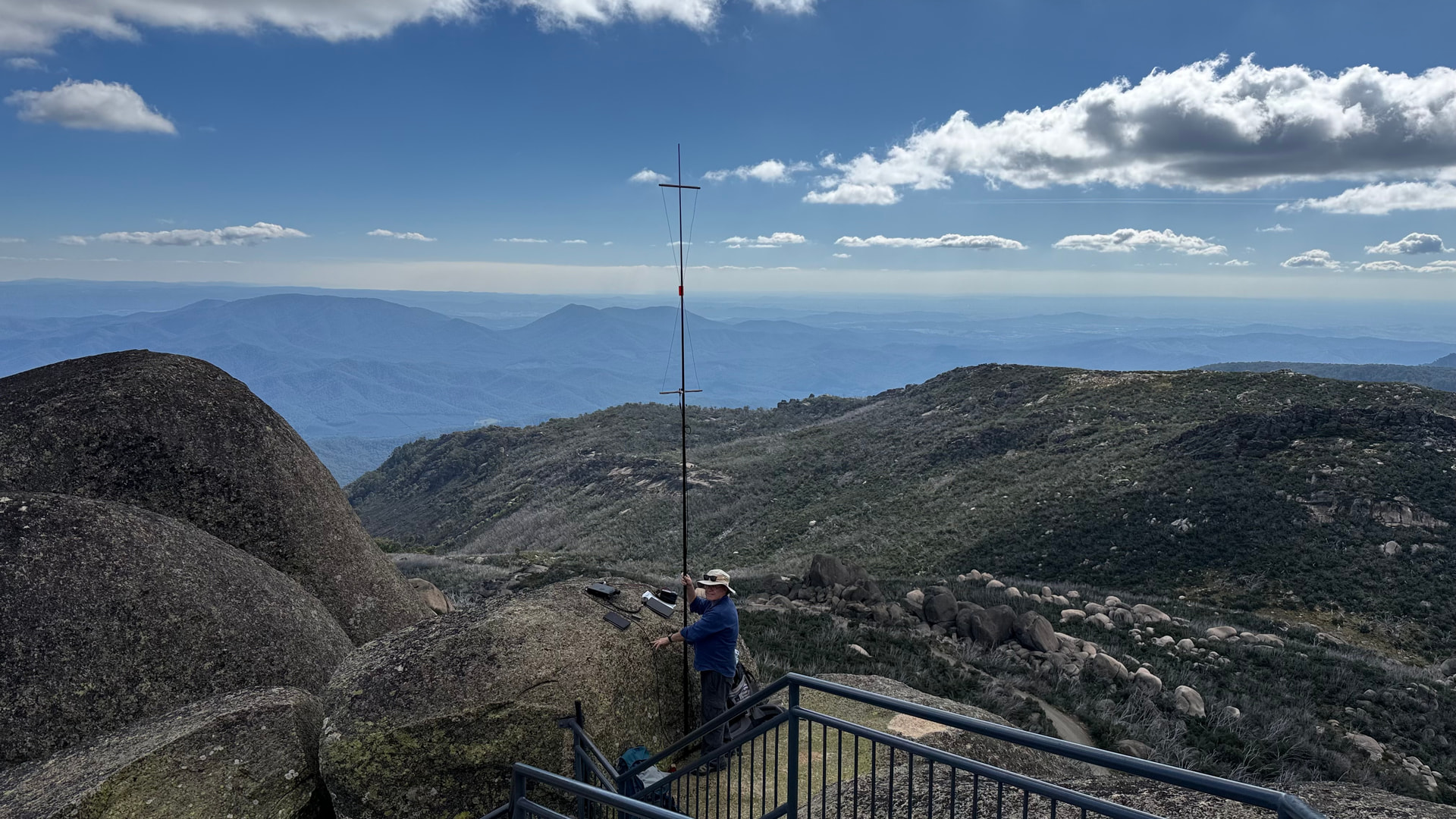
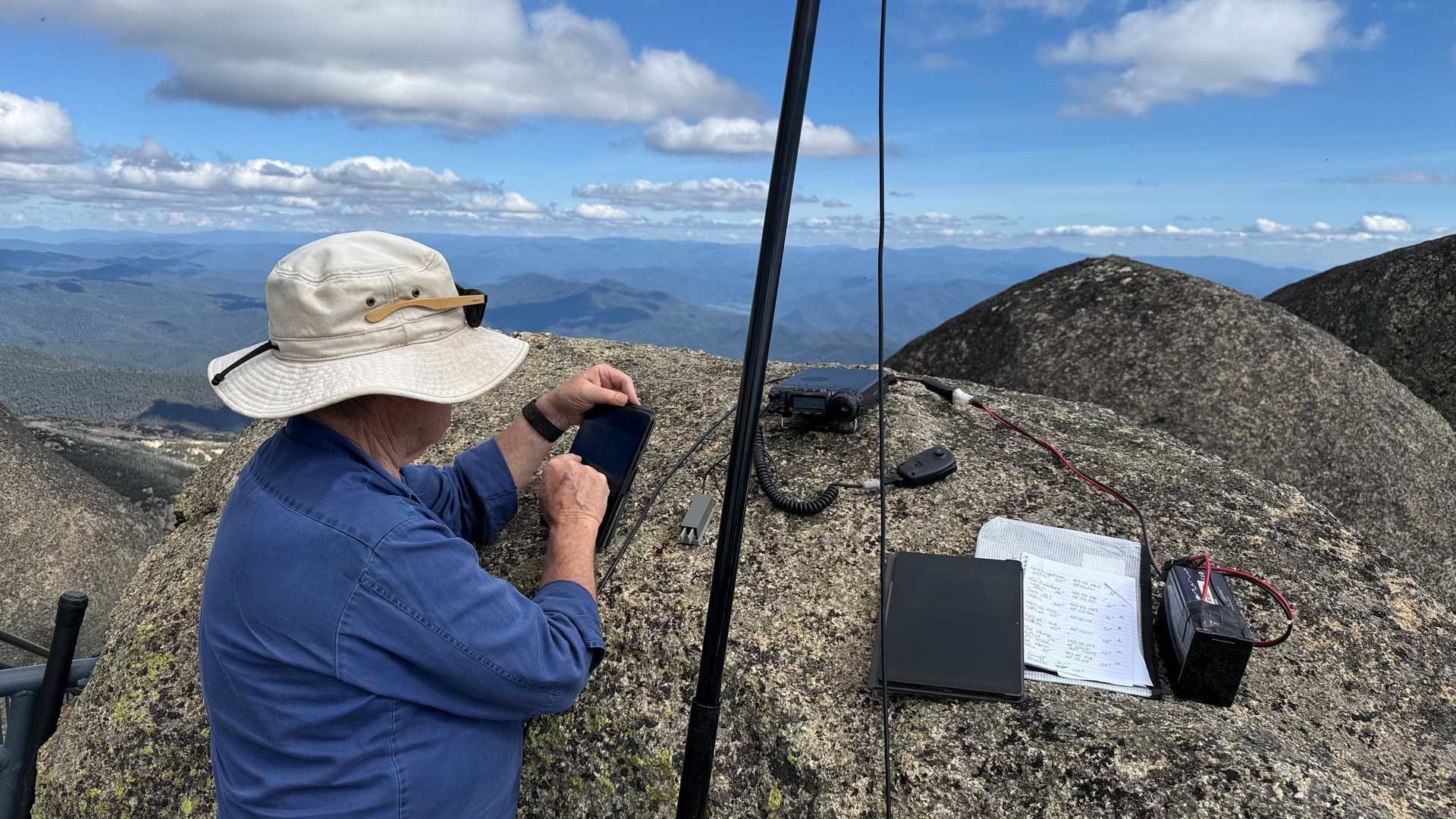
Your results are very good, conditions must have been good but that path length is always impressive. Not dissimilar to the results we (Andrew VK1AD and I) found when first using the hourglass antenna at Mt Stromlo, firstly on the signal from Carl VK2TP at Wellington, about 350 km. In that case the hourglass produced stronger signals than the 4 element yagi at 4m agl. We looked at each other and asked how that can be? Was there something wrong with the yagi, a recently built and tested antenna.
Suspecting local terrain problems for the northerly path to Carl, giving the hourglass an advantage over the yagi (the top element of the hourglass was 5.5m agl) we then looked for the 2m beacon from VK2RSY at Dural, near Sydney, a path length of 260 km but one that is temperamental. Sometimes nothing is audible from this beacon from sites around Canberra. What we found was that the hourglass antenna received the beacon almost as well as the 4 element yagi. The only issue was the noise level from domestic sources in the area, which were making the beacon signal sound a bit noisier than it was on the yagi. We theorised that this was due to the wide beamwidth of the hourglass compared with the yagi. But whenever the QSB on the path took the signal down on the yagi, it also went down on the hourglass but never disappeared completely. So our conclusion was that the hourglass antenna was producing signals very nearly as good as the 4 element yagi.
And it has the advantage of being able to be rolled up into your backpack and being unrolled onsite and mounted quickly onto the telescopic fibreglass pole.
I think the discussion on this antenna reveals that some of our colleagues let preconceptions overshadow the ability to read about something different and actually consider it objectively. “I haven’t tried one but it can’t work as well as its users say”, but then going on to discuss other antennas and reminiscing about past glories. No, this antenna is a genuine discovery for portable operations, no problems carrying it in a backpack, no trees or shrubs to tangle it in. I had built one and tested it, but building antennas on the lounge room floor in a small townhouse does not compare with doing it in a workshop with a vice, a drill press for accuracy so mine will be rebuilt soon for more robustness and repeatability in performance and characteristics.
Thanks for the information on the tropospheric propagation and your commentary on your experiences with the Hourglass, Andrew. The improved conditions certainly explain the armchair copy we enjoyed during our 20 minute ragchew - not what I was expecting at all!
The Hepburn charts suggest that propagation to VK5 might have been possible but I didn’t hear anyone working stations to the west - I wonder if anyone seeing this can report?
As you note, there are a number of points about the design that make an antenna successful for SOTA, and gain and pattern are just one of them. Weight, size and ease of erection are important too.
Hi David,
congrats on your excellent results using the hour glass loop!
It’s great to see a growing number of hour glass users
And it’s good to see someone is still using the FT-290R, too
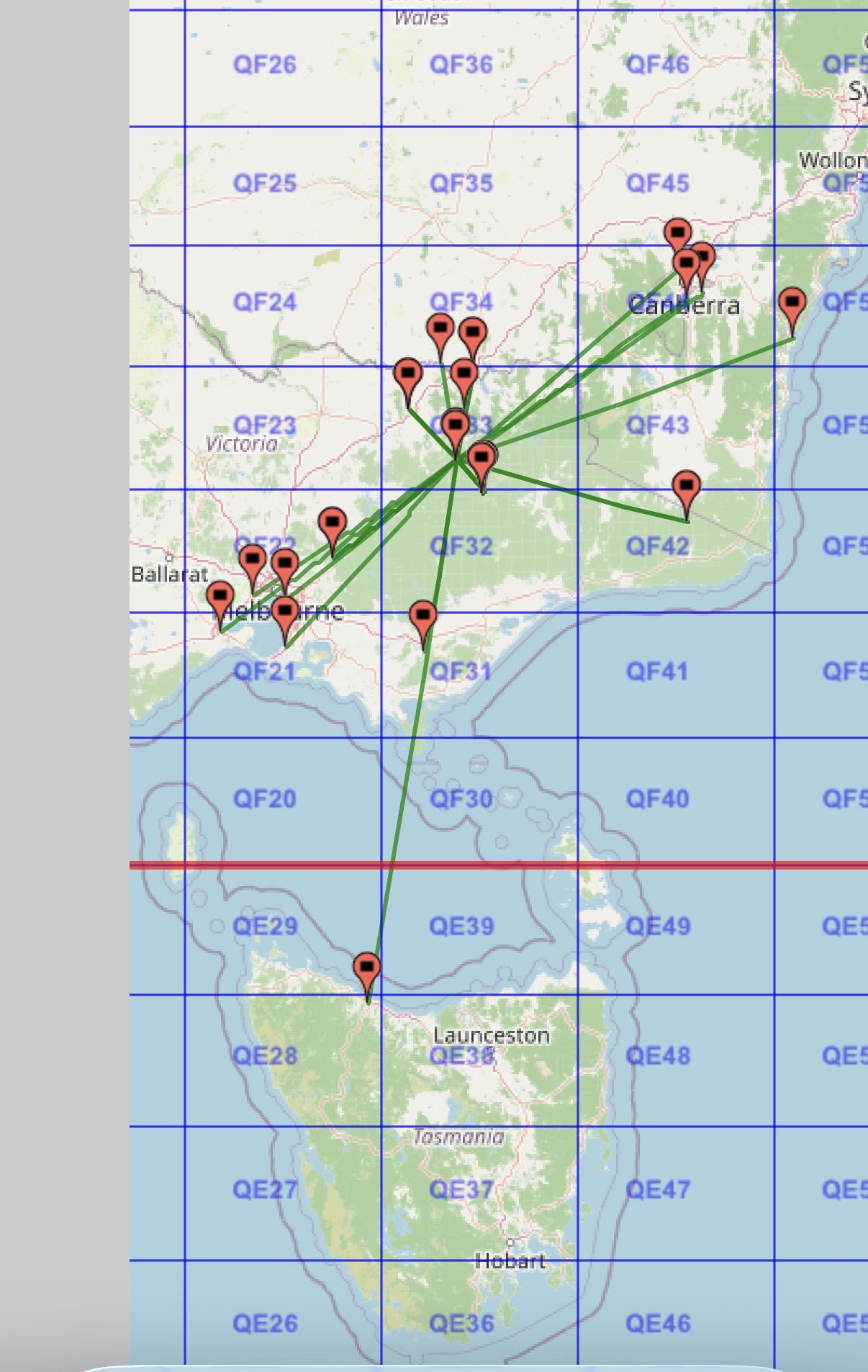
Yesterday I participated in the AGCW VHF contest from DM/BW-849 and tried the hour glass loop again. I was very pleased with the results, even though the summit is rather flat with many trees, ODX was 614 km, each ring is 100 km,
On Saturday, 21 March 2026, I took the hour glass, or is it hourglass, out to 3 summits.
VK3/VC-009 Mt Bride. This is not one of my favorite summits due to the overgrown access track and large numbers of blood sucking leeches, however it is part of my three summit “B” SOTA circuit, and I have activated it 10 years in a row.
The summit is located in a eucalyptus forest, and the AZ is surrounded by very tall trees. There is no view to be enjoyed, rarely any visitors, and only leeches for company.
I was on this summit for about 50 minutes and logged 8 QSOs on 2m SSB ranging between 65 and 130 km.
VK3/VC-011 Britannia Range. A 5 km drive from Mt Bride, this summit is accessed via a dirt track most suited to 4WD vehicles with reasonable clearance. Today I choose to walk up taking 40 minutes from bottom to top. Like Mt Bride this summit is also in a eucalyptus forest, has no view, but the AZ includes part of the access track so one can set up a bit further away from the trees.
I was on this summit for about 45 minutes and logged 5 QSOs on 2m SSB ranging between 40 and 135 km.
VK3/VC-016 Mt Beenak. An 11 km drive from Britannia Range this is the third summit in in my “B” circuit. Access to the summit is via a gated gravel maintenance track requiring a 30-minute walk up.
VK3SRT joined me on this summit. At the summit are two communication towers and a fire spotter’s tower. The summit area is clear of trees and there is some view to the surrounding hills.
We were on this summit for about 90 minutes, and I logged 8 QSOs on 2m SSB ranging between 33 and 134 km.
The 2m version certainly does NOT work well on 70cm.
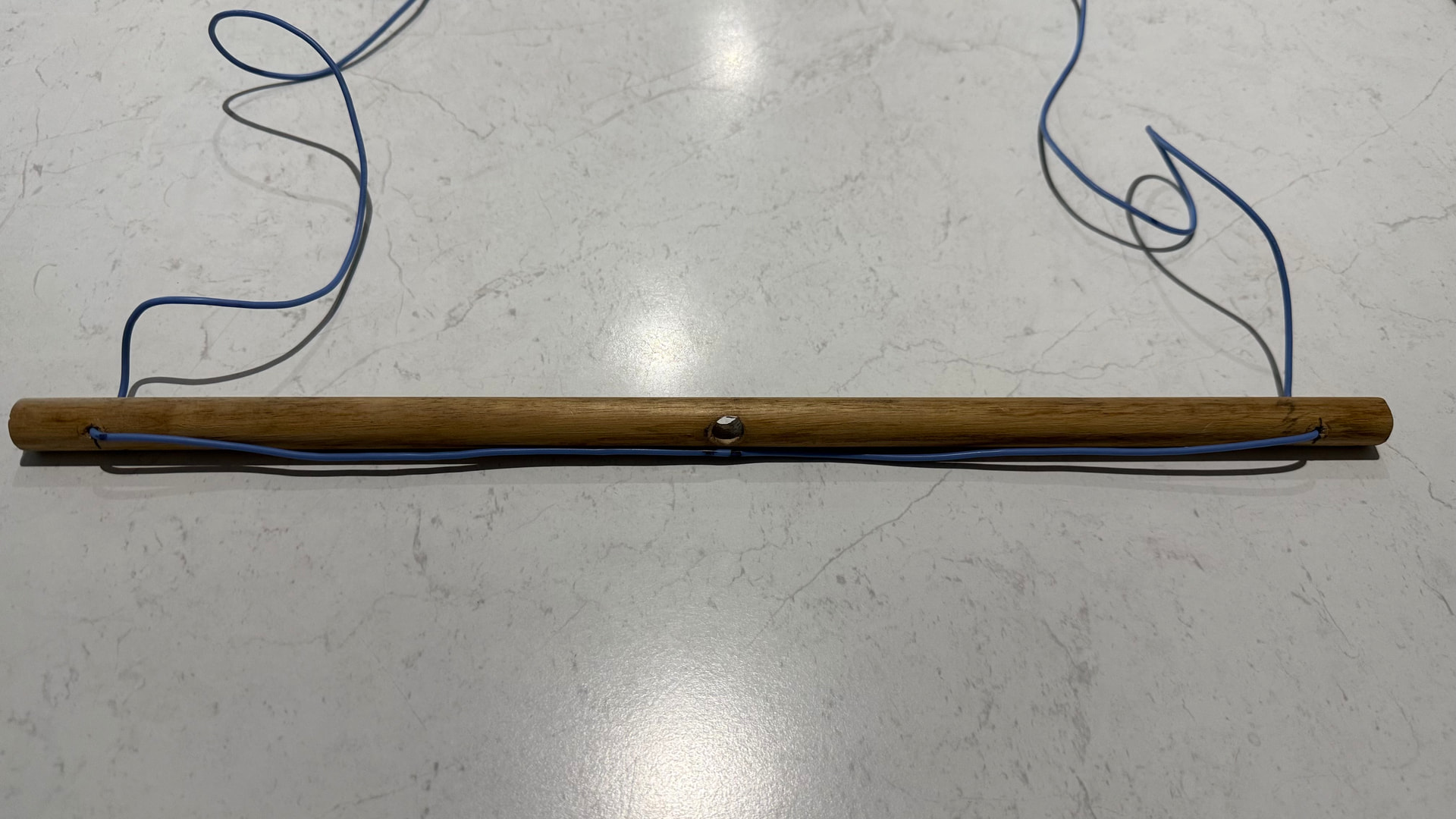
Easy enough to scale it for 70cm, however. A height of 62cm and width of 14cm (total wire length of 140cm looks like a good starting point (depending on wire size, etc.) At that wavelength, a taller array of stacked elements may work better. Yet another project…
At Mt Coree VK1/AC-023 complete with aircraft trails. Using the Hourglass antenna I worked stations out to 395 km on aircraft scatter, including a S2S with VK3YY @ VK3/VC-002 387 km.
Saturday 28 March 2026, saw me out again, this time to a drive-up summit, Mt Useful VK3/VT-016. A group of keen SOTA activators were also in the high country, based at Mt Hotham, and I was hoping to work some S2S.
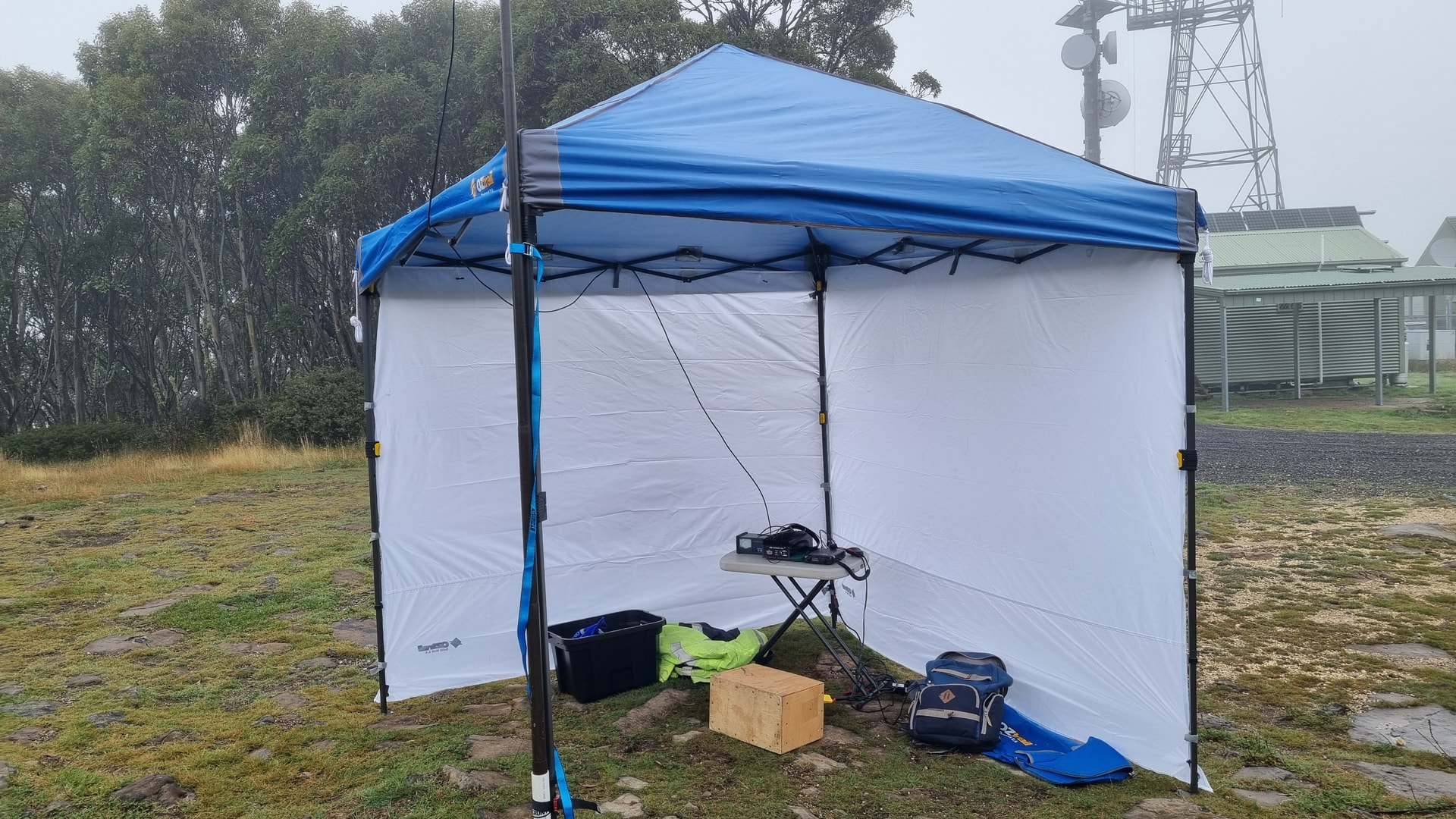
Being a drive-up summit allowed some more luxuries to be accommodated and protection from the elements was number one on my list.
Using the hourglass antenna, I made 23 QSOs over about 2 1/2 hours including six S2S QSOs. QSO distances ranged from a nearby summit at 41 km, to an enhanced path to a well-equipped station 353 km away.
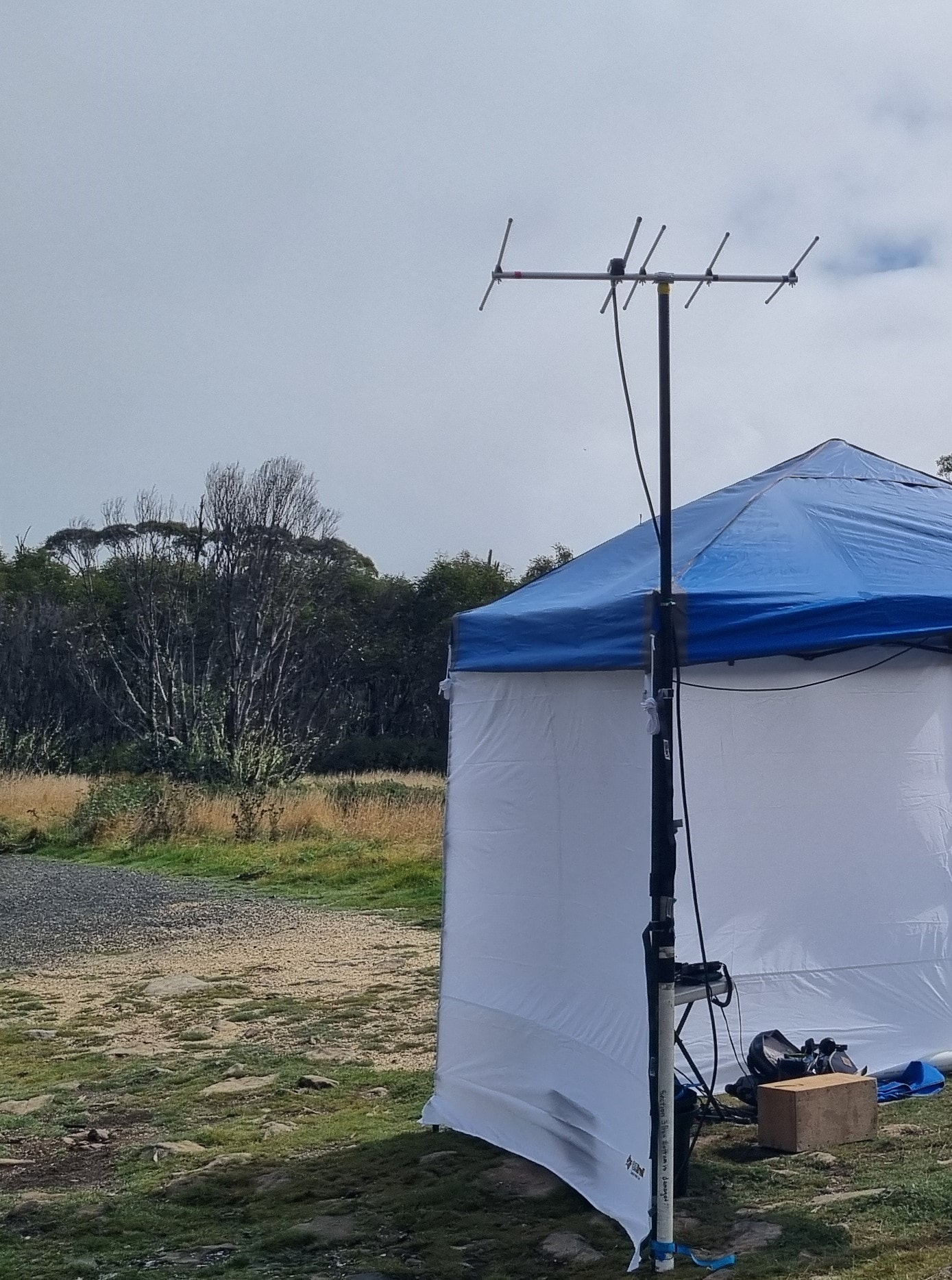
I also managed four S2S QSOs, at 118 km, using a 5 element Yagi that provided slightly better readability than the hourglass.
Unfortunately, whilst packing up I broke the top support of the hourglass antenna, so some repair work is now required.
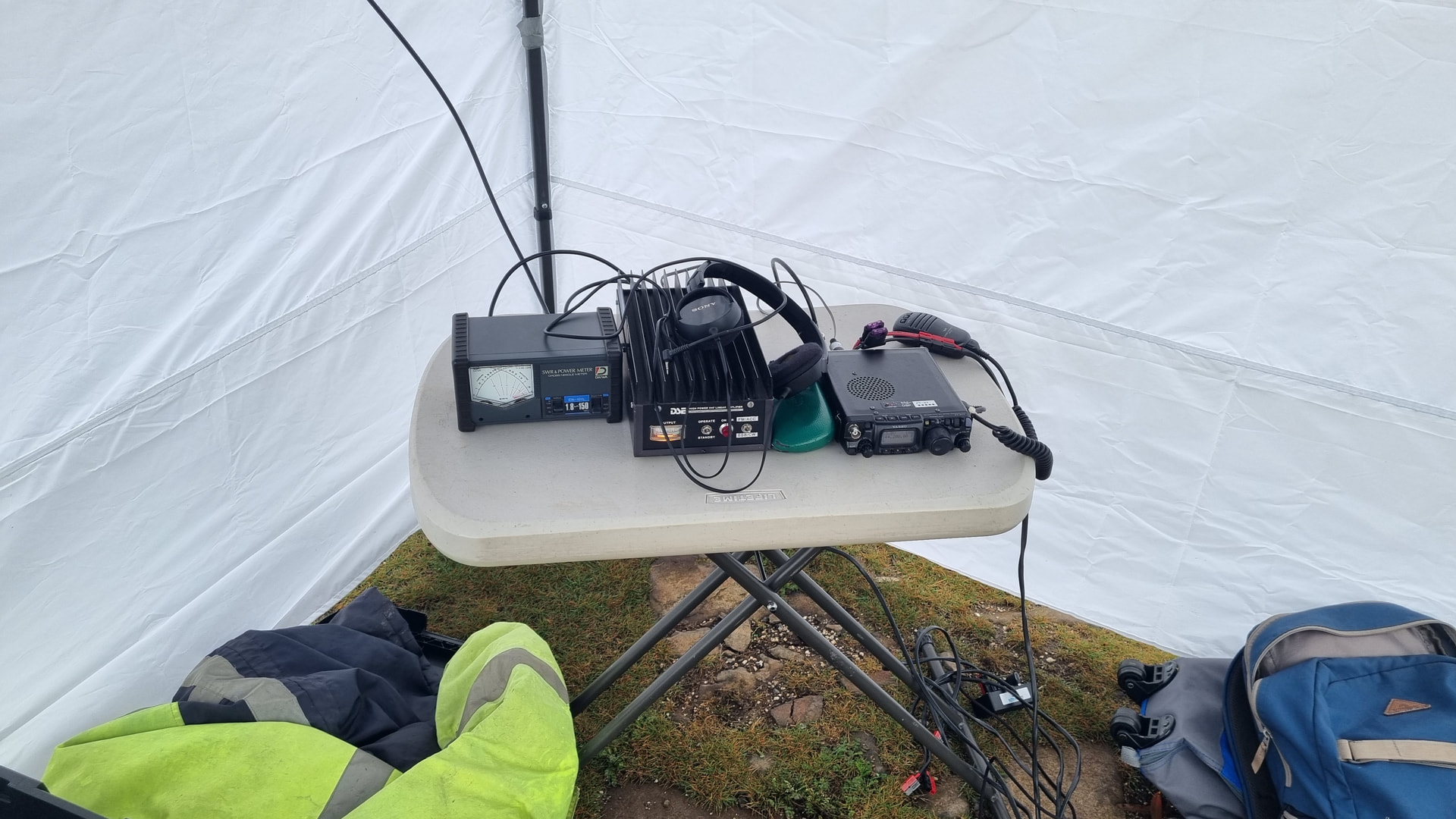
As this was a drive-up summit, in addition to protection from sun and rain, I also took a table, a larger battery and a 100 Watt VHF amplifier. Driven from the FT817 with an output of about 60 Watts from the amplifier I was able to work every station that I heard.
Looks great again chaps! I’m going to follow the ARRL article to build mine but want to use your take on it so I can mount it to a 10m or 7m mast (I have a 6m Carbon 6 on the way and a ground spike too).
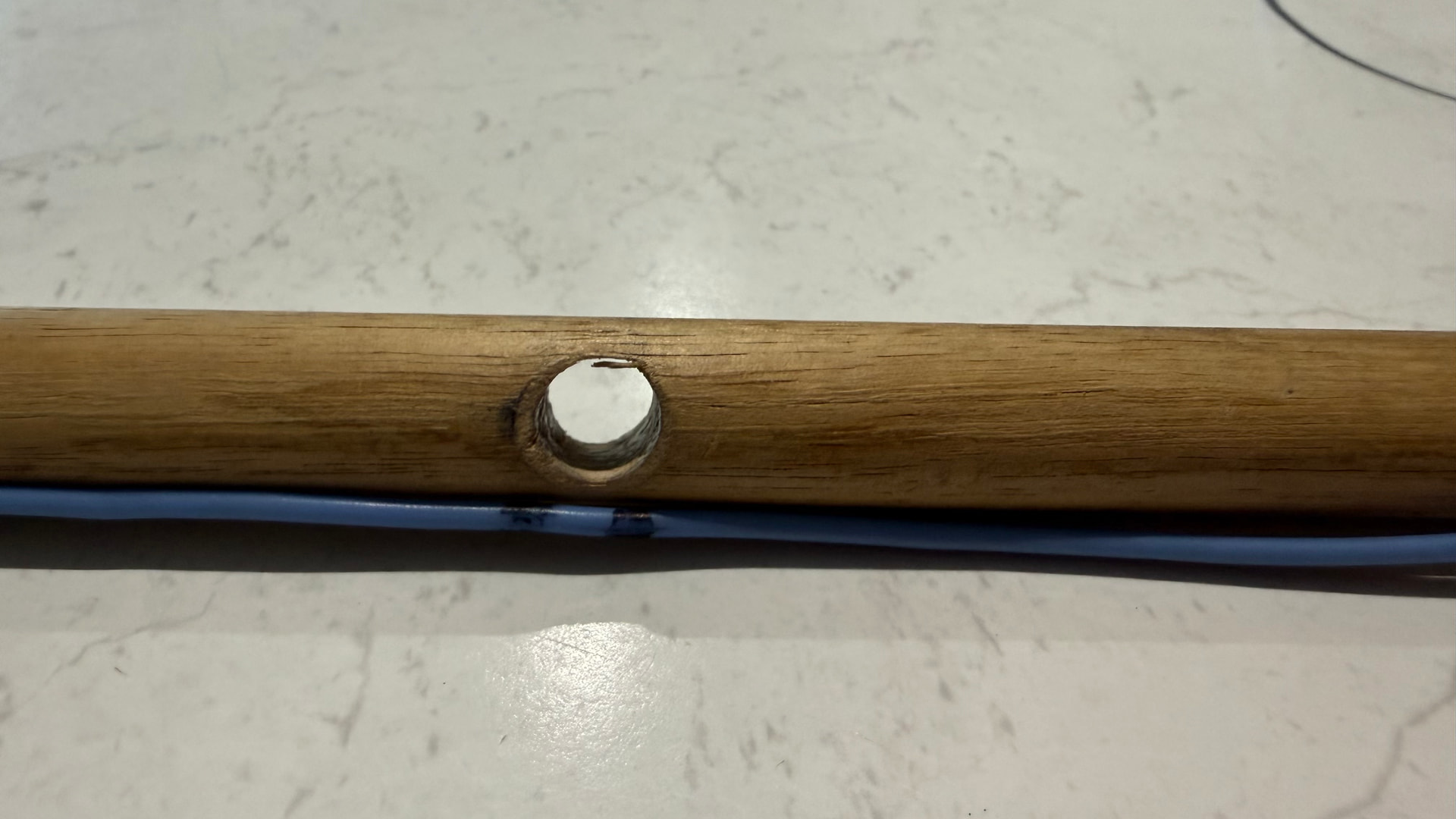
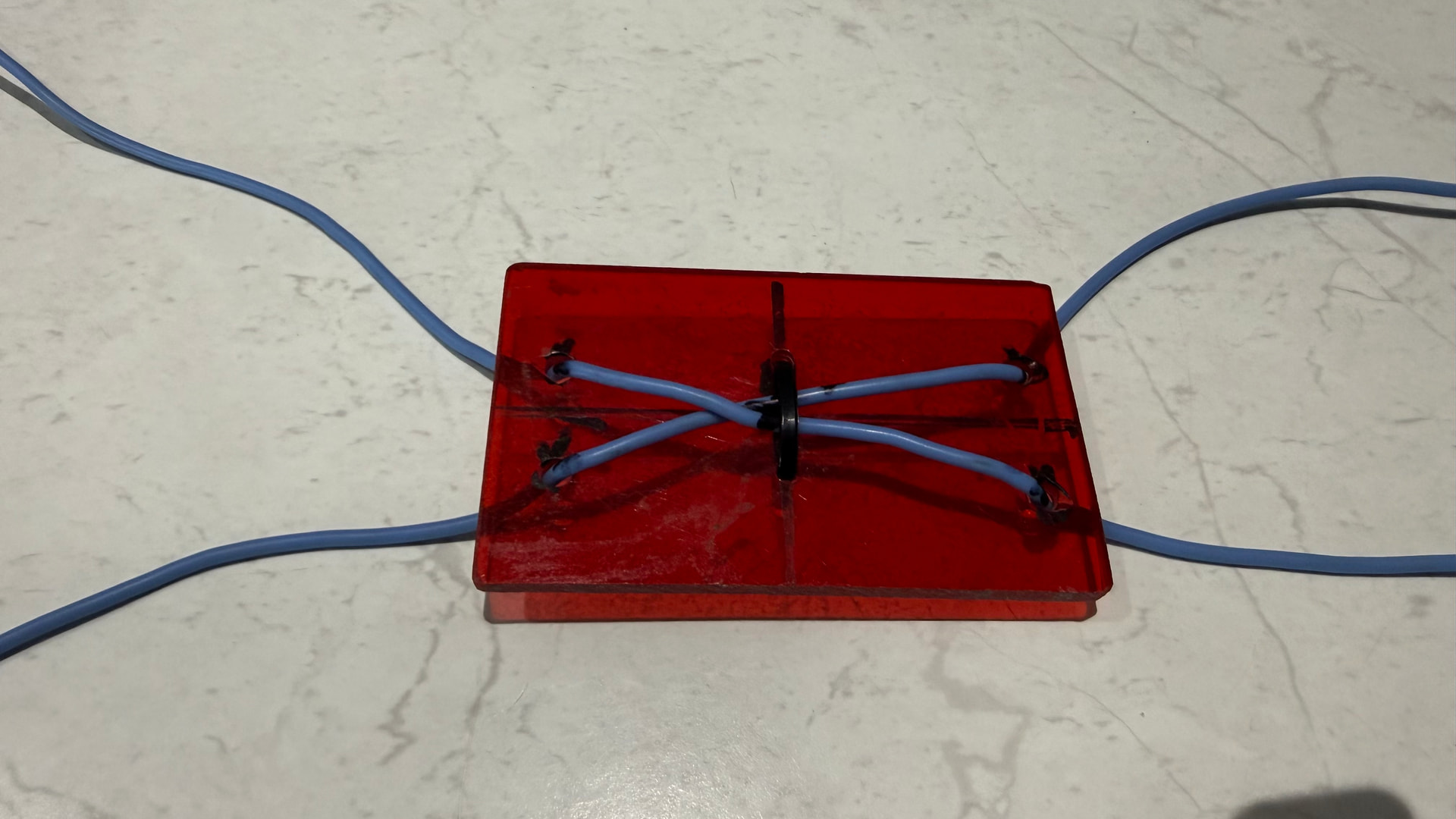
How did you mount yours? Are you running the wire through two pieces of pvc tubing and how are they secured to the mast? Zip ties?
I have some spare PLA tubes i printed from my 270 Moxon last year that I could use. Excited to build this now.
Great effort from all the folks getting on board the Days Of Our Lives antenna train!
Aha! I see! I thought you had the red centre box slid over the mast to hold it in place. For the tubes I’m going to use the DL2MAN Moxon ones I have and just edit the 3D model to fit the mast diameter.
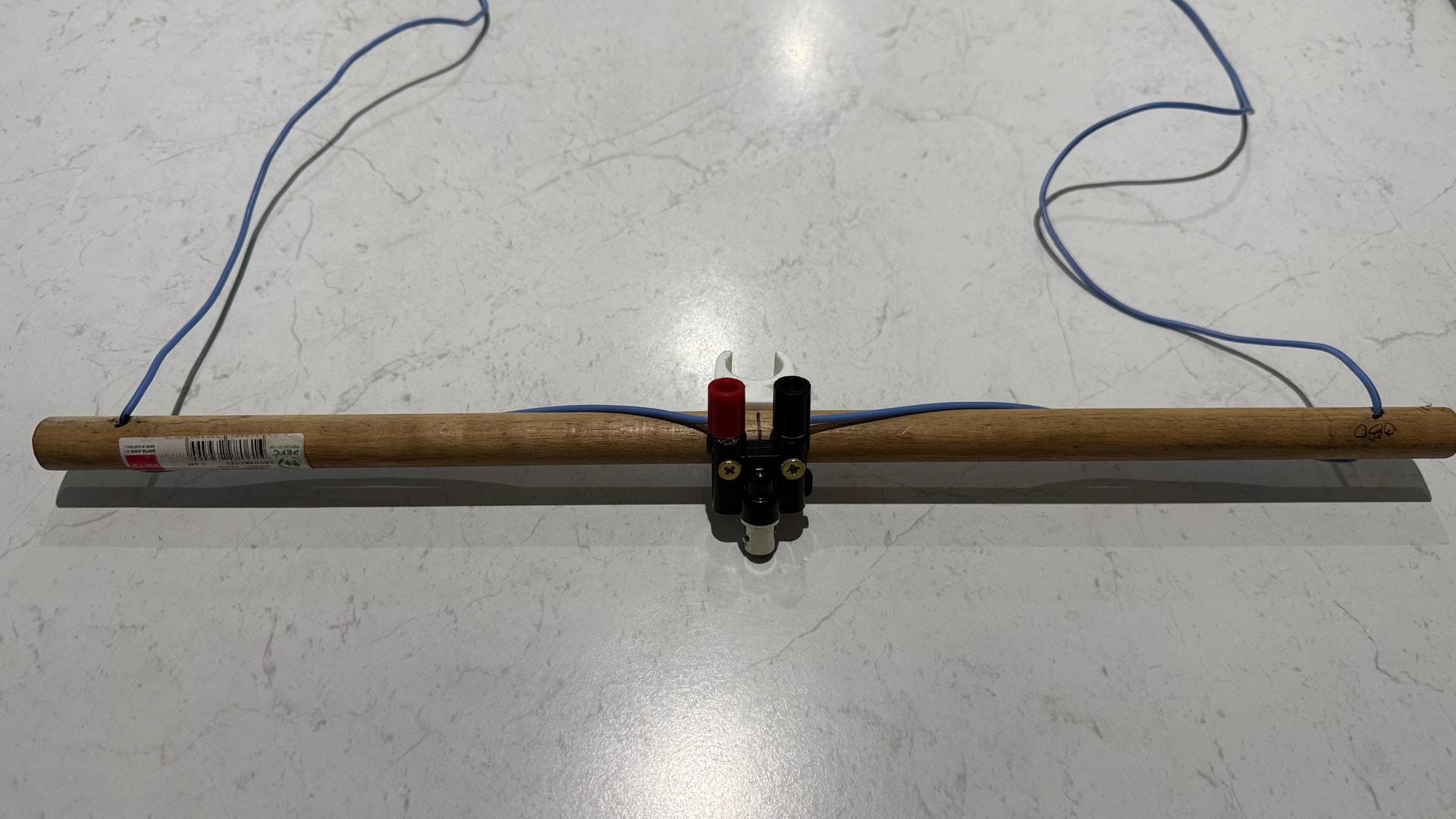
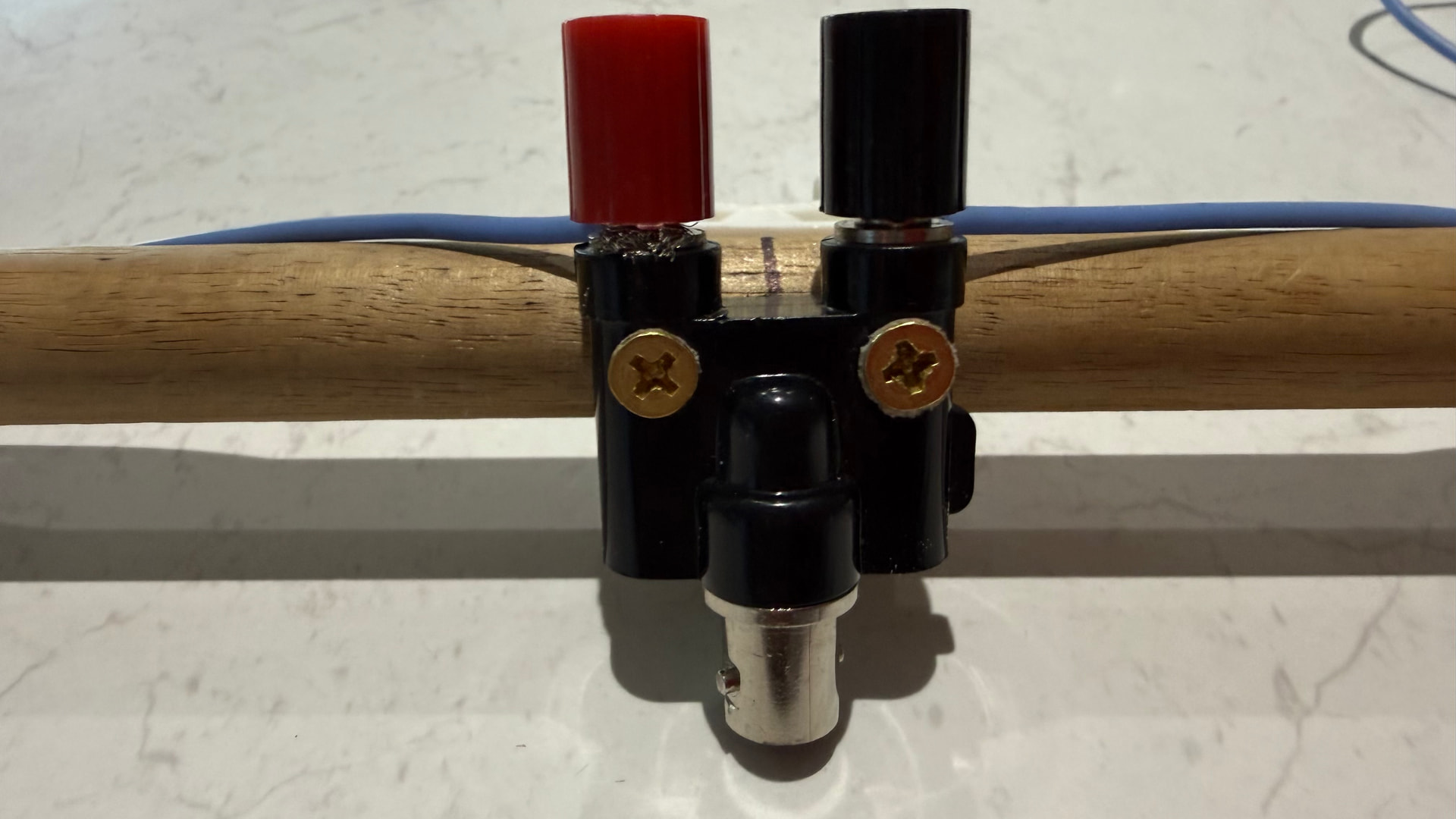
Also I like what you done with the wiring, that is the same approach I want to take, to use a Banana > BNC adaptor. Did you just keep tuning and trimming rather than using tuning flags?
I read in the ARRL piece you can get good gain by adding a second hour glass on the back. Are you going to try that too?
I like that yours is collapsible and portable. Great stuff!
Yes, test, adjust and repeat, no more than 5mm from each side (evenly) at a time. Forget the so-called redundant tuning flags. My version VSWR is 1.03:1 at 144.150 MHz.


 I blame