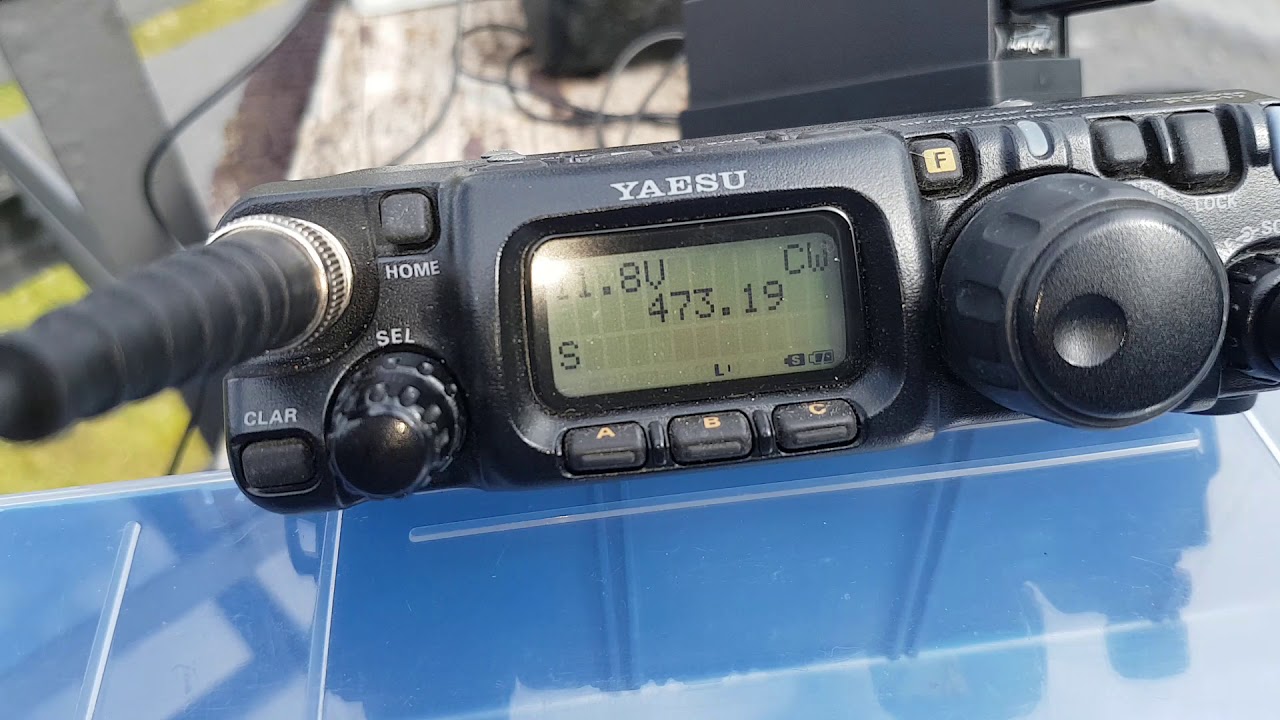
I rarely do HF SSB preferring CW. But it’s not the sound of reception that is a problem. I do 2m FM and that does feel more like a telephone chat, whereas SSB seems to involve shouting into a microphone. One of the many reasons I like CW is no one can hear me talking. I try to avoid activating in a busy area but inevitably someone walks past when I am trying to talk and I am quite self conscious about it. It also means I have to take my FT817 with me.
I would be willing to carry the FT817 if there was a 2m SSB challenge and I’d try CW too.
I don’t think it is a matter of “can’t”, its more a matter of “can’t be bothered”. If it is readable they just don’t bother to fine tune it, they just make their contact and move on. Its another facet of this tendency to tune the band in steps of 1kHz or 2.5kHz, I suspect that many people go a full operating session without ever touching the big knob that dominates the front of their rigs. Not that there is anything wrong with that, I do it a lot myself, but I can handle the surprise when I come across someone with a historical analogue rig on a funny frequency!
It still happens. In recent years I’ve had a few 2m & 70cm SSB and CW ragchew nets with local ops on a winter’s day / evening with the other two drifting in opposite directions [or was I drifting too with my 18yo rig?] for at least 2 or 3 round robins.
I was surprised when one of my G8 friends told me the G4 he was in a 2m CW QSO with recently, complained that he was 150-200Hz “off frequency”. Okay, it can be a tad annoying if one person in a SSB net is off by that much [so switch in the RIT on his turn!], but in a 1-to-1 CW QSO, what’s the problem as long as he’s still in your passband? Must he have exactly the same sidetone pitch every time? I pointed out that some of the more expert SOTA chasers deliberately tx off the activator’s frequency so their callsign stands out in a pile-up.
I always activate on ‘funny’ frequencies (i.e. not on neat boundaries) as they are often quieter.
I am still awaiting payment for use of MY frequency 144.333MHz by a number of operators.
I well recall arriving on a summit (the tenth of ten over a two day period back in 2008), setting up, tuning the rig to 144.333MHz and whistling into the mic to check the system before calling CQ. “Good evening Gerald” came over my headphones. Who needs to call CQ when they know precisely where you’ll be.
Yes.
And if you tune in [fly on the wall, as I have done] to some ARC SSB weekly nets, you’re bound to get one bloke who isn’t bang on the frequency. No problem, set the RIT for him and turn it on / off at the start / end of his overs.
Daytime D-layer absorption will be significantly worse on the 136-kHz allocation than on higher frequency bands like 80m. Would be hard no doubt to make contacts even with CW especially with any realistic hilltop antenna
Activation at 2200 m is certainly a bit ambitious.
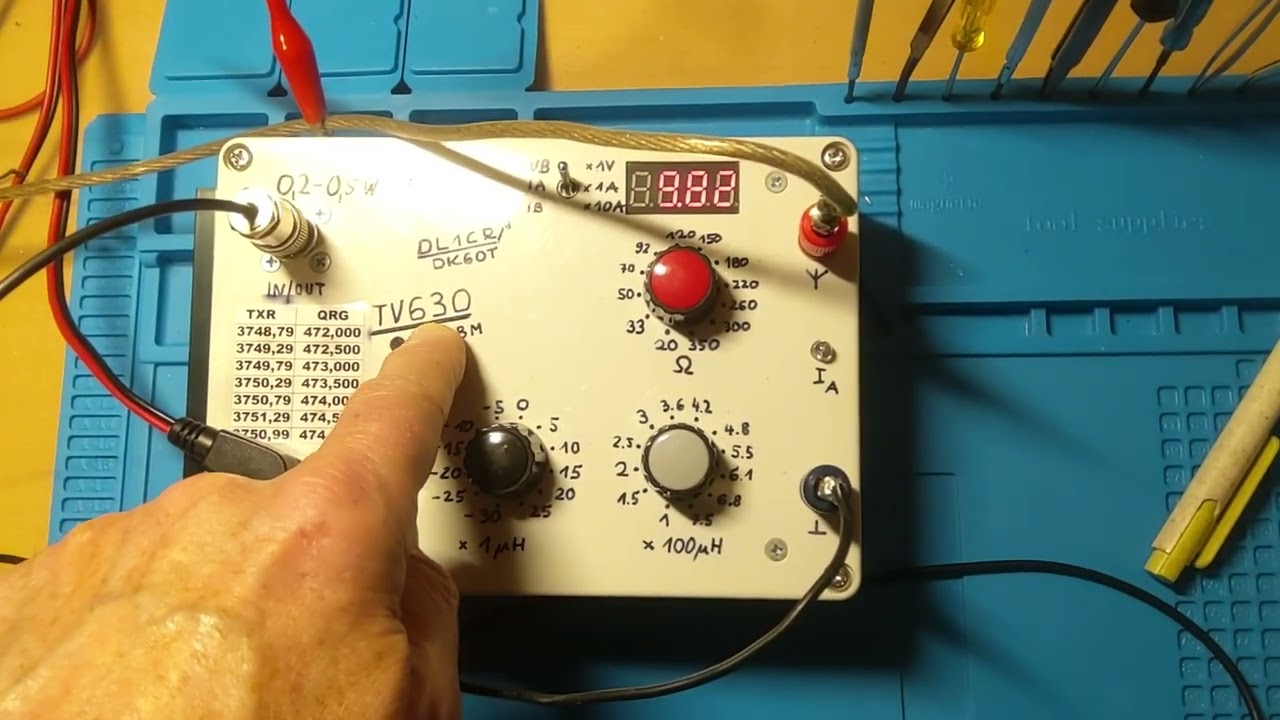
But the 630 m band is SOTA compatible. Unfortunately, my chaser went down. But at least I was able to reach 70 km without any problems. The antenna was a 40 m long wire hanging diagonally from a 10 m high metal tower, serving as a counterweight. The power was approximately 15 W. The extension coil on a toroidal core is built into the transverter.
My keying skill were still very modest back then in 2019.