Hi Pete,
That is my score chasing since 2010
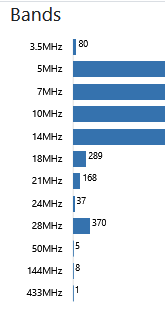
and my score activating since 2020
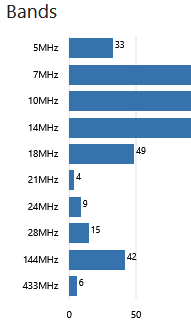
I have a bibande V/UHF tx/antennas but here in my zone I missed fighter

but why not
73, Eric
F5JKK
Hi Pete,
That is my score chasing since 2010
but why not
73, Eric
F5JKK
I would support a 2m FM/SSB Challenge Richard also, but in 2026. Too late to start one now. Glad to have a year off Challenges after the very successful 10m one last year.
I have my own challenge on for 2025 - chasing virtually 100% in CW this year for a change. Less demanding on my time in the shack, but I’ll still do some phone when I am on activations.
73 Phil G4OBK
Yes, I think all discussion is for 2026. I’d like a decision as soon as possible so I can sort kit e.g. make a yagi for 2m.
Hi Matt, usually mornings my local time - 2100 to around 0200Z (20m and up, but sometimes snagged some 40m contacts). in the later afternoon 40m would deliver contacts reasonably well - and I think a couple on 80m in the early evenings.
Matt
VK1MA
Those that know me will appreciate that 2m is standard fare for me. As such a challenge for 2026 certainly appeals to me. As Pete WA7JTM says, many of us used 2m to get an introduction to radio and then, for the majority, it seems that the HF bug bit and working longer distances became the expected norm. 2m got forgotten, or at best became a backup band.
Operating on HF has a definite appeal and I use it extensively. Putting up a dipole or end fed is certainly easier than putting up a yagi and then having to rotate it while operating. However, I for one still value the more local (and sometimes not so local) contacts made on 2m.
Prior to starting in SOTA in 2006, amateur radio for me had become little more than a series of entries in a log book. I had tried all modes and HF frequencies in an attempt to inject a bit of personality into my operating. I was first licenced in 1969 for VHF/UHF only, so the majority of my contacts back then were with people that I had spoken to before. I got to know many of them personally, meeting up at rallies or even just visiting each others shacks. I missed that until I started in SOTA using 2m SSB. Now the camaraderie was back. Working 2m regulars like Graham G4JZF, Don G0NES, Don G0RQL, Richard G4ERP, Frank G3RMD and many others each time I was up a hill gave me what I wanted (and needed) from amateur radio.
So a big  for 2m from me.
73, Gerald
The purpose of a challenge is to stimulate SOTA activity on underused bands. 2m can hardly be described as underused for SOTA since as G4TGJ pointed out, it is the third most used band. In past discussions the MT has shown little enthusiasm for single band single mode challenges so a 2m SSB challenge is unlikely however desirable it may seem. Remember that most of the 2m SSB enthusiasts use horizontal polarisation while most activity is on FM with vertical polarisation and minimal gain, so there are built-in compatability problems. Probably if an SSB challenge occured it would mean moving SSB operating to vertical polarisation, sacrificing the gain advantage of horizontal polarisation.
Gerald, as you were licenced in 1969 you became active when the bulk of B licence activity had moved to 2m. When the B licence arrived in 1964 it was for 70cm and above, and 70cm activity steadily built up until by comparison the 2m band was a wasteland (remember no repeater networks back then.) When in 1968 B licensees were given access to the 2m band activity rapidly moved back to the easier 2m band with its plenitude of commercial gear. I think this is pretty well the same thing as happened with 2m when the B and A licences were combined, HF was cheaper and easier and opened new horizons for the B hams - complicated by the reduction in ragchew activity which may be due to mobile phones.
I use both HF and VHF when activating, but the delight of chatting with regular chasers no matter what the frequency is a key part for me.
I’m probably never going to meet most of them but it makes my day when they call in to my summit.
Andy
MM7MOX
2m SSB/CW/FT8/SSTV/RTTY so not a single mode. Last year we had a single band challenge - the only difference is we might exclude 2m FM just because it’s already popular. It’s ideal as many activators already have suitable equipment e.g. FT817 or IC705 and would just need to make or buy an antenna - even a dipole will work. I tried 2m SSB a couple of years ago with a simple dipole and was surprised to get several replies to my CQ call, including some non SOTA chasers.
Don’t understand the logic of that one. This would be specifically not FM and so not using the same antenna.
Whatever is decided it would be nice to know now so we can plan for it.
There’s another thread about the lack of activity on 70cm. Perhaps that should be the challenge.
A few years ago I had a 2m SSB contact from Shropshire to Devon using my HF doublet. It was made from figure-of-eight flex, split at the top for the dipole, and left intact for the feeder. The overall length cut to give a nice match on 30m*, a tuner used on other bands.
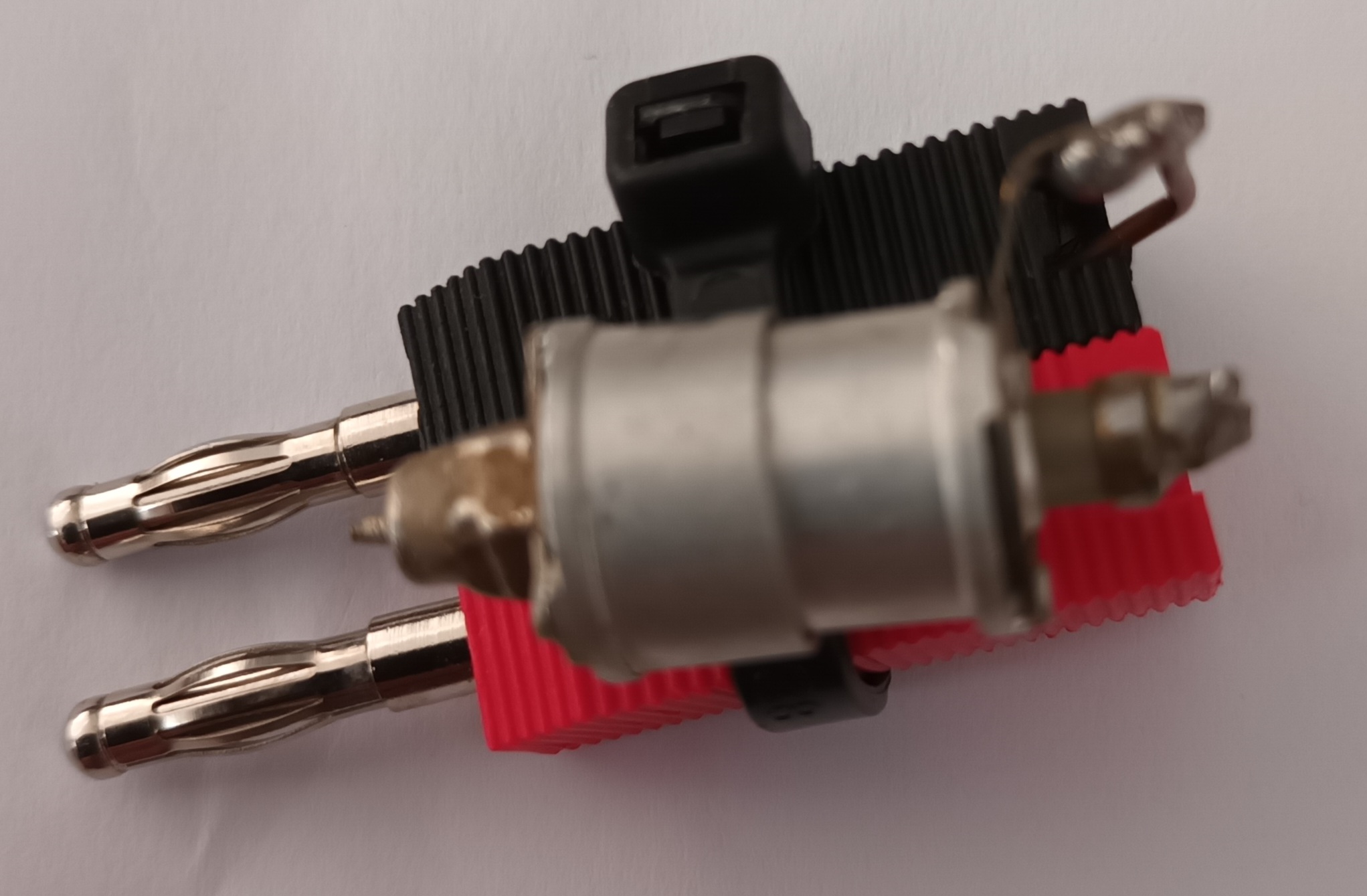
This is the “tuner” for 2m (just a variable capacitor connected across the feeder next to the FT817)
It is worth experimenting…
Compared to when you and I were first licenced Richard, the number of people with 2m antennas horizontally polarised is much smaller. There are still plenty of people with 2m or 2/70 vertical antennas. Given a theoretical 30dB cross polarisation loss, suggesting SSB activities take place on vertically polarised would help people who only have vertical antennas.
Building a 2m dipole is easy. Building a yagi or moxon isn’t much harder. I’m sure lots of people made antennas specifically for the 10m challenge. Isn’t this the point of amateur radio?
There is always slant polarisation too, which I have used to good effect:
I tend to use this on windy summits whether I intend to or not.
Notwithstanding the (hard to quantify) gain of horizontal polarisation over vertical polarisation, I think you have a point w.r.t. 2m/70cm SSB using verticals.
Whatever 2026 challenge the MT eventually decides upon, please choose one that will prevent me selling my FT817 [due to lack of use] and activate with it instead of my KX2
Decides upon? When it comes to something like that, tangental to the main thrust of SOTA, getting a consensus out of the MT is like herding cats! 
A challenge can be a personal one, why not pick one to suit your needs, declare it here and keep us posted on your progress - you might even get people joining you! Something juicy like trying to exceed say 100 points in 2026 activating solely on 70cm, 6m or 80m, or 2m SSB? Something that you have or can knock up the gear for but will not be too easy. Let us make 2026 the year of personal challenges!
Look down, guys - there is a virtual gauntlet at your feet!
Many do personal challenges all the time, so that wouldn’t be doing anything special.
The whole point about a public SOTA challenge is that it encourages lots of activators & chasers to participate in the same activity with self-reinforcing benefit.
Yes, I could have had a personal goal to get more 10m QSOs in 2024 than in the whole time since I was first licensed. And I probably might have achieved it but I wouldn’t have got a fraction of the 10m S2Ss and chaser contacts and overall fun that I actually got due to the public challenge.
In theory maybe. However, in practice I start off on 2m SSB with my yagi horizontally polarised and then move to FM, but rarely do I bother to change to vertical polarisation unless I am really struggling for contacts. Perhaps the fact that I run 25w into a 5 element yagi means that I overcome the 20dB theoretical loss between polarisation modes. Of course the terrain can have considerable effect on how the signals arrive. I’ve often noted knife edge defraction on paths that shouldn’t work, but do.
Maybe there is a case for omitting FM from the challenge as that’s where most of the current activity lies. I would say that it often surprises me to find out that some chasers that run multimedia rigs copy me on SSB, but don’t call me until I move to FM (and I havent changed the antenna polarisation). Is there something about SSB that people don’t like?
144mhz SSB Vertical. Tim G5OLD and myself made a successful 2 way Vertical to Vertical SSB contact on 22/03/25 when he was GM5OLD/P on the isle of mull. 394.81 km / 245.4 mi. GM/SI-027 this year. I’m in IO72RC above Aberporth. I will support any challenge if I have the band and antenna. I really enjoyed the 10mtr challange as it’s one of my favorite bands when open.
Hi Gerald,
I do think there is something about ssb that many people don’t like. The voices sound funny (peculiar) whereas FM sounds “right”. But this in turn is due to people not tuning in ssb properly. There is no reason why correctly tuned ssb should not sound essentially the same as an FM signal from the same voice.
Many people tune in ssb to the point where they can understand the words being spoken, they admit it sounds “high pitched” but they seem to think that is something you have to accept with SSB. If only they would tune down so the voice sounds natural and not “high pitched” or “low grumbly”.
Unfortunately due to the way ssb transceivers work, receiving a signal as a “high pitched” voice means that the other station will hear your voice as “low pitched”. If the other guy retunes you so you sound high pitched, which is the only pitch he can understand, he will then sound low pitched to you.
My brother Chris VK2DO is among other things, a piano tuner. He will often remark to me that I am the only person who is ever on frequency, but it isn’t because my radio is special, I just tune in his voice so it’s “right” and then I know mine is “right” in his receiver. Also I know his rig is on freq due to being GPS locked. However those with a musical ear will generally tune ssb correctly. I dare say the musicians among us would qualify there.
I used early Yaesu tubed radios for years and I knew they were never on frequency and didn’t stay there. So i got used to retuning continuously. One of the hilarious things heard in the ft101b days was the nets that gradually moved up the band. To correct the sound of incoming signals, operators used to set their clarifier/RIT control so their receiver and transmitter were always offset from each other. The offset changed as one of the crucial pots was mounted on the side of the final amplifier cage, so drifted with heat.
In short, ssb is too complicated for many operators. FM is as simple as a telephone.
Bracing for the responses…
73 Andrew VK1DA/VK2DA