Good news from Hans! 73 Chris
6 Likes
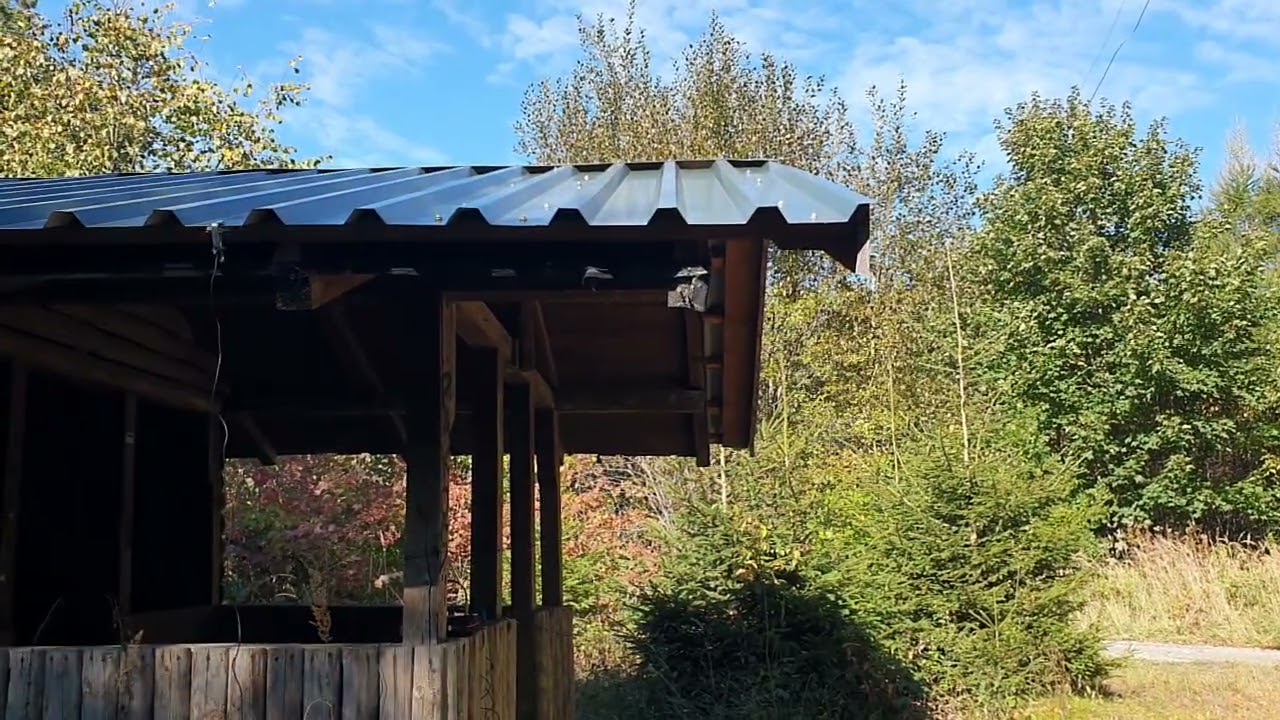
Today I was able to successfully activate the summit DM/NS-122 on 630m and now have a complete with DM/NS-121 on the wave.
73 Chris
16 Likes
Good luck Chris, fingers wires and bridges all crossed for you both…
1 Like
…hi Paul, we in VK can use 630m and 2200m. Food for thought!
Geoff vk3sq
2 Likes
Tnx Paul, my RST 90km away was 539 and a for him a big surprise, when Chris DF5QG later told me that I had only 10W out.
73 Chris
3 Likes
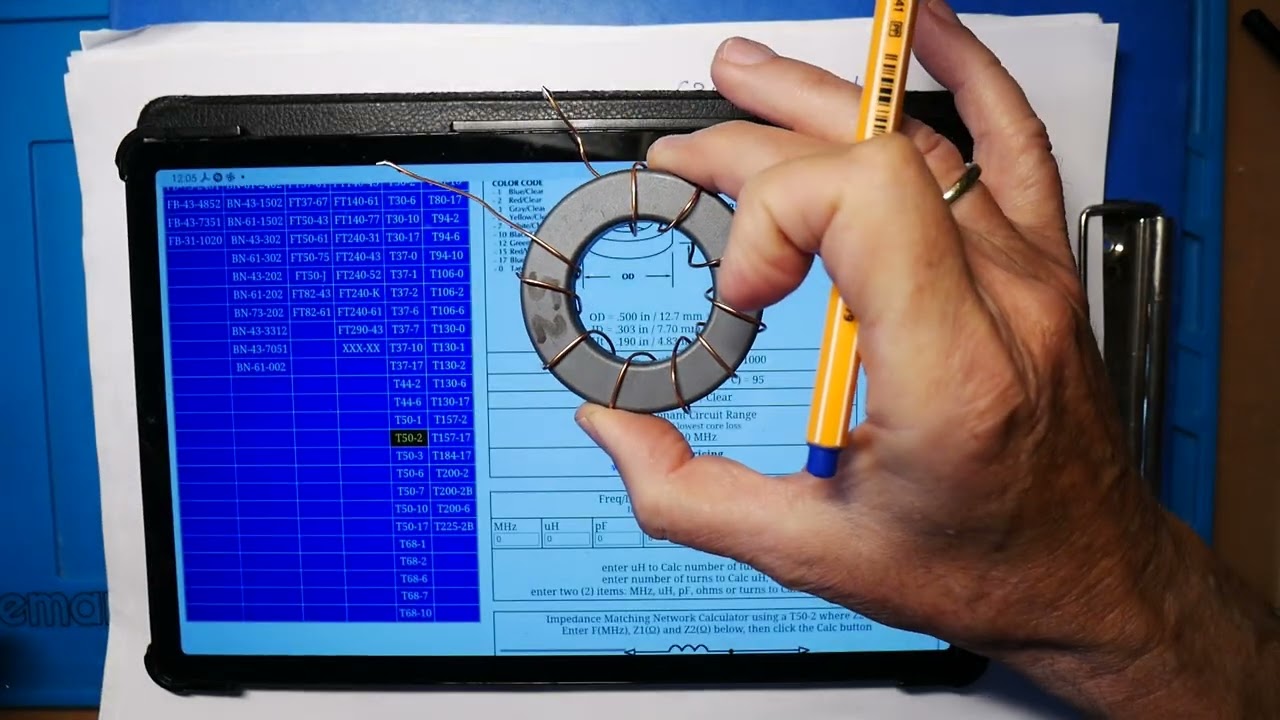
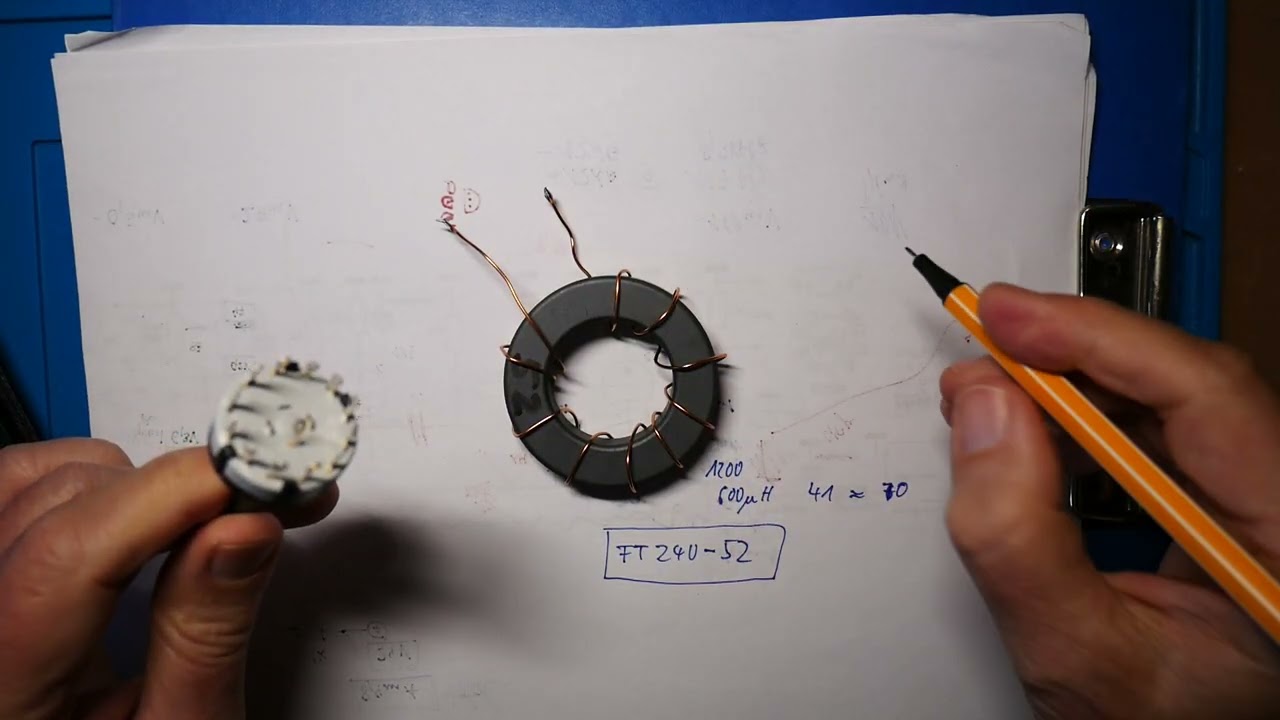
Here are two clips for adapting 630m antennas to the TRX. In German only, please use AI subtitles for translation.
73 Chris
4 Likes
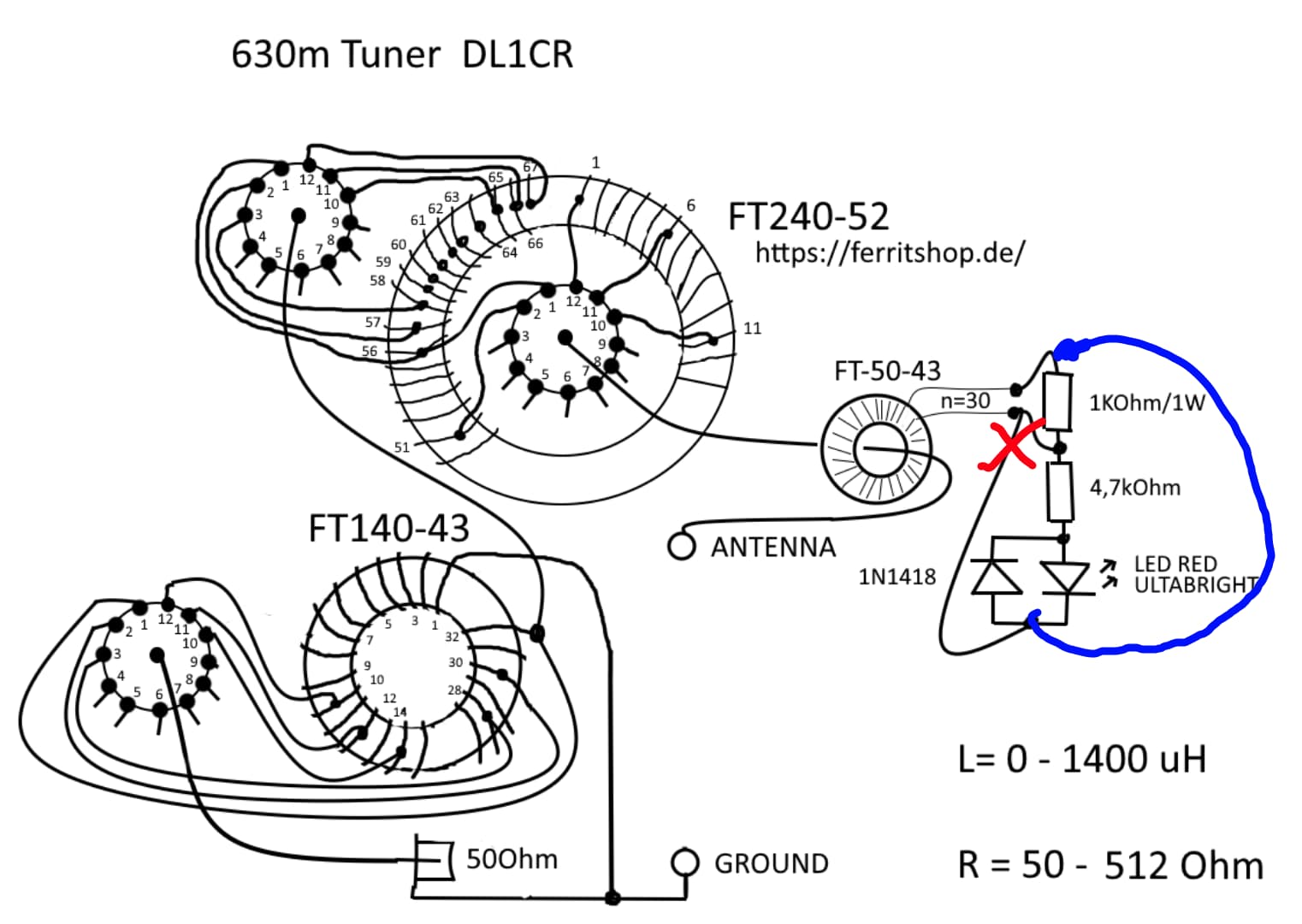
Is it that the rotary switch on the input shunt inducror switches from straight thru (pos 1) to max (pos 2), whereas the two rotary switches on the series inductor switch from straight thru (1) to min (2)? I could be dreaming, it’s late!
1 Like
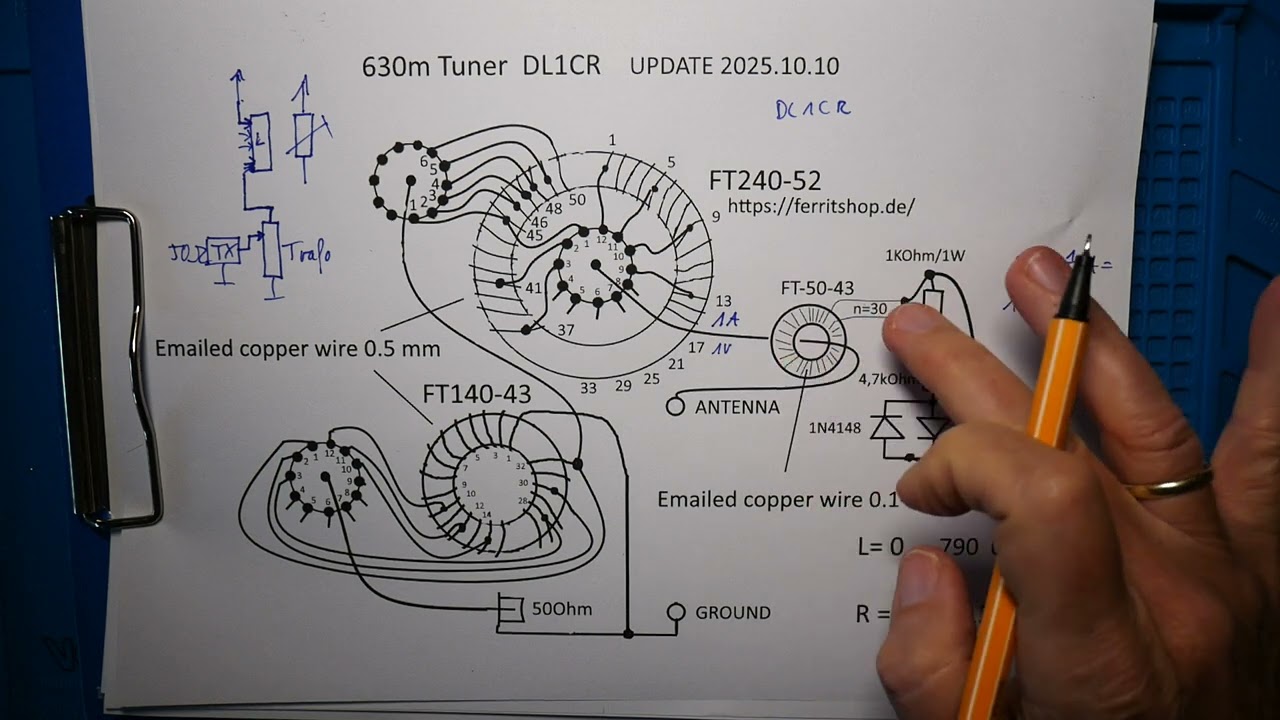
The circuit for the impedance transformer is indeed a bit odd. I try to keep the coil impedance for the transmitter input as high as possible. On switch position 1 it’s direct connected to load coil above. That’s for a antenna and ground with 50ohms. On 12 the 50ohms are transformed to 512 Ohm.for a bad cointerpoise situation.
I will provisionally corrected the error in the schematic in a minute.
73 Chris
2 Likes
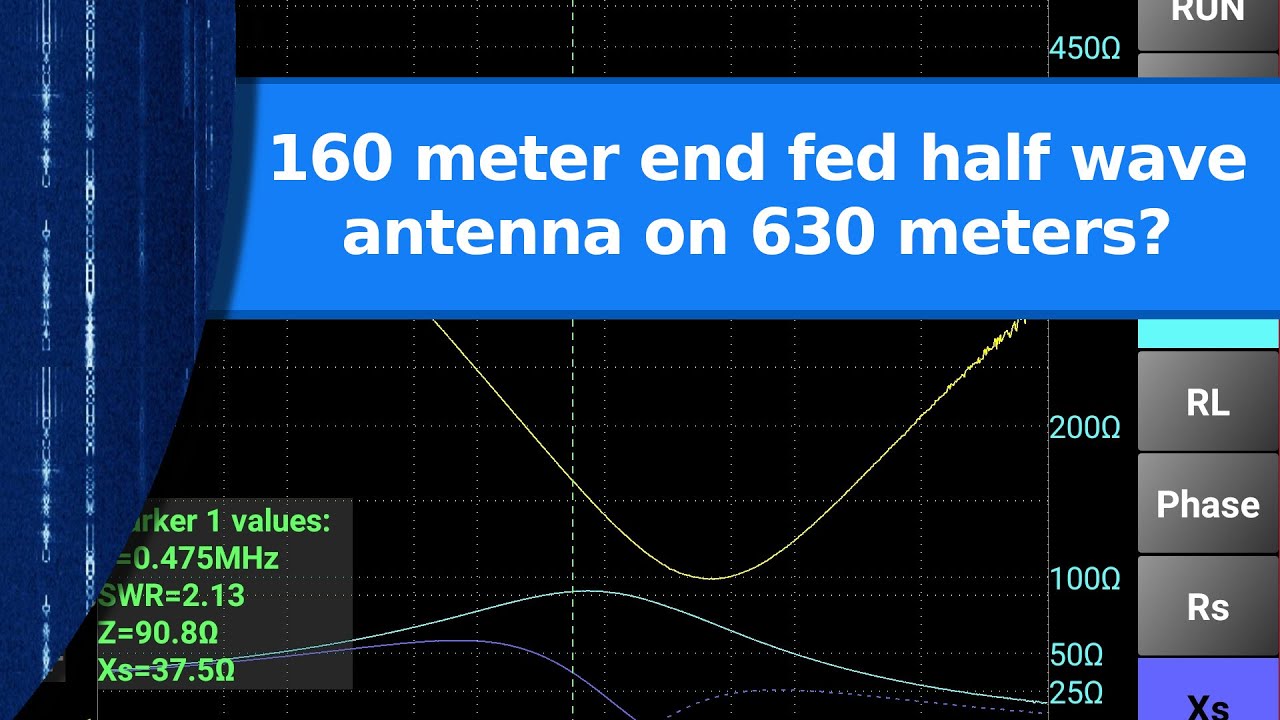
Lars, SA4BLM, sent me the link to the clip. It’s interesting to hear that SSB is also being used on 630m in the States. The band plan in Germany only allows for CW and digital.
73 Chris
4 Likes
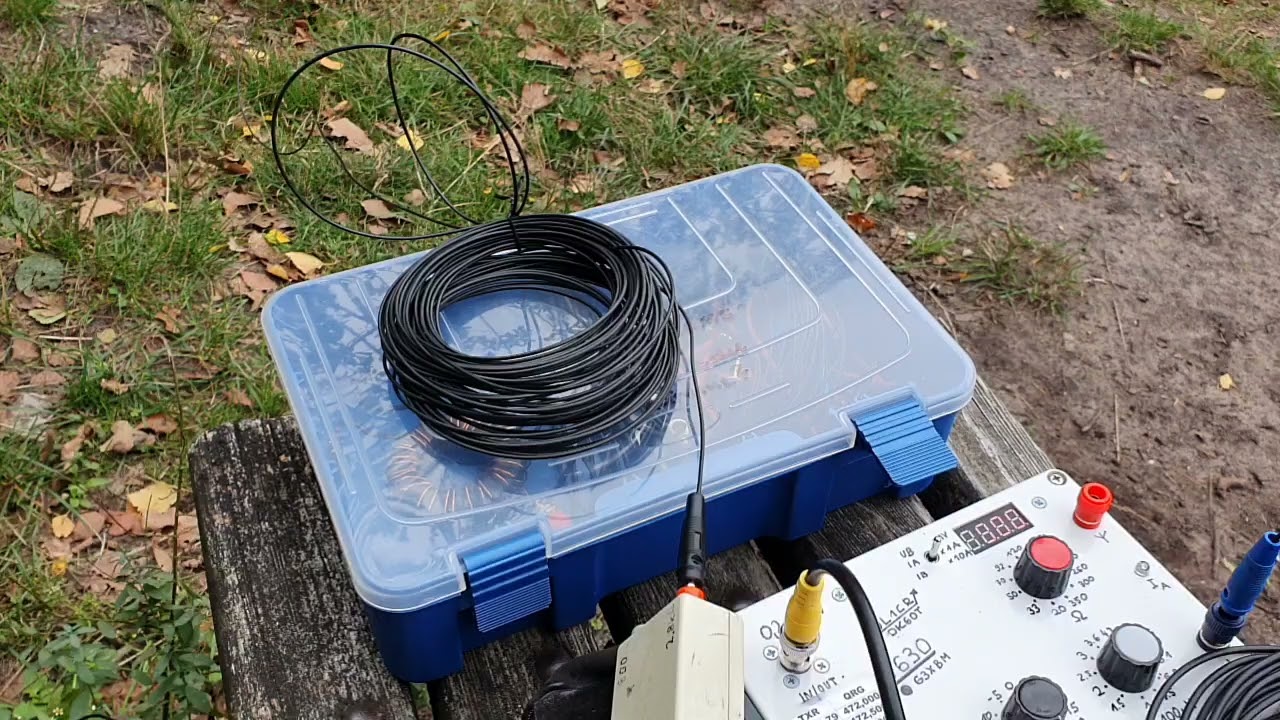
Today I tried a 630m activation with minimal effort.
I used my usual 20m long EFHW 10m inverted V antenna. As a counterweight, I placed 40m of wire in a semicircle under the antenna.
Amazingly, about 600uH was sufficient for tuning, and the repeatability was 559 at a distance of 100km.
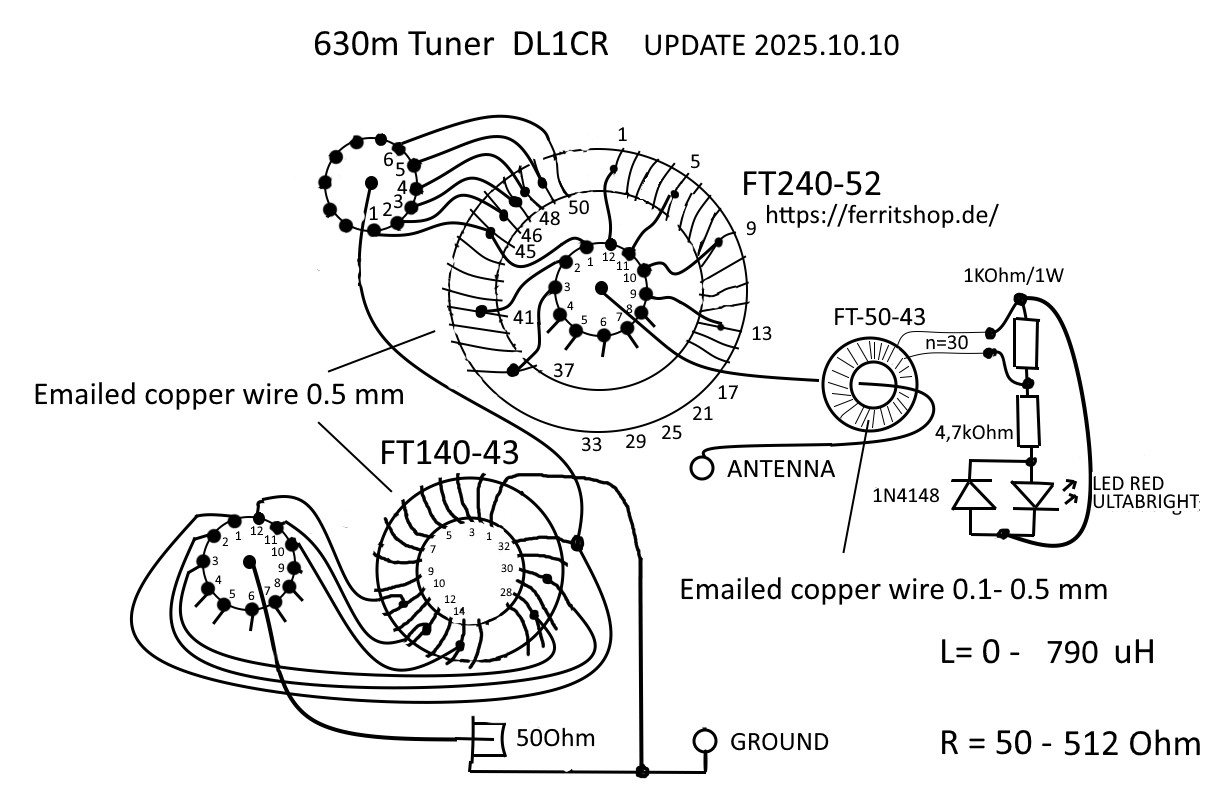
Therefore, I revised and simplified my above suggestion for an antenna tuner.
The rotary switch for coarse tuning still has 12 positions, but for fine tuning, there are now only 6.
A video explaining the circuit diagram will follow soon.
73 Chris
6 Likes
Please use AI subtitles for translation.
73 Chris
5 Likes
Chris, thanks for posting about your experiences with 630m, the equipment and antenna setups, as well as your antenna loading/matching unit. I’m thinking of building one of Hans’ QDX-M units for 630m and trying to build a similar matching unit to yours.
'll start by deploying some wires over a few activations and measuring their capacitive reactance to determine how much loading inductance I’ll need in my different operating environments.
-Nate
N8BTR
4 Likes
Dear Nate, thanks for the kind words.
I’ve neglected 630m activity a bit over the last few weeks and months. There is a PCB available for the converter now. I’ll be getting back into 630m more this coming winter.
Wishing you lots of success.
73 Chris
4 Likes
Chris,
Are you able to share any testing, data, or information on how you arrived at the FT240-52 toroid? Did you try any other cores, or was there something specific that led you to choose that one?
I’m also curious if you’ve measured the core temperature during operation. I saw that you ran WSPR at 10W, so I assume it handles long transmissions reasonably well at that power. Do you know how it behaves at 20W or higher with continuous transmissions? Does the temperature become an issue?
My understanding is that the heating is related to both the number of turns used and the antenna current. So I know a longer wire and/or a better counterpoise/ground system (like you’d typically have at a home station) would result in significantly more current and therefore more core heating.
Just trying to get an idea of how much power this loading coil setup can handle in the portable antenna environment.
Thanks!
-Nate
N8BTR
1 Like
Initially, I stacked two T200-2 cores to achieve the required inductance of approximately 600 µH; the T2 material is known for maintaining a high Q-factor at frequencies of 10 MHz and above. However, I later discovered a core material listed at FT240-52 that is suitable for resonant applications up to 5 MHz—and thus perfectly adequate for 472 kHz—while also requiring significant fewer turns. If you can’t get the 52 , try it with the well-known one FT240-43.
I have not yet gained practical experience regarding heat generation caused by core losses, but I assume these losses are negligible compared to the losses associated with ground resistance.
My current transverter has an output of 50 W. I will measure the heat generation during the initial testing.
73 Chris
3 Likes
Thanks for that detail, Chris!
I’m on a Slack group for discussing 630 and 2200m, and someone mentioned trying a toroidal-core loading coil. He said the core got hot with 100W of RF, so I asked what mix he was using. That led to some discussion about other people who had tried toroidal coils, and it sounds like they often got VERY hot.
One guy said:
“When we were trying, they would saturate and smoke at under 10 watts. The enamel was burning off the wires. We tried several different mixes - 2, 30, 73 and 75. Never had a good result. Very easy to kill a ferrite at those temps exceeding the Curie point. Had to throw them out after that.”
Someone also shared a video of a guy operating 630m in Hawaii with 50W. He was using eight -2 mix cores in series with a very short antenna. A couple of other people chimed in with similar experiences.
I’ve been doing quite a bit of research into toroids, core mixes, and their properties since then.
So far, if I’m understanding this correctly, it seems that to make a toroidal loading coil work reasonably well on 630m, you really want a relatively high antenna/feedpoint impedance so you can keep the RF current through the loading coil down, and you probably don’t want to push very high power through it.
That makes me think this loading approach may be much better suited to a portable 630m setup than to a 100–500W station with a large ground/radial system, as some of the commenters in that group are running.
I’d love to see any data anyone has on this sort of thing, and I plan to do some testing of my own.
So far I’m thinking about trying 61 mix (very high Q, but no published data below 1 MHz), 52 mix (good Q at 475 kHz, as you mentioned), and -2 mix.
And, again, I plan to deploy some wire in a couple experiments and make some antenna measurements as well.
-Nate
N8BTR