In Spain it’s best to use the direct auto-spot frequency you’re going to use …if on random FM, generally 145.5, it’s already difficult…on 144.3 SSB It Will be a Miracle.
On this global reflector, how do you annotate provincialisms or regionalisms like this? lol
I put together a regional cheat sheet for this challenge and shared with my regional SOTA group. It includes all sorts of provincialisms like our national band plan/calling freq, regional 2/70 weak signal nets, etc.
(I do automatically make some allowances for reflector . sota . org. uk. )
Best regards,
Drew
n7da
1 Like
Perhaps it would be a good idea if all such variations would be noted here,
1 Like
2027 challenge: fastest time from leaving the car to first QSO on Billinge. Sub 10 minutes?
2 Likes
Less, depending on where you parked it can be done the moment you step out of the car.
The two parking spots on crank road are just inside the az (I’m about 90% sure of this but never activated from there). The main issue is the proximity of the masts.
Fully laden to trig is about 5 to 10 minutes of mostly flat so a light jog would be possible.
Great Orme, Gun and possibly Long mynd are other that come to mind for record attempts 
1 Like
Kit Hill!
1 Like
Polarization and antenna mounting: For VHF/UHF activations, I have a 3D printed mount that holds my directional antenna, lets me switch polarization on the fly, and attaches to the mast I’m already using for HF. https://youtu.be/mPXz5-MpXUg?si=9rlLXCGYfJVIts67
6 Likes
Josef, some nice ideas there which proves once again that I need a 3D printer.
I did get a friend to modify and print G7SAT’s antenna mount.
Here it is with 23cm Yagi designed by DG7YBN and a SG-Lab transverter.
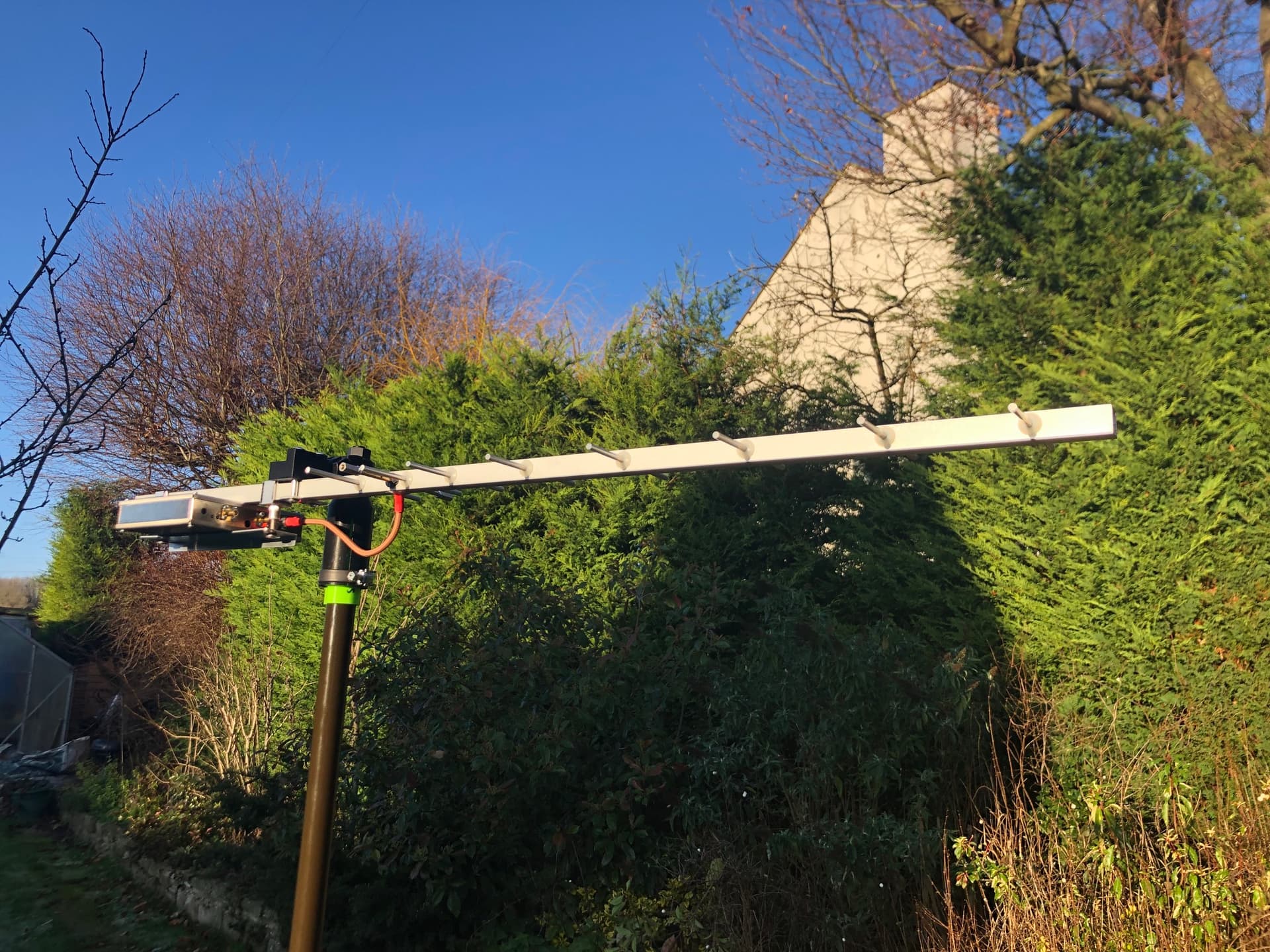
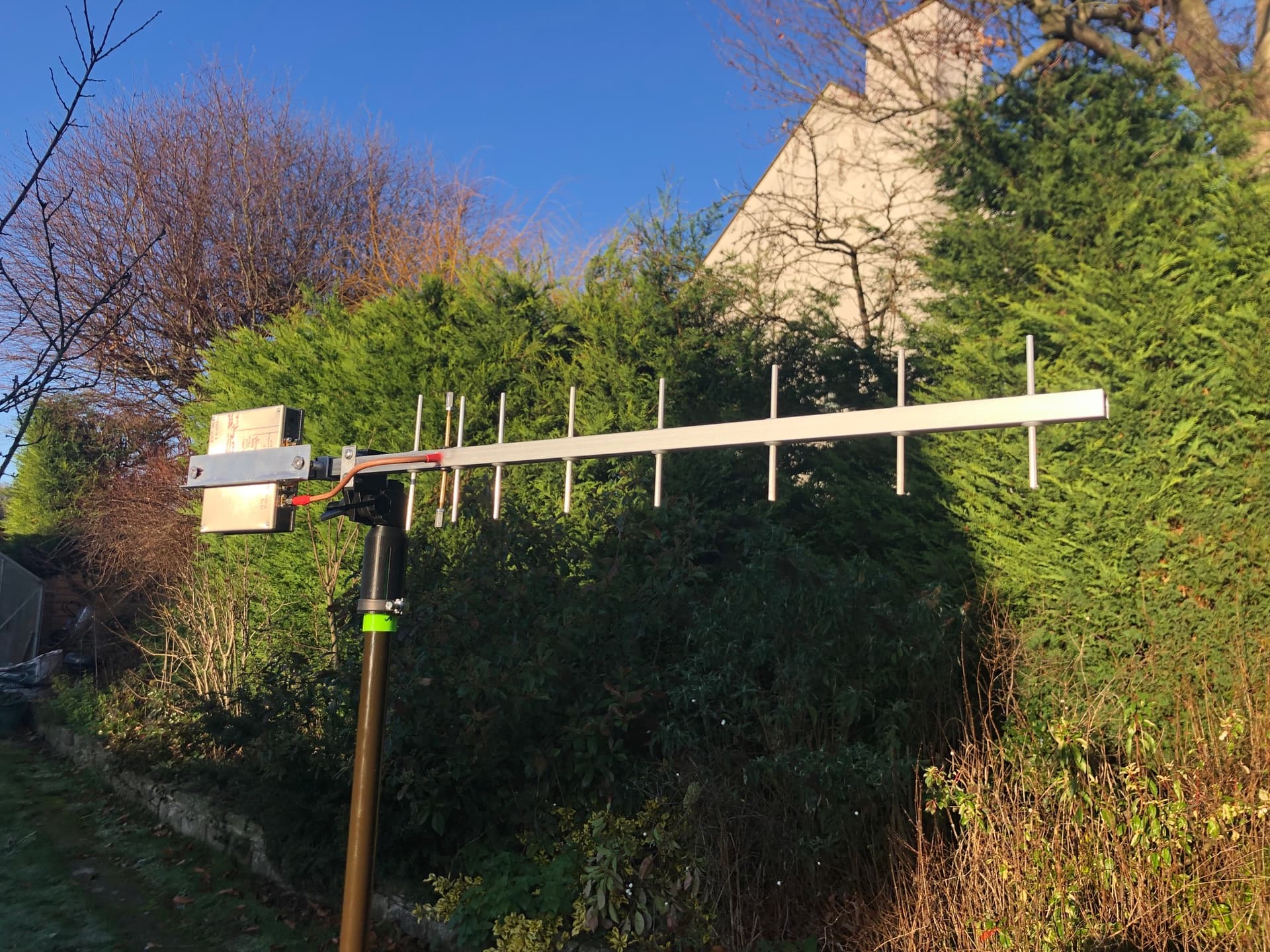
5 Likes
KD7QOW…That piece is interesting, is It abalaible online for printing?
1 Like
Probably the best investment I made this year. No regrets and wouldn’t be without one now.
In 2025 I designed the Adiemod on one (18 different prototypes) as well as designed a stand/carry handle for the FT-290R, printed a Moxon, various CW keys, a battery storage box, a FIFA World Cup trophy replica and even a replacement part for a Nintendo Switch OLED that saved me a fortune on eBay scalper prices.
I hope to print (and hopefully design) more CW stuff in 2026 as well as more antennas too.
3 Likes
This keeps being brought up because it isn’t clear. If it was consistent and unambiguous there wouldn’t be a problem.
So it appears that 144.300MHz used to be called the SSB calling frequency but for reasons that no one seems to understand it was changed to be a centre of activity but with no difference in how you should use it i.e. QSY after establishing contact. Perhaps the new name implies that when the band is busy you should just find a clear frequency near the centre of activity and call CQ there. Not sure if that happens very often!
A simple solution would be to add a footnote in the bandplan saying that you should QSY after establishing contact on 144.300MHz.
With SOTA this discussion is probably moot since you should find a clear frequency and self-spot. I’m hoping that if I do this specifying that I am using vertical polarisation I will get contacts.
3 Likes
Here, the stations best equipped for SSB (weak signal) will have their antennas set to H polarization… all other contacts will be incidental… we’ll have to keep trying and see what happens. I don’t see much local activity, which is a shame.
When this was discussed on the reflector in 2021, I attempted to point out that a COA frequency is not the same as a calling frequency, i.e. you are generally not required to QSY after establishing contact on a COA frequency. The terms are not synonyms.
For example, 7030 kHz is the UK 40m CW QRP Centre of Activity. It’s just a portion of the band where CW QRPers are to be found. Anyone can have QSOs on 7030.0 and they aren’t required to QSY. Folk tune around that frequency. The COA frequency itself isn’t special.
I understand the argument made back then by Brian @G8ADD (and others?) that VHF might be different. I don’t have a strongly-held opinion on that, but just point out that HF also has weak signals, QRN, QSB, etc.
The problem with amateur radio, like so many hobbies, is that not all on-air procedures and etiquette are codified in a written set of rules. Most of it is by custom and tradition, which can and do change over time, and many don’t like a change even if it comes from the RSGB [although they might stick to everything else in the band plan].
IMO, the band planners would have stuck with the original definition for 144.300 as a calling frequency had that been their intent, or at least added a ‘QSY’ footnote to that effect. It’s one thing for the RSGB VHF Band Manager to express a personal opinion that folk should continue to QSY. Then why isn’t that explicit in the plan? And, if you feel strongly enough about it, why haven’t you brought a campaign to the RSGB to have a clarification note added to the plan? Anyone who’s been licensed 10 years or less wouldn’t know about the previous history of that frequency.
Anyway, I’ve found an explanation for the change, and I copy it here without expressing any personal opinion. Take it with a pinch of salt. Please don’t shoot the messenger.
…
The RSGB shifted 144.300 MHz from a dedicated UK SSB calling frequency to the VHF Centre of Activity primarily to centralise activity, promote better spectrum usage, and align with international standards, making it a shared, active spot for local and DX SSB contacts on 2m rather than a potentially quiet, fixed UK-specific channel, encouraging more dynamic use as activity dipped.
Key Arguments & Context:
Low Activity: The original UK SSB calling frequency wasn’t getting enough consistent use, making it less effective as a beacon for activity.
Spectrum Efficiency: Moving it to the COA meant it became a focal point for all SSB activity (local, regional, DX), ensuring the frequency was more likely to be occupied and useful.
International Alignment: A shared COA frequency helps coordinate with European and other countries’ band plans, facilitating cross-border contacts.
Encouraging Usage: By making it a bustling hub, it was hoped more operators (especially newer ones or those with limited antennas) would use it, bringing the 2m SSB band to life.
1 Like
Yes, it is! I just posted it to my Thingiverse. https://www.thingiverse.com/thing:7250990
I’ve also got one in there for an arrow antenna yagi. Both mounts are designed specifically for the Sotabeams tactical mini. I haven’t verified if they work for other masts, although I don’t see specifically why they wouldn’t.
1 Like
Yes, it’s annoying when you can’t be sure what the current flavour of operating is preferred.
1 Like
TNX
73
1 Like
Like many other died-in-the-wool 2m SSB operators* I often had a rig on and listening to the calling frequency, listening to whatever traffic there was and waiting for DX to appear, the sudden onset (literally in seconds) of sporadic E or aurora, very occasionally a major meteor over Europe that for seconds or sometimes minutes let you hear everything over a very wide area, and I busied myself with other activities with half an ear on the sounds from the rig. This was the value of the calling frequency, one spot to monitor. A so-called Centre of Activity is too diffuse, it cannot be used the same way. One could use scan mode, I suppose, scanning a band each side of the centre, but it would slow down reactions. To my mind it is a backward step, an institutionalised inefficiency - just the sort of thing that earns the RSGB a measure of cynicism from the people that do things instead of sitting in committees!
*As I was, when activity collapsed my interest migrated to SOTA and the lower HF bands!
PS There is still a calling frequency on 6m SSB for intercontinental DX, which during the season I use the same way as outlined above.
Your example probably exemplifies the thinking behind the change to the VHF/UHF band plan, i.e. even dedicated 2m SSB ops like you were finding ad-hoc activity - outside of contests, special events, SOTA alerts, etc - had “collapsed”, hence it became largely a waste of time monitoring the calling frequency, and so interest drifted elsewhere in the hobby.
On a technical point, modern rigs with frequency-range waterfalls make it easier to spot (visually) that occasional burst of activity rather than scanning a range of frequencies.
Many of us older hands are convinced the Great HF Migration was caused when Class B licensees [substitute your national term as appropriate for access only to 144MHz and higher] like me were allowed onto HF following the (perfectly reasonable) abolition of the Morse test requirement mainly from 2003-2007 following a rule change by the ITU.
It’s a pity because folk of our ‘maturity’ know how it used to be. I still get a certain frisson hearing a VHF CW or SSB signal that I don’t get with FM, which is why I’m glad about the 2026 SOTA 2m/70 SSB/CW Challenge.
Andy G8CPZ / M0ALC
1 Like
Any thoughts on calculating current grid for <MY_GRIDSQUARE> when you are using PoLo to just chase. That field isn’t included in the full export when you chase only with PoLo
The trouble with that is that a visual indication requires attention, aural monitoring can continue while engaged in other activities.
1 Like