Have been looking at the QMX as a potential self christmas present but found the waiting list for the assembled device to be over 4 months. Didn’t know it was that popular. Maybe it might be a birthday present instead
Thought it is a nice small TX that seems to punch way above its weight and price in terms of functionality and it does ssb so can use it now and cw for when i learn cw.
The QMX is awesome! You should definitely get one.
The kit isn’t terribly hard to build if you have some patience and decent soldering skills. I’ve built a QMX mid band, QCX 20m and I have a QCX 40m waiting to be built.
Also, if you’re worried about your build skills and run into any troubles, Jeff Moore W1NC fixes / tunes up peoples QRP-lab radios. Jeff doesn’t actually charge for his services. He just accepted donations of whatever you can / want to give. All the donations go to keeping parts in stock so he can help out others with their radios.
Christmas is every year and the QMX is really awesome:+1: . Keep in mind that the power is only 5W, so you might struggle in difficult conditions (in SSB, in CW this might be easier). Also, the QMX has no tuner, sometimes this might help, especially when the summit is in a dense forest.
But by all means, get one! This little rig will amaze you!
The SSB is CESSB, so that gives a bit more “oomph” to the signal. And let’s not forget to mention that the QMX+ is very picky on the voltage: 12V means 12V. I love mine, but found it too fragile to take it to Japan, given all the reported issues of QMX+’s which die after a few days of use.
Yes, and the modulation is applied as Polar modulation (effectively, the modulation is applied at the final amplifier stage so that it can run as Class C). The result is a higher efficiency and hence lower power consumption for the same output power. Flex is using a similar approach in their latest radio the Aurora.
yes. i currently use an FT817 for sota activating, not that i do much of it but get out a hand ful of times a year if i’m lucky, so a QMX gives out the same power but smaller and lighter.
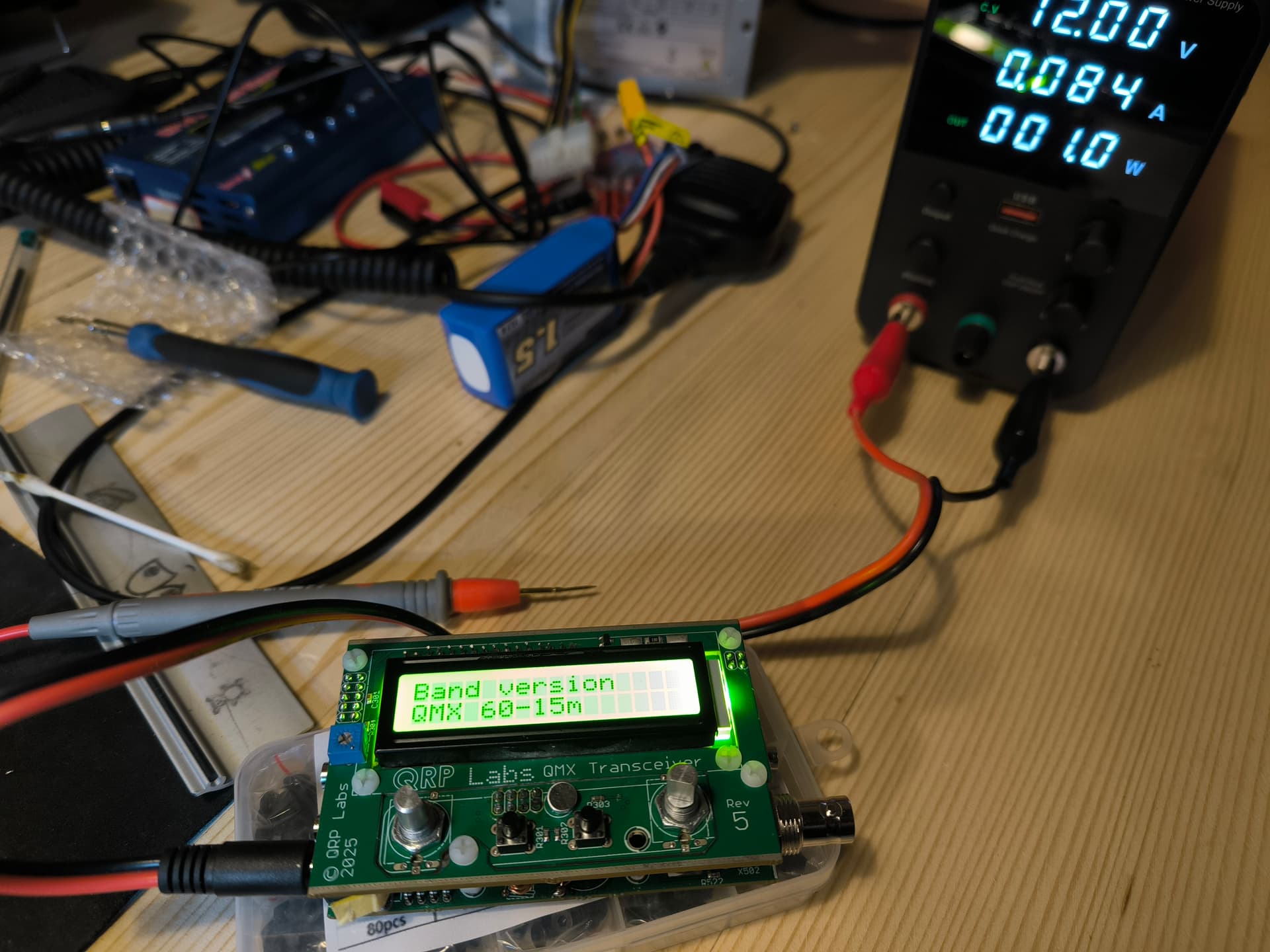
I just received and built my kit yesterday. It wasn’t hard; you just need a suitable soldering iron and a few basic tools.
However, you’ll need some patience and troubleshooting skills. I had a short between points A and B (see the assembly manual) and found out that one of the BS170 transistors was defective and shorted. I’m now waiting for replacement transistors.
I also received the board with a broken inductor, despite the protective packaging. The tiny wires don’t seem broken, so it might still work with a bit of glue.
Now, knock on wood, hopefully it will start on the first attempt.
The QMX is one of the best values in ham radio equipment. Because of its low cost and small size there are some characteristics to keep in mind. The small size requires a very dense package. A steady hand with good solder skills are needed to make repair, the SMD ICs requires special equipment to replace. Keeping costs low means the mechanical parts (encoders and switches) may need replacement. The QMX works, it is sensitive and selective enough to make plenty of contacts, but it’s not a rig costing 10x. Check out the QRP-Labs Groups IO page for other owners experiences. GL & 73
Firstly, you’ll have an idea RE the components and layout if you ever need to trouble shoot. Some factory assembled units need trouble shooting occasionally, so you may as well know it inside out. Plus I found it was a lovely project to sharpen up my soldering skills, lining components up properly, etc.
Take your time with it - enjoy the building zen.
It has a handy function to check SWR - you can check it before hitting the PTT button at least. Better than nothing.
You can also set an SWR protection level. I’ve set mine to 2 - just in case something changes in the wind (or someone walks into the antenna?).
With a dead short, I doubt either would help though.
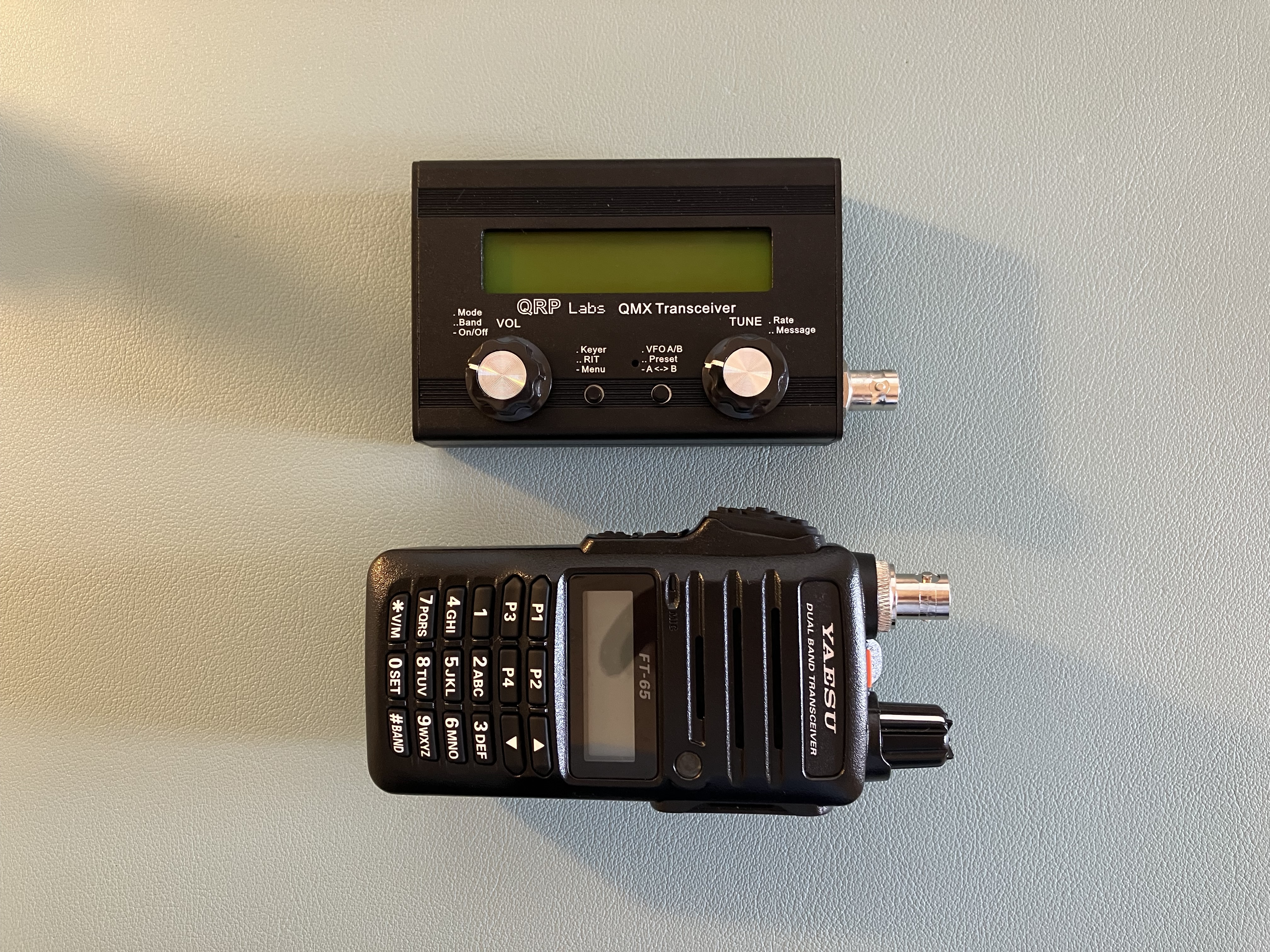
Not a criticism, but I wonder whether an extra cm here and there might make it a bit more popular for self assembly? It’s quite tight as you say. It’s ridiculously small - here it is compared to my FT-65.

 .
.