Question on anti-static bleeding method
Walking the dog in lovely late afternoon sunshine yesterday along the wide low-tide sands on the River Kent estuary near my village I felt inspired to resume my interest in kite-borne antenna radio using a vertical end-fed long wire [for 60m and 40m] suspended a few metres below my [SOTAbeams] kite from near the upper end of the flying cord. This is not intended for SOTA activations but just a bit fun and a challenge at my local coastline [somewhere with not many people around!]. I’ve tried it briefly a few times but have been nervous about connecting it to my precious KX2 for fear of electrostatic damage.
In the example setups I’ve seen they use a bleed resistor (about 1M-ohm) from the bottom of the vertical long wire to ground to bleed off static build-up in the antenna wire due to friction with the air.
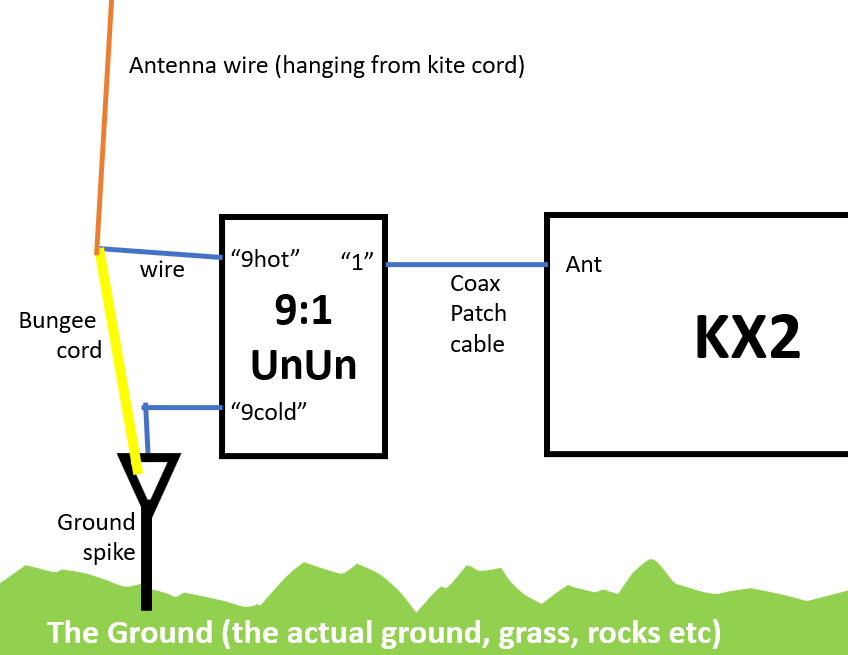
I plan to use a 9:1 UnUn [redundant from an old antenna project] to help the KX2 internal ATU match the hi Z of the EF LW. The ‘hot’ terminal of “9” side connects to the end of the EF-LW and the ‘cold’ terminal goes via a short wire to a [‘dog lead’ type] metal ground stake that skewers about 15 cm into the ground. The ground stake also acts as a physical tether for the lower end of the antenna wire via a short length of bungee cord.
I think the “9” side of the UnUn will provide an adequate DC path to the ground stake to bleed off static (in lieu of a bleed resistor) and my KX2 should be isolated on the other side (“1” side") of the UnUn.
Do you think this is a safe alternative to the bleed resistor?
Regards,
Andy G8CPZ