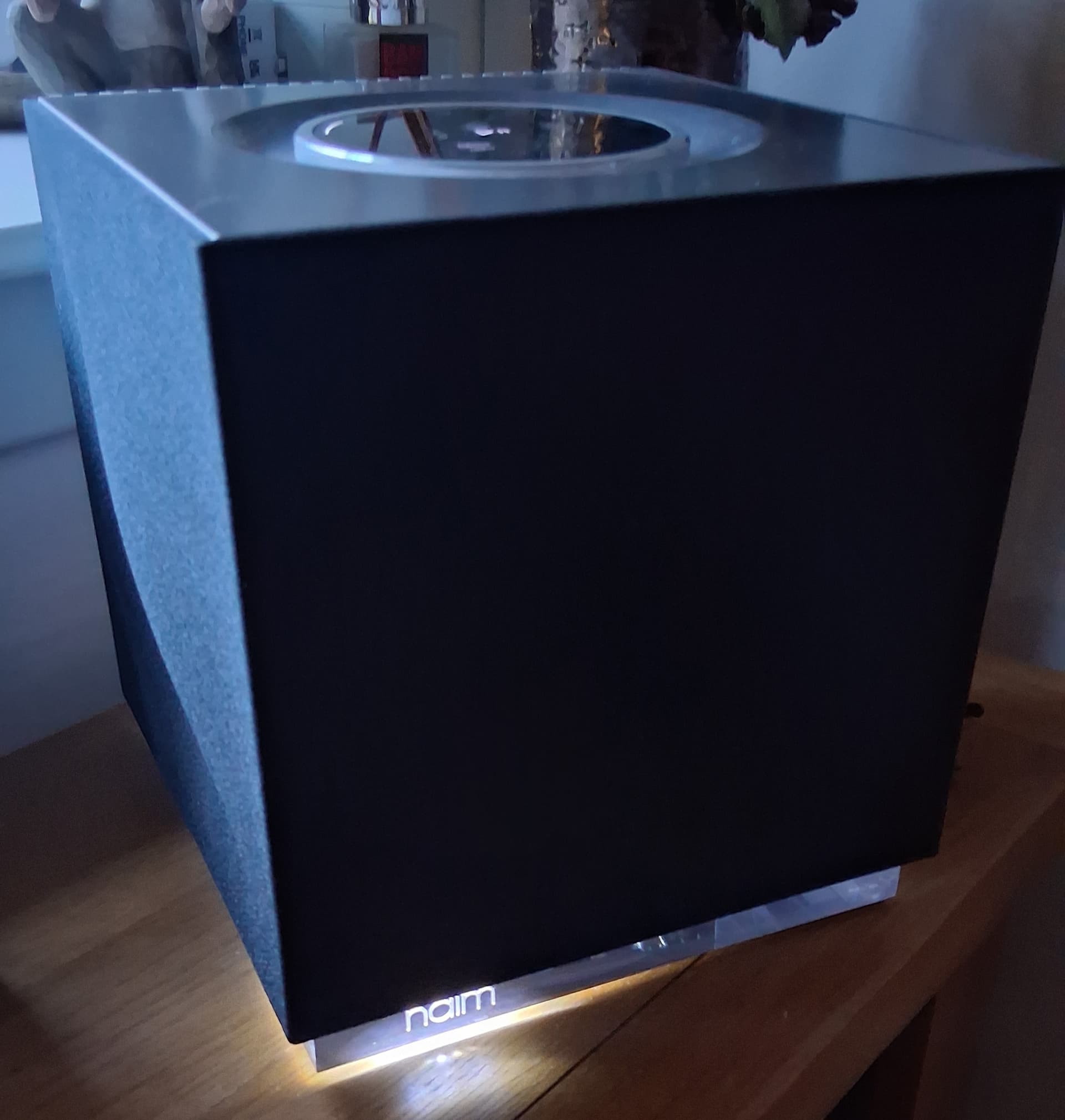
Given the frontend of many DAB/DAB+ receivers are as wide as a barn door, perhaps look at buying/building something like this;
73 Ed DD5LP.
Given the frontend of many DAB/DAB+ receivers are as wide as a barn door, perhaps look at buying/building something like this;
73 Ed DD5LP.
As has already been alluded to, RF broadcast radio is in its final years, in the UK anyway. Once the country is awash with fibre, the mass switch off of power hungry and expensive transmission towers is bound to commence.
Written as I listen to Internet Radio 2 on this.
Andy I am in the fairly unusual position, at home of having acceptable DAB reception but no Band 2 FM at all - even with a decent antenna, and almost nothing on 198 KHz either ( It is probably wiped out by the overhead power lines but it would be 44 at best with a normal radio), so for me DAB works well enough for my ears, well a lot better than trying to pick out anything on FM or LW. (Somewhat redundant with Gb Fibre)
I am also now somewhat in a quandary. When you listen to someone on the radio, or read their comments on the reflector I find myself forming a mental picture of the person and my picture of FMF seems to vary from the one for LLD. FMF was a whiskey drinking software genius tramping up steep Scottish hillsides in search of disposable vapes and LLD has his slippers on listening to The Archers in surround sound….
Finally on this off topic thread I had a defender for years and it did have a radio. I found that listening to loud music stopped me from worrying too much about the new noises it made ( I dealt with a variety of issues with bearings, driveshafts, and my particular loathing was the Windscreen Wiper mechanism which was painful to access…) If I could hear the noise above the sound of the radio it was probably worth fixing! (Frazer - I did enjoy my Landy but I’m rubbish at welding and it needed a lot…)
73. Paul
I feel your pain….I have to remove some of the dash to replace a vent control cable and I will be looking at the wipers while the dash is in bits.
…and it only ever went wrong in snow or sleet requiring three hours of fingerless gloves… (I think the Spindle Arm box was made of Cheese….)
Ah well 'tis Mrs. LLD (nee FMF) who is The Archers fan. I just hear it on when I do things. So I don’t really follow it though I do have to keep asking her “so who’s husband is that” etc! The discovery about how poor DAB was came when I bought a car which the previous owner had plumped for a £1200 or £1800 sound system upgrade. Oh boy did CDs sound good with 12 speakers and 500W. But DAB was so pish. I’d been listening to Planet Rock or such and was fed up with the interminable adverts and it popping and banging away that I tried R4 and The Archers omnibus was on and it sounded awful, switch to FM and it was perfect. Stills sounds bad whenever I check now.
I could just about accept the sub-standard sound quality if it worked as you drove about. But even in and around Edinburgh, the capital of Scotland, DAB dropped in and out all the time. You can’t to this day (second car with DAB radio) listen to any DAB station on the drive back from Scald Law till you get half way back to the Edinburgh ring road. FM is perfect the whole way. Likewise there’s no DAB over a big chunk of the A9.
I remember when I drove down your way from Bunrhope Seat down to Middleton-in-Teesdale just how damn remote it was. actually it was a miserable, cloudy, damp day so the expression that came to mind was desolate. Looking at the BBC transmission maps for FM there really is nothing that even attempts to cover your part of the world. Neither Sandale, Holme Moss, Chatton, Ashkirk or Pontop Pike attempt to cover where you are. I’m surprised you have electricity never mind DAB! Maybe Sandale is the only TX that gets any signal to where you are.
Yes but that doesn’t explain why back 30years at the start of DAB rollout why they attempted to fit far too many stations into the available bandwidth. Now the signal level DAB is transmitted at was based on when NICAM started and broadcasters found the NICAM signal with its error correction could be broadcast at very much lower power for the same coverage. I still think most DAB is transmitted at far too lower strength.
But the energy savings will be good. My local FM is 250kW ERP / station. The antenna gain is around 10dB so we have 5 (R1,2,3,4Scotland) at 25kW each, class C so 70% efficient meaning say 170kW of elastrickery just for one main FM transmitter. It probably covers 60% of the GM population though. DAB from Kirk o’Shotts is 10kW ERP so 1kW of RF up the pipe. The amps are super linear for DAB so lets say 25% efficiency or 4kW of electricity needed. Except it fails miserably to cover the same area as FM does.
At my house I can see the Black Hill and Kirk o’Shotts tower lights from the roof but the signal, according to the kitchen hifi, never is better than 48%. And DAB can pop and bang as you walk about the kitchen when using the inbuilt antenna.
So yes, switching off FM and using DAB saves the broadcaster much electricity. Doesn’t explain the broken by design from the start as DAB was rolled out.
To paraphrase Patrick Kelly all politicians and DAB proponents would reply to comments about poor quality audio “Never mind the quality feel the choice of stations”. Except most stations are the same since Bauer took over. Just the name, news and adverts are local. 
I share that opinion but the DAB broadcasters did it primarily for economic reasons and to offer a greater choice of stations to listeners, even if it compromises on individual audio quality compared to FM.
It’s a pity that MP2 was chosen, but when the DAB standard was being defined, MP2 was a mature “state of the art” compression algorithm and was specifically developed as part of the EUREKA 147 DAB project. Whereas MP3 for example was still in development and its performance was not fully verified for broadcasting applications. Also, DAB radios were very expensive in the beginning and choosing a more computing-intensive algorithm would have made them even more expensive.
Audiophiles complain that the bit rate of 160–192 kbit/s used for BBC Radio 3 on DAB although higher than for other stations is not high enough. For comparison, online streams via BBC iPlayer use the AAC codec at a higher fixed rate of 320 kbit/s, although good enough for most listeners is still not as good as CDs.
I wonder how much is actually a psychoacoustic effect in the listener’s [biased] mind, like folk who believe vinyl records sound better than CDs [when I can quote 13 technical reasons why they are audibly inferior]
Yet many people on a blind comparison pick out and prefer the sound of the vinyl! Maybe that “audible inferiority” is kinder to the ear in some way. Anyway, this seems a prime example of topic drift.
Yes, apparently the subtle distortions and much smaller dynamic range gives the sound of vinyl records something called ‘analogue warmth’. Personally, having spent my youth listening to them and protecting them carefully, I was stunned by the improvement from CDs when I first heard them in ~1984.
There’s nothing wrong with a bit of topic drift especially when the main theme has eventually run out of stream.
And Brian, you yourself wrote very recently, no one should complain when an ‘off-topic’ topic goes anywhere it likes.
Go on then.
I couldn’t find the original article from some years ago so I asked Google AI. On quick reading they look pretty much the same reasons as I recall. But disclaimer: sometimes AI has given me rubbish answers but usually only where there are a very limited number of sources and especially if some of them are contradictory.
{AI answer]:
Here are 13 reasons why CDs are considered to have better audio quality than vinyl records:
Very good. Here’s the same question asked the other way.
Vinyl Records — Ten Reasons They Can Sound Better Than CDs
Introduction:
Vinyl records are valued by many listeners for a sound character and listening experience that differs from CDs. Some reasons are technical, some are related to mastering or equipment, and some are psychological.
1. Analog continuity gives a different waveform
Vinyl reproduces a continuous analog waveform rather than a stream of digital samples, which many listeners perceive as a smoother, more natural timbre.
2. Mastering choices for vinyl are often gentler
Albums cut for vinyl are frequently mastered with less loudness maximization and different EQ shaping, preserving perceived dynamics and warmth.
3. Pleasant harmonic coloration from the playback chain
Turntables, cartridges, phono preamps, and tube amplification introduce subtle harmonic distortion and coloration that many find musically pleasing and more engaging than sterile accuracy.
4. High-frequency rolloff reduces listening fatigue
Vinyl playback typically rolls off extreme ultrasonic content and very bright highs, which can result in a smoother, less fatiguing top end compared with some CD masters.
5. Surface noise and artifacts add perceived presence
Tactile artifacts like crackle and surface noise create a sense of space and intimacy that some listeners interpret as livelier or more “real” audio.
6. Analog chain emphasizes microdynamics differently
Because of groove geometry and analog signal transfer, tiny transient nuances and microdynamic shading can be presented in a way that some ears read as greater expressiveness.
7. Equipment variability lets enthusiasts tailor sound
High-end turntables, tonearms, cartridges, and phono stages provide many tunable variables, enabling systems that reveal different kinds of detail and musicality than many CD rigs.
8. Different mastering sources between formats
Vinyl releases are sometimes cut from alternative masters or different mixes than their CD counterparts, so the vinyl version can simply be a different, preferred rendition.
9. Psychological and ritual effects change perception
The physical ritual of handling records, larger artwork, and the focused listening session that typically accompanies vinyl playback influence listeners’ perception of fidelity and emotional impact.
10. Commercial resurgence improved pressing quality
Vinyl’s revival has led to renewed attention to pressing quality, mastering craft, and audiophile releases, giving modern vinyl a level of quality that reinforces perceptions of superior sound.
Conclusion:
Both formats have strengths; vinyl’s appeal often combines technical, artistic, and emotional factors that lead many listeners to prefer its sound.
How to put this into Word: select the text above, copy, open Microsoft Word, paste into a new document, then save as a .docx file.
One format that is 100% pants (in my opinion) is that 360º audio stuff. It sounds appalling, particularly on older music.
I remember listening to a Van Halen song in 360 and it just sounded like each individual mixing board track could be heard but with such massive spacing that the whole thing just sounded wafer thin and tinny.
Dolby Atmos on the other hand can sound absolutely terrific. I have a Blu Ray disc of Blur’s latest album in Atmos which sounds superb. Also an Atmos edition Blu Ray of Mike Oldfield’s Tubular Bells. Blu Ray and DVDA can sound terrific too, I’ve a few of those.
Quadrophonic vinyl is interesting too, particularly Tangerine Dream esque ambient and techno stuff. There was one done in the 1970s by a lady who’s name I forget. That was Quadrophonic and it is superbly mastered. You need a decoder board for it though.
I have another interesting one on a Duran Duran live concert DVD (amazing band live by the way). This one is in 3D and also has an SRS Circle Surround 5.1 track on it. I thought it was CDS which was used on a handful of films in the 1990’s but it isn’t, it is a totally separate audio type. Sounds fantastic too.
Highly recommend the Live In London DVD. You need to get the Deluxe Edition though as the standard edition doesn’t have the SRS Circle Surround track on it.
Basically though I think all these formats, analogue and digital, are much of a muchness. They can all sound good. It just depends on how they were mastered. Some CD’s can sound really narrow and cluttered, vs a fantastic wide and open vinyl recording. Probably where the desirability lies. And vice versa.
Fraser, I wouldn’t argue about why some people prefer owning, handling and listening to vinyl records.
For my generation, it was part of the socialisation with other teenagers – in person – going to the record shop on a Saturday morning, flicking through the LPs and singles in the racks, talking to others there, or walking to your mates with the LP covers visible under arms for others to see, handling the records, flipping them over for the ‘B’ side. Frankly few of us in the 60’s could afford to buy very many and the LPs (30 shillings or more) often came as birthday or Christmas presents. It was highly tactile unlike today where youngsters ‘pick ‘n mix’ songs on Spotify from the last 7 decades without any sense of chronology. Nothing to touch, nothing to hold or show to others. I understand why kids like my 17-yo granddaughter has a record player and is building a collection of LPs.
I do take issue however with some of the voodoo claims by some that the audio of vinyls is in any way technically better – that’s just the perceptions and preferences of those individuals. For instance, “vinyl reproduces a continuous analog waveform rather than a stream of digital samples, which many listeners perceive as a smoother, more natural timbre”. Blind tests show this to be non-sense. No human can detect the digital origin in the reproduction process. The Nyquist theorem shows that the 44.1kHz sampling rate is more than high enough to reconstruct a continuous signal perfectly from discrete samples up to the 20kHz maximum audio frequency.
Me too. Then at Uni. it was CD’s we were flicking through in the record shop. The first CD I played blew my mind, but I now know that was partly due to my Pioneer midi system having a poor record player.
CD’s can be had for £1 on ebay and in charity shops. Fill your boots before they become popular again and people get fed up of renting music.
Damn, I wish that I could still hear 20kHz! A while back Andy (FMF/LLD) commented in a post that he played a track and realised that somebody had stolen the cymbals! I was already painfully aware that there was stuff missing that I used to be able to hear. Hifi does little for lofi ears - yet I can still pick out the clarinets in an orchestral tutti. People listen to music in different ways. The “educated” ear listens from the bass up, senses the different voicings of chords, the movement of the inner parts that support and colour the melody. The “uneducated” (NOT a value judgement BTW) ear listens to the melody and the rhythm but is hardly aware of the internal drama of the music - ask them later what they thought of the bass and they will say “was there a bass?” - just ask Tom EYP! Basically to many listeners music is a nice melody sitting on top of a pleasant wash of sound and hifi to them means how natural the voice or melody instrument sounds, rather than the clarity with which the internal details are rendered. For my part when I am listening to music I am happy with a quite moderate degree of hifi, my ears have aged to the point where more than that is wasted on me, but I appreciate a degree of clarity that lets me hear the internal drama going on in the “accompaniment.” Music for me is sonic architecture, a horizontally and vertically evolving drama, listening the way I do I barely have time to worry about the “fidelity”! I sometimes wonder if hifi enthusists are too busy examining the leaves to see the way they sit in the trees.
We have DAB in the Kia Rio but as you drop into Windermere it cuts out and the only option is FM, so that’s the default for us.
Fun fact a lad on my Uni course got his hands on one of the first DAB receivers to come into the country around 1992? He did try and get me into amateur radio too and it’s a shame that the perceived expense put me off as I’d have potentially been in the game 25 years sooner.
Mark
The amount of energy in the 15-20kHz range from music instruments, human voice, etc is very small compared to the 50Hz-5kHz range, and often referred to as ‘brilliance’ or ‘air’. But in most listening environments (e.g. the home) there’s usually some background noise or things that resonant so you can’t hear it or hear it properly. Recording studios are sound-proofed and have floor, wall & ceiling coverings to stop reflections.
One can hear the music properly reproduced on good-quality over-the-ears headphones. Listening to hi-fi music on loudspeakers [even the giant ones I had] in a room is fundamentally different from using headphones primarily because the sound interacts with the physical environment and the listener’s entire body.
When I upgraded my hifi about 10years back I delayed buying a disc preamp. I have just a “nice” CD player and amp after my old Nytech 252 + Mission 710 MKIIs. At my club’s last junk sale I acquired an original Musical Fidelity The Preamp for £5 (they were about £800 when new in 1984). It has a broken switch and has not been tested yet due to more work taking place in the house. There are some real bargains to be had.
Headphones have been my preference for decades now - it also protects other people from my more extreme tastes! (I remember my parents treating Schoenberg and Webern as a sonic assault!)